Miracle on the Sandbar: Stranded Whale Gets a Second Chance After Extraordinary Rescue in Australia

Miracle on the Sandbar: Stranded Whale Gets a Second Chance After Extraordinary Rescue in Australia
What looked like a tragedy in the making turned into a story of hope, determination, and compassion when a stranded whale was successfully rescued from a sandbar off the Australian coast.
The giant marine mammal was spotted trapped in shallow water during low tide, unable to return to the open ocean on its own. As word spread, dozens of rescuers, wildlife experts, and concerned locals rushed to help, launching an urgent mission to save the whale before it was too late.
A Giant in Distress
Witnesses described the scene as both stunning and heartbreaking.
The whale lay partially exposed as the water receded around it, struggling against the sandbar that had effectively become a prison. Every movement appeared difficult. Every minute increased the risk to its survival.
For whales, being stranded is one of the greatest dangers they can face. Their bodies are built to float in water, and without that support, the immense weight of their own mass can cause severe physical stress. Heat, dehydration, and exhaustion can quickly become life-threatening.
“It was clear the animal was in trouble,” one observer said. “Everyone standing there knew it needed help immediately.”
Community Comes Together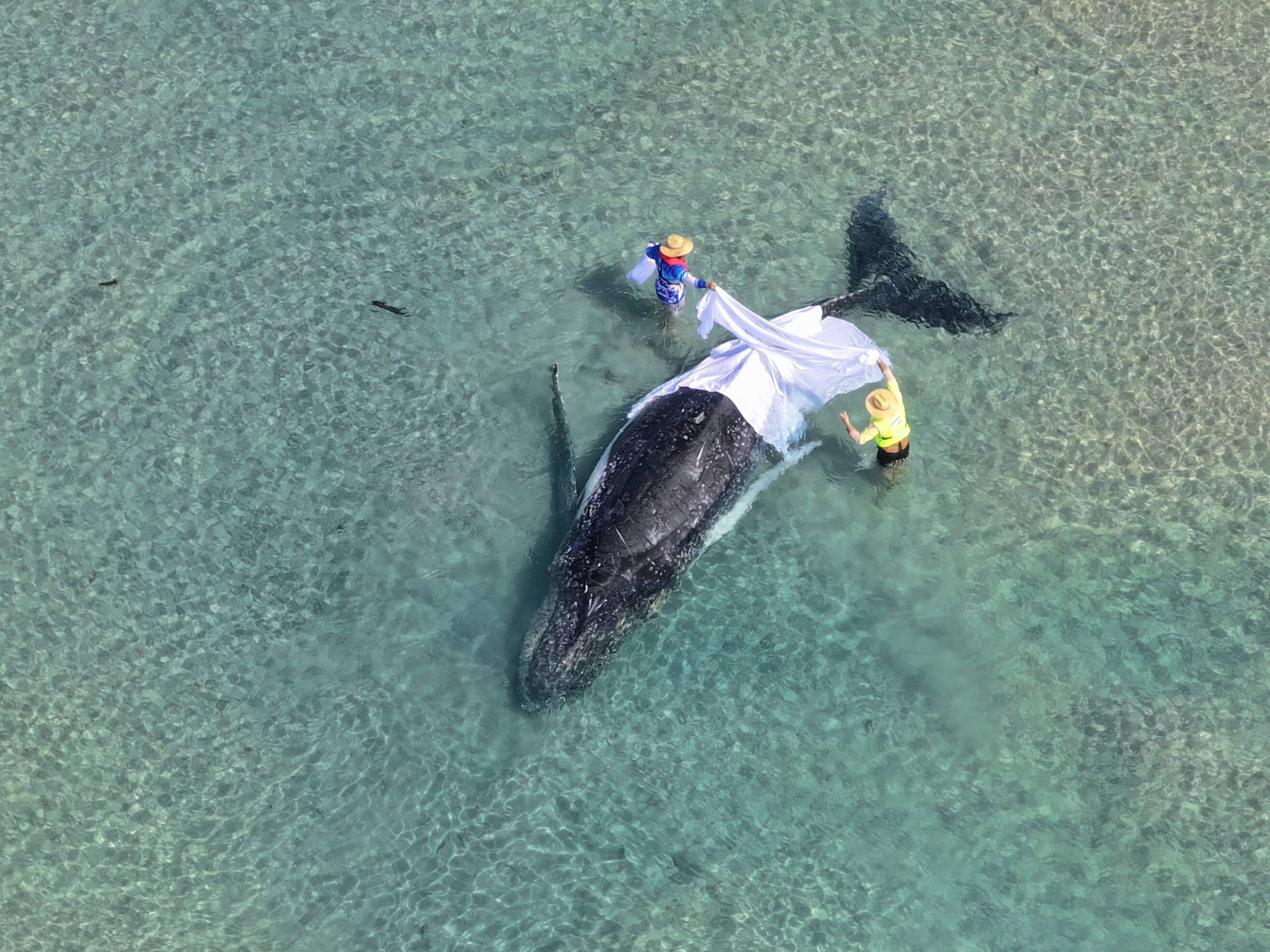
As rescue teams arrived, local residents joined the effort.
Some helped carry equipment. Others brought water and supplies. Many simply stayed nearby, hoping for a positive outcome.
Marine rescue specialists immediately began caring for the whale, keeping its skin wet and monitoring its condition while developing a strategy to return it safely to deeper water.
The operation required patience and precision. Rescuers had to wait for the right tidal conditions while ensuring the whale remained stable and as comfortable as possible.
Hours of Uncertainty
Throughout the day, hopes rose and fell.
The whale occasionally moved, giving rescuers encouragement, but the challenge remained enormous. The team knew that forcing the animal into deeper water too early could be dangerous, while waiting too long carried risks of its own.
As the tide slowly began to return, anticipation grew.
People gathered along the shoreline watched in near silence, knowing that the next few moments could determine the whale’s fate.
The Ocean Finally Calls It Home
Then came the breakthrough.
With enough water beneath it, the whale began to regain buoyancy. Guided carefully by rescue crews, the massive animal slowly turned toward deeper water.
For a few tense moments, it seemed uncertain whether the whale would be able to continue.
Then, with a powerful sweep of its tail, it surged forward.
Cheers erupted from the beach.
The whale continued swimming, moving farther and farther away until it disappeared beyond the waves, back where it belonged.
An Unforgettable Moment
Many rescuers described the experience as one of the most emotional moments of their lives.
“You never forget something like this,” one volunteer said. “To watch an animal that was so close to dying swim away free again is incredibly powerful.”
Videos of the rescue quickly spread across social media, attracting attention from around the world. Thousands praised the rescuers for their dedication and celebrated the whale’s remarkable survival.
Why These Rescues Matter
Scientists say whale strandings can happen for many reasons, including changing tides, illness, navigational errors, underwater noise, or environmental conditions.
While not every stranded whale can be saved, successful rescues provide valuable opportunities to protect marine wildlife and better understand the challenges these animals face.
For one whale on an Australian sandbar, what began as a desperate struggle ended as a story of survival.
As the sun set over the coastline and the ocean reclaimed one of its giants, those who witnessed the rescue were left with a lasting reminder: sometimes, a community’s determination can make the difference between tragedy and a second chance at life.