Part 2: The words landed exactly where he meant them to.
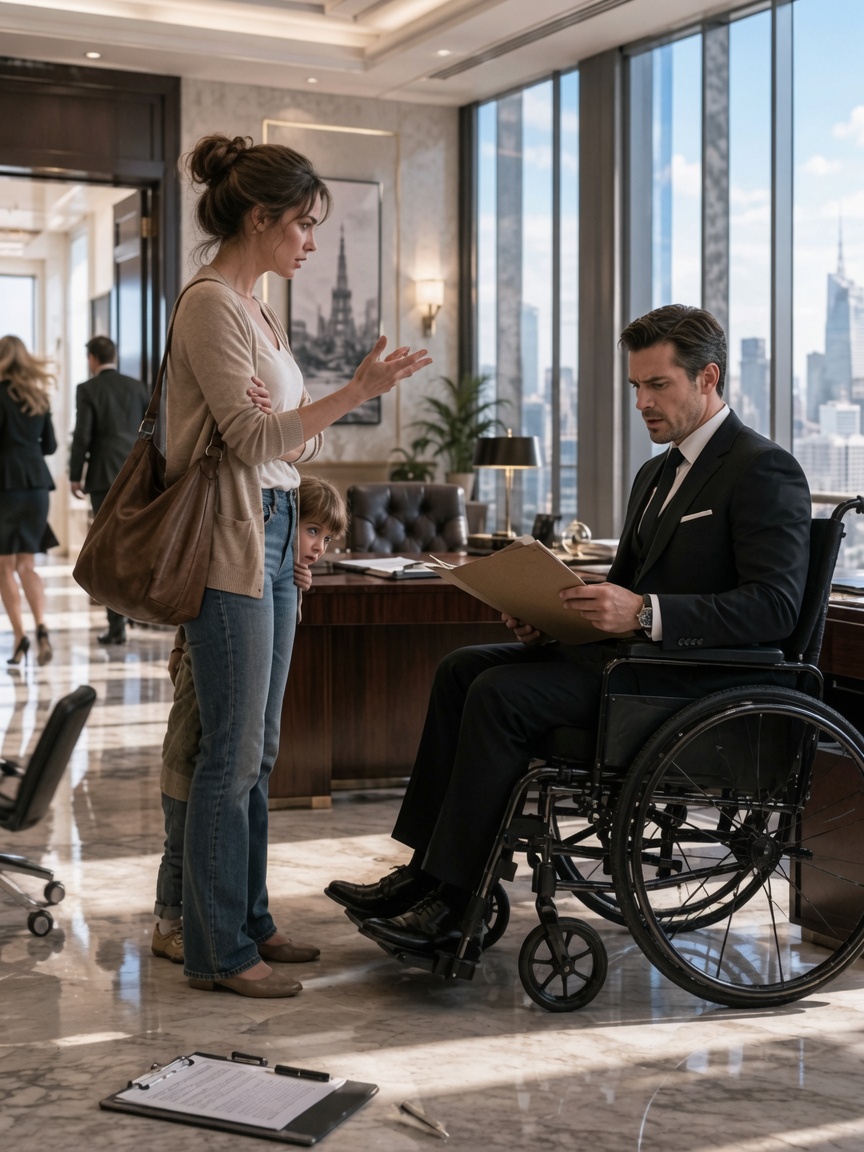
The words didn’t just land — they settled into the room like something heavy that refused to be ignored.
Pamela felt it immediately: that familiar, old heat rising in her throat. Shame. Not new, not sharp, just recognizable, like a bruise you’ve pressed too many times out of habit.
She had heard worse before.
From bosses who smiled while cutting her down.
From strangers who thought cruelty was a form of humor.
From an ex-husband who always made sure his words arrived exactly where they would do the most damage.
From women in dressing rooms who whispered like invisibility could be manufactured through volume control alone.
She let it pass through her anyway. She always did. Not because it didn’t hurt — but because reacting was something she could no longer afford.
“I’m Pamela Russell,” she said evenly. “I’m your new assistant. And I’d appreciate it if you didn’t drink whiskey before noon while taking nerve pain medication. It’s reckless.”
The silence that followed wasn’t empty. It was loaded — like a chamber being slowly rotated in a revolver.
From the corner of the room, Lachlan shifted first. His eyes flicked between them like he had just realized he’d walked into a room where the laws of conversation no longer applied. He stepped backward into the hall with careful, deliberate caution, the kind a man uses when he’s decided survival depends on not being noticed. The doors closed behind him with a soft, final click.
And then it was just the two of them.
Vincent Moretti stared at Pamela as though she had spoken in a language that offended him personally.
Then, in one sudden, violent motion, he picked up the crystal glass and hurled it at the wall beside her head.
It exploded on impact.
The sound was sharp enough to cut through the air.
Shards scattered like frozen lightning. Whiskey splattered across wallpaper that looked like it had been chosen by someone who never had to ask what anything cost.
Pamela didn’t flinch.
Not even a blink.
She simply turned her eyes to the damage, as if assessing a maintenance issue in a building she had been hired to manage.
Then she looked back at him.
“Are you finished?” she asked.
Vincent’s expression shifted.
Not softened. Not calmed.
Something more unsettling than either — a recalibration. Like a predator encountering prey that refused to behave like prey, and briefly forgetting which part of the script came next.
“Do you know who I am?” he asked.
“I read the address,” she said.
A pause.
“I could have you buried under concrete before lunch.”
Pamela nodded once, as if he had just informed her of a weather delay.
Without breaking eye contact, she walked to a supply closet she had already mentally mapped the moment she entered the room. She opened it, selected a broom and dustpan, and returned with the same unhurried precision.
“Maybe,” she said. “But right now, you can’t pick up the glass you just threw. And unless you want a shard in one of those expensive tires downstairs, I suggest you sit quietly while I sweep.”
His jaw tightened.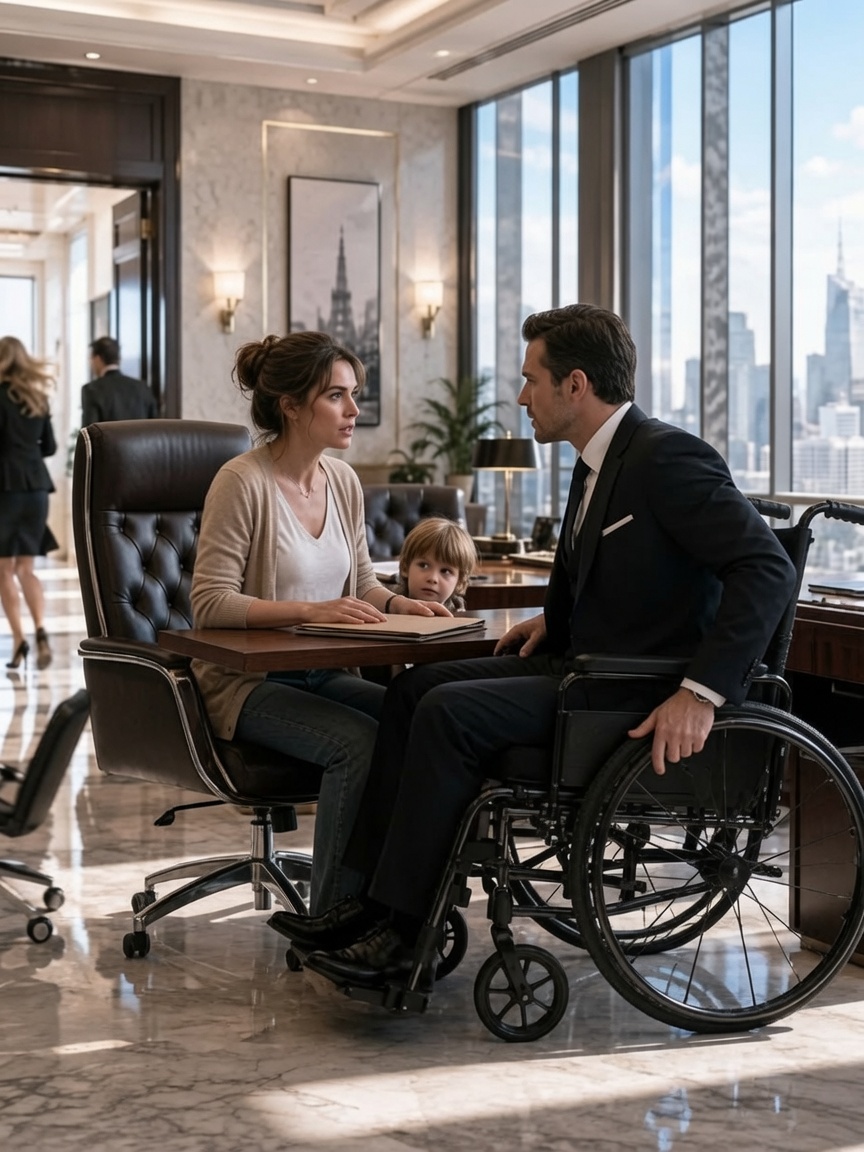
The silence that followed was different now — less explosive, more contained. Like something trying to decide whether it was being challenged or managed.
Pamela knelt.
The fabric of her skirt pulled slightly at her thighs, but she adjusted without hesitation. Her movements were careful, practiced, almost clinical. She began gathering the shattered glass with steady hands, sweeping it into the dustpan piece by piece, as though chaos was just another form of mess that required cleanup.
Her breathing never changed.
Not once.
“I said get out,” Vincent repeated, his voice lower now. More controlled. More dangerous in its restraint.
“No,” she replied.
That single word seemed to occupy more space than the broken glass on the floor.
His hand moved — not fast, but deliberate — toward the gun at his waistband.
Pamela stood.
She emptied the dustpan into the wastebasket, the clink of glass punctuating the moment like punctuation in a sentence neither of them could stop writing.
Then she turned back to him.
“The job pays fifteen thousand a month,” she said calmly. “For that kind of money, Mr. Moretti, you can throw one glass a day if it helps. I’ll sweep every one. But I am not leaving.”
He stared at her.
Not in anger now — in something closer to disbelief. As if she had violated an unspoken rule he had built his entire life around.
“The file Mr. Blake gave me says you need morning stretches,” Pamela continued. “Since you fired your therapist, I’ll help with that too.”
“Don’t touch me,” he snapped instantly.
“I don’t want to touch you any more than you want to be touched,” she said. “But we both have a job to do.”
She took a step closer.
Not aggressive. Not hesitant.
Just final.
Vincent shoved her.
It was meant to be decisive — a correction, a reminder of physics and hierarchy. His strength carried the weight of years spent in violence and the brutal adjustment of a body forced to live differently than it once did.
A smaller woman would have stumbled.
A frightened woman would have fallen apart on instinct.
But Pamela only shifted her weight, absorbing the force in a way that suggested she had been pushed before — perhaps not physically, but in every other way that mattered.
Her eyes stayed on him.
Not defiant.
Not afraid.
Present.
And that, more than anything else in the room, changed the shape of what came next.