Research Team Is Thrilled To Find Endangered ‘Jellybeans’ In Wild Mama’s Pouch
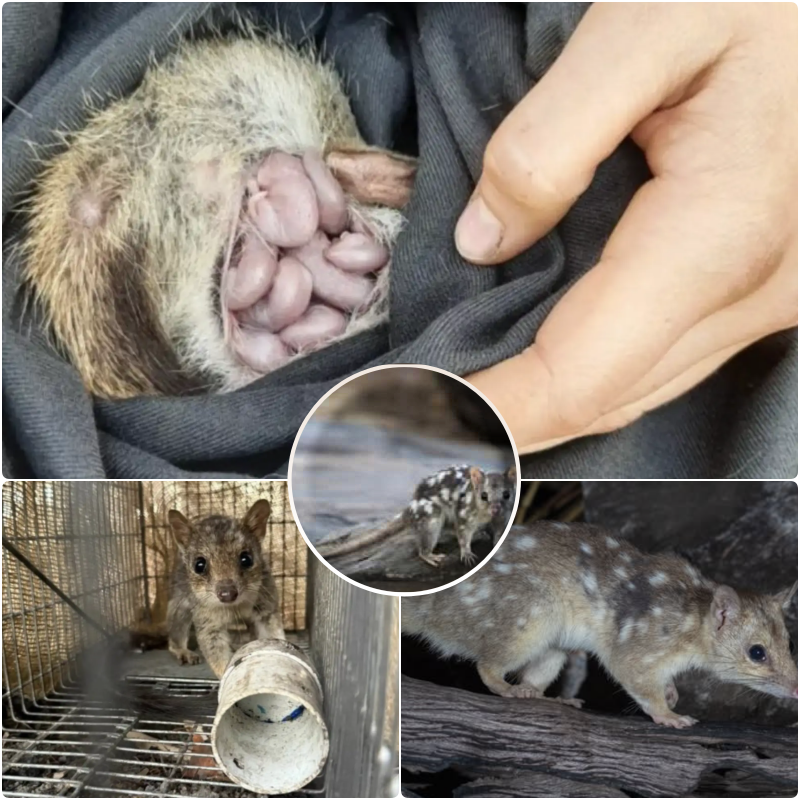
At the Australian Wildlife Conservancy’s (AWC) Brooklyn Wildlife Sanctuary, every field survey is more than just routine work — it’s a quiet mission filled with hope for the future of endangered wildlife.
Recently, a team of dedicated researchers ventured out across the sanctuary, carefully scanning the landscape for signs of northern quolls — small, spotted marsupials native to Australia. These elusive creatures, known for their cat-like faces and delicate size, have become increasingly rare in the wild, making each sighting incredibly meaningful.
After hours of searching, the team finally located not just one, but two adult quolls. But what they discovered next made the moment even more extraordinary.
Each female quoll was carrying a full pouch of babies — eight tiny joeys each, affectionately referred to by scientists as “quoll jellybeans.” Nestled safely inside their mother’s pouch, the miniature offspring represented something far greater than just new life. They were a powerful symbol of recovery.
Smiles spread across the researchers’ faces. For them, this wasn’t just a lucky find — it was proof that years of conservation work were finally paying off.
Northern quolls are currently listed as endangered, with populations declining significantly over recent decades. The threats they face are numerous and severe, including habitat destruction, predation by invasive species, and environmental changes. In many areas, their numbers have dropped so drastically that sightings have become rare.
Determined to reverse this trend, AWC ecologists have spent years restoring and protecting habitats at Brooklyn Wildlife Sanctuary. Their approach has been both strategic and hands-on: carefully managing fire regimes through controlled early dry-season burns and reducing the impact of feral herbivores that degrade the land.
These controlled burns play a crucial role. By creating a mosaic of burnt and unburnt vegetation, they provide quolls with sheltered areas to hide, hunt, and raise their young, while also reducing the risk of large, destructive wildfires. This balanced environment helps limit predator pressure and supports a healthier ecosystem overall.
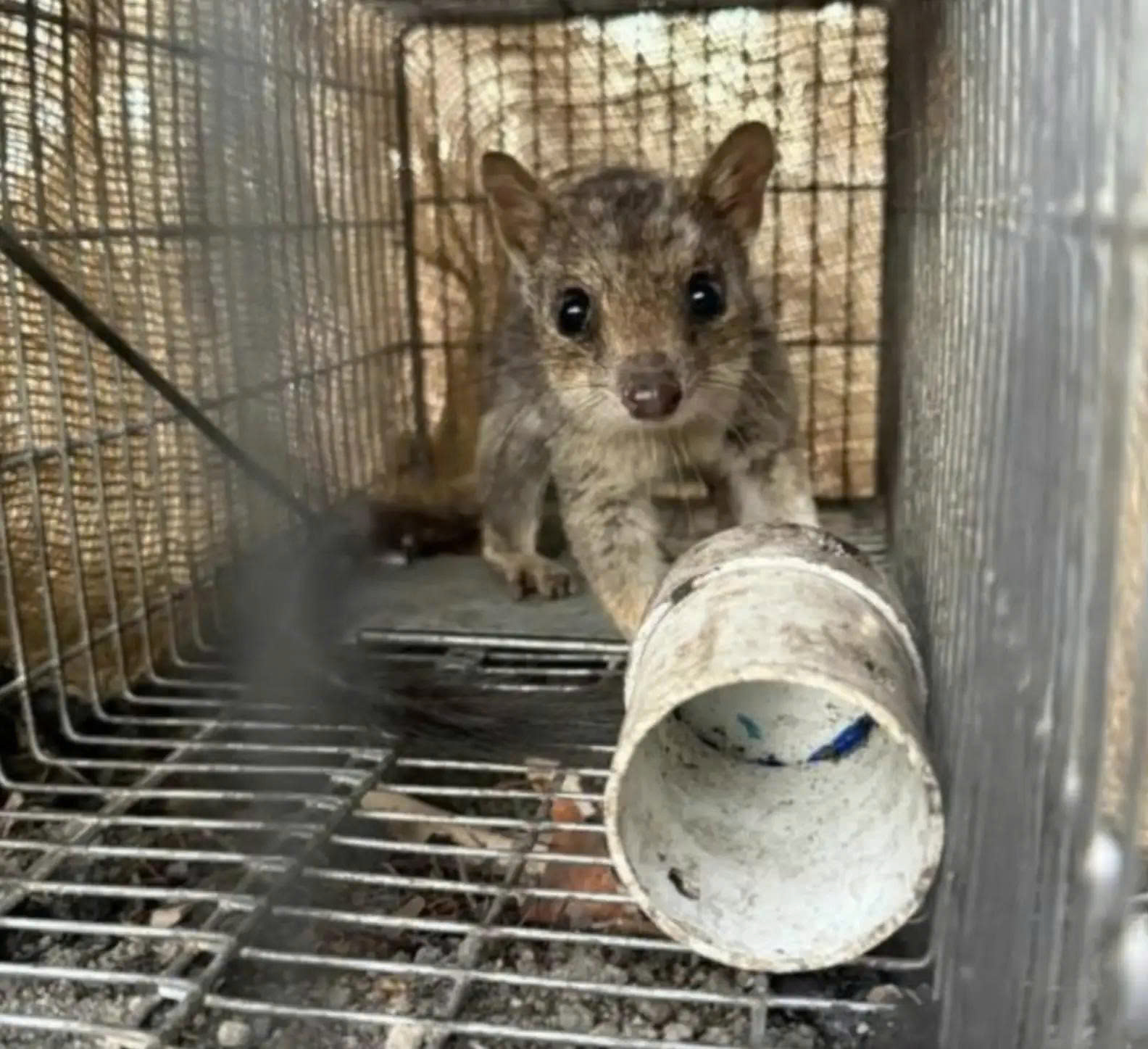
Dr. Gabrielle Beca, a wildlife ecologist with AWC, emphasized the importance of this discovery in a press statement: finding females with pouch young is one of the strongest indicators that a population is stable and benefiting from conservation efforts.
But the importance of northern quolls goes beyond their own survival.
As natural predators, quolls help regulate populations of small mammals, reptiles, and insects. This role keeps ecosystems balanced and prevents overpopulation of certain species that could otherwise disrupt the environment. In this way, protecting quolls also means protecting the broader health of the land they inhabit.
Encouraged by these promising signs, researchers are now looking toward the future. Plans are underway to translocate some of the quolls from Brooklyn Wildlife Sanctuary to Mount Zero–Taravale in northern Australia. This move aims to establish new populations and further strengthen the species’ chances of long-term survival.
It’s a bold step — but one built on hope, science, and persistence.
One day, if these efforts continue to succeed, spotting a northern quoll in the wild may no longer be a rare and remarkable event. Instead, it could become something ordinary — a sign of a thriving, restored ecosystem.
And behind that future will be the quiet, tireless work of conservationists who refused to give up on a species fighting for survival.