243 Babies, Cardboard Boxes, and a Midair Disaster: The Harrowing Flight That Became One of History’s Most Heartbreaking Rescue Missions
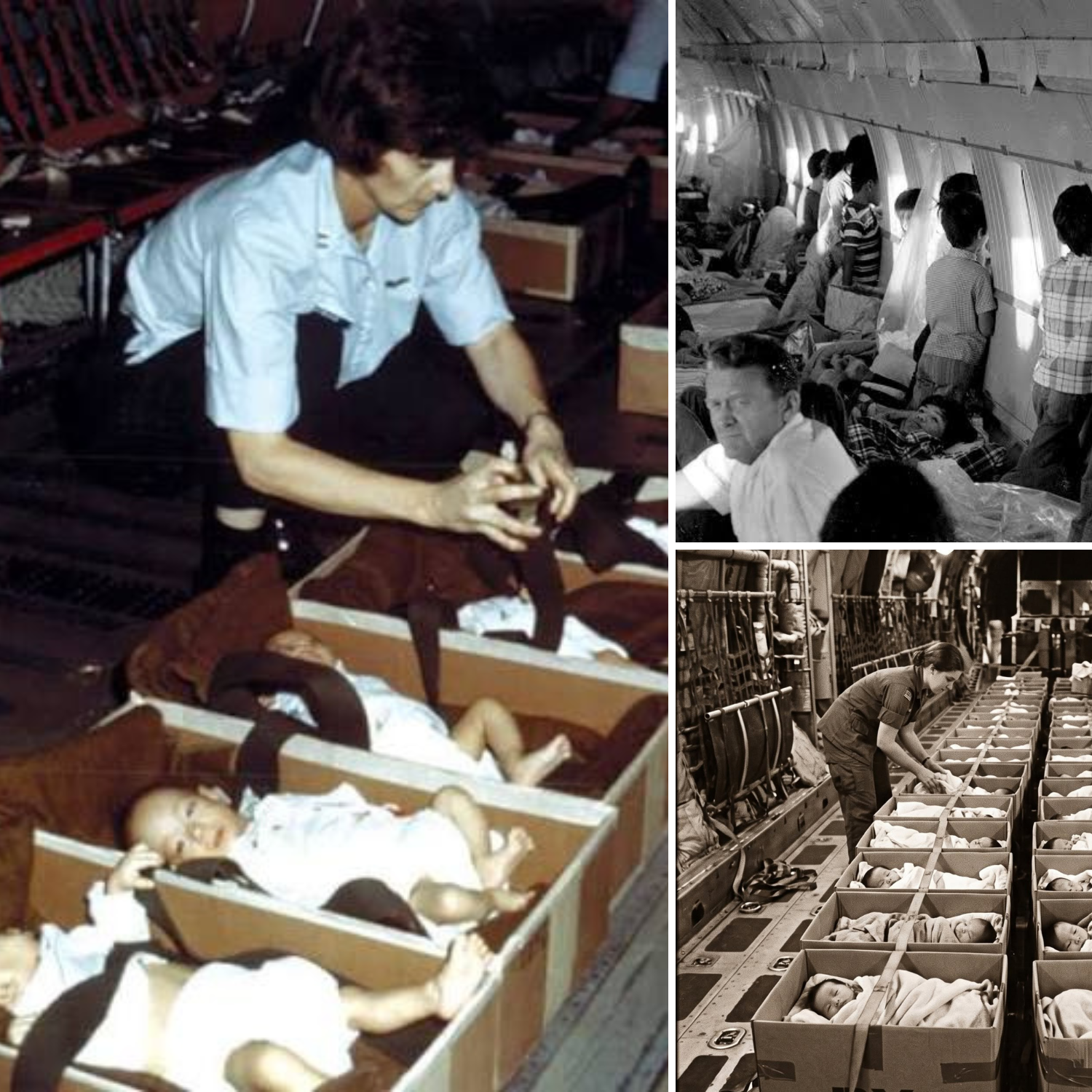
Rows of cardboard boxes filled the floor of a military transport plane, each holding a baby too small for a regular seat. The infants had been carefully secured with straps threaded through the boxes, an improvised solution born from desperation rather than design. It was supposed to be the beginning of their journey to safety. Instead, only minutes after takeoff, disaster struck more than 23,000 feet above Vietnam.
The mission unfolded during the final, chaotic days of the Vietnam War in April 1975. As South Vietnam neared collapse, officials and humanitarian workers rushed to evacuate orphaned and vulnerable children before the country fell. The operation would eventually become known around the world as Operation Babylift, an ambitious effort that sought to give thousands of children a chance at a new life abroad.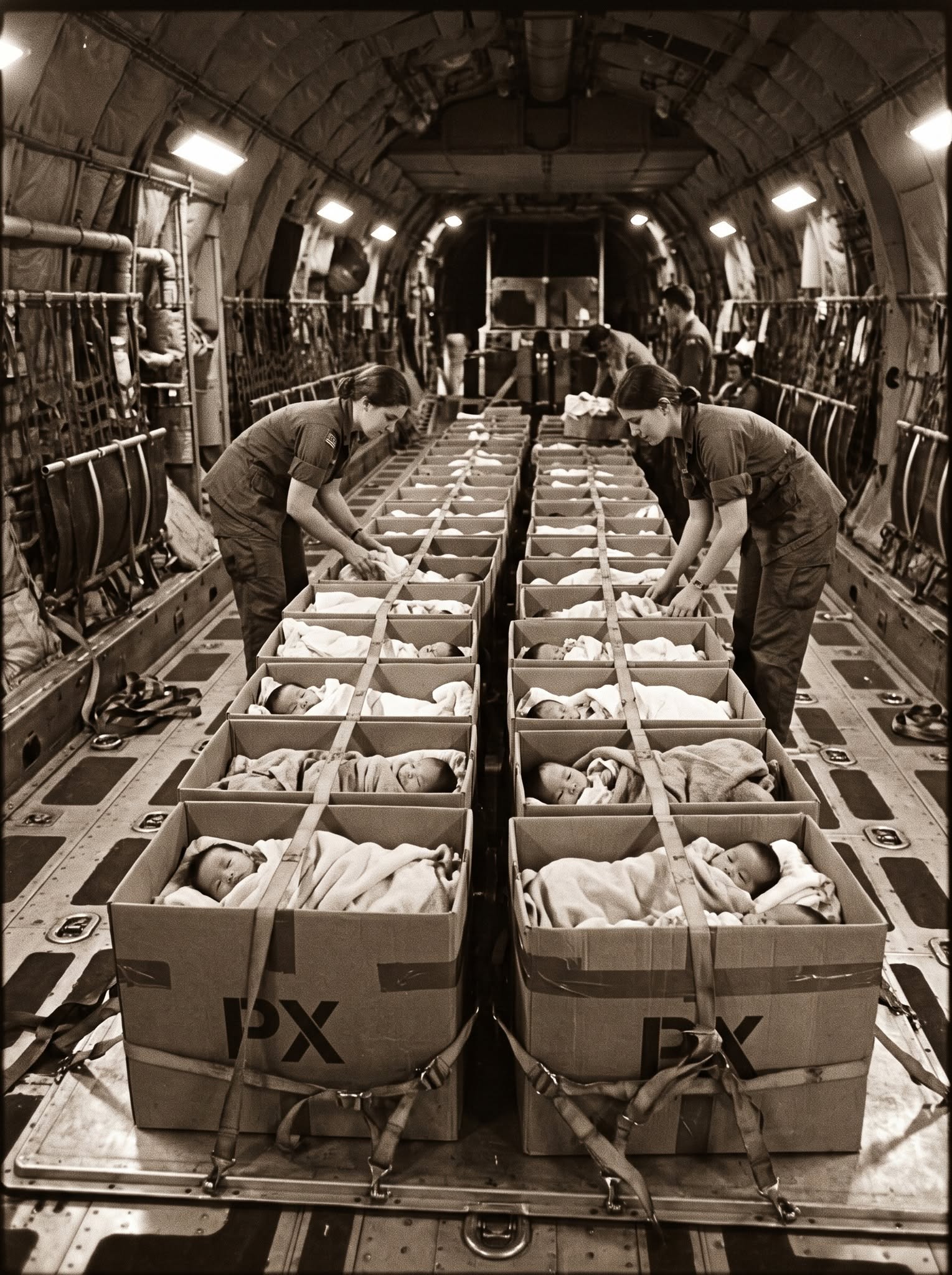
The first major flight carried extraordinary hopes—and an unimaginable burden.
On board the enormous U.S. Air Force C-5A Galaxy were 243 children, most of them babies, along with military personnel, medical teams, caregivers, and flight crew. The aircraft had been packed far beyond its normal humanitarian configuration. With so many infants to transport, conventional seating simply wasn’t possible.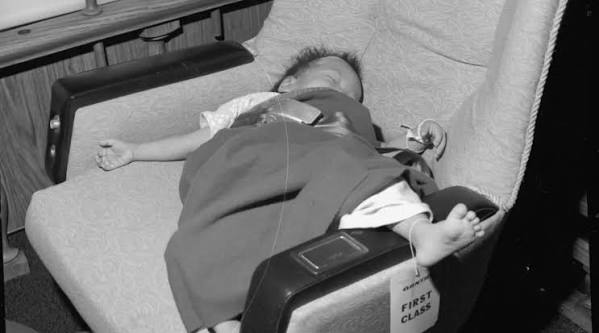
Some toddlers were fastened into troop seats, but many of the youngest passengers were placed inside sturdy cardboard file boxes. The simple containers acted as makeshift bassinets, while cargo straps were threaded through their handholds to keep them from sliding across the aircraft during flight. It was a remarkably practical solution under impossible circumstances, allowing rescuers to fit dozens of infants safely inside the cargo hold.
For those caring for the children, every available hand was needed. Nurses, volunteers, and escorts moved constantly among the babies, comforting cries, checking blankets, and making sure each child remained secure as the giant aircraft climbed away from Saigon.
Then everything changed.
Only minutes after takeoff, while the aircraft was cruising at approximately 23,000 feet, the rear cargo door suddenly failed. The explosive loss of the door caused rapid decompression throughout the aircraft, filling the interior with violent air currents and debris. Even more devastating, the failure damaged critical flight-control systems, leaving the pilots struggling to command the massive transport.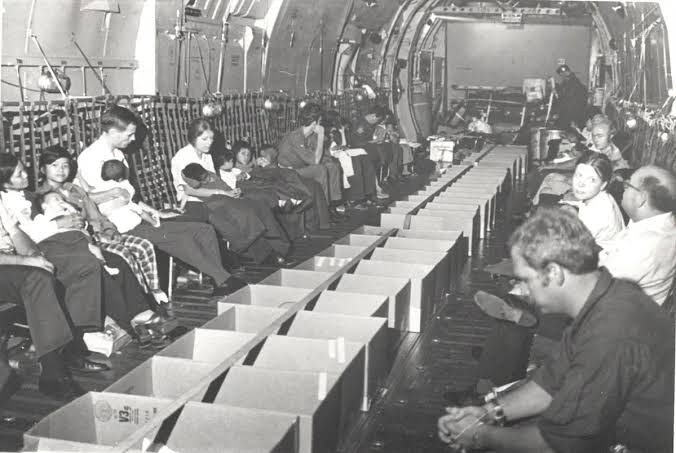
Inside the cabin, the peaceful rescue mission instantly became a fight for survival.
The crew worked desperately to regain control while beginning an emergency return toward Tan Son Nhut Air Base. Despite the catastrophic damage, the pilots managed to keep the crippled aircraft airborne long enough to attempt a landing.
It was an extraordinary display of skill under nearly impossible conditions.
But the damaged aircraft could not make it safely back.
The C-5A crashed into rice fields just short of the runway. The violent impact tore the giant plane apart, scattering wreckage across the countryside. Large sections of the aircraft broke away as it skidded, briefly lifted back into the air, and finally slammed into an embankment before coming to rest in multiple pieces.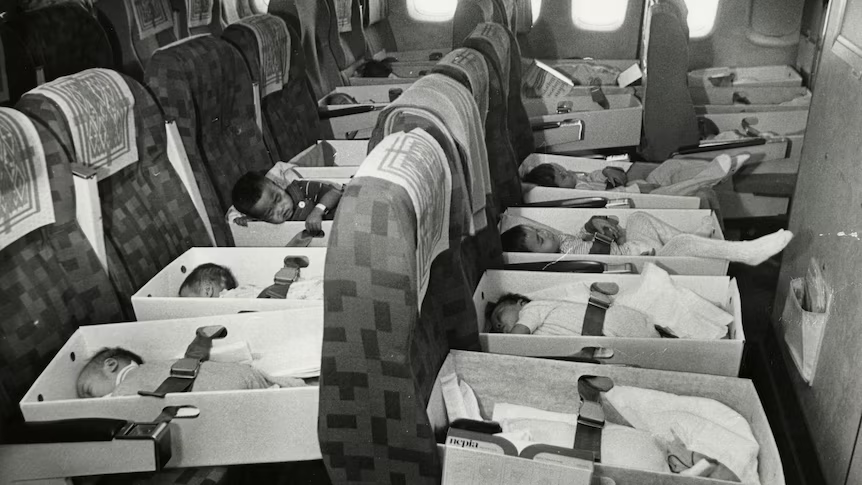
The tragedy claimed the lives of many of those aboard.
Among the victims were dozens of children whose evacuation had barely begun. Adults accompanying them—including members of the flight crew, medical personnel, and escorts—also lost their lives. Yet amid the devastation, there were survivors.
Many of those seated on the aircraft’s upper deck managed to escape the wreckage. Rescue efforts began almost immediately, although reaching the crash site proved difficult because it lay deep within muddy rice paddies. Helicopters and emergency responders rushed to recover survivors, while nurses and military personnel continued caring for injured children even in the chaotic aftermath.
The heartbreaking loss stunned those involved in the evacuation effort.
For many Americans and Vietnamese alike, the accident transformed what had been intended as a symbol of hope into one of the most painful moments of the war’s closing chapter. Images of babies transported in cardboard boxes became lasting reminders of both the desperation surrounding the evacuation and the extraordinary lengths people were willing to go to protect vulnerable children.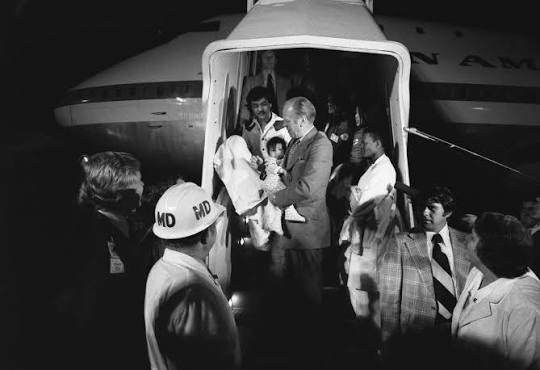
Despite the tragedy, the larger rescue mission did not end.
Additional flights continued throughout April 1975, ultimately transporting thousands of Vietnamese children to the United States and several other countries, including Canada, Australia, and nations across Europe. Humanitarian workers remained determined to carry out the mission, believing that stopping would leave countless more children trapped in an increasingly dangerous situation.
For the medical teams and volunteers who participated, the memories never faded.
Some later recalled how simple office file boxes unexpectedly became lifesaving tools during those emergency evacuations. In an environment where proper infant carriers simply did not exist in sufficient numbers, the cardboard containers allowed rescuers to secure babies quickly and efficiently aboard military cargo planes.
What looked unusual in photographs represented ingenuity under intense pressure.
The story of that first doomed flight has also remained deeply personal for many of the children who survived the broader evacuation. Decades later, numerous Operation Babylift adoptees have reflected on lives shaped by a mission that combined unimaginable loss with extraordinary opportunity. Some have reunited with biological relatives, while others continue searching for answers about their origins.
The flight itself occupies a unique place in history—not only because of the catastrophic accident, but because it captured the heartbreaking complexity of a nation in its final days of war.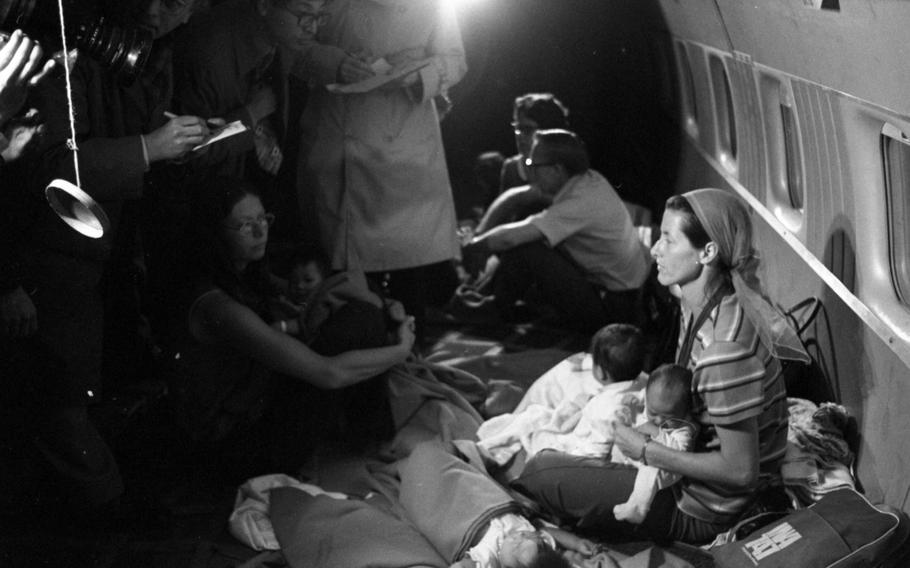
On one side stood fear, uncertainty, and families facing impossible decisions. On the other stood military crews, doctors, nurses, volunteers, and humanitarian workers willing to risk everything to carry children toward safety.
The cardboard boxes that once lined the cargo floor were never intended to become symbols. Yet over time they came to represent something far greater than improvised transport. They reflected the determination to save as many young lives as possible when time, resources, and hope were all running out.
Nearly half a century later, that mission remains remembered not only for the terrible crash that unfolded high above Vietnam, but also for the courage, compassion, and sacrifice shown by those who believed every child was worth saving—even in the darkest final moments of a long and devastating war.