Kelsey Grammer Made Millions Laugh While Carrying the Memory of His Sister Karen and a Lifetime of Family Loss

For millions of television viewers, Kelsey Grammer became inseparable from laughter. His controlled delivery, unmistakable voice and portrayal of the complicated Dr. Frasier Crane helped turn him into one of television’s most recognizable performers.
But the polished actor audiences eventually came to know had already endured devastating losses long before fame arrived.
One of the most painful came in 1975, when Grammer was just 20 years old. His younger sister, Karen Grammer, was 18 when she was kidnapped, assaulted and murdered in Colorado Springs, Colorado. Kelsey was later faced with the heartbreaking responsibility of identifying her body.
It was an experience that would remain with him for decades.
Years later, after awards, successful television shows and international recognition had transformed his public life, Karen was still part of his private story. Grammer eventually described a period when his sorrow became so overwhelming that happiness seemed almost unreachable.
“For a long time, the grief was so dominant that I couldn’t access happiness,” he recalled.
Yet Karen’s death was not the first tragedy to shape his life — nor would it be the last.
Loss Entered His Life Early
Allen Kelsey Grammer was born on February 21, 1955, in Saint Thomas in the U.S. Virgin Islands. Creativity surrounded him from childhood. His father, Frank Allen Grammer Jr., was a musician and businessman, while his mother, Sally, had a background in dance.
After his parents separated, Kelsey and Karen lived with their mother. The family was already adjusting to major changes when another tragedy struck.
In 1968, while Kelsey was still a teenager, his father was shot and killed at his home in Saint Thomas.
The loss meant Grammer entered adulthood already familiar with grief. He had lost a parent at an age when he was still forming his own identity and determining what his future might look like.
Seven years later, Karen’s murder brought an entirely different level of heartbreak.
She was only 18, with an adulthood she never had the chance to experience. For Kelsey, losing his sister was not simply a painful chapter that could be closed as his career moved forward. The memory traveled with him.
Still, he continued pursuing acting.
The Stage Became His Training Ground
Before sitcom audiences knew his name, Grammer devoted himself to classical theater.
He studied acting at Juilliard and immersed himself in the demanding world of Shakespeare, voice work and stage performance. His early roles included appearances in productions of “Macbeth” and “Othello,” in which he played Cassio.
That background helped develop the qualities that would later define his screen performances: precision, vocal control and the ability to move between comedy and vulnerability.
Acting also offered a way to explore emotions that were far more complicated than anything visible from the outside.
But even as Grammer worked toward a professional future, his family endured another terrible loss.
In 1980, his half brothers, Billy and Stephen, died in a scuba diving accident near the Virgin Islands.
By then, Grammer had lost his father, his younger sister and two brothers.
The succession of tragedies created a striking contrast with the career that was about to make him famous. Audiences would soon see a confident, articulate comic performer. Behind that image was a man who understood how quickly a family could be changed forever.
Frasier Crane Changed His Career
In 1984, Grammer joined “Cheers” as psychiatrist Dr. Frasier Crane.
The character was sophisticated but deeply imperfect — intelligent and confident one moment, insecure and emotionally confused the next. What could have remained a supporting sitcom role became something much larger.
Grammer gave Frasier enough vulnerability to make audiences care about him.
The psychiatrist might be capable of analyzing everyone around him, yet his own relationships and emotions repeatedly left him struggling. That contradiction became central to the character’s appeal.
When “Cheers” ended, Frasier received his own series in 1993.
“Frasier” became one of television’s most successful sitcoms, allowing Grammer to continue playing the character for more than a decade. His performance brought him four Primetime Emmy Awards and two Golden Globe Awards.
Millions watched him deliver perfectly timed jokes and portray a man whose intellectual confidence frequently collided with loneliness, pride and a desire to be loved.
Away from the laughter, however, Grammer’s earlier losses had not disappeared.
He also faced addiction and other personal difficulties while navigating the consequences of years of emotional trauma. Fame could change his circumstances, but it could not remove the memories that had shaped him.
That tension became one of the defining contrasts of his life: a performer capable of bringing enormous joy to strangers while privately carrying experiences rooted in profound grief.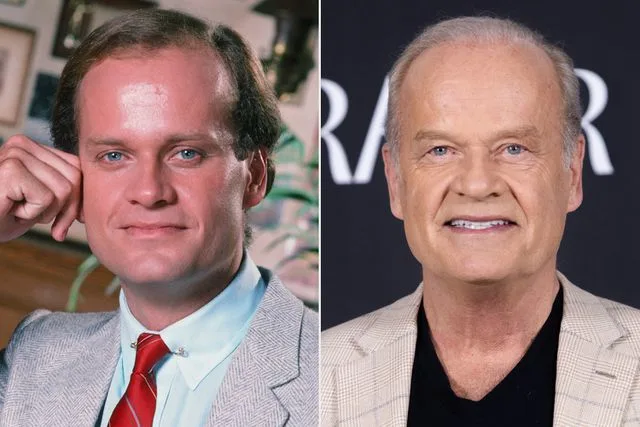
Karen Became More Than the Story of Her Death
As the decades passed, Grammer increasingly confronted something else about Karen’s legacy.
He did not want his sister to exist in public memory only as a murder victim.
Karen had been a daughter, a sister and an 18-year-old young woman whose identity was far larger than the violence that ended her life. The crime might explain why strangers knew her name, but for her brother, it could never explain who she had been.
In 2025, Grammer placed her story at the center of his memoir.
His intention was not simply to write about bereavement. He described the book as an intense and deeply personal account of Karen’s life leading up to her death, emphasizing that it was “not a Grief book.”
The distinction mattered.
By writing about Karen as a person rather than allowing the final moments of her life to define her, Grammer sought to preserve something tragedy often threatens to erase: the ordinary, living human being who existed before becoming the subject of a terrible story.
Karen had memories attached to her name. She had relationships. She had hopes. Most importantly for Grammer, she had been his sister.
Remembering her meant remembering those things too.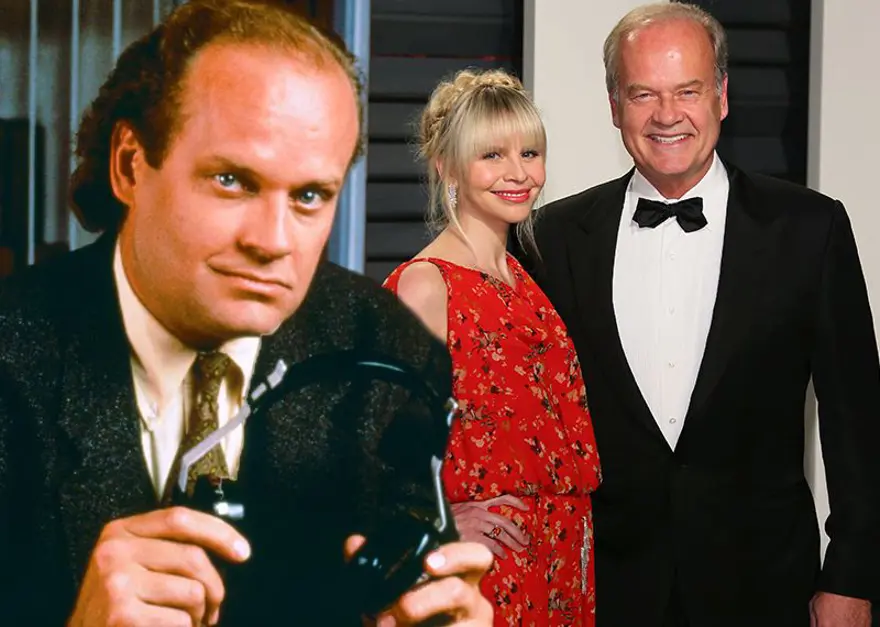
A Life Where Grief and Joy Learned to Coexist
Kelsey Grammer’s career eventually became associated with extraordinary longevity. His voice, theatrical training and portrayal of Frasier Crane made him familiar to generations of viewers.
Yet the personal history behind that success tells a very different story.
He was still young when his father was killed. At 20, he confronted the murder of his 18-year-old sister. Five years later, he lost his half brothers in a diving accident.
Those experiences did not prevent him from building a life or creating laughter, but neither did success erase them.
Instead, Grammer gradually learned to carry conflicting emotions together. Love did not disappear because someone died. Happiness did not necessarily mean grief had ended. Continuing to live did not require forgetting the people who were gone.
That may be why Karen’s story remained so important decades after her death.
For audiences, Kelsey Grammer became the sophisticated voice behind one of television’s most famous characters. For all the acclaim that followed, however, another identity remained with him: the brother who remembered an 18-year-old sister whose life deserved to be known for more than the way it ended.
And in choosing to tell Karen’s story, Grammer ensured that her memory would not belong solely to tragedy.