From Corgis at the Palace to a Horse Waiting at a Funeral: The Royal Pets That Became Part of British History
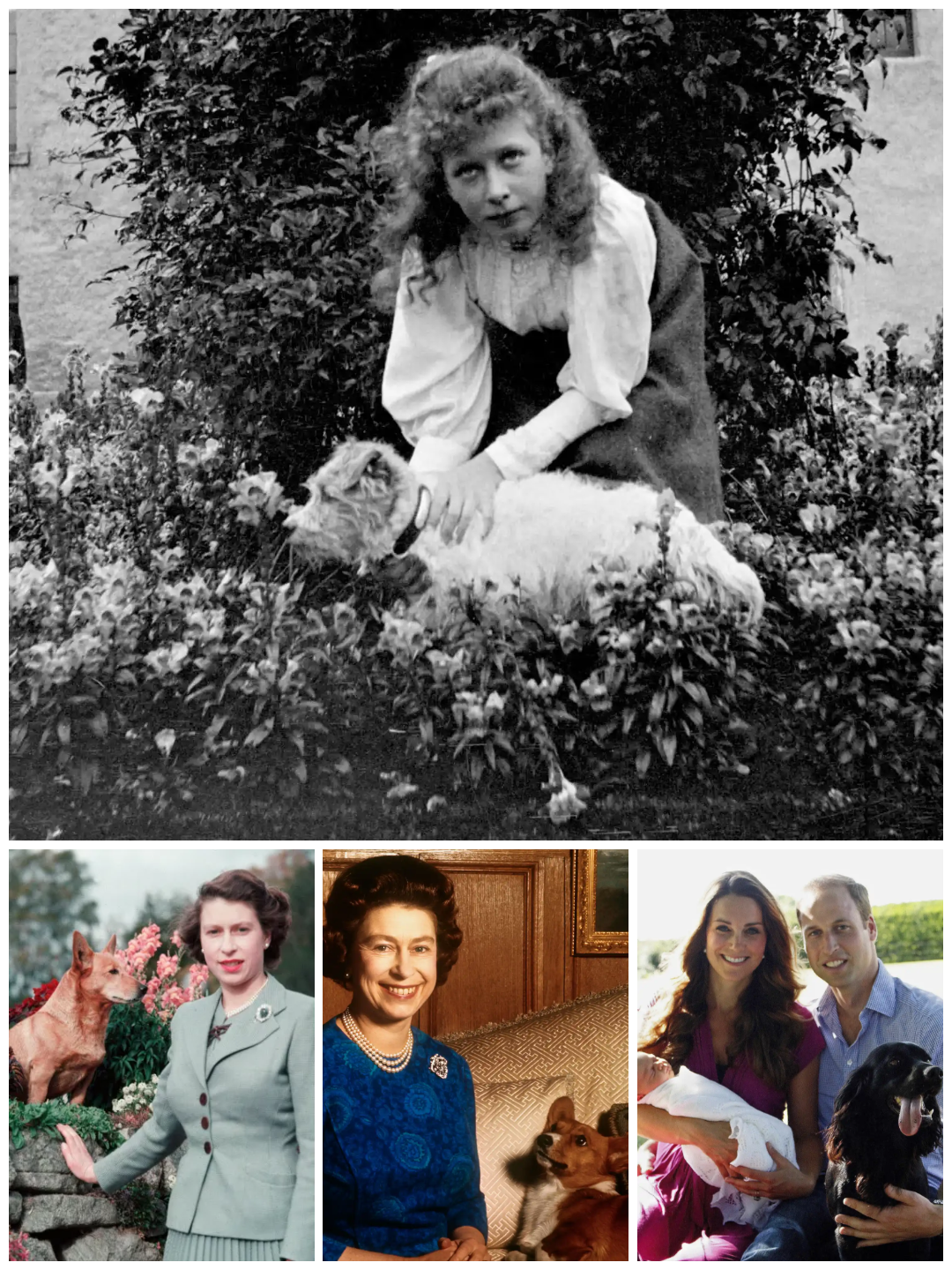
Royal history is usually remembered through coronations, weddings, grand ceremonies and generations of famous faces. Yet behind the palace gates, another group of companions has quietly shared the lives of kings, queens, princes and princesses.
Dogs have wandered royal halls, horses have carried monarchs across country estates, and beloved pets have appeared in family photographs that revealed a far more personal side of monarchy.
Some were companions for only a few years. Others remained beside their royal owners through marriages, births, historic milestones and profound loss. A handful became so closely associated with the royal family that they earned their own place in history.
Queen Elizabeth II and the Corgis That Became Royal Icons
Few royal relationships with animals are more famous than Queen Elizabeth II’s lifelong devotion to corgis.
Her affection for the breed began when she was still a child. In 1933, her father gave the young princess a corgi named Dookie. Another dog, Jane, later became part of the family and stayed with Elizabeth and Princess Margaret at Windsor Castle during World War II.
But one corgi would become particularly significant.
When Elizabeth was 18, she received a Pembroke Welsh corgi named Susan. The dog remained beside her during a remarkable period of change, including Elizabeth’s marriage to Prince Philip and the death of her father, King George VI.
When Elizabeth became queen in 1952, Susan was still part of her life.
Over the decades that followed, the Queen owned more than 30 corgis and corgi-dachshund crosses, with many of them descending from Susan.
The dogs were more than private companions. They became part of Elizabeth’s public image.
Three of them — Monty, Willow and Holly — even appeared alongside the Queen and Daniel Craig in the memorable short film created for the opening ceremony of the 2012 London Olympics.
For millions of people around the world, corgis became almost inseparable from the image of Queen Elizabeth herself.:max_bytes(150000):strip_icc():focal(749x0:751x2):format(webp)/Royal-Pets-080326-5-ea5852aa133a468aa08c8d22ef549de5.jpg)
The Pony That Waited as the Queen Came Home
Dogs were not Elizabeth’s only great animal love.
Horses had been part of her world since childhood.
She received her first horse, a Shetland pony named Peggy, when she was just 4 years old. That early gift began a lifelong passion for riding, breeding and horse racing.
Decades later, one of her most cherished companions was a Fell pony named Carlton Lima Emma, usually known simply as Emma.
The Queen rode Emma for approximately 15 years. Their final ride together came in July 2022.
Only two months later, the pony appeared in one of the most poignant scenes following Elizabeth’s death.
As the Queen’s funeral procession made its way through Windsor in September 2022, Emma stood nearby as the coffin passed.
A riding headscarf connected to the Queen had been placed on the pony’s saddle.
There were no speeches between them, of course. Yet the image carried enormous emotional weight: a horse that had accompanied Elizabeth through years of private rides standing quietly as its longtime rider returned to Windsor for the final time.
Emma remained in royal care afterward.:max_bytes(150000):strip_icc():focal(999x0:1001x2):format(webp)/Royal-Pets-080326-3-d5ebe7f980d44e60b76143249e31d7e9.jpg)
Queen Victoria’s Extraordinary Household of Dogs
The bond between Britain’s monarchs and their animals reaches back long before Elizabeth II.
Queen Victoria was especially fond of dogs.
One of the most important was Dash, a Cavalier King Charles spaniel originally given to Victoria’s mother. Victoria became deeply attached to him, and when Dash died in 1840, he was buried at Windsor Castle.
Her love of dogs did not end there.
Victoria and Prince Albert kept numerous animals throughout their marriage, while the Queen developed a particular enthusiasm for collies. Over several decades, she reportedly owned more than 80 of them.
Her interest in animals also extended beyond personal companionship. Victoria supported efforts connected with animal welfare and became associated with the organization that would eventually be known as the Royal Society for the Prevention of Cruelty to Animals.:max_bytes(150000):strip_icc():focal(666x0:668x2):format(webp)/Royal-Pets-080326-b35d88e8c3284306ae384d089ea8ad05.jpg)
The Spaniels That Took a King’s Name
Centuries earlier, spaniels had already become part of royal culture.
King Charles I and, especially, King Charles II were closely associated with the small dogs.
Charles II was famously devoted to his spaniels, which followed him through royal residences and became recognizable companions around court.
The connection became so strong that the breed eventually carried the royal name that remains familiar today: the Cavalier King Charles spaniel.
It is a remarkable example of how a monarch’s affection for a particular animal could influence not only royal imagery but the identity of an entire breed.:max_bytes(150000):strip_icc():focal(749x0:751x2):format(webp)/Royal-Pets-080326-4-28ebf02b102f4e7eaf75ebb51a4aecda.jpg)
Caesar Followed King Edward VII One Final Time
One of Britain’s most famous royal dogs belonged to King Edward VII.
Caesar, a wire-haired fox terrier, became a constant presence beside the King.
The little dog was so closely associated with Edward that his collar identified him as belonging to the monarch.
Then came a moment that transformed Caesar from royal pet into part of royal history.
When Edward VII died in 1910, Caesar joined the funeral procession, walking behind the carriage carrying his master’s coffin.
The small terrier following a royal funeral procession created a striking contrast with the ceremony surrounding him.
Caesar’s connection to the King was later immortalized in another way. A representation of the dog was incorporated at the foot of Edward’s tomb at St. George’s Chapel.
After the King’s death, Caesar remained with Queen Alexandra until the terrier died in 1914.:max_bytes(150000):strip_icc():focal(995x344:997x346):format(webp)/royal-family-pets-080526-fd3379e7c4ed4d8dbca1221038a1924c.jpg)
William and Catherine’s Family Dogs
The tradition of royal families sharing their homes with animals continues into the present generation.
Prince William and Catherine welcomed an English cocker spaniel named Lupo into their family in 2011. The dog was a gift from Catherine’s brother, James Middleton.
Lupo soon became part of the young royal family’s story and appeared in photographs alongside Prince George during his early childhood.
When Lupo died in 2020 after nine years with the family, William and Catherine publicly mourned a dog who had occupied an important place in their home.
Another cocker spaniel, Orla, later became part of the family and has appeared during both private and public moments.
The family expanded again when Orla’s son Otto joined the household in 2025.
For William and Catherine’s children, dogs have therefore become part of childhood in much the same way animals shaped earlier generations of the royal family.:max_bytes(150000):strip_icc():focal(999x0:1001x2):format(webp)/Royal-Pets-080326-6-5b1b46de660548a3b971a6cf400fc916.jpg)
Meghan’s Beagle Was There Before Royal Life Began
Prince Harry and Meghan Markle have also surrounded their family with dogs.
One of the most significant was Meghan’s rescue beagle, Guy.
Meghan adopted Guy from a Canadian rescue organization in 2015, before she married Prince Harry or became a member of the British royal family.
That meant Guy was there before almost everything changed.
The beagle remained part of Meghan’s life through her relationship with Harry, their royal wedding, the births of their children and the couple’s eventual move to the United States.
Guy died in January 2025 after nearly a decade with Meghan.
The Sussex household has also included Labrador Pula and a rescue beagle named Mia.
Camilla’s Rescue Dogs Made It Onto a Coronation Dress
Queen Camilla’s affection for dogs has also become part of her public identity.
She adopted Jack Russell terriers Beth and Bluebell from Battersea Dogs and Cats Home and developed a long relationship with the animal rescue organization.
The dogs became so meaningful to Camilla that they were represented in embroidery on her coronation dress.
It was a small, deeply personal detail incorporated into one of the most formal occasions of her life.
Beth died in 2024 after developing an untreatable tumor.
Camilla later welcomed another Battersea rescue dog named Moley.:max_bytes(150000):strip_icc():focal(665x0:667x2):format(webp)/Royal-Pets-080326-2-a511cdef2b83468396efbb6510903939.jpg)
Zara Tindall and the Horse That Helped Define Her Career
For Zara Tindall, the royal relationship with animals has been inseparable from competitive sport.
One horse in particular, Toytown, played a major role in her equestrian career.
Together, Zara and Toytown achieved success at the highest levels of eventing, including European and world championship medals.
Toytown retired from competition in 2011 and spent his later years at Gatcombe Park.
He died in 2017 at the age of 25.
For Zara, Toytown was more than a successful competition horse. Their partnership became one of the defining relationships of her sporting career.:max_bytes(150000):strip_icc():focal(665x0:667x2):format(webp)/Royal-Pets-080326-1-f4d921e786654be3a1db9c1cacce73a8.jpg)
The Private Side of Royal Life
Across generations, royal pets have occupied a world very different from crowns, titles and protocol.
To a dog or horse, a monarch is not a historical figure.
They are simply the familiar person who walks through the door, reaches for the leash, fills a bowl, offers a treat or climbs into the saddle.
That may explain why stories about royal animals continue to resonate so strongly.
They strip away some of the distance surrounding monarchy and reveal something immediately recognizable.
Behind palace walls, beneath crowns and beside centuries of tradition, members of the royal family have experienced the same simple attachment known to millions of pet owners everywhere.
And sometimes, the most unforgettable farewell to a monarch is not delivered in words at all.
Sometimes it is a small dog walking behind a coffin — or a beloved pony standing quietly beside the road, waiting as its rider passes by one final time.