THE “SECRET WILL” RUMOR: WHAT IS ACTUALLY KNOWN ABOUT ANN WIDDECOMBE’S FINAL DAYS?
THE “SECRET WILL” RUMOR: WHAT IS ACTUALLY KNOWN ABOUT ANN WIDDECOMBE’S FINAL DAYS?
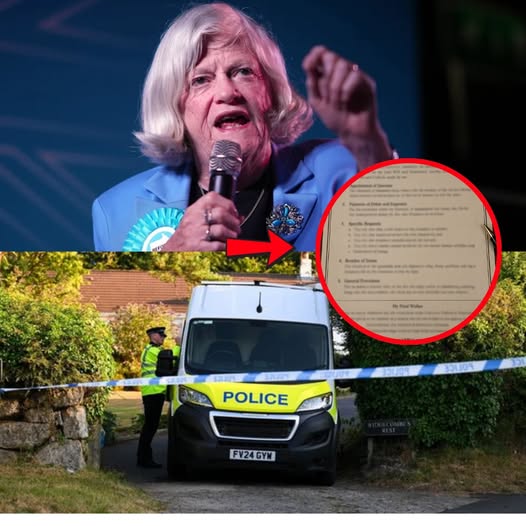
An unverified claim circulating online alleges that Ann Widdecombe prepared a private will before her death and that the document was later discovered among her belongings. There is currently no reliable public confirmation of the alleged document or its contents, while police continue examining separate evidence connected to the investigation into her death.
 UNITED KINGDOM — A new claim circulating on social media has sparked renewed interest in the case involving the death of Ann Widdecombe, with online posts alleging that she may have prepared a private or “secret” will shortly before her death.
According to the unverified account, the alleged document was supposedly discovered among her personal belongings, potentially inside a locked container, and may have contained a final message or unusual instructions.
However, there is currently no reliable public evidence confirming those claims.
Neither the alleged document nor its supposed contents have been independently verified through publicly available court records, police statements or established news reporting.
That distinction is particularly important as investigators continue examining evidence connected to the wider case.
 WHAT IS THE “SECRET WILL” CLAIM?
The alleged will appears to have emerged through online discussion rather than through a confirmed police or court disclosure.
Posts circulating online have suggested that Widdecombe may have anticipated something happening to her and therefore prepared a private document.
Some versions of the claim go further, alleging that the document was discovered in a locked box among her belongings.
But without authentication of the document, its date, handwriting, provenance or contents, there is no reliable basis for treating those details as established facts.
At present, the alleged “secret will” should be regarded as an unverified claim, not confirmed evidence.
NO CONFIRMED FINAL MESSAGE HAS BEEN DISCLOSED
Another element of the online story suggests that the alleged will contained a significant final message.
Again, no reliable public source has confirmed that such a message exists.
Investigators have not publicly established that Widdecombe left behind a document containing instructions or information relevant to her death.
As a result, claims that the alleged will could reveal something about her final days remain speculative.
In a developing criminal investigation, even seemingly convincing photographs, screenshots or transcriptions shared online cannot automatically be considered authentic evidence.
POLICE EXAMINE A SEPARATE LINE OF INQUIRY
While the will rumor remains unverified, investigators are continuing to examine other evidence connected to the case.
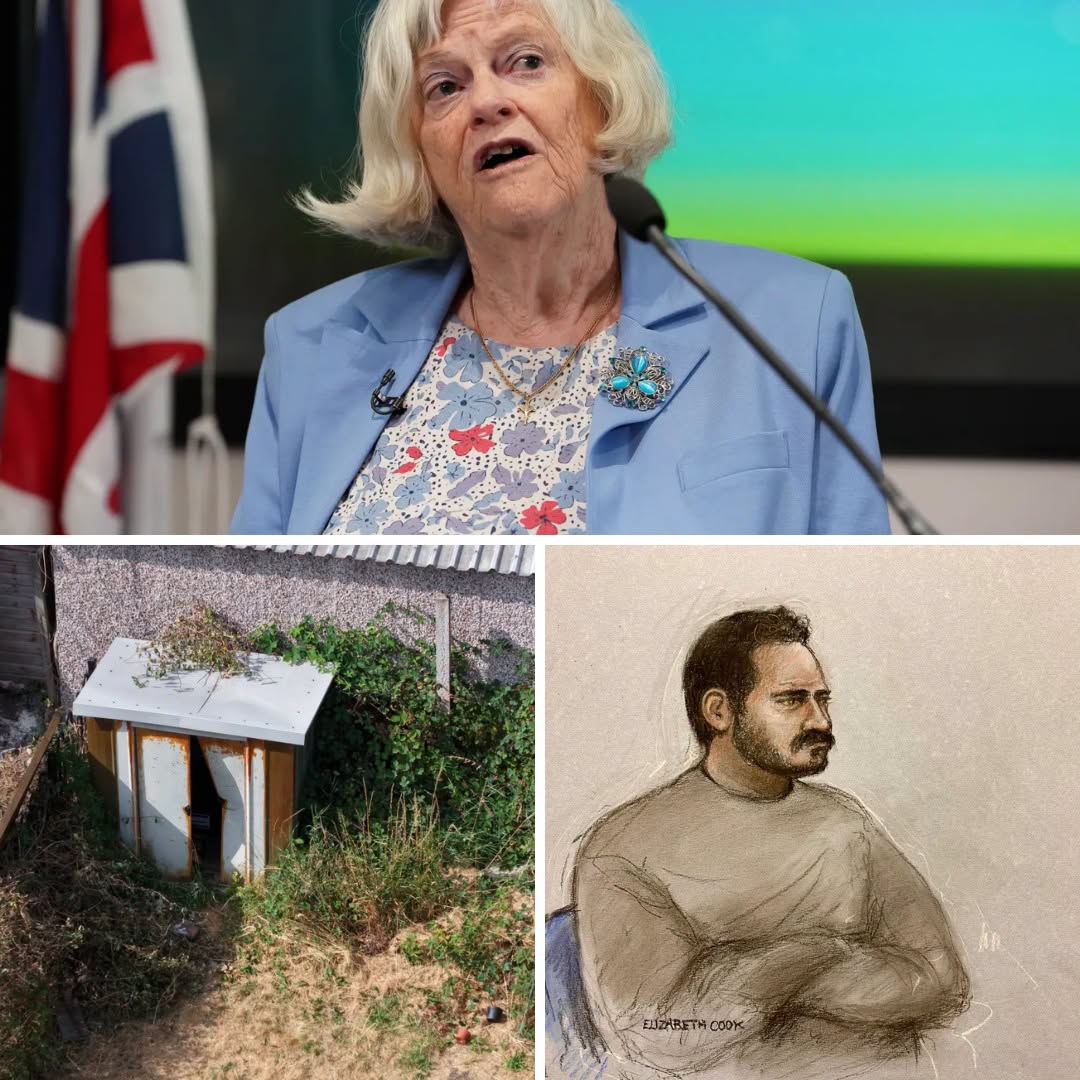
Police are reportedly investigating whether Joshua Kerry, who is suspected in connection with Widdecombe’s death, may also have been linked to an earlier incident involving an incendiary device at the home of Nigel Farage.
Investigators are examining available evidence, including forensic material, CCTV footage and other information, as they work to establish whether there is a connection between the incidents.
Any potential link remains a matter for investigators to establish.
At this stage, an allegation or investigative line of inquiry should not be interpreted as proof that the same person was responsible for separate incidents.
WHY THE DISTINCTION MATTERS
The combination of an unsolved or developing investigation and rapidly spreading social-media claims can create a difficult environment for investigators and the public.
Details that have not been confirmed can quickly become repeated as though they were established facts.
That appears to be the situation surrounding the alleged will.
The idea of a person secretly preparing a final document naturally attracts attention, particularly when connected to a high-profile death. But without verification, the story cannot establish what Widdecombe knew, feared or intended before her death.
For investigators, evidence must be assessed through established procedures rather than through the volume of online discussion surrounding a particular theory.
WHAT COULD HAPPEN NEXT?
The significance of the alleged will, if such a document is eventually authenticated, would depend on its contents, when it was created and whether investigators determine that it has any relevance to the circumstances surrounding Widdecombe’s death.
Until then, there is no sound basis for drawing conclusions from the online claims.
Meanwhile, investigators are continuing to examine evidence related to the wider case, including the reported inquiry into the earlier incendiary-device incident.
Further developments could clarify whether there is a connection between the incidents or whether they are unrelated.
FACTS, QUESTIONS AND UNVERIFIED CLAIMS
For now, several important points should be kept separate:
The alleged private or “secret” will has not been independently verified.
There is no confirmed public evidence establishing that it was found inside a locked box.
The alleged contents or supposed final message have not been reliably disclosed or authenticated.
Police are continuing to examine evidence connected to the wider investigation.
Forensic evidence, CCTV and other investigative material are being reviewed in relation to the reported inquiry involving Joshua Kerry.
A reported investigative connection is not the same as a confirmed finding of responsibility.
As the investigation develops, official statements, court documents and verified reporting will be essential in determining which details are genuine and which originated from online speculation.
For now, one question remains at the center of the public discussion:
Was there really a private final document—and if so, what did it contain?
Until investigators or reliable records provide an answer, the “secret will” remains an unverified claim rather than confirmed evidence.