A 3-Year-Old Began Soaking the Bed and Begging for Water at Night — Then Her Mom Learned What Her Body Was Trying to Say

Benning Richie had already been potty trained, which made the sudden nighttime accidents difficult for her parents to understand.
Again and again, the 3-year-old would wake to a soaked bed. Sometimes she was upset and apologetic, telling her mother she had not meant for it to happen.
At first, there seemed to be several ordinary explanations.
Benning had recently become a big sister after the arrival of baby Demi. Her parents wondered whether the accidents could be a temporary regression connected to the enormous change at home. Perhaps she wanted extra attention. Perhaps her sleep routine had simply been disrupted.
But then another strange pattern appeared.
Benning was constantly thirsty.
She would wake in the middle of the night desperately asking for water. Her thirst seemed difficult to satisfy, even when her parents tried limiting how much she drank before bedtime in hopes of stopping the accidents.
It did not work.
And soon, the thirst and bed-wetting were no longer the only changes her mother noticed.
The Signs Began Adding Up
Benning also seemed unusually hungry.
Young children often go through phases when their appetite changes, so individually, each symptom could be explained away. But together, they began forming a picture that increasingly worried her mother.
Then Benning started losing weight.
That was harder to dismiss.
She was eating, drinking constantly and still becoming thinner.
Her mother knew something was not right.
A visit to the pediatrician followed, although the first possible explanation was not diabetes. Constipation was initially considered as a potential cause of Benning’s symptoms.
Then a urine test changed everything.
The results showed glucose in Benning’s urine, and her blood glucose level was found to be in the 500s.
Suddenly, what had looked like a collection of confusing childhood behaviors became a medical emergency.
Benning needed to go to the hospital.
A Diagnosis Her Family Never Expected
At the hospital, further testing confirmed that Benning had Type 1 diabetes.
For her mother, the diagnosis was overwhelming.
Only hours earlier, she had been trying to understand why her daughter kept wetting the bed and demanding water. Now the family was confronting a lifelong condition that would require constant attention to Benning’s blood sugar.
The family was fortunate in one important respect: doctors believed the diabetes had been discovered early enough that Benning had not suffered organ damage.
Still, the transition was frightening.
What had started as an ordinary pediatric appointment turned into a three-day hospital stay, including several hours in intensive care while doctors worked to stabilize Benning’s blood sugar.
Her parents suddenly had to absorb an enormous amount of information.
They needed to learn how food affected glucose levels. They had to understand carbohydrates, insulin doses and blood sugar readings. They needed to recognize what could happen when Benning’s glucose became too high or dropped too low.
Most difficult of all, they had to perform medical procedures on their own little girl.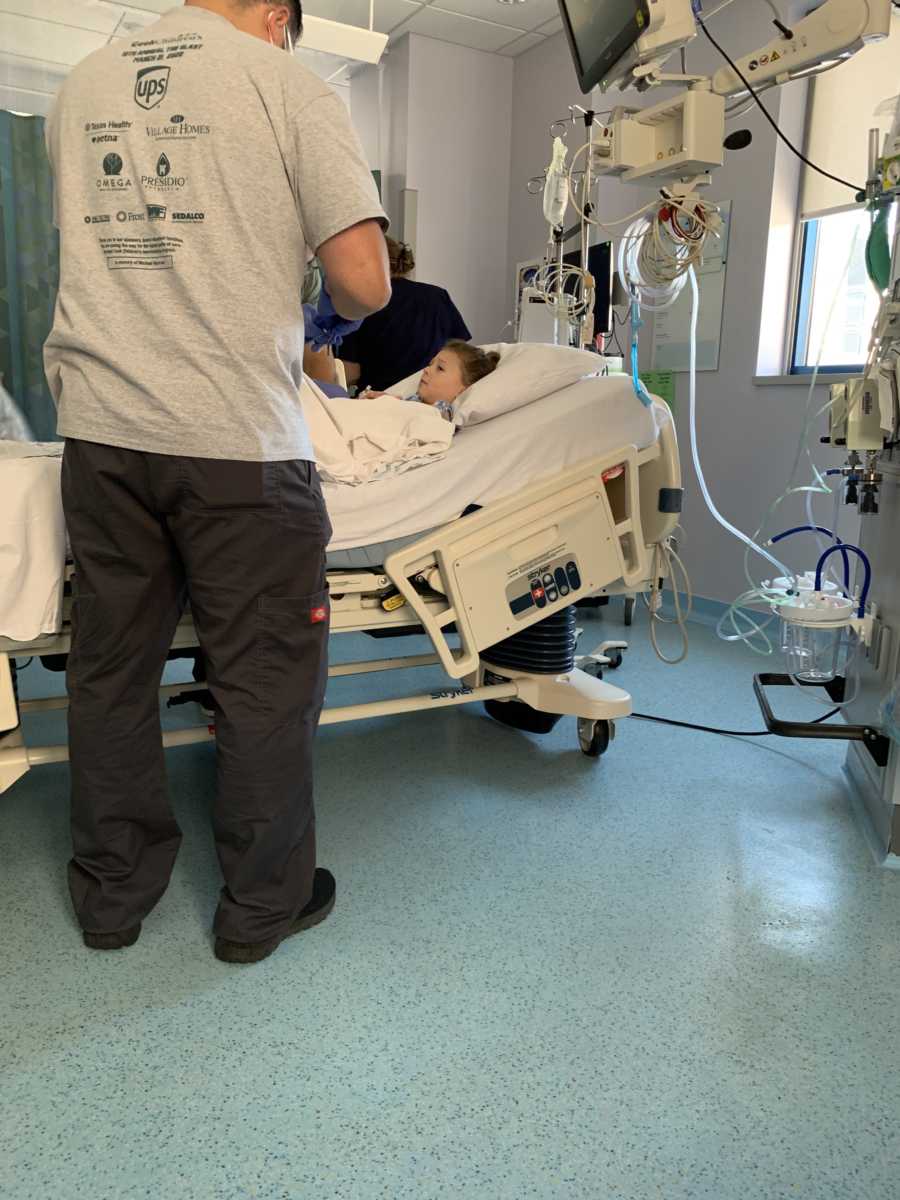
Learning to Care for a Frightened Child
Benning was still only 3.
She could not fully understand why the adults around her suddenly needed to prick her fingers or give her insulin injections.
For her parents, knowing those things were necessary did not make them emotionally easier.
Every calculation mattered.
Meals were no longer simply meals. The amount of carbohydrates Benning ate had to be considered alongside the insulin her body needed.
Nighttime changed too.
Her parents could no longer assume that putting their daughter to bed meant they would see her again in the morning. Her blood sugar sometimes required monitoring during the night.
Home had become a place of numbers, alarms, supplies and constant attention.
But gradually, the family began developing a new rhythm.
About a week after the diagnosis, Benning received a Dexcom G6 continuous glucose monitor. The device allowed her parents to monitor glucose through a sensor, reducing their dependence on repeated finger-stick checks.
For a family suddenly responsible for managing a young child’s diabetes around the clock, the technology became an important part of everyday life.
It did not make Type 1 diabetes disappear.
But it helped them understand what Benning’s body was doing.
Six Months Later, Benning Was Still Benning
The diagnosis changed many things about the family’s routine, but it did not erase the little girl underneath all the medical equipment and calculations.
Six months later, Benning was 4 years old.
She remained energetic and outgoing.
She played soccer. She attended birthday parties. She spent time with other children and continued experiencing the ordinary joys of childhood.
She even became comfortable talking about the device attached to her body, proudly explaining her glucose monitor when other children noticed it.
Behind those ordinary moments, however, her parents were still doing constant work.
They counted carbohydrates.
They adjusted insulin depending on what Benning ate and how active she was.
They watched glucose readings.
Sometimes they still woke her during the night when her blood sugar dropped and needed attention.
Diabetes had become part of the family’s life, but they were determined not to allow it to define everything about Benning’s childhood.
She could still run.
She could still play.
She could still celebrate birthdays, join a soccer game and enjoy being a little girl.
The difference was that her parents were constantly working in the background to make those moments possible.
Looking Back at the Clues
After the diagnosis, the symptoms that once seemed unrelated suddenly made sense.
The nighttime accidents.
The relentless thirst.
The increased hunger.
The weight loss.
Each had been telling the family that something was happening inside Benning’s body.
Her mother could now look back and understand that the soaked beds were not simply a potty-training setback. Benning was not being difficult when she woke desperate for water. Her behavior was not necessarily about adjusting to a new sibling.
Her body had been sending warning signs.
Her mother simply had not known what they meant yet.
That realization became one of the most important lessons the experience left behind.
Parents know the everyday rhythms of their children—the way they eat, sleep, drink, play and behave. Sometimes a single change means very little. But when several unusual changes appear together and persist, paying attention can matter enormously.
For Benning’s family, noticing that something did not feel right ultimately led them to the diagnosis she needed.
Life after Type 1 diabetes required a new kind of normal, one involving insulin, glucose monitoring and careful planning.
But beneath all of it remained the same child who had been there before the diagnosis.
Benning was still playing soccer, going to parties and growing up.
Only now, her family understood what her body had been trying so desperately to tell them.