The Eva Green Performance Kingdom of Heaven Almost Erased — and the Tragedy the Director’s Cut Restored
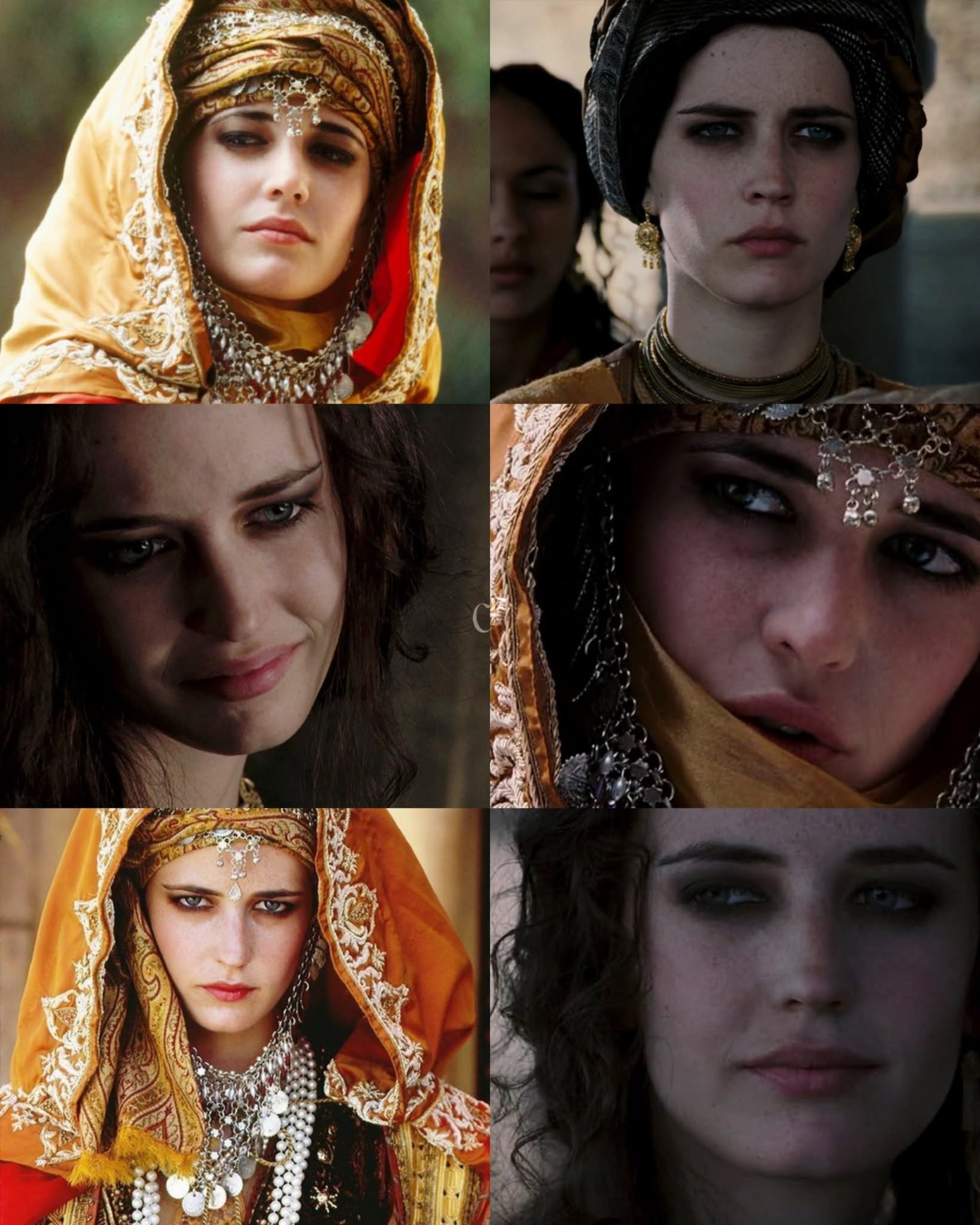
When Kingdom of Heaven arrived in theaters in 2005, Eva Green’s Sibylla of Jerusalem seemed to occupy a familiar place in a historical epic: a royal woman trapped between political duty, an unhappy marriage and a forbidden attraction.
She was elegant, mysterious and clearly aware that Jerusalem was moving toward disaster.
But something about her story felt incomplete.
As the movie progressed, Sibylla became increasingly withdrawn and emotionally shattered, yet the theatrical version gave audiences surprisingly little explanation for that transformation. What moviegoers did not see was an entire storyline involving her young son—a subplot that completely changes the meaning of Eva Green’s performance.
When Ridley Scott’s much longer Director’s Cut was later released, roughly 45 minutes of deleted material returned to the movie.
Among the biggest beneficiaries was Sibylla.
The restored footage did not simply give Green additional scenes. It restored the tragedy that had originally been designed as the emotional center of her character.
The Sibylla Audiences First Met
Set during the years leading to Saladin’s recapture of Jerusalem in 1187, Kingdom of Heaven follows a kingdom already beginning to fracture from within.
Sibylla is the sister of King Baldwin IV, played by Edward Norton. Baldwin suffers from leprosy but attempts to maintain an uneasy peace between Jerusalem and Saladin.
Sibylla’s husband, Guy de Lusignan, represents a very different political force. Guy and the militant faction around him favor confrontation, making him increasingly dangerous to the stability Baldwin has worked to preserve.
Then Balian of Ibelin arrives.
Played by Orlando Bloom, Balian becomes both a military figure in Jerusalem and a romantic escape for Sibylla.
Their attraction dominates much of her role in the theatrical release. Sibylla appears intelligent enough to recognize the disaster approaching and unhappy enough in her marriage to imagine another life.
Yet something important had been removed.
Sibylla was not originally written only as Baldwin’s sister, Guy’s wife and Balian’s lover.
She was also a mother.
And her child was tied directly to the future of Jerusalem.
The Young King Missing From Theaters
In the Director’s Cut, Sibylla has a young son from her previous marriage: Baldwin V.
His existence changes the political stakes of the story immediately.
As Baldwin IV grows weaker, Jerusalem faces a succession crisis. If the king dies without another heir in place, Guy could gain enormous power through his marriage to Sibylla.
Baldwin IV fears what Guy might do with that power.
Young Baldwin offers an alternative.
The boy is eventually crowned as Baldwin V, creating the possibility that Jerusalem might avoid falling directly into Guy’s hands.
For Sibylla, however, the political victory soon becomes a personal nightmare.
She begins noticing something troubling about her son.
The boy appears unable to feel pain.
It is a small detail with enormous meaning because Sibylla has already watched her brother suffer from leprosy.
She understands what the symptom may suggest.
Suddenly, the royal succession, political alliances and even the survival of Jerusalem become secondary to one horrifying possibility: her child may face the same disease that has slowly destroyed Baldwin IV.
The Scene That Changes Eva Green’s Character
The Director’s Cut gives Green time to show Sibylla processing what she believes is happening.
Earlier in the film, she can be playful, confident and politically aware. Once she realizes what her son may be facing, that certainty begins disappearing.
She has already witnessed the physical and emotional toll of Baldwin IV’s illness.
Now she imagines her child enduring the same fate.
What follows is one of the darkest scenes in the extended film.
Believing that she is protecting her son from years of suffering, Sibylla gives the sleeping boy poison and holds him as he dies.
The scene is quiet rather than spectacular.
There is no battle, siege or grand political speech.
Instead, the fate of a kingdom briefly disappears behind the private grief of a mother.
It is also the moment that explains almost everything about the Sibylla audiences see afterward.
Without it, her emotional decline can appear sudden.
With it, her transformation becomes devastatingly understandable.
Why the Theatrical Version Felt Different
Removing the Baldwin V storyline affected much more than one subplot.
It changed the entire progression of Sibylla’s character.
In the theatrical cut, viewers see her move from an intelligent and independent princess toward a darker, more resigned figure. Guy eventually rises to power, Jerusalem moves toward war and Sibylla appears increasingly broken by events around her.
But one of the biggest reasons for that emotional collapse is absent.
In the Director’s Cut, Sibylla has lost almost everything.
Her brother dies.
Her son becomes king.
She then believes she must choose between allowing the child to suffer from a devastating disease or ending his life herself.
Only afterward does she place the crown on Guy.
That moment therefore becomes far more complicated than a simple political decision.
The woman handing Guy the kingdom is already consumed by grief.
Green’s subdued expressions and increasingly distant behavior suddenly carry a different weight. What might have seemed cold or inconsistent in the shorter version becomes the behavior of someone whose private world has already collapsed.
A Film Transformed by Deleted Material
Sibylla was not the only character affected by the theatrical editing.
The Director’s Cut restores significant material throughout Kingdom of Heaven, including more of Balian’s background and additional political relationships within Jerusalem.
The longer version runs approximately three hours and gives many of the film’s decisions more room to develop.
That extra time fundamentally changes the experience.
The theatrical version often moves rapidly between major events. Characters make decisions that can seem abrupt because the scenes explaining their motivations have been shortened or removed.
The Director’s Cut allows those motivations to breathe.
For Sibylla, the difference is especially dramatic because an entire emotional storyline had effectively vanished.
Ridley Scott later made clear that he preferred the extended version, and the Director’s Cut gradually became the edition many fans and critics regarded as the stronger film.
Over the years, Kingdom of Heaven underwent a significant reassessment, with the longer version earning a reputation far better than the movie initially received in theaters.
Two decades after the original release, the Director’s Cut even returned to theaters in a remastered presentation, allowing audiences to revisit the film in the form closest to Scott’s intended version.
The History Behind the Fiction
Sibylla, Baldwin IV and Baldwin V were real historical figures.
Baldwin IV really did rule Jerusalem while suffering from leprosy.
After him, the young Baldwin V became king and died while still a child.
But the film takes major dramatic liberties with what happened.
There is no reliable historical evidence that Sibylla killed Baldwin V, and the exact cause of the young king’s death remains uncertain.
The mercy-killing storyline belongs to the film’s fictionalized interpretation of events.
The historical Sibylla also differed in important ways from Eva Green’s character, particularly regarding her relationship with Guy de Lusignan.
Yet as cinema rather than strict biography, the invented Baldwin V storyline performs an important function.
It connects Sibylla’s family tragedy directly to Jerusalem’s political collapse.
Baldwin IV’s disease is no longer simply the illness of a dying king. Its shadow reaches another generation.
The succession crisis is no longer just a struggle among ambitious nobles.
It becomes a tragedy involving a mother and her child.
The Performance Hidden Inside the Movie
Eva Green was still relatively early in her international film career when she played Sibylla.
The theatrical version showcased her screen presence but removed much of the material demonstrating the full emotional arc she had performed.
The Director’s Cut reveals something very different.
Her Sibylla begins as a woman who still believes she can control pieces of her own life. She challenges expectations, pursues Balian and recognizes the dangerous forces surrounding her brother’s throne.
Then those choices gradually disappear.
Her brother dies.
Her child faces the possibility of the same terrible illness.
Her family collapses.
And eventually Jerusalem itself follows.
That progression makes Sibylla one of Kingdom of Heaven’s most tragic characters rather than simply its romantic heroine.
The battles and enormous siege sequences may provide the movie’s spectacle.
But some of its most painful moments happen far away from the battlefield.
For Eva Green’s Sibylla, the most important war was happening inside the palace—and inside a mother forced by the film’s story to make a choice she could never undo.
The theatrical cut removed much of that tragedy.
The Director’s Cut finally gave it back.