“ONE OF THE HARDEST DAYS IN COURT” — EMOTIONAL TESTIMONY DEEPLY AFFECTS LINDSAY CLANCY TRIAL

“ONE OF THE HARDEST DAYS IN COURT” — EMOTIONAL TESTIMONY DEEPLY AFFECTS LINDSAY CLANCY TRIAL
Medical examiners delivered emotionally difficult testimony concerning the deaths of Cora and Dawson Clancy as prosecutors presented evidence during the Lindsay Clancy trial. Jurors were visibly affected by the proceedings, while Clancy herself became overwhelmed and the court took several breaks. The testimony marked another intense stage in a case centered on both the deaths of her children and the question of her mental state.
DUXBURY, MASSACHUSETTS — The Lindsay Clancy trial entered one of its most emotionally difficult phases as medical examiners took the witness stand and prosecutors presented evidence concerning the deaths of Clancy’s children, Cora and Dawson.
The courtroom was visibly affected by the testimony.
Jurors reportedly struggled with the emotional weight of the evidence, with at least one juror becoming tearful during the proceedings. Clancy herself was also overcome with emotion and repeatedly indicated that she could not continue listening.
The judge called several breaks as the courtroom attempted to manage the intensity of the testimony.
The evidence formed part of the prosecution’s broader case while the defense continues to argue that Clancy was experiencing a severe psychiatric crisis at the time of the tragedy.
MEDICAL EXAMINERS TAKE THE STAND
Medical examiners provided testimony concerning the circumstances surrounding the children’s deaths.
Their evidence is among the most consequential material being presented to jurors because medical findings can help establish what happened, when injuries occurred and other circumstances surrounding a death.
Prosecutors used the testimony to support their account of the events.
The defense, meanwhile, continues to focus on Clancy’s mental state and the psychiatric issues that preceded the tragedy.
As the trial progresses, jurors are being asked to consider the medical evidence alongside psychiatric testimony, witness accounts and other evidence introduced by both sides.
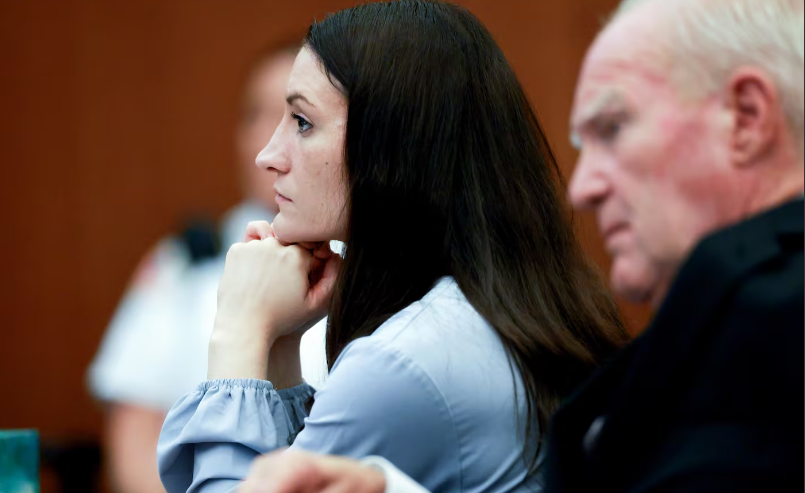 AN EMOTIONAL COURTROOM
The testimony proved difficult not only for the families involved but also for people inside the courtroom.
Jurors are required to remain attentive to evidence even when that evidence is emotionally overwhelming.
Reports from the proceedings indicated that the atmosphere became particularly intense as the medical testimony unfolded.
Clancy reportedly became visibly distressed and repeatedly said she could not continue.
The judge subsequently called breaks, allowing the proceedings to pause before testimony resumed.
Such interruptions underscore the extraordinary emotional circumstances surrounding the trial.
 THE CASE GOES BEYOND THE MEDICAL EVIDENCE
Although the medical evidence is central to the prosecution’s case, the trial is also examining what happened in the months leading up to the January 2023 tragedy.
Earlier testimony has focused extensively on Clancy’s mental health, including severe sleep problems, anxiety, troubling thoughts and the treatment she received before the deaths.
The defense has argued that Clancy was suffering from a serious postpartum psychiatric condition that affected her perception of reality and should have a significant impact on her criminal responsibility.
Prosecutors have presented a different interpretation of the evidence.
The jury will ultimately have to determine how the competing explanations fit with the facts presented in court.
THE ROLE OF FIRST RESPONDERS
Outside the courtroom, renewed attention has also focused on the first responders who arrived at the Duxbury home that night.
Police officers, firefighters, paramedics and other emergency personnel were confronted with an extraordinarily difficult scene.
Their actions have been remembered by many as an example of the demands placed on emergency workers during traumatic incidents.
First responders are often required to act immediately, even when circumstances are emotionally overwhelming and information is incomplete.
Their role in the aftermath of the tragedy is therefore another important part of the broader story surrounding the case.
WHAT THE JURY MUST CONSIDER
The emotional nature of the testimony does not determine the legal outcome.
Jurors must ultimately evaluate the evidence presented in court and decide which conclusions are supported by the facts and applicable law.
That includes the medical findings, testimony from experts, evidence concerning Clancy’s mental health and the competing arguments from prosecutors and defense attorneys.
The defense maintains that Clancy’s psychiatric condition is critical to understanding her actions.
The prosecution argues for a different interpretation of the evidence and her responsibility for what occurred.
A CASE DEFINED BY TWO QUESTIONS
As testimony continues, two central questions remain intertwined.
The first concerns what happened to Cora and Dawson and what the medical evidence can establish about their deaths.
The second concerns Lindsay Clancy’s mental state and whether her psychiatric condition affected her legal responsibility at the time.
Those questions are being examined through different forms of evidence, meaning the jury must consider the entire record rather than any single emotional moment in court.
THE HUMAN COST
For the families, the proceedings are about far more than legal arguments.
Every piece of medical evidence represents another reminder of an irreversible tragedy.
For jurors, the challenge is equally difficult: they must listen to deeply distressing evidence while maintaining the focus required to reach a fair verdict.
And for the emergency workers who responded that night, the case remains connected to one of the most difficult calls they were ever asked to answer.
The proceedings continue, with jurors expected to hear further testimony and arguments before they are ultimately asked to reach a decision.
The prosecution and defense continue to present competing interpretations of the evidence, and allegations and arguments made in court should not be treated as findings until the legal process is complete.