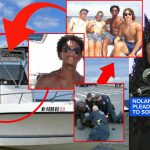
“THAT DOESN’T SOUND LIKE NOLAN…” — HIS BEST FRIEND SPEAKS OUT AS ONE VIRAL HORN ISLAND VIDEO COMES UNDER NEW SCRUTINY
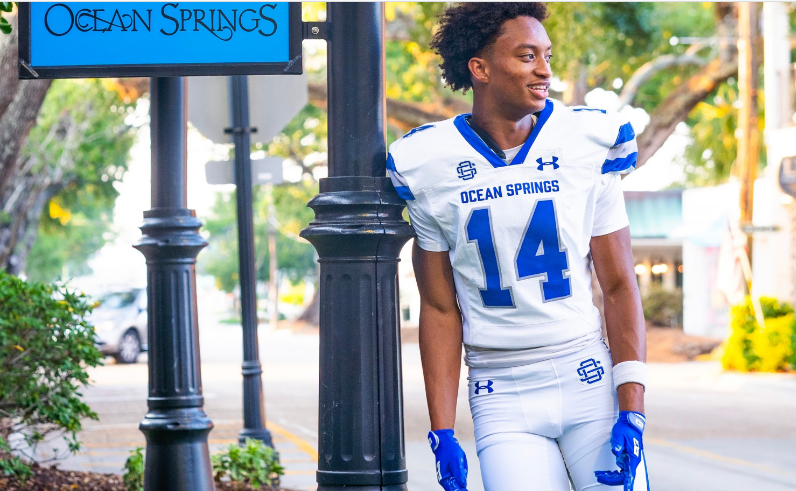
“THAT DOESN’T SOUND LIKE NOLAN…” — HIS BEST FRIEND SPEAKS OUT AS ONE VIRAL HORN ISLAND VIDEO COMES UNDER NEW SCRUTINY
A voice. A video. A missing timeline. And a best friend who says something about the footage simply doesn’t add up.
The mystery surrounding the death of 18-year-old Nolan Wells has taken another emotional turn after one of his longtime friends publicly questioned a crucial piece of video evidence circulating online.
Javvon Williams, described as one of Nolan’s closest friends, has now spoken publicly about what he says he witnessed around the time of Nolan’s disappearance on Horn Island.
His message is simple:
He wants answers.
And he believes people should be careful before deciding that every video, every voice and every online claim tells the complete story.
According to the article circulating online, Williams says the voice heard in a widely shared argument video is not Nolan’s voice.
If independently verified, that could matter.
But for now, it remains Williams’ claim, not an established forensic finding.
And that distinction is crucial.
“THAT’S MY BOY. I WANT HIM TO GET JUSTICE.”
Those words capture the emotion behind Williams’ decision to speak.
He isn’t presenting himself as a detective.
He isn’t publicly naming someone as responsible for Nolan’s death.
Instead, he is questioning whether the public has been looking at the available material correctly.
That is particularly significant because the Nolan Wells investigation has become heavily dependent on videos, photographs, social-media posts and eyewitness accounts.
Some pieces of information have been verified.
Others remain disputed.
And some material circulating online has already been shown to be unreliable.
That creates a difficult situation.
The public wants answers immediately.
Investigators need time to verify evidence.
And Nolan’s friends and family are left trying to make sense of a tragedy that still contains major unanswered questions.
THE VIDEO THAT WON’T GO AWAY
One of the most discussed pieces of online material is a video that reportedly captures an argument on or around Horn Island.
For weeks, people have debated the identity of the person whose voice can be heard.
Was it Nolan?
Was it someone else?
Was the recording taken at the time people claim?
What exactly was happening immediately before and after the portion that circulated online?
Williams now says the voice is not Nolan’s.
That immediately raises a bigger question:
Has the video been properly authenticated?
A social-media clip can look convincing while still leaving major questions unanswered.
Investigators would need to determine the original source of the recording, its complete length, when it was created, who recorded it and whether the audio has been edited or compressed.
They would also need to compare the voice with verified recordings of Nolan.
Only then could a professional voice comparison potentially determine whether the person speaking is actually Nolan.
Until that happens, Williams’ statement should be treated as an important lead — not proof.
WHY HIS ACCOUNT COULD MATTER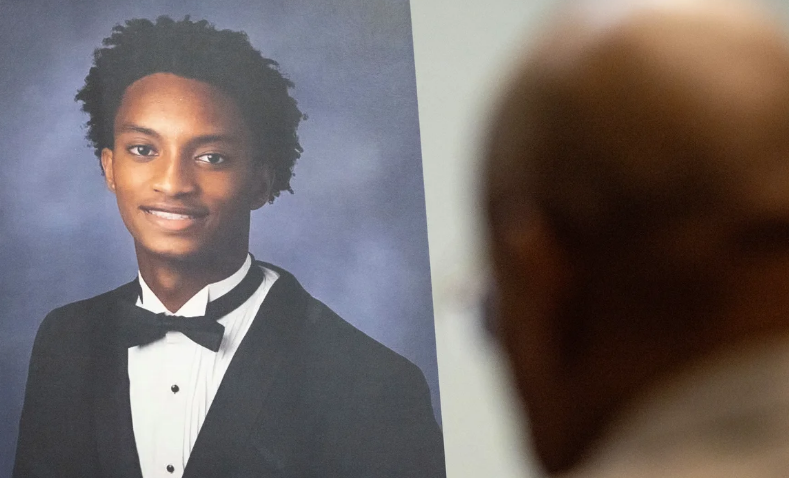
The article says Williams was on Horn Island around the time of the events surrounding Nolan’s disappearance and believes investigators never contacted him despite his relationship with Nolan and his presence in the area.
If that account is accurate, it raises a reasonable investigative question:
Was every potentially relevant witness interviewed?
That doesn’t mean investigators ignored evidence.
It doesn’t mean authorities intentionally overlooked Williams.
And it certainly doesn’t prove a cover-up.
There can be many reasons a particular witness may not immediately be contacted or may not have been considered central at a particular stage of an investigation.
But if Williams has firsthand information about Nolan’s movements, conversations or the people around him, his account could potentially help investigators compare different versions of the timeline.
That is what matters.
Not whether his story is dramatic.
Whether it can be verified.
THE TIMELINE IS STILL THE BIGGEST PUZZLE
The documented timeline already contains a crucial gap.
Nolan traveled to Horn Island with friends on July 4.
The boat arrived around 11:14 a.m.
Authorities and friends have said Nolan was last seen around 3 p.m.
The boat later left the island at approximately 4:31 p.m.
Nolan was not aboard.
His body was found in the water near Horn Island on July 6.
That leaves investigators with a critical period in which Nolan’s movements need to be reconstructed.
Where was he?
Who was with him?
What conversations took place?
Did he intend to remain on the island?
Did he attempt to leave?
What happened after his friends departed?
And when did anyone first realize that something was wrong?
These questions are more important than any single viral theory.
THE STORY ABOUT NOLAN STAYING BEHIND IS ALSO DISPUTED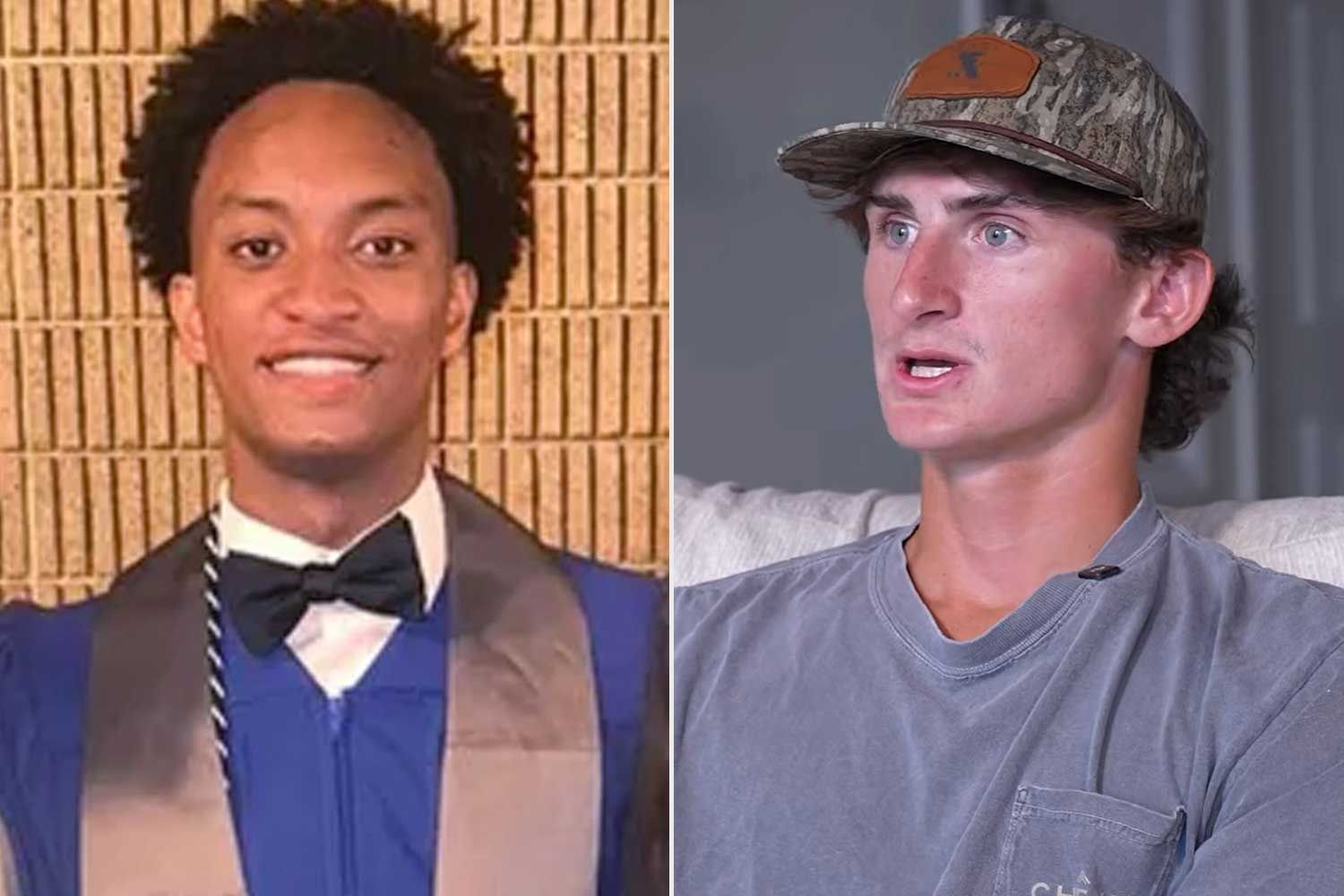
One of the most important disagreements surrounding the case concerns why Nolan wasn’t on the boat when it left.
Warren Hudson has said Nolan chose to remain on the island after meeting a young woman. Other reporting has also described the friends’ account that Nolan intended to stay behind.
But the Wells family has questioned that explanation.
That disagreement doesn’t prove either side is lying.
It demonstrates why investigators need to establish the timeline using evidence independent of individual recollections.
A witness may remember an event differently.
A timestamp can be wrong.
A photograph can be misidentified.
A video can be incomplete.
A phone can be separated from its owner.
That is why the case cannot be solved by one statement alone.
AND THEN THERE IS NOLAN’S PHONE
Nolan’s phone has become another major piece of the investigation.
His family has raised questions about the device and missing digital material, while authorities and attorneys have been working toward examining the phone and other digital evidence. The independent investigation has also focused on communications and electronic records that could help reconstruct Nolan’s final hours.
That could be extremely important.
If investigators can establish when Nolan’s phone was last used, they may be able to create another reference point.
Who did he communicate with?
When was the final call?
Was there activity after he was last seen?
Were photographs or messages created?
Does the digital timeline match the accounts provided by witnesses?
The answers could either support existing accounts or raise new questions.
But again, a discrepancy is not automatically evidence of wrongdoing.
It is a reason to investigate further.
THE BOAT RAISES QUESTIONS TOO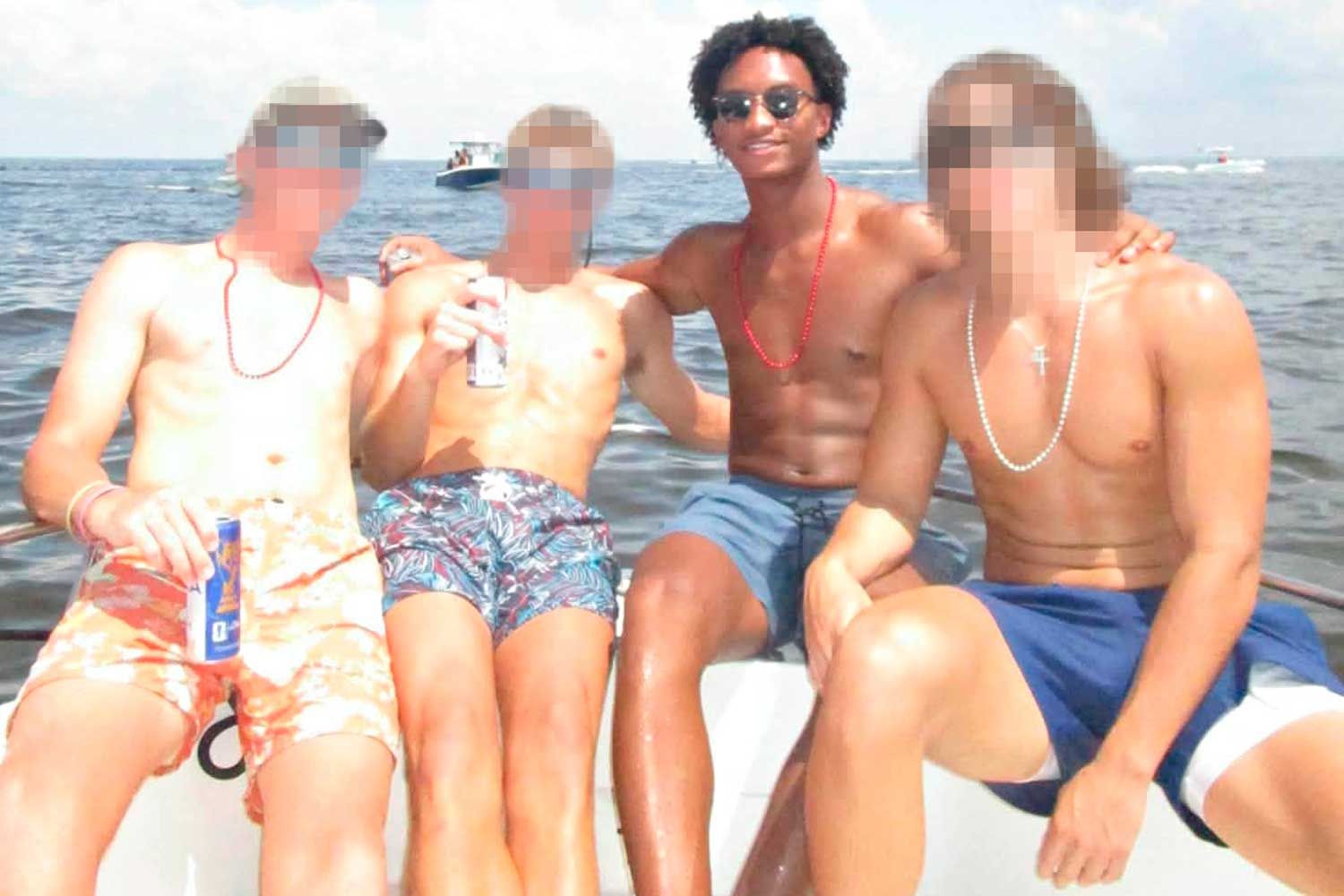
The boat’s movements have also become an important part of the reconstruction.
According to data obtained by CBS and reported by WLOX, the vessel departed the private dock around 9:56 a.m., reached Horn Island at approximately 11:14 a.m. and left the island around 4:31 p.m.
The boat later traveled toward Fort Bayou before returning to the dock.
Audio released by ABC also reportedly captured one of the teenagers contacting a towing company around 4 p.m. and saying the boat was taking on water.
That information provides important context for the friends’ explanation that the group left because of problems with the boat.
But it doesn’t by itself answer the most important question:
Why wasn’t Nolan on board?
That remains one of the central issues in the case.
WHAT DID NOLAN’S BEST FRIEND SEE?
This is where Williams’ account becomes potentially important.
If he was on the island during the relevant period, investigators could compare his observations with:
- The known boat timeline
- Photographs and videos
- Phone records
- Witness statements
- GPS information
- The location where Nolan was last seen
- Statements from other people at the gathering
If those independent sources all point in the same direction, confidence in the timeline increases.
If they contradict each other, investigators have another problem to solve.
That’s how the truth is eventually separated from speculation.
THE VOICE QUESTION COULD BE BIGGER THAN IT LOOKS
Imagine investigators determine that the voice in the viral video really isn’t Nolan.
That wouldn’t automatically tell them what happened to him.
But it could eliminate one assumption that has influenced online discussions.
That matters.
Investigations aren’t only about discovering new evidence.
They’re also about eliminating incorrect interpretations.
If a video has repeatedly been described as showing Nolan arguing with someone, but forensic analysis later determines that the speaker wasn’t Nolan, the public understanding of that moment would have to change.
The timeline would have to be rewritten.
Other witnesses would have to be reconsidered.
And investigators would have another reason to examine who actually appears in the footage.
BUT SOCIAL MEDIA HAS A PROBLEM
The Nolan Wells case has become a perfect example of how quickly an unresolved investigation can turn into an online mystery.
A short clip appears.
Someone identifies a voice.
Someone else claims the person isn’t Nolan.
Another account creates a timeline.
A screenshot appears.
Then a theory emerges.
Within hours, thousands of people may believe the theory is established fact.
But that’s not how evidence works.
A viral video isn’t automatically authenticated.
A screenshot isn’t automatically original.
An eyewitness isn’t automatically correct.
And a theory isn’t automatically a conclusion.
The case has also been affected by misinformation and AI-generated material circulating online, making verification even more important.
WHAT WE KNOW — AND WHAT WE DON’T
At this point, several facts are relatively clear.
Nolan was 18.
He went to Horn Island for a July 4 gathering.
He was separated from the group before the boat returned.
His body was found two days later.
Authorities initially suspected drowning, while the investigation remained active.
An independent autopsy commissioned by Nolan’s family later listed the cause and manner of death as undetermined, citing limitations including decomposition and the earlier examination; foul play was not ruled out.
What remains unresolved is precisely what happened between Nolan’s last confirmed movements and the discovery of his body.
And that is where witness accounts such as Williams’ may become relevant.
THE MOST IMPORTANT THING JAVVON WILLIAMS IS ASKING FOR
Not revenge.
Not an internet trial.
Not a social-media verdict.
According to the article, Williams’ message is that Nolan mattered to him and that he wants the truth about what happened to his friend.
That sentiment is shared by Nolan’s family.
But achieving that goal requires evidence.
It requires investigators to examine every credible witness.
It requires original photographs and videos.
It requires digital forensics.
It requires a verified timeline.
And it requires the public to distinguish between a question and an accusation.
ONE VOICE COULD CHANGE THE WAY PEOPLE SEE ONE VIDEO
The most intriguing part of Williams’ account is not that he claims to know exactly what happened to Nolan.
It is that he is challenging an assumption about a piece of evidence that has already been widely discussed.
If the voice in the video is indeed not Nolan’s, investigators may need to reconsider how that footage has been interpreted.
If the voice is confirmed to be Nolan’s, Williams’ claim can be resolved and the investigation can move forward with greater certainty.
Either way, authentication matters.
Because the truth doesn’t depend on which version gets the most views.
It depends on what can be proven.
THE MISSING HOURS STILL HAUNT THE CASE
Nolan went to an island expecting to spend a holiday with friends.
He never came home.
His family has spent weeks searching for an explanation.
His friends have faced intense public scrutiny.
Lawyers have launched competing investigations.
Witnesses have begun speaking publicly.
And now another close friend is saying that at least one widely circulated piece of video may not show what people think it shows.
That doesn’t solve the mystery.
But it adds another question to an already complicated investigation:
If that isn’t Nolan’s voice… whose voice is it?
And perhaps the bigger question:
What else has the public misunderstood about those final hours on Horn Island?
For now, Javvon Williams’ account should be treated as a witness perspective that requires independent verification.
But if investigators can authenticate the video, establish who was speaking and place the footage precisely within the July 4 timeline, that small piece of evidence could help separate what people think happened from what the evidence can actually prove.
Nolan’s story still has missing pieces.
And somewhere inside those missing pieces may be the answer his family and friends have been searching for.