Marvel Is Bringing Old Avengers Back — So Why Is Scarlett Johansson Still Saying No to Black Widow?
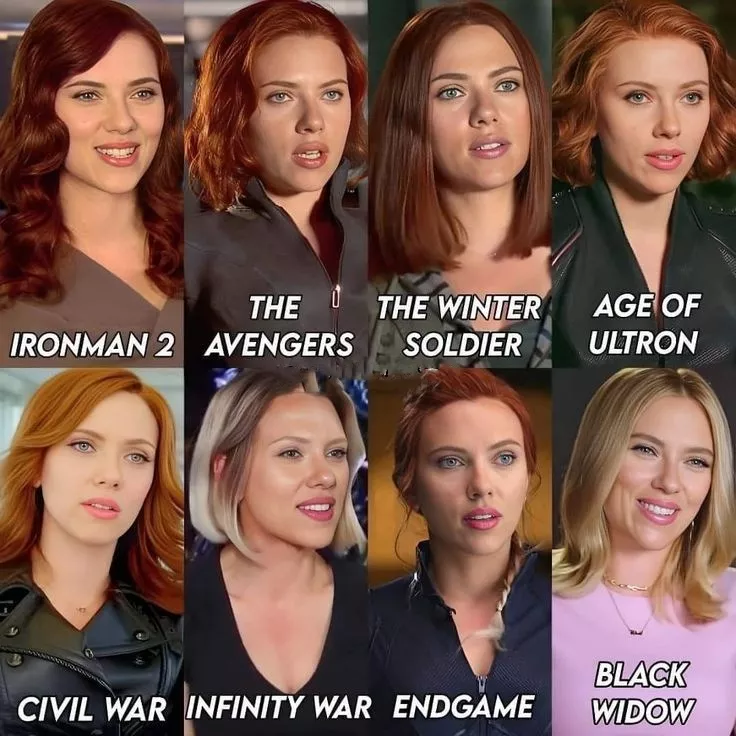
Seven years ago, three women appeared to hold enormous pieces of Marvel’s future.
Natasha Romanoff was one of the six original Avengers, the spy who had stood beside Iron Man, Captain America, Thor, Hulk and Hawkeye since the team first assembled.
Carol Danvers arrived just before Avengers: Endgame as Captain Marvel, one of the most powerful heroes the MCU had introduced.
Then Wanda Maximoff moved from supporting Avenger to the emotional center of WandaVision and, later, one of the most consequential characters in Doctor Strange in the Multiverse of Madness.
Now Marvel is preparing Avengers: Doomsday for its Dec. 18, 2026 release, and something curious has happened.
Chris Evans is officially back as Steve Rogers. Robert Downey Jr., whose Tony Stark died saving the universe in Endgame, has returned to the MCU in an entirely different role as Doctor Doom. The movie is assembling Avengers veterans, Fantastic Four heroes, X-Men characters and newer MCU faces into another enormous crossover.
Yet Scarlett Johansson’s Black Widow remains absent.
And unlike several other missing Marvel heroes, Johansson is not merely refusing to reveal a secret.
She has spent the past year explaining why she believes Natasha should stay gone.
Black Widow Has the Clearest Ending of Them All
Natasha’s MCU story reached its conclusion on Vormir in Avengers: Endgame.
She and Clint Barton traveled there seeking the Soul Stone, only to learn that obtaining it required the sacrifice of someone they loved. Both tried to save the other. Natasha ultimately fell, allowing Clint to return with the Stone and helping make the Avengers’ eventual victory over Thanos possible.
Marvel later gave Johansson the long-awaited Black Widow solo movie in 2021, but it did not reverse that death. The story was set earlier in Natasha’s life, following the events of Captain America: Civil War.
That distinction matters because Johansson does not speak about Black Widow as a character waiting for the right comeback.
She speaks about her as a character whose story worked because it ended.
In March 2025, Johansson could hardly have been clearer when asked about fans hoping Natasha might return.
“Natasha is dead,” she told InStyle, repeating the point several times before arguing that audiences should allow the character to keep the heroic moment she earned.
Two months later, she explained the idea in less blunt but perhaps more revealing terms. Johansson told Vanity Fair that she missed her Marvel castmates, but believed Natasha’s story was “complete” and said she did not want to disturb that conclusion.
That makes her position especially striking now.
Because Marvel itself has become increasingly comfortable reopening doors that once looked closed.
Steve Rogers Changes the Question
At the end of Endgame, Steve Rogers returned the Infinity Stones and then chose not to come back immediately. He lived the life with Peggy Carter that history had denied him and eventually appeared as an elderly man, passing the Captain America shield to Sam Wilson.
For years, that scene felt like Chris Evans’ farewell.
It no longer is.
Marvel officially revealed Steve’s return in Doomsday, and by July 2026 Evans was openly discussing what it felt like to make another Avengers movie after seven years away. He told Entertainment Weekly that working on Doomsday reminded him of filming the first Avengers because he once again found himself watching his costars in amazement.
Downey’s comeback is different. Marvel is not simply resurrecting Tony Stark. The actor is playing Victor von Doom, preserving Tony’s Endgame sacrifice while bringing one of the MCU’s most recognizable faces back into its biggest franchise.
Those distinctions are important.
But they also explain why fans keep asking Johansson the same question.
If Marvel can find a new story for Steve Rogers and an entirely new identity for Robert Downey Jr., is Natasha Romanoff truly the one original Avenger whose ending cannot be touched?
Johansson’s answer, so far, appears to be yes.:max_bytes(150000):strip_icc()/chris-evans-avengers-doomsday-122325-d3919335957d47c1ae0f49a3981563bf.jpg)
Scarlet Witch Is a Much Murkier Case
Elizabeth Olsen’s Wanda Maximoff occupies almost the opposite position.
Natasha received an unmistakable sacrifice scene. Wanda disappeared beneath a collapsing Mount Wundagore at the end of Multiverse of Madness after realizing what the Darkhold had turned her into and destroying its copies across the multiverse.
The film treated the moment like a sacrifice and writer Michael Waldron later described Wanda as “apparently dying,” but he also immediately acknowledged the storytelling possibilities created by an infinite multiverse.
That small distinction has fueled years of theories.
Wanda could truly be dead. Marvel could be reserving her for another project. An alternate version could eventually appear. Or Multiverse of Madness may prove to have been the ending of this version of Scarlet Witch.
For now, those remain possibilities rather than confirmed plans.
In March 2026, Olsen said she knew “nothing” about Doomsday when asked about the film, and her name has not been part of Marvel’s publicly announced ensemble.
That uncertainty is exactly what Natasha does not have.
Captain Marvel May Be the Strangest Absence
Then there is Carol Danvers.
Captain Marvel did not die.
She was still alive when The Marvels ended, after Carol, Monica Rambeau and Kamala Khan confronted Dar-Benn. Monica became stranded in another reality after helping close a dimensional rupture, while Carol’s story remained open.
So unlike Natasha, Carol has no heroic death explaining her absence.
Unlike Wanda, she was not last seen beneath a collapsing mountain.
Yet Brie Larson was not among the original Doomsday cast announcement, and she has continued to avoid confirming whether Captain Marvel will appear.
When Entertainment Tonight asked her about Carol’s whereabouts at an April 2026 premiere, Larson replied, “You know I can’t talk about that,” before adding, “Nice try.”
That is not confirmation.
It is also not a denial.
And as Marvel has repeatedly demonstrated, an announced cast list does not necessarily reveal every surprise. Steve Rogers himself was not part of the original March 2025 chair-reveal lineup before Marvel later confirmed Evans’ return.
So Captain Marvel’s status remains unusually difficult to read.
Natasha has a reason to be absent.
Wanda has an apparent death and a deliberately unresolved future.
But Carol?
Marvel has not yet provided a simple answer.
Meanwhile, Another Generation Is Already Moving In
Perhaps the clearest clue about Marvel’s direction is not who is missing from Doomsday, but who is already there.
Florence Pugh is returning as Yelena Belova. Vanessa Kirby is part of the ensemble as Sue Storm, the Invisible Woman. Letitia Wright returns as Shuri. They are joined by heroes from Thunderbolts, Black Panther, Fantastic Four, the older X-Men films and multiple generations of Marvel storytelling.
Yelena’s presence is particularly meaningful.
Natasha Romanoff is not coming back.
Her younger sister is.
That may ultimately say more about Marvel’s post-Endgame strategy than any resurrection theory. The studio does not necessarily need to restore every hero who once carried the franchise. In some cases, it can transfer their relationships, emotional weight and place within the larger universe to someone new.
Johansson has even suggested she could imagine returning to Marvel behind the camera rather than as Natasha, expressing interest in the kind of large-scale storytelling that can still preserve human relationships.
For a franchise now bringing together Steve Rogers, Doctor Doom, the Fantastic Four, veteran X-Men and a new generation of Avengers, almost any comeback seems possible.
Black Widow is different because the person who played her does not appear interested in proving that anything is possible.
Johansson wants Natasha’s sacrifice to remain what Endgame made it: an ending.
And in a cinematic universe increasingly built around second chances, variants and returning faces, refusing one more resurrection may be the most unusual choice Marvel can make.