LINDSAY CLANCY TRIAL: DISTURBING GOOGLE SEARCHES REVEALED IN COURT

LINDSAY CLANCY TRIAL: DISTURBING GOOGLE SEARCHES REVEALED IN COURT
New testimony has revealed a series of alarming internet searches made by Lindsay Clancy before the January 2023 deaths of her three children. Prosecutors and defense attorneys are now offering sharply different interpretations of what those searches reveal about her state of mind.
SEARCHES MADE BEFORE THE TRAGEDY
Massachusetts State Police investigators testified about searches found on Clancy’s phone, including terms involving psychosis, hallucinations, suicide methods and psychiatric medications.
Four days before the deaths, her phone was used to search:
“Can you treat a sociopath?”
Investigators also described searches involving psychosis symptoms, bipolar disorder, schizophrenia and other mental-health topics.
THE PROSECUTION AND DEFENSE SEE DIFFERENT STORIES
The digital evidence has become an important part of the courtroom battle over Clancy’s mental state.
Prosecutors argue that some of the searches and other digital activity can be interpreted as evidence of planning and intent.
The defense argues that the same records demonstrate a woman experiencing severe psychiatric deterioration, including postpartum psychosis, and seeking information about disturbing symptoms.
That disagreement is central to the case.
 THE SEARCHES STRETCHED BACK MONTHS
Investigators testified that the digital history did not begin immediately before January 24, 2023.
Some searches related to mental health and suicide were traced back to August 2022, while later searches included questions about medications and psychiatric symptoms.
The defense is using that longer timeline to argue that Clancy had been struggling for months and had repeatedly sought help.
ONE SEARCH DOESN’T ANSWER THE LEGAL QUESTION
A disturbing search can raise serious questions.
But a search alone does not establish why it was made, what the person intended to do with the information, or whether it proves criminal responsibility.
That is why jurors must consider the digital evidence alongside the medical testimony, witness accounts, messages, prescriptions and other evidence presented during the trial.
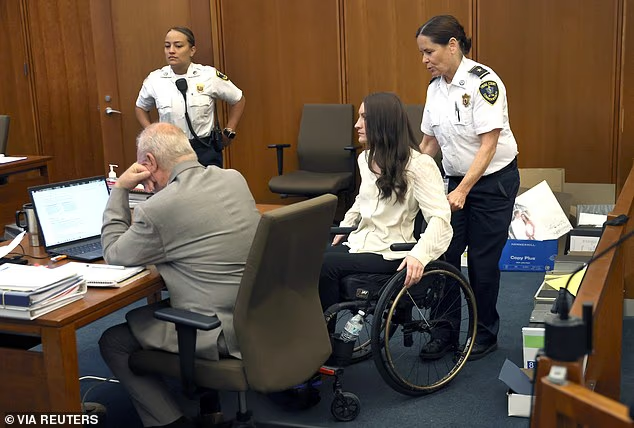 THE QUESTION NOW BEFORE THE JURY
Clancy has pleaded not guilty to three murder charges.
Her defense acknowledges that she killed her children but argues that severe mental illness left her legally incapable of being held criminally responsible. Prosecutors dispute that interpretation.
So the question is not simply:
“What did Lindsay Clancy search?”
It is:
WHAT DID THOSE SEARCHES MEAN — AND WHAT DO THEY REVEAL ABOUT HER STATE OF MIND BEFORE THE TRAGEDY?
Digital evidence is now a major part of the trial.
Mental illness remains at the center of the defense.
Prosecutors and defense attorneys disagree over what the searches demonstrate.
And the jury will ultimately have to decide how those pieces fit into the larger evidence.
This post summarizes publicly reported courtroom evidence. The meaning and significance of the searches are disputed, and no verdict has been reached.