ISABELLE WELSH: THE POLICE FAILURE THAT IS NOW RAISING SERIOUS QUESTIONS
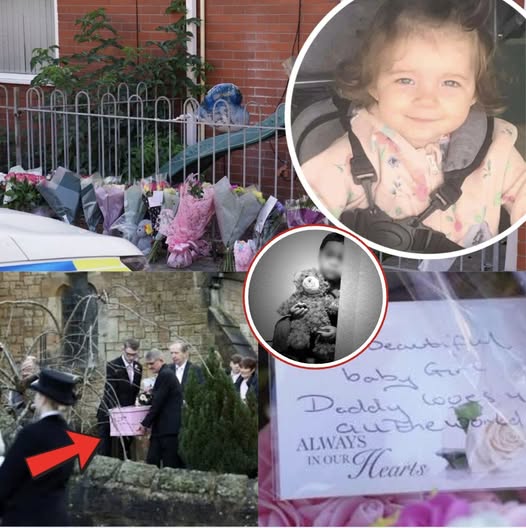
ISABELLE WELSH: THE POLICE FAILURE THAT IS NOW RAISING SERIOUS QUESTIONS
A devastating new detail has emerged following the murder of two-year-old Isabelle Rose Welsh — and it concerns what happened before her final weeks of abuse.
Cleveland Police has acknowledged that officers failed to execute an arrest warrant against Harrison Simpson, the man who was later convicted of murdering Isabelle.
The warrant had been issued in March 2024, around 18 months before Isabelle died.
 THE WARNING THAT DIDN’T LEAD TO AN ARREST
Simpson had failed to attend court after allegedly breaching a non-molestation order, a legal protection designed to safeguard someone from domestic abuse.
A magistrates’ court subsequently issued a warrant for his arrest.
But according to evidence reported by The Guardian, that warrant was never successfully executed.
Cleveland Police said officers made multiple inquiries and attempted to locate and arrest Simpson, but those efforts were unsuccessful.
The force has since acknowledged that the length of time the warrant remained outstanding was “far from adequate.”
18 MONTHS LATER, A CHILD WAS DEAD
Isabelle died on 14 September 2025 after what prosecutors described as a prolonged campaign of violence.
She had suffered 21 broken bones and numerous other injuries.
Her mother, Alexandra Walker, and Walker’s boyfriend, Harrison Simpson, were subsequently convicted of murder and child cruelty.
Simpson was also convicted of sexually assaulting Isabelle. Walker was cleared of that specific sexual-assault charge.
Both were sentenced to life imprisonment.
Simpson received a minimum term of 28 years and six months, while Walker received a minimum term of 22 years, less time already spent on remand.
THE QUESTION NOW HANGING OVER CLEVELAND POLICE
The most difficult question is not whether police knew Simpson existed.
They did.
There was an outstanding arrest warrant.
The question is:
Why was that warrant still outstanding when Simpson was later living with Isabelle?
That does not automatically establish that Isabelle could have been saved.
It would be wrong to claim that executing the warrant would certainly have prevented her murder.
But the failure has inevitably raised questions about whether earlier intervention could have changed what happened next.
 POLICE SAY CHANGES HAVE ALREADY BEEN MADE
Cleveland Police says a review was launched after Simpson’s arrest for murder.
The force says it has since introduced measures including:
Better visibility of outstanding warrants
A comprehensive system for tracking warrants
Greater oversight of outstanding arrests
A governance group led by a superintendent
The changes are intended to reduce the risk of similar failures happening again.
ISABELLE’S FINAL MONTHS
The court heard that Isabelle endured a prolonged period of serious abuse before her death.
The sentencing judge described what happened to the toddler as a “sadistic” campaign of abuse.
The senior investigating officer described the case as one of the worst he had dealt with, highlighting the suffering Isabelle experienced.
For her family, however, the story is not simply about police procedures or court documents.
It is about a two-year-old child who should have been protected by the adults around her.
THE BIGGER ISSUE
The Isabelle Welsh case now raises a broader question about how the criminal justice system handles people who are already subject to protective court orders.
An arrest warrant existed.
Attempts were made to locate Simpson.
But the warrant remained outstanding for approximately 18 months.
Then a child who was ultimately murdered was found to have suffered horrific injuries over a prolonged period.
That sequence deserves serious scrutiny.
Not because it proves what would have happened if Simpson had been arrested earlier — we cannot know that.
But because failures involving vulnerable people need to be examined honestly if lessons are to be learned.
ISABELLE WAS ONLY TWO.
AN ARREST WARRANT HAD BEEN ISSUED MONTHS BEFORE HER DEATH.
CLEVELAND POLICE HAS ACKNOWLEDGED THE DELAY WAS UNACCEPTABLE.
THE FORCE SAYS ITS SYSTEMS HAVE SINCE BEEN CHANGED.
The most painful question may never have a definitive answer:
Could Isabelle have been protected if the warrant had been executed sooner?
What can be established is that the warning existed.
The warrant existed.
And the arrest never happened.
Independent commentary based on publicly reported court proceedings and the Cleveland Police response. The existence of the arrest warrant does not establish that earlier arrest would have prevented Isabelle’s death.