MOTHER AND DAUGHTER SAY THEY WERE FORCED TO COVER UP XX-XY SHIRTS AT WNBA GAME
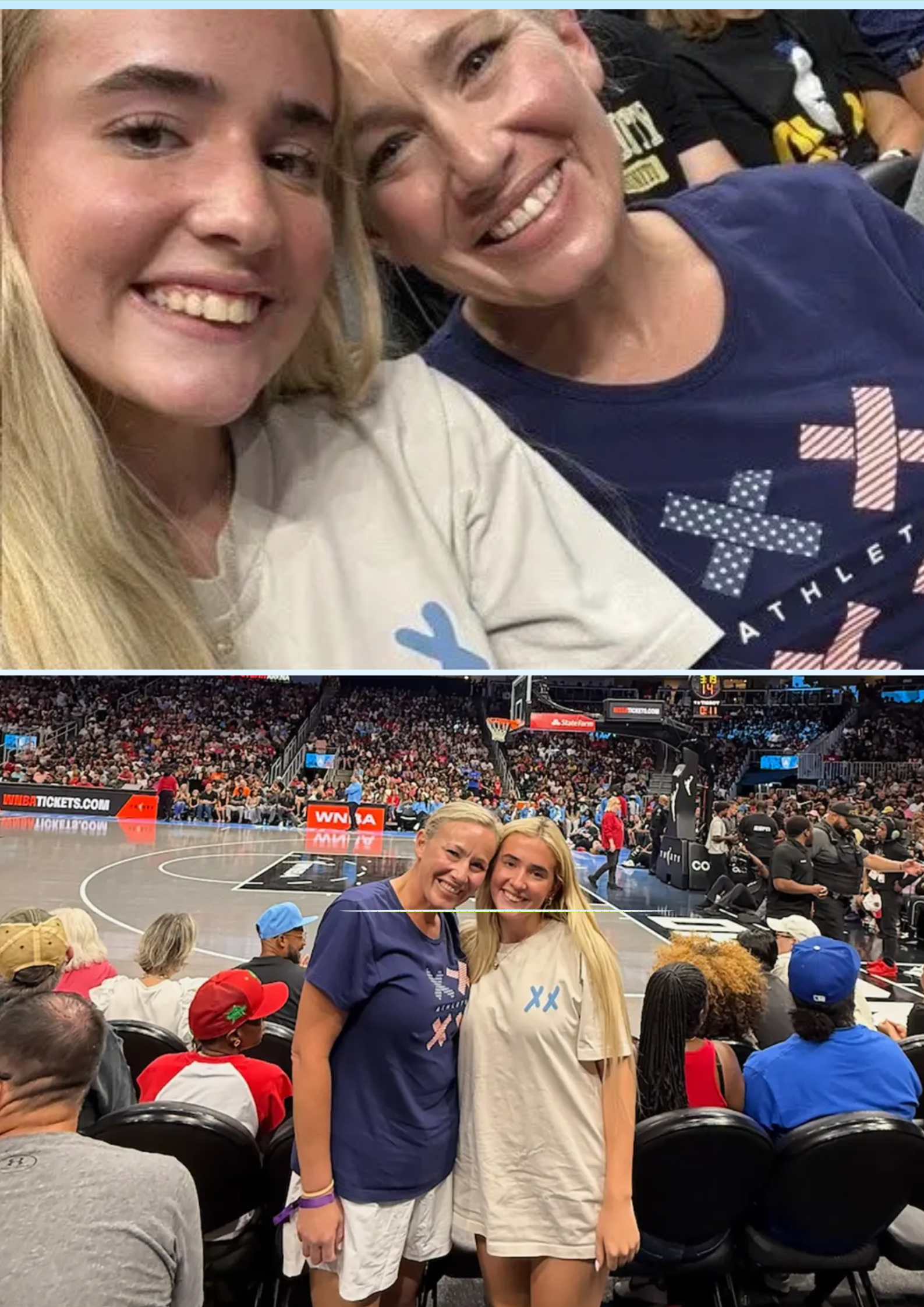
MOTHER AND DAUGHTER SAY THEY WERE FORCED TO COVER UP XX-XY SHIRTS AT WNBA GAME
 ATLANTA — A WNBA game between the Atlanta Dream and Indiana Fever has become the latest flashpoint in the league’s increasingly heated debate over transgender athletes after a mother and her teenage daughter said arena security ordered them to cover shirts supporting biological sex distinctions in sports.
The incident happened Sunday night during the Fever’s 95-91 overtime victory over the Dream at Gateway Center Arena, according to the New York Post.
The two fans, identified only as a Georgia mother named Casey and her daughter Annie, said they were wearing “XX-XY Athletics” shirts while attending the game.
They said they had purchased the shirts in support of women’s sports and specifically wanted to support Fever player Sophie Cunningham, whose recent comments about transgender participation in women’s sports have sparked controversy across the WNBA.
“WE WERE MADE TO COVER UP OUR SHIRTS”
According to the mother, the pair was sitting quietly in the arena when security personnel approached them during overtime.
The mother said security told them the shirts were considered “offensive” and instructed them to cover them with shirts provided by the arena.
The alternative, she said, was to leave the building.
The mother later described the encounter as confusing because she said neither she nor her daughter had been protesting, holding signs or disrupting the game.
“We did nothing,” she said, according to the Post.
She said they were simply watching the game and supporting Cunningham and women’s sports.
The pair claimed they were given “Wellness Night” shirts and told they needed to put them on over their existing shirts if they wanted to remain inside.
THE MOTHER SAYS ANOTHER FAN WAS INVOLVED
The mother and daughter also claimed that another fan’s interaction with security played a role in what happened.
According to their account, a fan wearing a “Protect Trans Rights” shirt had also been asked to cover the message.
The mother suggested that the other fan may have alerted security to the XX-XY shirts.
The circumstances surrounding that interaction have not been independently established beyond the accounts reported by the Post.
The Atlanta Dream and Gateway Center Arena’s full account of the encounter was not included in the report reviewed for this article.
 “WE CAME TO SUPPORT WOMEN’S SPORTS”
The mother said she and her daughter had paid approximately $1,000 each for their tickets and traveled to the game because they wanted to support Cunningham and the broader debate surrounding women’s athletics.
Her daughter, who has participated in several sports including soccer, said she had never experienced an incident like this at an athletic event.
For the mother and daughter, the confrontation was not about disrupting the game.
They said it was about being allowed to express their views while attending a professional sporting event.
WHY SOPHIE CUNNINGHAM HAS BECOME CENTRAL TO THE DEBATE
The controversy comes amid weeks of intense discussion surrounding Cunningham, the Indiana Fever guard.
Cunningham recently spoke publicly about transgender athletes and said she wanted to “protect young girls” in women’s sports.
Her comments generated strong reactions from both supporters and critics.
Supporters have organized demonstrations at games, while opponents have accused Cunningham and those backing her of promoting anti-transgender rhetoric.
The controversy became significant enough that the WNBA recently convened a task force involving team general managers and presidents to discuss the growing tensions surrounding transgender-athlete issues.
The league said the task force found no immediate eligibility matters affecting the league.
THE WNBA SAYS RESPECTFUL DIALOGUE MATTERS
The league has attempted to draw a distinction between discussing eligibility rules and targeting transgender people.
A WNBA spokesperson said the league denounces efforts to use the issue to demean or marginalize others.
Commissioner Cathy Engelbert has also said the league intends to approach the subject thoughtfully and respectfully, noting that WNBA player-eligibility rules are collectively bargained.
That position has done little to quiet the debate.
Instead, Cunningham’s comments have become a focal point for a much broader national argument about sex, gender and competitive fairness in women’s sports.
A NEW QUESTION FOR THE WNBA
The Atlanta incident now introduces another question into that debate:
How should professional sports organizations handle politically and culturally charged messages worn by fans inside their arenas?
The mother and daughter believe their shirts represented a legitimate position about women’s sports.
Arena security, according to their account, viewed the shirts differently.
Whether the shirts actually violated a written arena policy—and exactly what instructions security personnel were following—could become important as the controversy develops.
For now, the incident remains based largely on the account provided by the two fans.
THE DEBATE IS FAR FROM OVER
The confrontation at Gateway Center Arena comes at a moment when the WNBA is already under intense scrutiny over its handling of transgender-athlete discussions.
Cunningham’s comments have generated protests, public support and criticism from across the political and sports spectrum.
Now, an incident involving two spectators and a pair of T-shirts has added another layer to the controversy.
The larger debate is no longer limited to what athletes are permitted to do on the court.
It is increasingly becoming a question of what fans are permitted to say, display and wear in the stands.
And as the WNBA season continues, the dispute over where that line should be drawn is unlikely to disappear anytime soon.
This article reports the allegations made by the mother and daughter as reported by the New York Post. The circumstances surrounding the security interaction and whether the shirts violated any specific arena policy have not been independently established. No conclusion is made here about the motives or actions of individual security personnel.