FROM WATERFRONT LUXURY TO A JAIL CELL: GRANDFATHER SURRENDERS AFTER FATAL NEW JERSEY BOAT CRASH
FROM WATERFRONT LUXURY TO A JAIL CELL: GRANDFATHER SURRENDERS AFTER FATAL NEW JERSEY BOAT CRASH
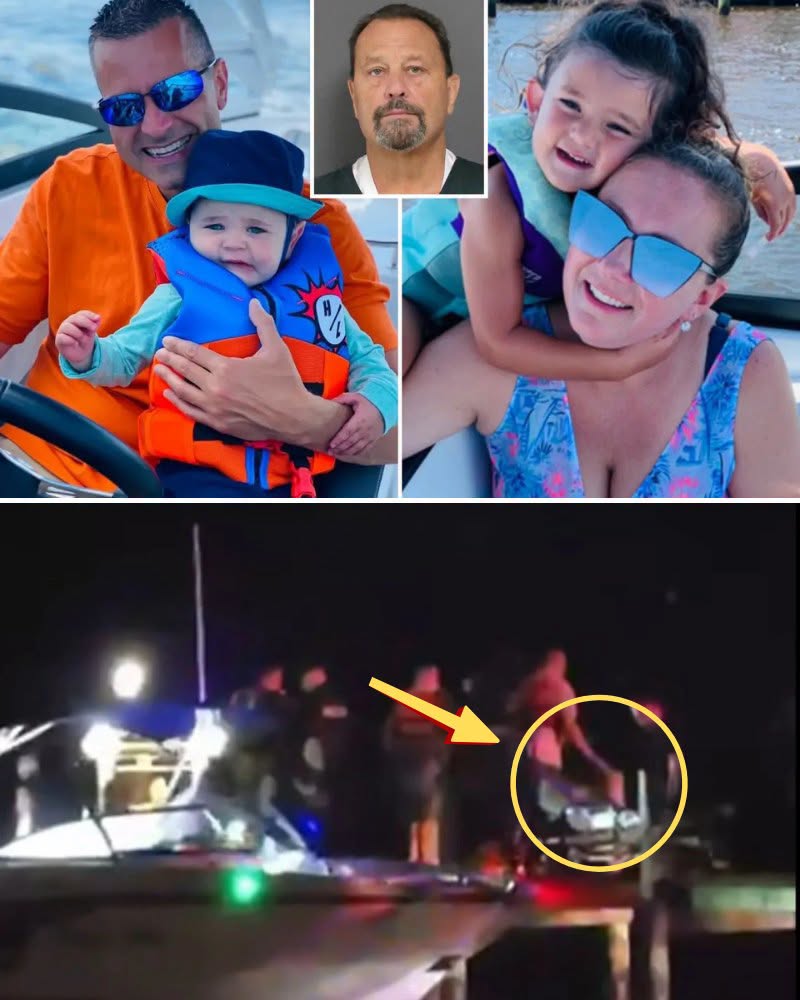
BAYVILLE, NEW JERSEY — A 64-year-old New Jersey grandfather has surrendered to authorities following a devastating boating crash that claimed the lives of his two young grandchildren, turning a case involving a family tragedy into a criminal investigation.
Stephen Schneider voluntarily surrendered to police on Friday and was taken into custody at the Ocean County Jail, according to the information provided about the case.
Schneider is facing multiple second-degree homicide charges and boating-under-the-influence charges in connection with the fatal crash.
 A NIGHT OF TRAGEDY ON BARNEGAT BAY
Authorities allege that Schneider was operating a 30-foot boat when it crashed while he was allegedly under the influence.
The collision resulted in the deaths of his two grandchildren.
The incident has devastated a family that is now confronting an unimaginable reality: two children are gone, and their grandfather is facing serious criminal charges.
The investigation will ultimately have to determine exactly what happened before, during and after the crash.
A LIFE OF AFFLUENCE COLLIDES WITH A CRIMINAL CASE
Public records reportedly show that Schneider lived in a waterfront property in Bayville valued at approximately $1 million.
The image of a comfortable waterfront lifestyle now stands in stark contrast to his current circumstances.
Instead of returning to his home after the boating tragedy, Schneider is being held at the Ocean County Jail while the criminal case moves forward.
But his financial circumstances have no bearing on the allegations themselves.
The central question for prosecutors will be whether they can prove that Schneider operated the vessel while impaired and that his actions meet the legal requirements for the homicide charges filed against him.
 VOLUNTARY SURRENDER
Schneider did not have to be arrested at his home, according to the information provided.
He voluntarily surrendered to authorities and was subsequently booked into the county jail.
His first formal court appearance will be an important next step in the case, where the allegations against him will move into the judicial process.
At that stage, the prosecution will begin presenting its case while the defense will have an opportunity to challenge the allegations and evidence.
THE CHILDREN AT THE CENTER OF THE CASE
Beyond the criminal charges, the tragedy has left a family mourning two young lives.
The children were not simply passengers in a boating accident—they were Schneider’s grandchildren.
That family connection makes the case particularly painful.
A recreational outing on the water ended with two children dead and a grandfather facing the possibility of years in prison if convicted.
WHAT PROSECUTORS MUST PROVE
Being charged with homicide does not mean Schneider has been found guilty.
Prosecutors will have to establish the facts supporting each charge, including the circumstances surrounding the boat’s operation and whether impairment played a legally significant role in the crash.
Investigators will likely examine evidence such as:
- Toxicology results
- The boat’s condition and navigation data
- Witness accounts
- The sequence of the collision
- Emergency-response records
- Video or other digital evidence
- Schneider’s actions before and after the crash
That evidence will ultimately determine how the case proceeds.
A FAMILY TRAGEDY NOW IN COURT
The contrast is stark.
A waterfront home.
A family boat.
Two young grandchildren.
And now a jail cell.
But behind the headlines is a family facing the devastating consequences of a single night on the water.
For prosecutors, the case is about establishing criminal responsibility.
For the victims’ loved ones, it is about the loss of two children whose lives ended far too soon.
And for Schneider, the coming court proceedings will determine whether the allegations result in criminal convictions.
For now, he remains accused—not convicted—while investigators and prosecutors work to establish exactly what happened on Barnegat Bay.
All charges are allegations unless and until proven in court.