Patrick Swayze Was Supposed to Be Cash — Then Tango & Cash Became One of the Wildest Productions of the ’80s
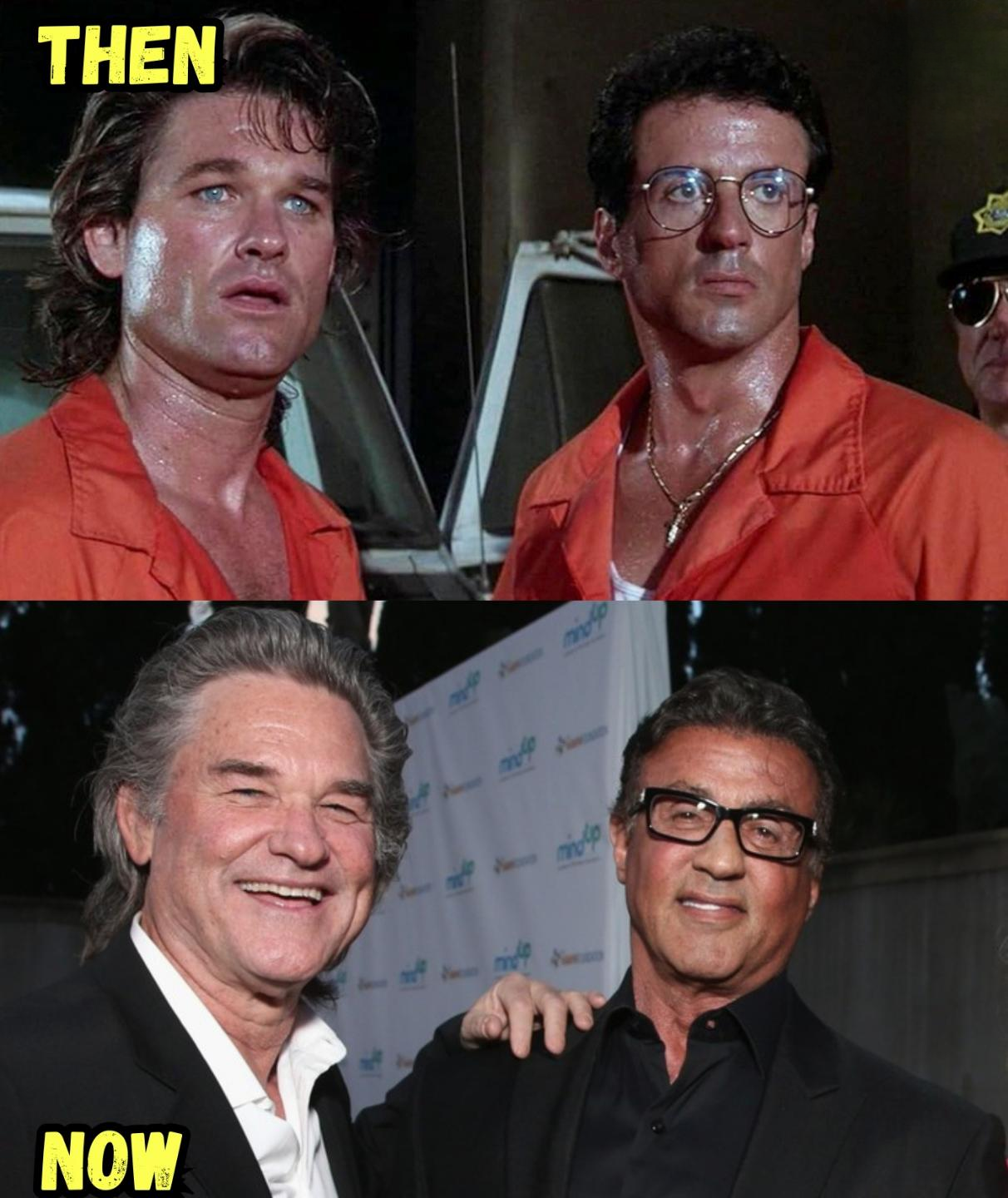
Today, it is almost impossible to separate Tango & Cash from Sylvester Stallone and Kurt Russell.
Stallone is Ray Tango: polished, controlled, dressed like a Wall Street executive who happens to carry a gun.
Russell is Gabriel Cash: messy, reckless and seemingly incapable of entering a room without creating a problem.
Their completely different energies are the movie.
But that pairing almost never happened.
Before Russell became Cash, another major star had already been lined up for the role.
Patrick Swayze.
And his departure was only the first twist in a production that would become almost as chaotic as anything that happened onscreen.
Patrick Swayze Was Originally Cash
The American Film Institute’s production history records that Swayze was initially cast as Gabriel Cash.
That creates one of those fascinating alternate-history questions for movie fans.
Stallone and Swayze.
Tango and Cash.
It is not difficult to imagine.
Swayze had the physical presence for an action movie and was entering an extraordinary period of his career.
But he ultimately left the project, and Kurt Russell stepped into the role instead. Contemporary and retrospective accounts connect Swayze’s departure with Road House, the action movie that became one of his defining films.
In hindsight, both decisions seem strangely perfect.
Swayze became Dalton.
Russell became Cash.
And Russell’s version of the character brought something the movie desperately needed:
chaos.
Russell and Stallone Were Almost Designed to Clash
Stallone was already one of the defining action stars of the decade.
Rocky Balboa.
John Rambo.
By 1989, audiences knew exactly what kind of physical presence he brought to a movie.
Tango & Cash had fun turning that image sideways.
Ray Tango wears expensive suits, glasses and a carefully controlled expression. He is wealthy, sophisticated and surprisingly restrained for a Stallone action hero.
Cash is almost his opposite.
Russell plays him as a disheveled cowboy cop with a much looser personality.
Even a contemporary Los Angeles Times report emphasized the contrast: Tango was conceived as refined and sharply dressed, while Cash was deliberately rumpled and wild.
That contrast became the movie’s secret weapon.
But behind the camera, considerably less controlled contrasts were developing.
The Production Began Falling Behind
Andrei Konchalovsky was an unusual choice to direct the movie.
The Soviet-born filmmaker had made serious dramas and had earned Hollywood respect with Runaway Train, whose performances brought Oscar nominations for Jon Voight and Eric Roberts.
Warner Bros. saw that combination of action and character work as an asset.
But Tango & Cash was being made under intense pressure.
Production began in June 1989.
The film was expected to reach theaters before Christmas.
According to the Los Angeles Times, complicated sequences were being squeezed into schedules that some crew members believed were unrealistically short.
One veteran crew member described the production to the newspaper as the worst-organized movie they had experienced.
Then the director changed.
Konchalovsky Left After Nearly Three Months
Konchalovsky departed after almost three months of filming.
Exactly how and why has been described differently by the people involved.
Warner Bros. and Konchalovsky’s agent characterized the separation at the time as mutual, while production sources described mounting disagreements involving scheduling, script changes and the need to accelerate shooting.
AFI’s production record says producers wanted Konchalovsky to speed up the movie by changing and cutting material, something he resisted before leaving over creative differences.
Albert Magnoli, best known for directing Prince in Purple Rain, stepped in to finish the movie.
And even that did not end the changes.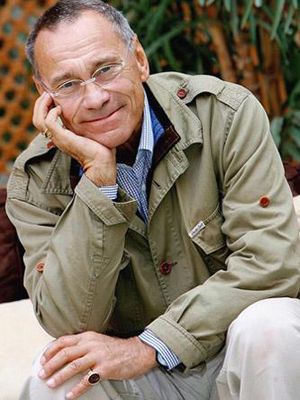
They Went Back and Shot a New Beginning
After principal photography had essentially been completed, the actors and crew were called back.
Magnoli wanted a new opening.
That required another two weeks of filming.
The movie finally wrapped on Oct. 20, 1989 — leaving only about two months before its planned December theatrical launch.
Think about that timeline.
A major studio action movie.
Two enormous stars.
An estimated budget of roughly $54 million.
A director change late in production.
Additional photography.
A completely new opening.
And a Christmas release date rapidly approaching.
The movie people eventually watched was being reshaped almost until the last possible moment.
Even the Tone Was Apparently Being Fought Over
Looking at Tango & Cash today, its absurdity seems intentional.
The one-liners.
The outrageous villains.
The prison escape.
Kurt Russell disguising himself as a woman.
A weaponized armored vehicle barreling into the finale.
It is difficult to imagine anyone trying to make this material restrained.
But accounts of the production describe competing ideas about exactly what the movie should be.
Konchalovsky and Stallone were associated with a somewhat tougher, more grounded approach, while producer Jon Peters reportedly pushed the movie toward broader comedy and camp.
After Konchalovsky left and Magnoli took over, the movie moved further toward the exaggerated pop-action tone audiences eventually saw.
Years later, Stallone himself said he thought Konchalovsky’s version would have been considerably more realistic, while the replacement direction shifted the movie toward a lighter comic style.
Maybe that explains why Tango & Cash sometimes feels like several different 1980s action movies fighting for control of the same screen.
Oddly enough, that became part of its charm.
The Movie Somehow Holds Together Because Stallone and Russell Do
Strip away the explosions and the strange production history and the movie rests on one thing:
the relationship between its two stars.
Stallone plays straight man.
Russell creates chaos around him.
Neither character particularly likes the other when they meet.
Then they are framed, imprisoned together and forced into exactly the partnership neither wants.
The formula was familiar by 1989.
Lethal Weapon had already demonstrated how enormously successful mismatched-cop chemistry could be.
But Tango & Cash pushed the idea into something much sillier.
Russell’s casting becomes especially important when you remember that he was not originally supposed to be there.
His unpredictability gives Stallone something to react against.
A different Cash might have produced a completely different movie.
It Was Expensive — But Audiences Still Showed Up
AFI cites an estimated production budget of approximately $54 million.
The film opened on Dec. 22, 1989 and ultimately earned about $63.4 million at the domestic box office.
Critical enthusiasm was hardly overwhelming.
But the movie never disappeared.
Over the decades it developed exactly the kind of afterlife that polished, forgettable studio products rarely get.
People remember the quotes.
They remember Stallone mocking his own Rambo image.
They remember Russell’s manic energy.
They remember Jack Palance delivering every villainous line as though subtlety had personally offended him.
And they remember Tango and Cash together.
The Accident May Have Been the Best Part
Hollywood likes stories that make success look inevitable.
Tango & Cash is much more entertaining because almost nothing about it was inevitable.
Patrick Swayze was supposed to be Cash.
Kurt Russell replaced him.
The production fell behind.
The director left.
Another director stepped in.
The opening was replaced.
The movie was still being finished while its release date approached.
Yet when the dust settled, Stallone and Russell had created a pairing that people were still nostalgic about decades later.
Perhaps Tango & Cash survived precisely because it never feels overly controlled.
It is loud.
It is ridiculous.
It is unapologetically 1989.
And buried underneath all that chaos is one of Hollywood’s best reminders that sometimes losing the original plan is exactly how you find the right movie.