The Watcher: The Disturbing True Story Behind Netflix’s Mysterious House
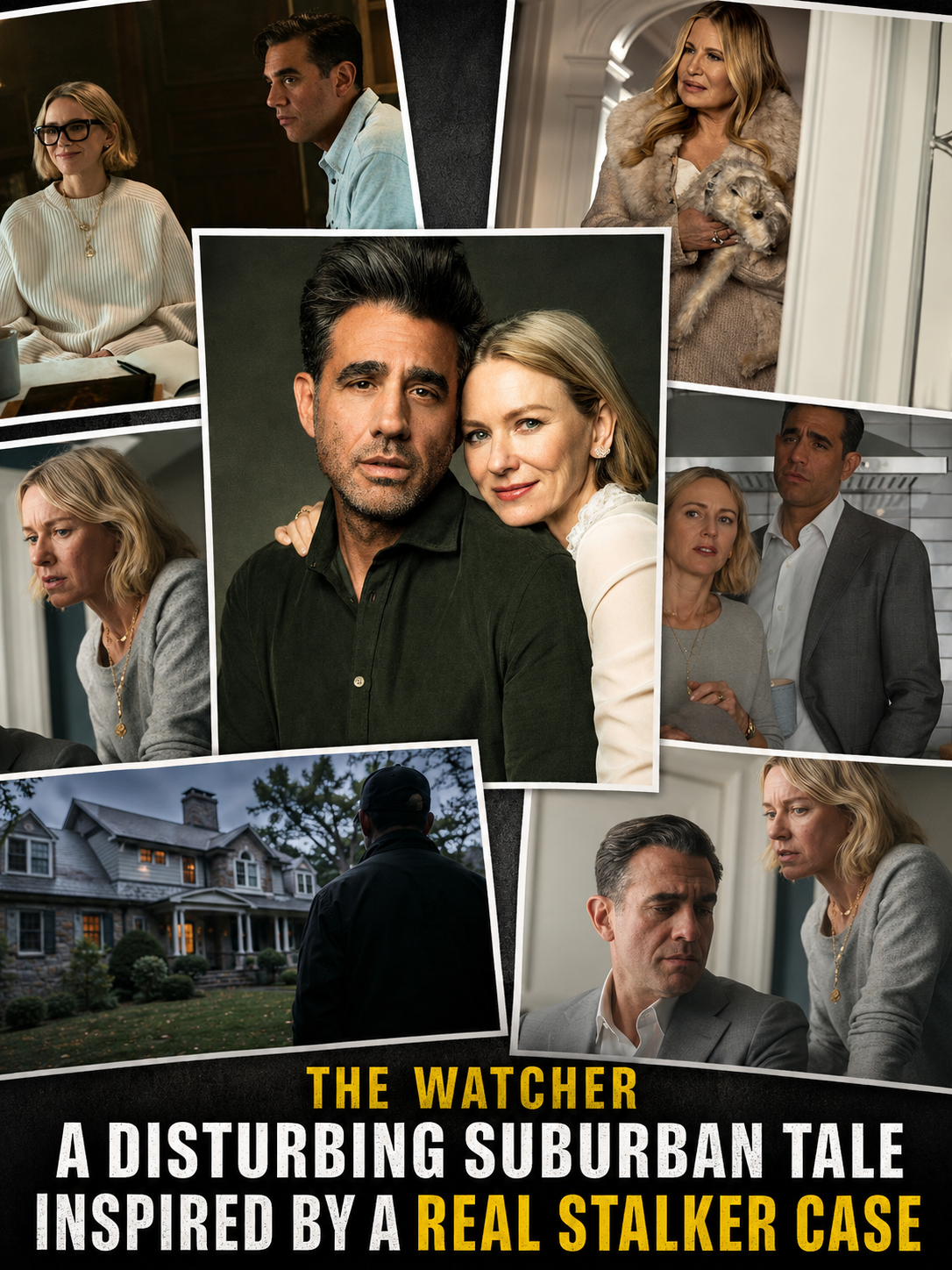
Netflix’s The Watcher seems almost designed to make homeowners suspicious of every unfamiliar car, neighbor and envelope that appears outside their front door.
The series stars Bobby Cannavale and Naomi Watts as Dean and Nora Brannock, a married couple who spend a fortune buying what appears to be their dream home in an affluent suburban neighborhood.
Then the letters begin.
Someone calling themselves “The Watcher” claims to have been observing the property for generations. The mysterious writer knows details about the family, appears unusually interested in their children and warns that the house itself has been watched for decades.
As the messages become increasingly disturbing, the Brannocks begin suspecting nearly everyone around them.
The premise sounds like a carefully constructed suburban horror story.
But the letters were real.
Netflix changed the names of the family, invented several frightening incidents and created a much more elaborate network of suspects. Yet at the center of the series is the real experience of Derek and Maria Broaddus, who purchased a home at 657 Boulevard in Westfield, New Jersey, in 2014.
They never moved in.
And the person who sent the letters has never been publicly identified.
Where Is the Real Watcher House?
The actual house stands at 657 Boulevard in Westfield, New Jersey.
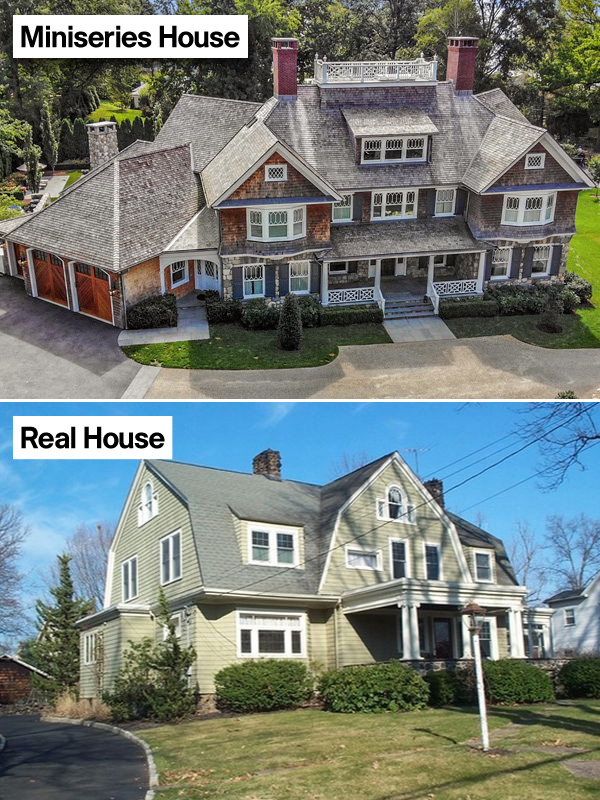
Netflix keeps the street address but dramatically transforms the property itself.
In the series, the Brannocks purchase a sprawling mansion with a swimming pool on more than an acre of land. The fictional property is presented as being worth more than $3 million.
The real house was considerably more modest — although still expensive.
Derek and Maria Broaddus paid $1.36 million for the six-bedroom Dutch Colonial in 2014. Built in 1905, it sits on less than half an acre and has four bathrooms and several fireplaces. There was no backyard swimming pool.
The enormous house viewers see in the Netflix series isn’t even in New Jersey.
Filming used a much larger property in Rye, New York.
Who Were the Real People Behind Dean and Nora Brannock?
Dean and Nora Brannock are fictionalized versions of Derek and Maria Broaddus.
Derek was approaching 40 and had built a successful career in insurance, eventually becoming a senior vice president at a Manhattan insurance company.
Maria had grown up in Westfield.
For her, buying 657 Boulevard represented a return to the community she knew as a child.
The couple imagined raising their children there.
Instead, the house became a financial and emotional nightmare before they had even finished moving in.
Netflix also changes their family structure.
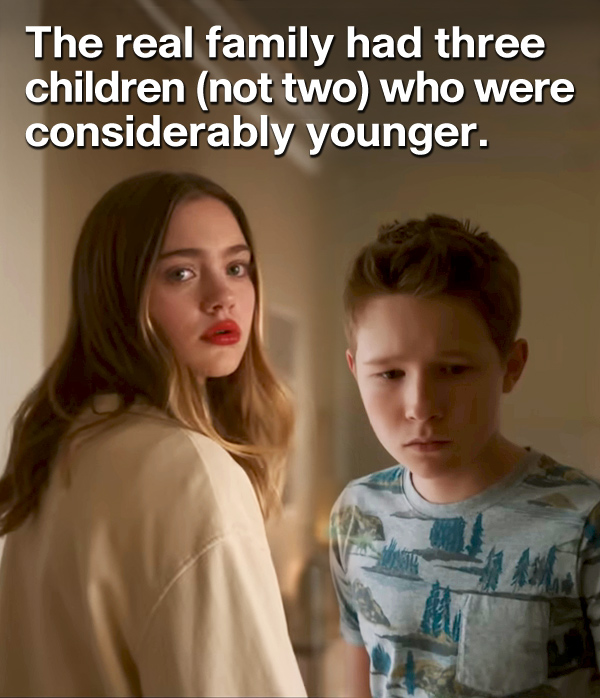
Dean and Nora have two children in the series: a teenage daughter and a younger son.
Derek and Maria actually had three children — two girls and a boy — who were approximately 5, 8 and 10 years old when the ordeal began.
When Did the First Watcher Letter Arrive?
The nightmare began in June 2014.
The Broadduses had recently purchased 657 Boulevard and were renovating it before moving in.
One evening, after spending time painting inside the house, Derek checked the mailbox.
Among the ordinary mail was a white envelope addressed simply to the new owner.
At first, the letter sounded almost welcoming.
Then the tone changed.
The writer claimed that generations of their family had been responsible for observing 657 Boulevard. According to the letter, a grandfather had watched the property decades earlier, followed by the writer’s father.
Now it was supposedly the current Watcher’s turn.
Even more disturbing, the writer appeared to know what was happening at the property.
The letter mentioned the contractors working on the house and the Broadduses’ vehicle.
Then it turned toward their children.
Did the Real Letters Really Mention “Young Blood”?
Yes.
This wasn’t something Ryan Murphy’s series invented for shock value.
The mysterious writer referred to the Broaddus children as “young blood” and expressed a disturbing fascination with the fact that children would soon be living inside the house.
The author also suggested that once the children’s names were discovered, they could be called or drawn toward the Watcher.
For Derek and Maria, the language changed everything.
An anonymous letter about a house could perhaps have been dismissed as a cruel prank.
A stranger apparently observing their young children was something else entirely.
And the later letters became even more specific.
Did the Watcher Really Know the Children’s Names?
The second letter arrived roughly two weeks later.
By then, the writer knew considerably more.
The Watcher referred to the Broaddus children by their nicknames and appeared aware of their birth order.
The writer also mentioned seeing one of the girls painting on an easel inside an enclosed porch.
That detail was particularly disturbing.
The porch wasn’t easily visible from the street because vegetation obscured the view.
Someone would seemingly need to be very close to the property — potentially in a neighboring yard — to observe what the Watcher described.
That helped convince the family that whoever was sending the letters might live nearby.
Was Westfield Really the Quiet, Affluent Community Shown in the Series?
Largely, yes.
Westfield is an affluent suburban community less than an hour from New York City.
Residents have described it as the kind of picturesque town associated with safety, families and comfortable suburban life.
In 2014, it ranked among the safer communities in the country.
That peaceful reputation made the Watcher mystery considerably more unsettling.
But Westfield already had one notorious chapter in its history.
In 1971, resident John List murdered his wife, mother and three children inside the family’s mansion before disappearing.
He remained a fugitive for nearly 18 years.
Netflix appears to borrow from the List murders when constructing some of the darker mythology surrounding its fictionalized neighborhood.
Did Derek and Maria Suspect Their Neighbors?
Very quickly.
The language in the letters made the family wonder whether the sender lived close enough to observe their movements.
Then came several uncomfortable encounters.
During a tour of the renovation, one neighbor reportedly made a casual remark about it being good to have younger people — or “young blood” — coming into the neighborhood.
Derek immediately noticed the similarity to the Watcher’s language.
Another neighbor then drew his attention to the Langford family, who lived next door.
The Langfords had been in the neighborhood since approximately the period when the Watcher claimed the mysterious surveillance tradition had passed to a previous generation.
One member of the family, Michael Langford, attracted particular suspicion.
He had lived in the area for decades and was described as socially unusual.
His family’s property also provided a view toward the Broaddus home.
Police investigated him.
Nothing conclusively connected him to the letters.
Were the Strange Neighbors Watching the House From Lawn Chairs Real?
Partially.
Netflix greatly exaggerates this element.
A painter working on 657 Boulevard did report something unusual about neighbors living behind the property.
Two lawn chairs were positioned unusually close to the Broadduses’ yard.
At one point, the painter saw an older man sitting there facing toward 657 Boulevard instead of toward his own house.
That really happened.
The binoculars and more overtly sinister surveillance depicted by Netflix, however, are inventions.
There is no evidence that these neighbors were spying on the Broadduses with binoculars or were responsible for the Watcher letters.
Did the Watcher Attack or Vandalize the House?
Not in the dramatic ways depicted by Netflix.
The real Watcher never appeared inside the home, murdered anyone, left dead animals around the property or launched the kind of physical campaign audiences see in the series.
There was one suspicious incident.
A contractor had installed a heavy sign in the yard, only to return and discover that someone had pulled it out overnight.
The family wondered whether the Watcher was responsible because the letter writer had expressed anger about renovations being made to 657 Boulevard.
But no culprit was identified.
Beyond that, the real harassment consisted primarily of letters and the fear they created.
Did the Broadduses Contact Police?
Immediately.
After receiving the first letter, Derek and Maria went to law enforcement.
The previous owners of the home, John and Andrea Woods, also became involved after revealing something the Broadduses hadn’t known before purchasing the property.
They had received a Watcher letter too.
Detective Leonard Lugo investigated the case and questioned Michael Langford multiple times.
Police were unable to develop enough evidence to charge him.
The Broadduses eventually expanded their own search.
They hired a private investigator.
They consulted people with FBI experience.
One former FBI agent analyzed the letters and believed certain writing habits suggested an older person.
The language also appeared to reveal resentment toward wealth, particularly because the writer repeatedly framed the Broadduses’ purchase of the expensive home as an act of greed.
Still, none of those efforts revealed the Watcher’s identity.
How Many Watcher Letters Did the Family Receive?
The Broadduses received four letters connected to their ownership of the home.
The first arrived shortly after they bought the property.
The second followed approximately two weeks later.
A third arrived several weeks after that.
Then the letters stopped for more than two years.
By then, the Broadduses had abandoned their dream of moving in and were struggling to decide what to do with the property.
They eventually rented it to another family.
In February 2017, a fourth letter arrived.
This message was particularly angry about the Broadduses’ attempt to have the property divided and redeveloped.
The writer suggested that different forms of misfortune could eventually come to the family.
Fortunately, none of the elaborate threats in the Watcher letters were known to have been carried out.
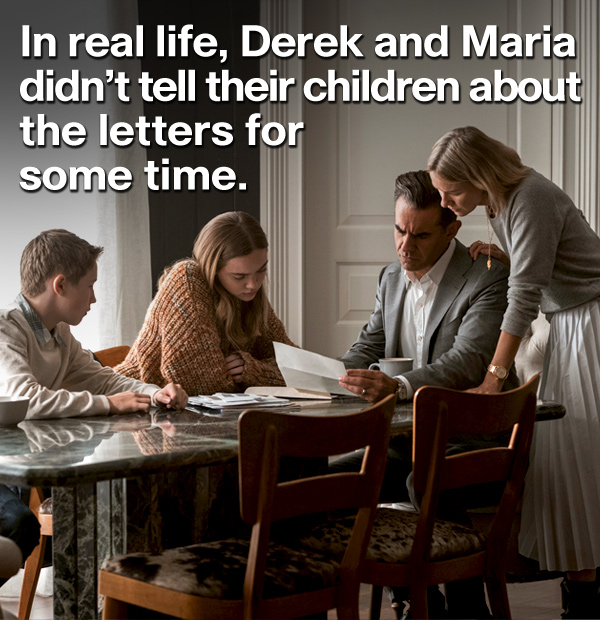
Did the Broaddus Children Know What Was Happening?
Not at first.
Derek and Maria deliberately protected their children from the truth.
Instead of moving into 657 Boulevard, they initially stayed with Maria’s parents.
Only a small circle of people knew the real reason.
The parents feared that telling young children an unknown person was apparently watching them would create lasting terror.
Eventually, media attention made keeping the secret impossible.
Reporters began calling the property the “Watcher House,” and the family realized their children might hear the story somewhere else.
Derek and Maria decided they needed to explain what had happened themselves.
Did DNA Suggest the Watcher Might Have Been a Woman?
Yes — and this became one of the most intriguing clues.
Investigators recovered DNA from one of the envelopes.
The sample appeared to come from a woman.
That complicated some of the most obvious theories, particularly the focus on Michael Langford.
Attention then turned toward his sister, Abby Langford.
Investigators secretly obtained a sample associated with her and compared it with the DNA recovered from the envelope.
It did not match.
The female DNA therefore narrowed the mystery in one sense while creating another.
It never produced an identified suspect.

Was There Really a Secret Tunnel Under 657 Boulevard?
No.
This is pure Netflix.
One of the series’ most disturbing discoveries involves a tunnel beneath the property, creating the possibility that someone might enter or move around the home without the family’s knowledge.
Nothing like that existed in the actual Broaddus house.
There was no hidden underground passage.
There is also no reliable evidence that the Watcher secretly entered the home while Derek and Maria owned it.
The actual mystery was frightening precisely because it required so little physical action.
Someone simply seemed to know things they shouldn’t know.
Then letters appeared.
Did the Real Family Ever Live at 657 Boulevard?
No.
This is probably the single biggest difference between the Netflix series and reality.
Dean, Nora and their children move into the house in The Watcher, allowing the series to stage increasingly frightening events inside the property.
Derek and Maria Broaddus never took that risk.
After receiving the threatening letters about their children, they decided there was no reasonable way they could move in.
Maria later explained that they weren’t prepared to put their children in possible danger.
The house therefore sat empty while the family continued paying the mortgage, property taxes and renovation costs.
Their dream home had become a place they were afraid to live.
Did They Try to Sell It?
Yes — repeatedly.
Only about six months after receiving the first letter, the Broadduses decided to give up on the house.
They initially listed 657 Boulevard for approximately $1.5 million, hoping to recover their $1.36 million purchase price along with money they had spent renovating it.
But rumors about the mysterious letters made buyers nervous.
The family kept reducing the asking price.
Eventually they took the property off the market and rented it.
Years of attempts followed.
The Broadduses finally sold 657 Boulevard in July 2019 for approximately $959,000.
That was hundreds of thousands of dollars below what they had originally paid — without even counting their renovation expenses and years of carrying costs.
Financially, the Watcher nightmare was devastating.
Did the Family Leave Westfield?
Interestingly, no.
Derek reportedly wanted to leave.
Maria didn’t.
Westfield was her hometown, and she did not want an anonymous letter writer to force her children away from their community.
With financial help from relatives, the family eventually purchased another Westfield home in 2016.
This time, they reportedly used an LLC in an effort to keep their new address private.
The Watcher had successfully prevented them from living at 657 Boulevard.
But the family did not allow the letters to drive them out of town completely.
Had Anyone Else Received Watcher Letters?
Yes.
The previous owners, John and Andrea Woods, had received a strange letter shortly before selling 657 Boulevard.
They told the Broadduses that it referenced the author’s family watching the property over the years.
The Woodses had lived there for decades without experiencing anything similar before that single letter and apparently did not regard it as a serious threat.
Another family living elsewhere on the street was later said to have received a similar letter as well.
These reports complicated theories that the Broadduses had invented the entire story themselves.
Did the Broadduses Sue the Previous Owners?
Yes.
Derek and Maria were furious that the Woodses had received a Watcher letter before the sale but had not disclosed it.
The Broadduses filed a legal complaint arguing that the information should have been revealed before they purchased the property.
Their reasoning was straightforward: if sellers disclosed ordinary problems with a house, why shouldn’t a threatening anonymous letter about someone watching it also matter?
Ironically, the lawsuit helped expose the entire story publicly.
A local reporter discovered court documents containing details from the Watcher correspondence.
Media interest exploded.
According to the account behind the Netflix adaptation, the family received hundreds of interview requests.
Their private nightmare became national news.
Did People Accuse Derek and Maria of Writing the Letters Themselves?
Yes.
Once police failed to identify a suspect, some Westfield residents began questioning the Broadduses.
One theory suggested that the family had suffered buyer’s remorse after spending $1.36 million and invented the Watcher story as a way to escape the purchase or recover money.
There were major problems with that theory.
The financial consequences of the ordeal were severe for the Broadduses.
They continued carrying the property for years and eventually sold it at a substantial loss.
More importantly, investigators tested Maria’s DNA.
It did not match the female DNA recovered from the Watcher envelope.
No evidence has established that Derek or Maria wrote the original Watcher letters.
But Did Derek Later Send Anonymous Letters of His Own?
Yes — and this strange detail is real.
Years of accusations from neighbors eventually pushed Derek into doing something he later admitted he regretted.
Some local residents had publicly accused the Broadduses of fraud.
One particularly hostile social-media post suggested that the couple deserved an old-fashioned public punishment.
On Christmas Eve, Derek anonymously delivered letters to several families he believed had unfairly attacked his family.
He signed them as coming from “Friends of the Broaddus Family.”
Derek later acknowledged that he had written those messages.
That does not mean he wrote the original Watcher letters.
Instead, he described the act as an angry reaction after years of feeling that his family had been falsely accused and humiliated.
He said he was not proud of it.
Are Pearl, Jasper and Mo Real Neighbors?
Not in the way Netflix presents them.
Much of the eccentric supporting cast was invented or heavily fictionalized.
The series surrounds Dean and Nora with a parade of suspicious people who seem capable of being the Watcher.
Some elements were inspired by actual neighbors.
The strange lawn-chair behavior has a real-world basis.
The long-established Langford family also clearly influenced parts of the show’s collection of unusual nearby residents.
But the television characters, their confrontations with the Brannocks and many of their bizarre actions should not be treated as literal portrayals of real people.
Netflix needed suspects.
Real life provided far fewer dramatic answers.
Was Private Investigator Theodora Birch Real?
No.
Noma Dumezweni’s Theodora Birch is one of the series’ most memorable characters, but she did not exist.
The Broadduses really did hire a private investigator and really did consult people with FBI experience.
Netflix combines and transforms those investigative efforts into a single charismatic character who can guide viewers through different theories.
Her personal story and her dramatic involvement in the mystery are fictional.
Did a Teenage Boy Really Have an Affair With Nora?
No.
Another major Netflix invention involves the Brannock family’s teenage daughter and Dakota, a young man hired to install a home-security system.
That relationship wasn’t part of the Broaddus story.
Remember that the real couple’s children were only 5, 8 and 10 when the letters began.
There was no teenage daughter secretly dating a security installer.
This storyline was created entirely for television drama.
Was Anyone Murdered Because of the Watcher House?
No.
Netflix turns the neighborhood into something resembling a sprawling gothic mystery, complete with suspicious deaths, frightening discoveries and possible conspiracies.
The actual case contains none of that.
Nobody was proven to have been murdered because of the Watcher letters.
No underground cult was uncovered.
No secret room revealed the culprit.
No neighbor was exposed as part of a generations-old conspiracy.
What really happened was considerably simpler — and arguably more unsettling.
A family bought a house.
Someone began sending them letters containing details about their lives.
And nobody could prove who was doing it.
Did Derek and Maria Make Money From Netflix?
Yes.
Years after the ordeal began, their story became highly valuable entertainment material.
Reeves Wiedeman wrote an extensive account of the mystery for New York Magazine in 2018.
The article attracted enormous Hollywood interest.
Several studios reportedly competed for adaptation rights, and a seven-figure deal was eventually reached involving the rights to both the article and the homeowners’ story.
Netflix ultimately turned the material into The Watcher.
For the Broadduses, the sale provided some financial compensation after years of losses associated with 657 Boulevard.
But it also meant watching television dramatically reinvent one of the most frightening periods of their lives.
So Who Was the Real Watcher?
Nobody has publicly proved the answer.
Michael Langford was investigated.
His sister was considered.
Other neighbors attracted suspicion.
DNA suggested a woman had handled at least one envelope.
Some residents suspected the Broadduses themselves.
Private investigators and law enforcement examined numerous possibilities.
None resulted in a confirmed identification.
And that is where the real case differs most dramatically from a conventional mystery story.
There is no final scene revealing the person behind the letters.
No confession.
No arrest.
No explanation that makes every clue suddenly fit together.
The Watcher’s identity remains unknown.
The Real Watcher Story Was Less Dramatic — and Perhaps More Frightening
Netflix needed seven episodes of suspense.
So the series created tunnels, strange neighbors, affairs, deaths, elaborate conspiracies and increasingly theatrical confrontations.
The Broaddus family experienced something much quieter.
They didn’t move into a haunted-looking mansion and begin seeing mysterious figures wandering through the halls.
They never moved into 657 Boulevard at all.
What frightened them was information.
Someone knew they were renovating.
Someone knew what vehicle they drove.
Someone knew they had three children.
Someone learned the children’s nicknames.
Someone apparently watched one of the girls painting in an area that was difficult to see from the street.
Then another envelope arrived.
And another.
The Broadduses spent years trying to determine whether the person responsible lived next door, across the street or somewhere else entirely.
They went to police.
They hired investigators.
They consulted former FBI personnel.
DNA was tested.
Neighbors were questioned.
Nothing produced a definitive answer.
Eventually, they sold the home at a painful financial loss and moved on.
But one question followed them out the door:
Who had been watching 657 Boulevard?
Netflix fills that uncertainty with fiction.
The real story never did.