The Thing About Pam: The Bizarre True Story Behind Betsy Faria’s Murder and Pam Hupp
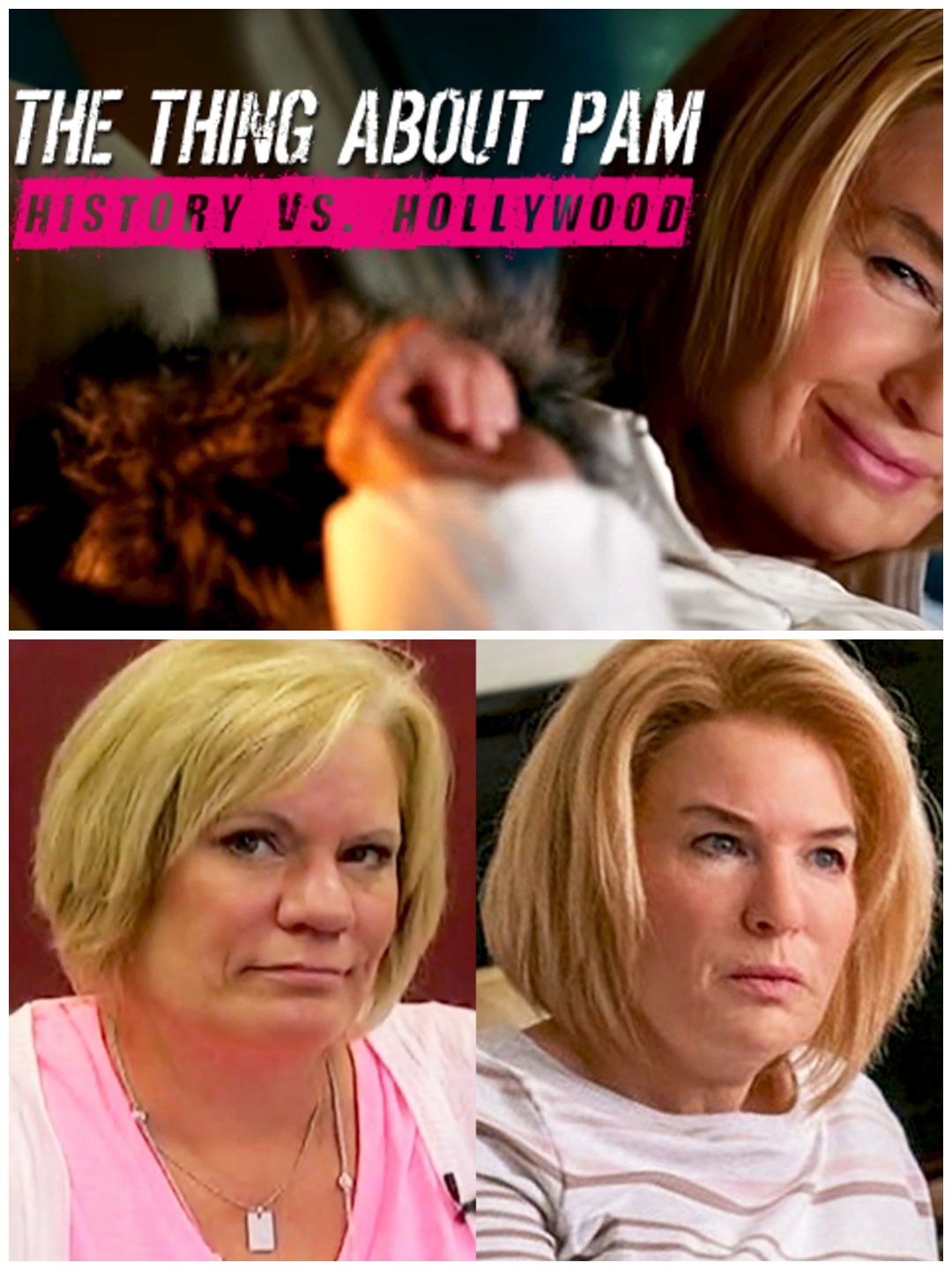
NBC’s The Thing About Pam tells a story so strange that many of its most unbelievable moments sound like they must have been invented for television.
A terminally ill woman changes the beneficiary of a $150,000 life-insurance policy just days before she is brutally murdered.
Her husband has an alibi, yet he is convicted and sent to prison.
The prosecution’s star witness becomes increasingly suspicious.
Years later, that same witness kills another man in what authorities say was an elaborate attempt to redirect suspicion back toward the already-exonerated husband.
And eventually, she herself is charged with the original murder.
Renée Zellweger stars as Pamela Hupp, whose connection to the 2011 killing of her friend Elizabeth “Betsy” Faria became the center of years of Dateline NBC reporting, a hit podcast and finally the six-part NBC miniseries.
Although the series uses dark comedy and exaggerates certain personalities, much of the underlying story really happened.
The real case, however, is even more complicated.
Who Was the Real Pam Hupp?
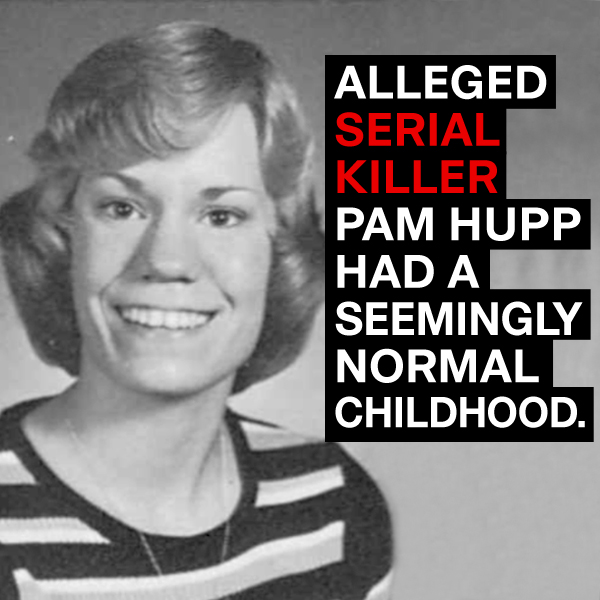
Pamela Hupp was born in Missouri on October 10, 1958.
She grew up in Dellwood, a middle-class suburb in the St. Louis area, and attended Riverview Gardens High School.
Nothing about her early life suggested that she would eventually become the central figure in one of Missouri’s strangest murder cases.
By the time Betsy Faria died in December 2011, Hupp was 53.
She had previously worked for State Farm but was no longer employed by 2010, reportedly receiving disability benefits because of neck, back and leg problems.
Those physical ailments would later become a curious part of her courtroom appearances.
Did Pam Hupp and Betsy Faria Really Meet Through State Farm?
Yes.
The two women became acquainted while Hupp was working as an administrator for State Farm in the early 2000s.
Their friendship became significantly closer after Betsy developed cancer.
Betsy was battling breast cancer that eventually spread to her liver, and by 2011 her illness was terminal.
During the final period of Betsy’s life, Pam increasingly inserted herself into her daily routine.
She drove Betsy places, spent considerable time with her and eventually became involved in one of the most important financial decisions Betsy made before her death.
Did Pam and Betsy Really Raise Money for Another Family With Cancer?
Yes — but the story had a disturbing complication.
In 2011, Pam and Betsy went door to door collecting donations for another local family dealing with cancer.
Betsy apparently believed they were doing something compassionate.
Having experienced cancer herself, she reportedly saw the fundraiser as an opportunity to help another family and leave behind something positive.
The materials used in the collection, however, exaggerated the family’s situation.
The woman battling cancer was portrayed as though she were approaching her final Christmas, when she actually lived for roughly two more years.
According to reporting cited by History vs. Hollywood, around $10,000 may have been collected.
Pam allegedly kept the money.
There is no evidence that Betsy knew the fundraiser was being used that way.
Did Betsy Really Make Pam the Beneficiary of Her Life Insurance?
Yes.
This became one of the most important facts in the entire case.
On December 23, 2011 — four days before Betsy’s murder — she and Pam went to the Winghaven Library.
There, with a librarian serving as a witness, Betsy signed paperwork changing the beneficiary of a $150,000 State Farm life-insurance policy.
Her husband, Russ Faria, had previously been the beneficiary.
Now the money would go to Pam Hupp.
According to the account surrounding the case, Betsy’s intention was for Pam to use the money for the benefit of Betsy’s daughters.
But after Betsy died, Pam kept control of the proceeds.
Russ remained the beneficiary of a separate policy worth approximately $100,000.
What Happened on the Night Betsy Faria Was Killed?
December 27, 2011 began with Betsy spending time at her mother’s home.
Pam offered to drive her back to the house she shared with Russ in Troy, Missouri.
That evening, Russ was elsewhere.
He spent time with friends watching movies and later stopped at an Arby’s restaurant before returning home.
When he walked into the house, he discovered Betsy on the floor.
The scene was horrifying.
Betsy had been stabbed dozens of times — generally reported as 55 or 56 wounds — and a knife remained lodged in her neck.
Her wrists had also been cut.
Russ initially told a 911 dispatcher that he believed his wife had killed herself.
Given her terminal cancer and previous mental-health struggles, he apparently interpreted the cut wrists before realizing how extensive her other injuries were.
Investigators quickly determined that Betsy had been murdered.
Did Pam Change Her Story About Going Inside Betsy’s House?
Yes.
This is one of several inconsistencies that later drew attention to Hupp.
Pam told investigators that she had driven Betsy home on the night of the murder.
Initially, she indicated that she had simply dropped Betsy off.
When investigators questioned her again, however, Pam acknowledged that she had gone inside the house briefly.
That changing account became increasingly significant as investigators later reconsidered how much time Pam may actually have spent near the Faria residence.
Did Police Immediately Suspect Russ Faria?
Yes.
Russ became the focus of investigators almost immediately.
There were details at the house that seemed incriminating.
Betsy’s blood was found on Russ’s slippers, which were inside a closet, and blood was also discovered on a light switch.
Prosecutors developed a theory that Russ had killed Betsy and tried to make the scene appear different from what had really occurred.
But Russ had something extremely important on his side:
An alibi.
He had been with several friends during the evening.
His movements also generated records, including the receipt from Arby’s.
His defense argued that the timeline made it extraordinarily difficult for Russ to have driven home, murdered Betsy and staged the elaborate scene during the available period.
Investigators and prosecutors nevertheless remained convinced that he was responsible.

Did Pam Really Create an Email to Make Russ Look Dangerous?
Yes.
According to the record summarized by History vs. Hollywood, Hupp created an email while pretending to be Betsy.
The message was designed to appear as though Betsy herself had written it.
In it, “Betsy” supposedly described being frightened of Russ and alleged that he had previously threatened her.
The false message helped reinforce the image of an abusive husband.
It was another piece of supposed evidence pointing toward Russ — evidence that would later look very different once investigators began scrutinizing Pam herself.
Did Pam Claim She and Betsy Had Been Romantically Involved?
Yes, but that claim was not supported.
Years after Betsy’s death, investigators testified that Pam claimed she had been involved in a sexual relationship with Betsy and suggested Russ knew about it.
That story would have conveniently provided another possible motive for Russ.
According to the National Registry of Exonerations information summarized by History vs. Hollywood, the claim was considered another falsehood used to strengthen the case against him.
There is no reliable evidence establishing that Betsy and Pam were lovers.
Was Russ Really Convicted Despite His Alibi?
Yes.
Russ Faria went on trial in 2013.
His lawyer Joel Schwartz — played in the NBC series by Josh Duhamel — argued that investigators had locked onto Russ too early and ignored evidence pointing elsewhere.
The defense tried to emphasize the timeline, Russ’s friends and the Arby’s receipt.
Pam Hupp also became an important witness.
Despite the defense’s efforts, jurors found Russ guilty of murdering Betsy on November 21, 2013.
He received a life sentence without the possibility of parole.
A man who had repeatedly insisted he was nowhere near his wife when she was killed was sent to prison for her murder.
Did Pam’s Physical Problems Seem to Change During the Trial?
According to Russ’s attorney, yes.
The NBC series repeatedly shows Pam mentioning medical problems and moving differently depending on the situation.
That element was not invented entirely for comedy.
Joel Schwartz later recalled that Hupp appeared to develop or emphasize different physical ailments during the proceedings.
At one stage, for example, she appeared in court walking with a limp that had not previously been noticeable.
The show amplifies the behavior for dramatic effect, but the underlying observation came from people involved in the real case.
How Did the Case Against Russ Begin to Fall Apart?
Pam Hupp became increasingly difficult to ignore.
Evidence that had been excluded or underplayed at Russ’s first trial began receiving greater attention.
Cellphone data suggested that Pam had remained near the Faria home longer than she originally claimed.
Her statements about Betsy’s insurance money also created problems.
During Russ’s trial, Pam had indicated that a significant portion of the insurance money had been placed into a trust for Betsy’s daughters.
Later, during litigation involving the insurance proceeds, it became clear that this had not happened as described.
There were problems with crime-scene evidence as well.
Before Russ’s retrial, the defense obtained more than 100 photographs that had not been made available during the original proceeding. Their existence undermined testimony suggesting that photographs had failed because of a camera malfunction.
Years later, the handling of those photographs would become even more controversial. In 2025, a former crime-scene investigator was charged with perjury over testimony connected to the Faria investigation.
Was Russ Faria Eventually Cleared?
Yes.
In June 2015, Russ was granted a new trial.
This time the case was heard by a judge rather than a jury.
On November 6, 2015, Judge Steven Ohmer acquitted Russ of murder and the related weapons charge.
He walked free after approximately three and a half years behind bars.
The outcome completely transformed the public understanding of the case.
Russ was no longer the convicted husband.
Attention increasingly moved toward the woman who had driven Betsy home, received her $150,000 life-insurance policy and provided testimony helping prosecutors convict him.
Did Russ Receive Compensation for His Wrongful Prosecution?
Eventually, yes.
Russ filed a federal civil-rights lawsuit against Lincoln County and members of law enforcement over the investigation and prosecution.
In 2020, the county agreed to a $2 million settlement.
The money could not restore the years Russ had spent imprisoned or undo the public accusation that he murdered his wife.
But legally, the case against him was finished.
Who Was Louis Gumpenberger?
Louis Gumpenberger was a 33-year-old Missouri man whose life had been drastically changed by an earlier automobile accident.
The crash left him with significant physical and cognitive disabilities.
He became connected to Pam Hupp in August 2016.
What happened next ultimately led to Hupp’s imprisonment.
Pam claimed Gumpenberger had attacked her.
Investigators concluded that the reality was almost exactly the opposite.
Did Pam Really Drive Around Looking for Someone to Use in a Fake Crime?
Investigators said yes.
Authorities examining location information from Pam’s cellphone concluded that she had spent time driving through lower-income neighborhoods before Gumpenberger’s death.
The prosecution’s theory was that she was searching for a vulnerable stranger she could manipulate into participating in what appeared to be an offer involving Dateline NBC.
Gumpenberger became that person.
Pam reportedly approached him while pretending to be connected to a television production and offered him money to participate in a fake scenario.
She drove him to her home.
There, she shot and killed him.
Why Would Pam Want Louis Gumpenberger Dead?
Authorities believed the answer led directly back to Betsy Faria.
By 2016, Russ had been acquitted.
Public attention was increasingly focusing on Pam.
The theory was that Pam wanted to manufacture a new story showing that Russ was still dangerous.
After killing Gumpenberger, she attempted to make it appear that he had been sent to attack her.
Investigators found a note suggesting that Russ had hired Gumpenberger to kidnap Pam and obtain money related to Betsy’s insurance policy.
If police believed the setup, suspicion might shift back toward Russ.
Instead, the plan unraveled almost immediately.
What Made Police Doubt Pam’s Story About Gumpenberger?
Almost everything.
Pam called 911 claiming that an intruder had followed her into her home and that she had shot him in self-defense.
But the physical evidence did not fit.
Investigators found $900 in cash on Gumpenberger.
The serial sequence of the bills connected them to money in Pam’s possession.
His body was also lying over a piece of carpet that appeared deliberately positioned to protect the flooring underneath from blood.
Most importantly, Gumpenberger’s physical and cognitive disabilities made Pam’s story about a sophisticated kidnapping plot extremely difficult to believe.
His mother explained that he simply was not capable of carrying out the type of operation Pam described.
Police soon concluded that Pam had selected him, brought him to her home and killed him as part of a staged scenario.
Was Pam Convicted of Killing Louis Gumpenberger?
Yes.
In 2019, Hupp entered an Alford plea to first-degree murder.
Under an Alford plea, a defendant does not formally admit guilt but accepts conviction while acknowledging that prosecutors possess enough evidence to likely obtain a guilty verdict.
Hupp received life in prison without the possibility of parole.
That conviction is why she remains incarcerated regardless of what ultimately happens in the separate Betsy Faria case.
Did Pam Try to Kill Herself After Her Arrest?
Yes.
After she was arrested in connection with Gumpenberger’s murder, Hupp attempted suicide while in custody by stabbing herself in the neck and wrists with a pen.
She survived.
The incident became another strange chapter in a story already filled with staged scenes, contradictory statements and dramatic attempts to control the narrative around her.
Was Pam Eventually Charged With Betsy Faria’s Murder?
Yes.
This is where the original History vs. Hollywood article needs updating.
In July 2021, Lincoln County prosecutors charged Hupp with first-degree murder in Betsy’s 2011 death.
Prosecutors alleged that Hupp killed Betsy in order to obtain the $150,000 life-insurance proceeds and then deliberately attempted to make Russ appear responsible.
Hupp has pleaded not guilty.
The case has experienced years of delays, disputes over evidence and changes in its trial arrangements.
Has Pam Been Convicted of Killing Betsy?
No.
That distinction is important.
Hupp is a convicted murderer because of the Louis Gumpenberger case.
But as of 2026, she has not been convicted of Betsy Faria’s murder.
The charge against her remains pending, and she continues to deny killing Betsy.
Therefore, although prosecutors accuse her of the crime and much of The Thing About Pam presents her as responsible, it would be inaccurate to describe her guilt in Betsy’s murder as legally established.
What Changed in Pam Hupp’s Case in 2026?
A major change occurred in April 2026.
Hupp waived her right to have the Betsy Faria case decided by a jury.
In exchange, Missouri prosecutors agreed that they would no longer seek the death penalty.
That means the eventual verdict will come from a judge in a bench trial, rather than from a jury.
The first-degree murder charge itself remains in place.
The case has also become more complicated because of ongoing disputes over DNA evidence and the handling of evidence from the original Faria investigation.
So unlike the NBC miniseries, the real Pam Hupp story still does not have its final chapter.
Did Pam Kill Her Mother, Shirley Neumann?
That has never been established.
Pam’s mother, Shirley Neumann, died in 2013 after falling from the balcony of her third-floor apartment in Fenton, Missouri.
She was 77.
Initially, authorities ruled the death accidental.
There were nevertheless unusual circumstances.
Pam was reportedly the last known person to see her mother alive.
Toxicology testing also found a very high level of the sedative zolpidem in Neumann’s bloodstream.
Authorities later received an anonymous suggestion that Pam might have killed her mother for financial reasons.
After Hupp was charged in the Gumpenberger case and suspicion around Betsy’s murder intensified, Neumann’s death received another look.
The official manner of death was eventually changed from accidental to undetermined.
Investigators reopened the case but did not obtain enough evidence to charge Hupp.
Therefore, claims that Pam killed her mother remain speculation, not a proven homicide.
Is Pam Hupp a Serial Killer?
Calling her one as an established fact goes further than the evidence currently allows.
Hupp has been convicted of one murder: Louis Gumpenberger.
She has been charged, but not convicted, in Betsy Faria’s death.
Her mother’s death remains officially undetermined.
Some definitions of serial murder require two or more victims killed in separate incidents.
If Hupp were ultimately convicted in Betsy’s case, the description would become easier to justify under modern definitions.
For now, however, it is more accurate to describe her as a convicted murderer who is accused of a second homicide and has also faced scrutiny in another suspicious death.
Did Pam Really Always Carry Around a Huge Soda?
Surprisingly, yes.
One of the smaller details in NBC’s portrayal is grounded in reality.
Renée Zellweger’s Pam frequently carries a convenience-store cup containing an oversized soft drink.
Hupp apparently really was known for buying large sodas regularly and reportedly even had a store loyalty card that allowed her to earn free drinks.
It’s an insignificant detail compared with the murders and court cases, but it illustrates how carefully the production studied Hupp’s public mannerisms and habits.
Did Renée Zellweger Meet Pam Hupp?
No.
Zellweger did not meet Hupp while preparing to play her.
Instead, she relied on the enormous amount of publicly available material surrounding the case.
That included police interviews, courtroom testimony, news reports, Dateline NBC episodes and the podcast.
Hupp had spent years talking to detectives, lawyers and reporters.
That meant Zellweger had an unusually extensive archive from which to study her voice, movements and manner of speaking without ever sitting across from her personally.
Is The Thing About Pam Really Based on a Dateline Podcast?
Yes.
The NBC drama grew directly out of Dateline’s long-running coverage of the Faria case.
Keith Morrison reported extensively on the story, and the resulting The Thing About Pam podcast became enormously popular.
Morrison then returned to narrate the scripted miniseries.
His unmistakable true-crime delivery is therefore not simply a parody inserted into the show.
He had actually been telling this story for years before Renée Zellweger ever played Pam Hupp.
The Real Thing About Pam Story Is Still Not Finished
The strangest aspect of The Thing About Pam may be that the television version already feels like a complete crime saga.
Betsy Faria is murdered.
Russ Faria is blamed.
Pam Hupp helps build the case against him.
Russ is convicted.
The conviction collapses.
Pam kills Louis Gumpenberger in an apparent effort to redirect suspicion.
She goes to prison.
And prosecutors eventually accuse her of murdering Betsy.
That seems like an ending.
It isn’t.
The real legal case surrounding Betsy’s death is still unresolved.
Russ Faria has been acquitted.
Pam Hupp is serving life without parole for murdering Louis Gumpenberger.
She now faces a separate first-degree murder prosecution in Betsy’s death and has pleaded not guilty. In April 2026, she waived a jury trial after prosecutors agreed to remove the death penalty.
Betsy’s life-insurance policy remains at the center of the prosecution’s theory.
Pam’s actions after the murder remain central to public suspicion.
And the disastrous original prosecution of Russ Faria continues to raise questions about how investigators became so committed to one suspect while disregarding evidence pointing elsewhere.
That is ultimately what makes the real story more unsettling than the miniseries.
It is not simply about one suspicious friend.
It is also about how an investigation can become trapped inside its first theory.
Russ had witnesses.
He had receipts.
He had a timeline.
Yet he spent years in prison.
Meanwhile, the woman who had been with Betsy shortly before her death, who had become beneficiary of $150,000 only days earlier, and whose statements repeatedly changed was treated as a key witness against him.
Years later, she would murder another man while attempting, according to investigators, to drag Russ back into yet another invented crime.
The television series ends by pointing toward Pam.
The real court system still has one more question to answer:
Whether prosecutors can finally prove beyond a reasonable doubt that Pam Hupp was also the person who killed Betsy Faria.