WHAT HAPPENS IF LINDSAY CLANCY IS FOUND NOT GUILTY?
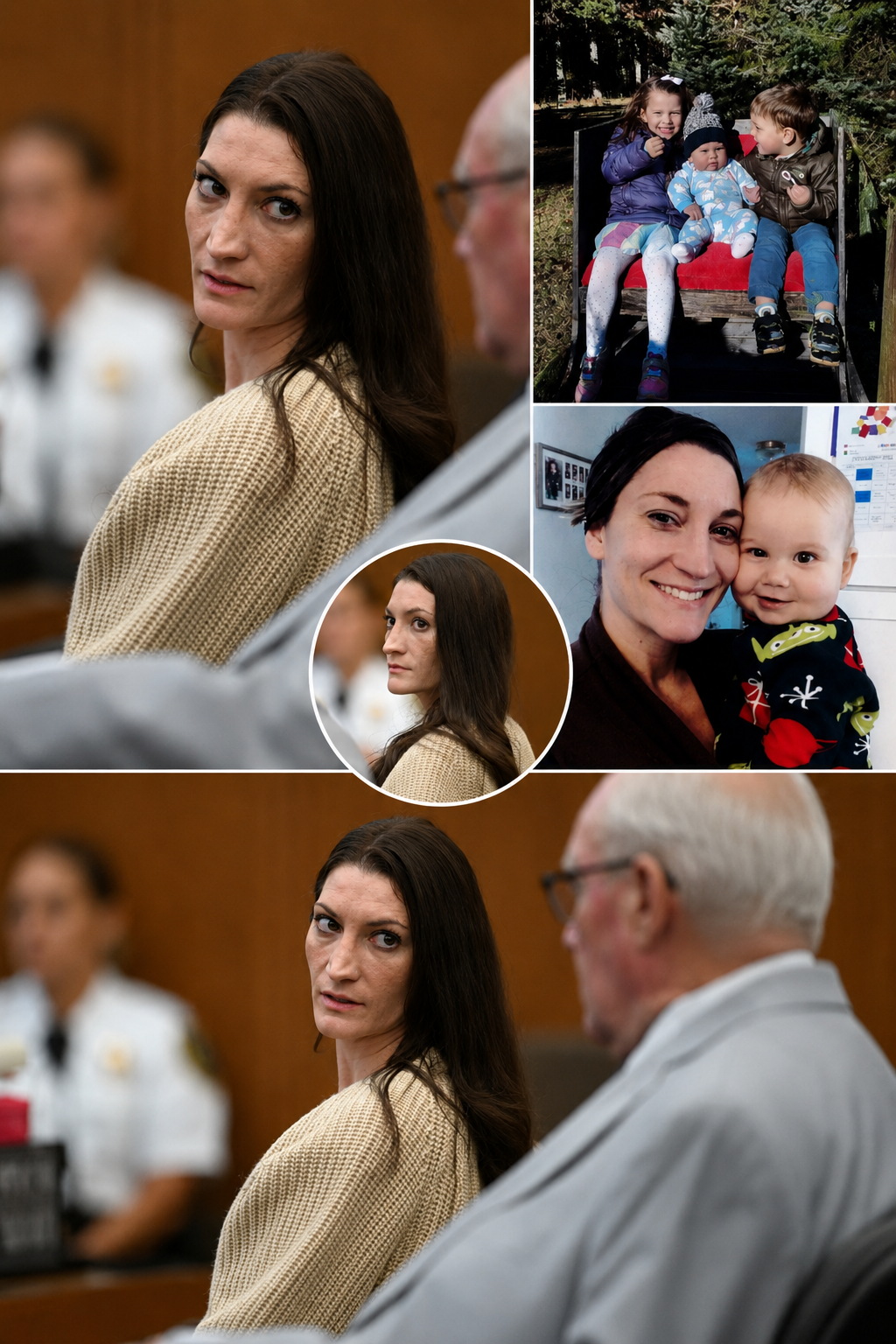
WHAT HAPPENS IF LINDSAY CLANCY IS FOUND NOT GUILTY?
As the Lindsay Clancy trial moves toward its final stage, one question is attracting enormous attention:
What would actually happen if the jury does not find her criminally responsible?
The answer is more complicated than simply walking out of court.
 TWO VERY DIFFERENT OUTCOMES
Clancy’s defense has argued that she was experiencing severe postpartum psychosis when her three children died in January 2023.
The defense is therefore seeking a finding that she was not criminally responsible because of mental illness.
That is different from a conventional acquittal based on the prosecution failing to prove the crime.
SHE WOULD NOT NECESSARILY GO FREE
If the jury finds Clancy not guilty by reason of insanity, Massachusetts law provides for psychiatric commitment rather than immediate release.
A judge can order her committed to a secure state psychiatric facility, where she could remain for an indefinite period depending on subsequent legal and psychiatric proceedings.
In other words:
A finding of not criminally responsible would not necessarily mean Lindsay Clancy walks free.
WHAT WOULD HAPPEN NEXT?
If such a verdict were reached, the case could move into a different legal phase focused on Clancy’s mental health and whether she presents a continuing danger.
Her confinement could potentially continue through successive court orders.
The length of that confinement would not simply be determined by the number of years that would have been imposed as a criminal sentence.
 BUT WHAT IF THE JURY SIMPLY SAYS “NOT GUILTY”?
A conventional not-guilty verdict would be fundamentally different.
Generally, an acquittal prevents the prosecution from retrying a defendant for the same offenses because of constitutional double-jeopardy protections.
But that is not the outcome the defense’s mental-illness strategy is primarily seeking.
The central issue is whether Clancy should be considered criminally responsible for her actions because of her mental state at the time.
THAT QUESTION IS NOW THE HEART OF THE TRIAL
Defense psychiatrist Dr. Phillip Resnick testified that Clancy was experiencing psychosis and believed an outside force was controlling her, describing her state as being like a puppet.
Prosecution psychiatrist Dr. Avram Mack offered a dramatically different assessment, saying he found no evidence that Clancy was psychotic and that she remained capable of understanding right from wrong.
Those conflicting expert opinions could be critical when jurors determine whether Clancy was legally responsible.
AND THE JURY HAS NOT DECIDED YET
The trial remains ongoing, with closing arguments expected as the case approaches its final stage.
Until the jury reaches a verdict, no outcome should be treated as certain.
THREE POSSIBILITIES — THREE VERY DIFFERENT FUTURES
Guilty: Clancy could face life imprisonment without parole for a first-degree murder conviction.
Not guilty by reason of insanity: She could be committed to a secure psychiatric facility for an indefinite period rather than simply released.
Not guilty: She would generally be acquitted of the charges and protected from being retried for those same offenses under double-jeopardy principles.
The jury now faces one of the most difficult questions in the case:
Was Lindsay Clancy suffering from a psychiatric disorder so severe that she could not be held criminally responsible — or did she understand what she was doing and remain legally responsible for it?