Stephen Chow Didn’t Find “The Beast”—He Called Back a Kung Fu Star He Had Admired Since Childhood
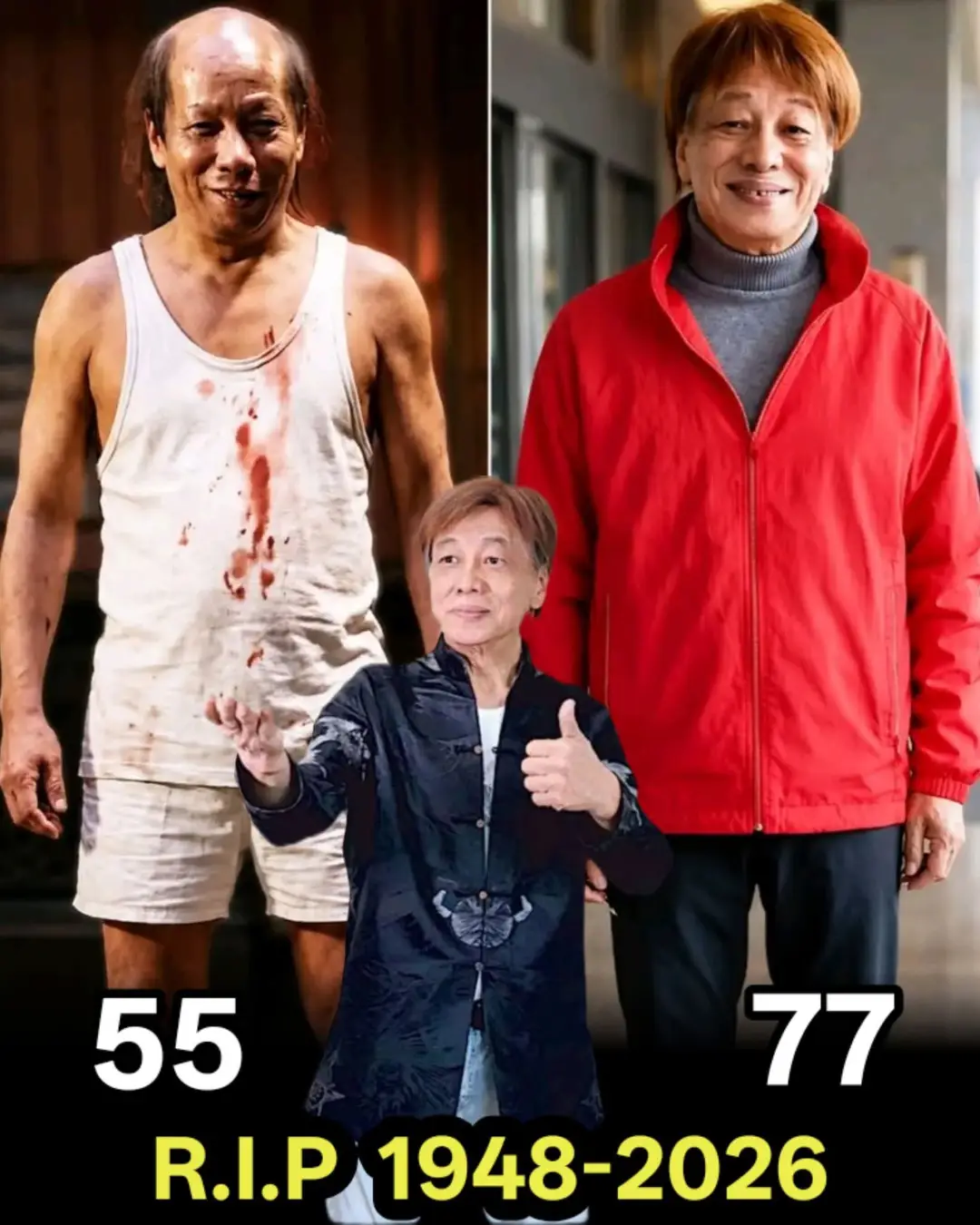
When Kung Fu Hustle finally unleashes its most dangerous fighter, the movie makes a joke out of almost everything audiences expect from a martial-arts supervillain.
The Beast does not arrive wearing an elaborate costume. He does not look young, muscular or glamorous. Instead, he appears balding and disheveled, dressed in a white undershirt and cheap slippers, behaving more like an eccentric old man than the deadliest martial artist alive.
Then he catches a bullet.
For many international viewers who discovered Kung Fu Hustle in 2004 and 2005, the actor playing him seemed like another wonderfully unexpected face Stephen Chow had found for his surreal martial-arts comedy.
But Bruce Leung Siu-lung was anything but a discovery.
Decades before he became the Beast, Leung had been one of Hong Kong’s prominent martial-arts stars—and one of the performers Chow himself admired while growing up. By the time Chow brought him into Kung Fu Hustle, Leung had been largely absent from the screen for roughly 16 years.
The casting was not simply about finding an actor who could look dangerous.
It was a filmmaker reaching back into his own childhood.
Stephen Chow Built Kung Fu Hustle From the Movies He Loved as a Boy
Chow’s obsession with martial arts started long before he became one of Hong Kong cinema’s biggest comedy stars.
He has repeatedly described Bruce Lee as his greatest childhood idol. After seeing Lee on the big screen, Chow wanted to learn kung fu himself. His family could afford formal lessons only briefly, so he continued practicing on his own, studying books and imitating movements he saw in movies.
That childhood fascination eventually became part of the foundation of Kung Fu Hustle.
After the enormous success of Shaolin Soccer, Chow had enough industry power and financial backing to make a larger martial-arts film. Instead of filling it only with contemporary stars, however, he surrounded himself with people connected to the Hong Kong cinema that had shaped him.
Yuen Wah, who plays the Landlord, had worked as a stunt performer around Bruce Lee. Yuen Qiu, the formidable Landlady, had left filmmaking for years before returning for Chow. Veteran martial artists appeared throughout Pigsty Alley.
And then there was Leung.
Official production material for Kung Fu Hustle described him as one of Chow’s cinematic heroes while he was growing up. Chow particularly remembered the power and beauty of Leung’s high kicks and emphasized that he considered him a genuine martial artist rather than merely an actor capable of performing convincing poses.
That distinction mattered enormously for the Beast.

Bruce Leung Had Already Been Famous Long Before Kung Fu Hustle
Leung belonged to an earlier generation of Hong Kong action cinema.
He worked as a stunt performer when he was young and developed a reputation for authentic martial-arts ability. During the 1970s and 1980s, he appeared in numerous action productions, including The Dragon Lives Again and Magnificent Bodyguards, the latter alongside Jackie Chan. He was also associated with the wave of martial-arts performers marketed internationally in the aftermath of Bruce Lee’s death.
But some of Leung’s greatest recognition in Asia came from television.
His performances as Chen Zhen, the fiercely patriotic martial artist made famous by Bruce Lee, helped make Leung a familiar face to audiences in the early 1980s. Productions including The Legendary Fok and Fist of Fury cemented his image as a powerful screen fighter.
At his peak, Leung was sometimes grouped with the era’s celebrated “dragons” of martial-arts entertainment. The exact membership of those informal groupings varies by source, but the point is clear: he was not an obscure performer waiting for a break.
He was already part of the martial-arts culture that a young Stephen Chow had absorbed.
Then his career stalled.
He Disappeared From Movies for Years
Accounts of Leung’s career describe a major setback during the politically sensitive relationship between the mainland Chinese and Taiwanese entertainment markets in the 1980s.
After Leung traveled to mainland China, he lost access to the Taiwanese market—an especially serious problem at a time when Hong Kong film and television producers depended heavily on Taiwanese distribution. Chinese entertainment reporting from the period and later retrospectives describe the resulting pressure as effectively pushing him out of mainstream screen work.
Leung eventually turned his attention to business.
His last film work of that period is generally dated to 1988. When Kung Fu Hustle arrived in 2004, approximately 16 years had passed.
Technically, Chow approached him somewhat earlier: production on Kung Fu Hustle began in 2003, meaning Leung had already spent roughly 15 years away when cameras started rolling. That explains why different accounts describe his hiatus as either 15 or 16 years.
Either way, by Hong Kong cinema standards, it was a lifetime.
Leung was in his mid-50s. The industry around him had transformed. Wire work, digital effects and the international success of movies such as Crouching Tiger, Hidden Dragon and The Matrix had changed what audiences expected from martial-arts spectacle.
Chow did not try to make his old hero look young again.
He did something far more interesting.

The Beast Worked Because He Didn’t Look Like a Legend
The Beast’s appearance is one of Kung Fu Hustle’s smartest tricks.
The Axe Gang expects the ultimate assassin. What emerges is an unimpressive-looking man who seems almost annoyed that anyone has disturbed him.
Only gradually does the audience understand what he can do.
He demonstrates astonishing speed. He stops a bullet with his fingers. He survives attacks that would destroy ordinary fighters. When confronted by the Landlord and Landlady, he reveals the terrifying Toad Style and transforms the film’s exaggerated kung-fu fantasy into something even more extreme.
Leung’s age actually strengthened the joke.
Here was a performer who really did belong to an earlier era of martial-arts filmmaking, playing a character whose frightening power is hidden inside a body everyone initially underestimates.
Chow was doing the same thing with his cast that the movie does with Pigsty Alley: asking viewers not to judge extraordinary people by ordinary appearances.
The apparently harmless residents turn out to be masters.
The shabby old man turns out to be the Beast.
And the supposedly forgotten actor playing him had once been a hero to the film’s director.
His Comeback Became a Second Career
Kung Fu Hustle became a major international success and introduced Leung to viewers who had never seen his earlier work. The film earned HK$61 million in Hong Kong and helped establish Chow far more broadly with international audiences.
For Leung, it opened the door to another stretch of screen work.
He subsequently appeared in projects including Shamo, Kung Fu Chefs, Gallants, Tai Chi 0 and Tai Chi Hero. In Gallants, filmmakers again drew on the appeal of veteran Hong Kong martial-arts performers, proving there was still an audience eager to watch members of that generation fight on screen.
Leung died on Jan. 14, 2026, at age 77. News of his death brought tributes from across the martial-arts film world. Jackie Chan praised both his martial-arts knowledge and the distinctive style he had brought to film and television.
Stephen Chow’s message was much shorter: “Forever remembering Mr Leung Siu-lung.”
That tribute carried particular weight because their connection had begun long before they became collaborators.
When audiences first saw the Beast shuffle onto the screen in his undershirt and slippers, they were watching the arrival of Kung Fu Hustle’s ultimate villain.
Stephen Chow was seeing something else.
One of the kung-fu heroes from his childhood had stepped in front of a movie camera again.