LINDSAY CLANCY TRIAL TAKES ANOTHER SHOCKING TURN AS PSYCHOLOGIST CALLS HER 18-MINUTE ‘VOICE’ ‘VERY, VERY UNUSUAL’
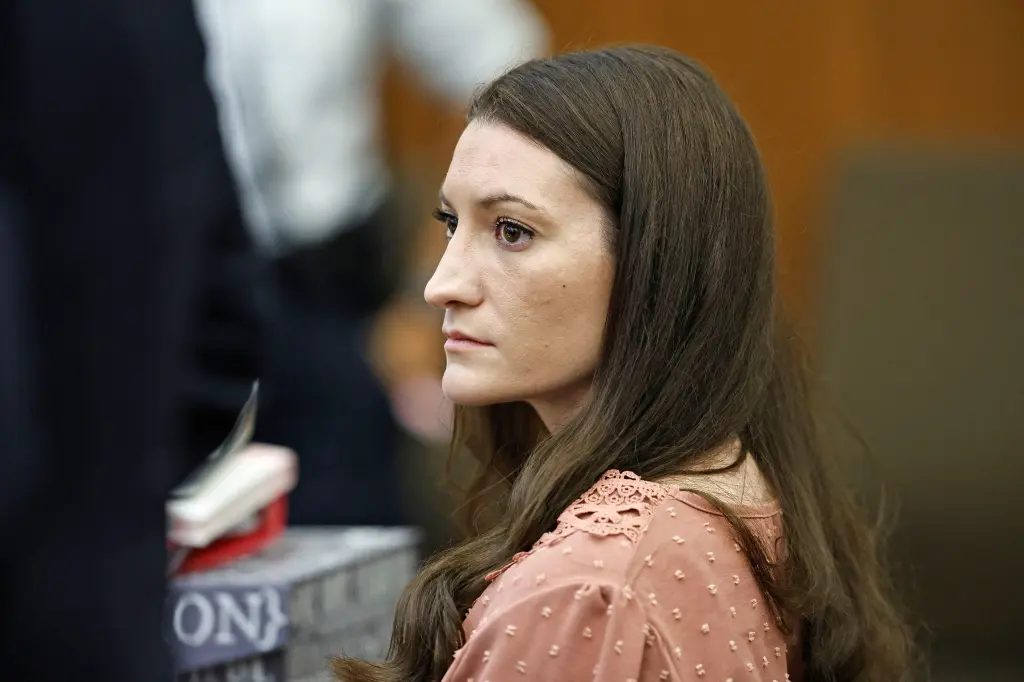
LINDSAY CLANCY TRIAL TAKES ANOTHER SHOCKING TURN AS PSYCHOLOGIST CALLS HER 18-MINUTE ‘VOICE’ ‘VERY, VERY UNUSUAL’
PLYMOUTH, MASS. — A prosecution psychologist has raised new questions about Lindsay Clancy’s account of the night her three children were killed, telling jurors that the male voice she says commanded her to murder them appeared for only one brief and extraordinary period — roughly the same 18 minutes in which the killings occurred.
The testimony came as Clancy’s closely watched Massachusetts murder trial entered its final stages.
Clancy, 36, is charged with killing her three children — 5-year-old Cora, 3-year-old Dawson and 8-month-old Callan — at the family’s Duxbury home in January 2023. She has acknowledged killing the children but has pleaded not guilty by reason of lack of criminal responsibility.
Her defense argues that she was experiencing severe postpartum psychosis and was unable to understand or control her actions.
Prosecutors, however, have presented expert testimony challenging that explanation.
:max_bytes(150000):strip_icc():focal(749x0:751x2):format(webp)/lindsay-marie-clancy-013023-1-176600bdc3614f6ca230e63734b87361.jpg) THE VOICE SHE SAYS COMMANDED HER
THE VOICE SHE SAYS COMMANDED HER
According to testimony, Clancy told mental-health experts that she heard a male voice instructing her to kill her children and then take her own life.
The voice allegedly told her:
“This is your last chance. You have to kill the kids so you can kill yourself.”
For the defense, the alleged voice is central to the argument that Clancy was experiencing psychosis.
But prosecution forensic psychologist Dr. Kirk Heilbrun testified that the timing of the reported hallucination was highly unusual.
He said Clancy reported hearing the voice for the first and only time during the approximately 18-minute period in which the children were killed.
“And to put it mildly,” Heilbrun testified, that would be a “very, very unusual” pattern for this type of experience.
WHY PROSECUTORS SAY THE TIMING MATTERS
The prosecution’s experts have focused heavily on the sudden appearance and disappearance of the alleged voice.
Heilbrun suggested that the extremely narrow timing could be significant when assessing whether Clancy was actually experiencing a psychotic episode.
Another prosecution expert, forensic psychiatrist Dr. Gregory Saathoff, also testified about inconsistencies in Clancy’s descriptions of the voice.
According to Saathoff, Clancy gave different accounts of exactly when she first heard it.
In one account, she said the voice began after a phone call with her husband at about 5:34 p.m. In another, she reportedly placed the beginning closer to 5:15 p.m.
Saathoff characterized aspects of her account as “markedly inconsistent.”
He also questioned why the voice allegedly instructed Clancy to kill her children but did not tell her specifically how to do it.
The prosecution argues that these inconsistencies raise doubts about whether the voice was truly a symptom of psychosis or whether Clancy was attempting to explain her actions after the fact.
:max_bytes(150000):strip_icc():focal(523x0:525x2):format(webp)/lindsay-clancy-tout-102623-a31a4f806c804f4bbf54ecf242cad482.jpg) THE DEFENSE HAS A VERY DIFFERENT EXPLANATION
THE DEFENSE HAS A VERY DIFFERENT EXPLANATION
Clancy’s attorneys have argued that her behavior must be understood against the backdrop of a severe psychiatric crisis.
They say she had been struggling with postpartum anxiety, depression, suicidal thoughts and other disturbing symptoms for months before the killings.
Defense experts have testified that she was suffering from postpartum psychosis at the time and that the alleged voice was a genuine command hallucination.
Clinical and forensic psychologist Paul Zeizel, who evaluated Clancy after the killings, previously testified that she told him she heard a male voice ordering her to kill her children and then herself.
Zeizel also described a prolonged deterioration in Clancy’s mental health and testified that she had sought help before the tragedy.
That evidence forms a central part of the defense argument that Clancy was not simply a mother who decided to kill her children, but a woman experiencing a profound psychiatric crisis.
WHAT DID CLANCY BELIEVE SHE WAS DOING?
The prosecution has presented another possible explanation for the killings.
Heilbrun testified that Clancy may have believed her children would suffer if she died and that killing them would allow them to remain together in heaven.
He described the theory as “altruistic filicide” — a term used when a parent believes killing a child is somehow protecting that child from suffering.
That theory is crucial because it suggests that Clancy may have been experiencing serious emotional distress while still understanding what she was doing.
Prosecutors maintain that mental illness alone does not necessarily mean a person is legally incapable of being held responsible.
The defense, meanwhile, argues that Clancy’s illness was so severe that she could not appreciate the wrongfulness of her actions or control her behavior.
HER FIRST WORDS AFTER THE KILLINGS
The jury has also heard testimony about what happened after Clancy’s husband, Patrick, returned home.
Forensic psychologist Heilbrun testified that when Patrick asked what she had done, Clancy said:
“I tried to kill myself.”
Heilbrun argued that the statement was significant because it did not suggest that she was simply following an external command.
The defense has disputed the prosecution’s interpretation of Clancy’s statements and behavior, arguing that her mental state cannot be evaluated through isolated words or actions without considering the larger psychiatric crisis she was experiencing.
THE TRIAL HAS BECOME A BATTLE OF EXPERTS
The case has featured an extraordinary clash between psychiatric experts.
Defense witnesses have described symptoms they believe are consistent with postpartum psychosis.
Prosecution witnesses have acknowledged that Clancy suffered from mental-health problems but have disputed that she was psychotic when the children died.
Heilbrun diagnosed Clancy with Bipolar II disorder, while other prosecution testimony has focused on depression and her ability to understand and control her actions.
The disagreement is not simply about whether Clancy was mentally ill.
It is about whether that illness reached a level that legally excused her conduct.
CLOSING ARGUMENTS ARE NEAR
After weeks of testimony and dozens of witnesses, the trial is approaching its conclusion.
The jury is expected to hear closing arguments shortly before deciding whether Clancy was criminally responsible for the deaths of her three children.
If jurors accept the prosecution’s argument, Clancy could be held criminally responsible for three first-degree murder charges.
If they accept the defense theory that severe mental illness left her legally incapable of understanding or controlling her actions, the outcome would be dramatically different and could involve psychiatric commitment rather than a conventional prison sentence.
ONE QUESTION COULD DEFINE THE ENTIRE CASE
At the center of the trial is an extraordinarily difficult question:
Was Lindsay Clancy experiencing a devastating psychotic episode when she killed her children — or was she suffering from mental illness while remaining capable of making deliberate decisions?
The alleged male voice has become one of the most closely examined pieces of evidence.
For the defense, it may represent the clearest sign that Clancy was experiencing psychosis.
For the prosecution, its sudden appearance, limited duration and inconsistencies in Clancy’s accounts are reasons to question that explanation.
After more than three years of investigation and weeks of courtroom testimony, the final decision will soon belong to the jury.
And three young children — Cora, Dawson and Callan — remain at the center of a case that has forced the courtroom to confront one of the most difficult intersections of criminal responsibility, motherhood and severe postpartum mental illness.