Dolly Parton Grew Up Without Electricity or Running Water — Her First ‘Microphone’ Was a Tin Can on a Tennessee Porch
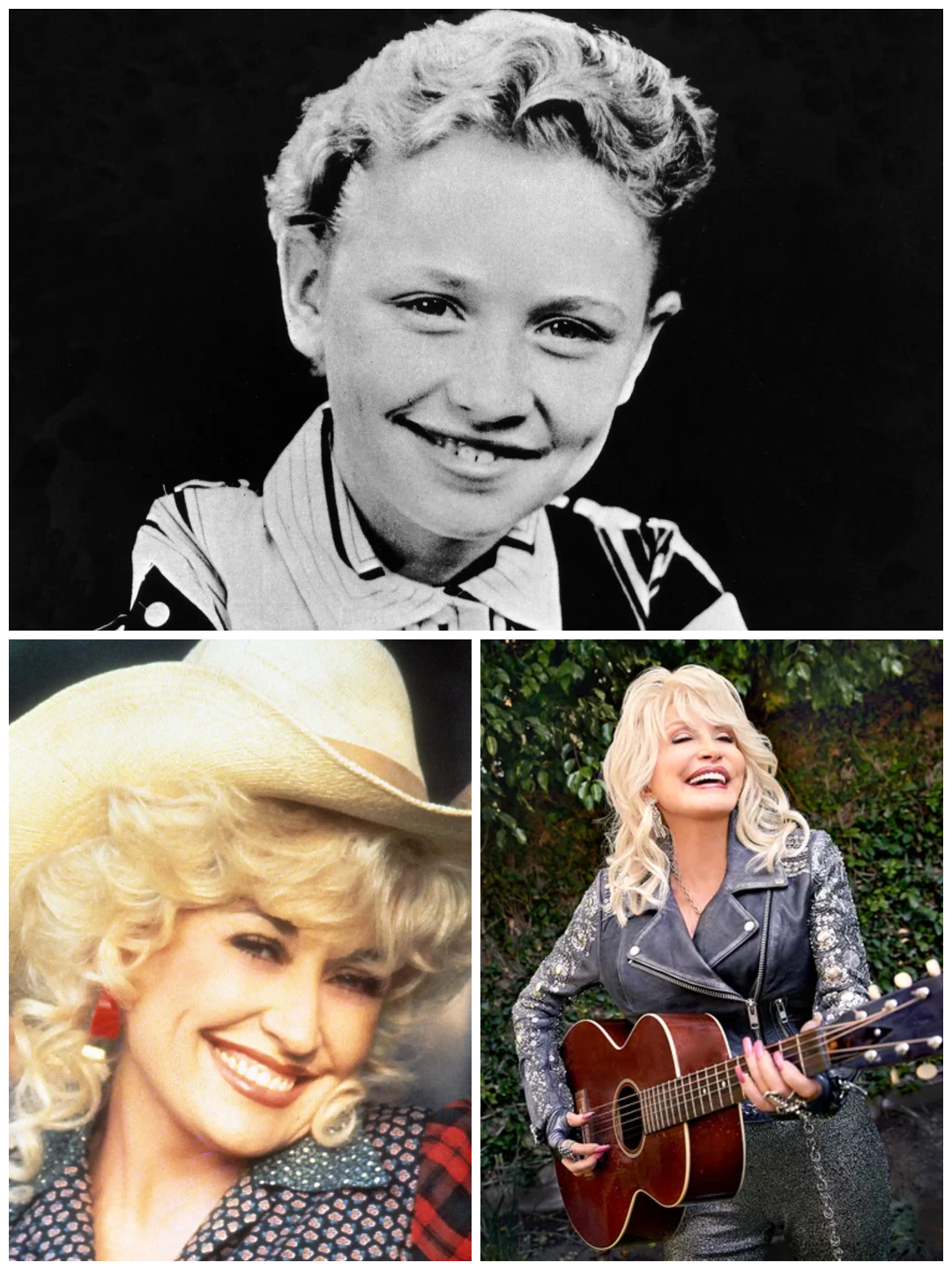
Long before Dolly Parton stood beneath arena lights, collected awards or heard thousands of people sing her songs back to her, she had a very different audience.
There were chickens, dogs and children gathered around a small home in the Smoky Mountains.
And instead of a professional microphone, young Dolly had a tin can.
That homemade device became part of one of Parton’s favorite memories from a childhood shaped by poverty, imagination and an extraordinary determination to build a different future. Looking back on those years in 2025, she could see a direct line between the little girl performing on a porch in rural Tennessee and the country music icon she eventually became.
Parton, who died Aug. 25, 2026, at age 80, spent much of her life speaking openly about where she came from. She never tried to erase the poverty of her childhood after becoming wealthy and famous. Instead, she treated those beginnings as essential to understanding who she was.
She grew up on Locust Ridge in eastern Tennessee with her parents, Robert Lee and Avie Lee Parton, and 11 siblings.
Their family lived in a small two-room log cabin.
There was no electricity.
There was no running water.
Money was scarce, but music and imagination were everywhere.
As a child, Parton fashioned a pretend microphone from a tin can attached to a tobacco stick. She would position herself on the front porch, sing with everything she had and imagine an audience much larger than the animals and children in the yard.
In her mind, she was already going somewhere.
She dreamed about the Grand Ole Opry. She imagined performing in front of real crowds. Standing on that porch, she said, made her feel like a star long before anyone outside her family knew her name.
Remarkably, one of those childhood dreams began becoming real when she was only 13.
In 1959, Parton appeared at the Grand Ole Opry after being introduced by Johnny Cash.
The experience was worlds away from singing into a tin can at home.
Parton remembered the nervousness of suddenly facing a real audience. She had been accustomed to performing around family, where everything felt familiar. Now there were strangers watching and reacting.
That reaction mattered.
When audiences called her back for an encore, something began changing inside her.
Parton remembered looking toward her uncle, Bill Owens, almost seeking confirmation that what she was experiencing was real. She would ask whether the audience had actually liked her.
His answer was yes.
Eventually, Parton began wondering whether she might truly become a star.
Her uncle thought she would.:max_bytes(150000):strip_icc():focal(999x0:1001x2):format(webp)/dolly-parton-portraits-PEOPLE-2-04c247ca4a4844b18c860be188b3a9a0.jpg)
Her Parents Gave Her Two Different Kinds of Strength
Parton later traced much of what allowed her to succeed back to her mother and father.
From her father, Lee, she believed she inherited discipline, responsibility and an enormous capacity for hard work.
Lee Parton was a tobacco farmer who could not read or write, but his daughter never equated his lack of formal education with a lack of intelligence.
She remembered him as extremely smart and relentlessly hardworking.
Those qualities became central to her own career.
Parton’s success may eventually have looked glamorous from the outside, but she built it through decades of writing, recording, touring, performing, acting and developing new projects.
She believed that willingness to work came directly from her father.
Her mother gave her something different.
From Avie Lee and her mother’s side of the family, Parton said she received a strong spiritual foundation along with creativity.
The combination proved powerful: imagination from one side, determination from the other.
Parton believed she had inherited exactly what she needed from both parents.
Her song “Coat of Many Colors” would eventually turn one memory from those impoverished years into one of the most recognizable pieces of her career.
Rather than hiding the circumstances of her childhood, Parton transformed them into art.:max_bytes(150000):strip_icc():focal(999x0:1001x2):format(webp)/dolly-parton-portraits-11-5b2fd75fe6c94d44b74fd3a7c0683f9d.jpg)
Leaving the Mountains Did Not Mean Leaving Them Behind
After graduating from high school, Parton moved to Nashville.
Her professional breakthrough eventually came through country star Porter Wagoner, who made her his duet partner on his television program.
Hits followed, including “Jolene” and “Coat of Many Colors.”
Parton and Wagoner eventually went their separate ways in 1974, allowing her to push further into a solo career that would expand far beyond traditional country music.
There were obstacles.
Parton encountered sexism in the entertainment industry as well as stereotypes about her Appalachian upbringing. Her rural accent, appearance and background sometimes became subjects of condescension.
She refused to treat where she came from as something embarrassing.
Instead, she spoke openly about poverty while building a career that eventually crossed into pop music and Hollywood.
By the 1980s, the child who once performed for animals in a Tennessee yard had become a movie star as well as a recording artist.
Yet Parton said simply becoming rich had never been the entire point.
She wanted success because she loved creating.
She wanted to write songs, sing them and perform them.
She also knew from childhood that success could allow her to take care of the people she loved.
One of her songs, “The Sacrifice,” expressed something of that relentless ambition — a determination to succeed regardless of what the journey demanded.
For Parton, wealth was secondary to proving she could make a life doing the work she felt born to do.:max_bytes(150000):strip_icc():focal(999x0:1001x2):format(webp)/dolly-parton-barbara-walters-062426-fd04189721f546179d8677d5cffcf130.jpg)
The Little Girl With the Tin Can Got Her Answer
By 2025, Parton could look back over the distance between Locust Ridge and the life she ultimately built.
She had once dreamed from a porch.
Now those dreams had come true on a scale the little girl holding that tin can could scarcely have understood.
Still, Parton never stopped defining herself first as an artist.
Songwriting, singing and performing were not separate jobs to her. They were interconnected pieces of the same creative identity.
Even after decades of success, she remained grateful for both the talent she believed God had given her and the opportunities that allowed her to use it.
When asked what she would tell the 10-year-old Dolly standing on that porch with her homemade microphone, Parton answered with the humor that followed her throughout her life.
Essentially, she would warn that little girl to be careful what she wished for.
The dream was going to come true.:max_bytes(150000):strip_icc():focal(999x0:1001x2):format(webp)/dolly-parton-portraits-10-T-652090f4dc674f84859b8299ebdabec2.jpg)
But she was going to have to work extremely hard for it.
That may be the clearest way to understand Parton’s journey.
The poverty was real. So were the limitations of the two-room cabin and a childhood without electricity or running water.
But so was the imagination.
A tin can became a microphone. A porch became a stage. Chickens and dogs became an audience.
And a little girl in the Smoky Mountains looked beyond everything she did not have and began imagining the life she eventually created.