Dolly Parton Had Strong Beliefs — But There Was a Reason She Refused to Turn Her Fame Into a Political Weapon
Dolly Parton spent decades in a position few entertainers ever reach: millions of people trusted her, listened to her and felt they somehow knew her.
She understood exactly how powerful that could be.
And that was one reason she was so reluctant to tell those people how to vote.
Parton, who died Aug. 25 at age 80, deliberately kept her personal political beliefs largely out of public view throughout her career. It was not because she lacked opinions. She openly acknowledged having them.
Instead, she worried about what could happen when someone with her enormous platform spoke too forcefully and millions of admirers treated those words as instructions rather than simply one person’s point of view.
In a 2021 interview, Parton explained that she tried to be exceptionally careful because she knew people paid attention to what she said — sometimes assigning more meaning to her comments than she intended.
Her philosophy was simple: people were entitled to their own beliefs and faith, but those convictions did not need to become weapons against others.
That distinction became central to the way Parton navigated an increasingly polarized America.
She would speak about compassion.
She would support causes.
She would defend people she believed were being treated unfairly.
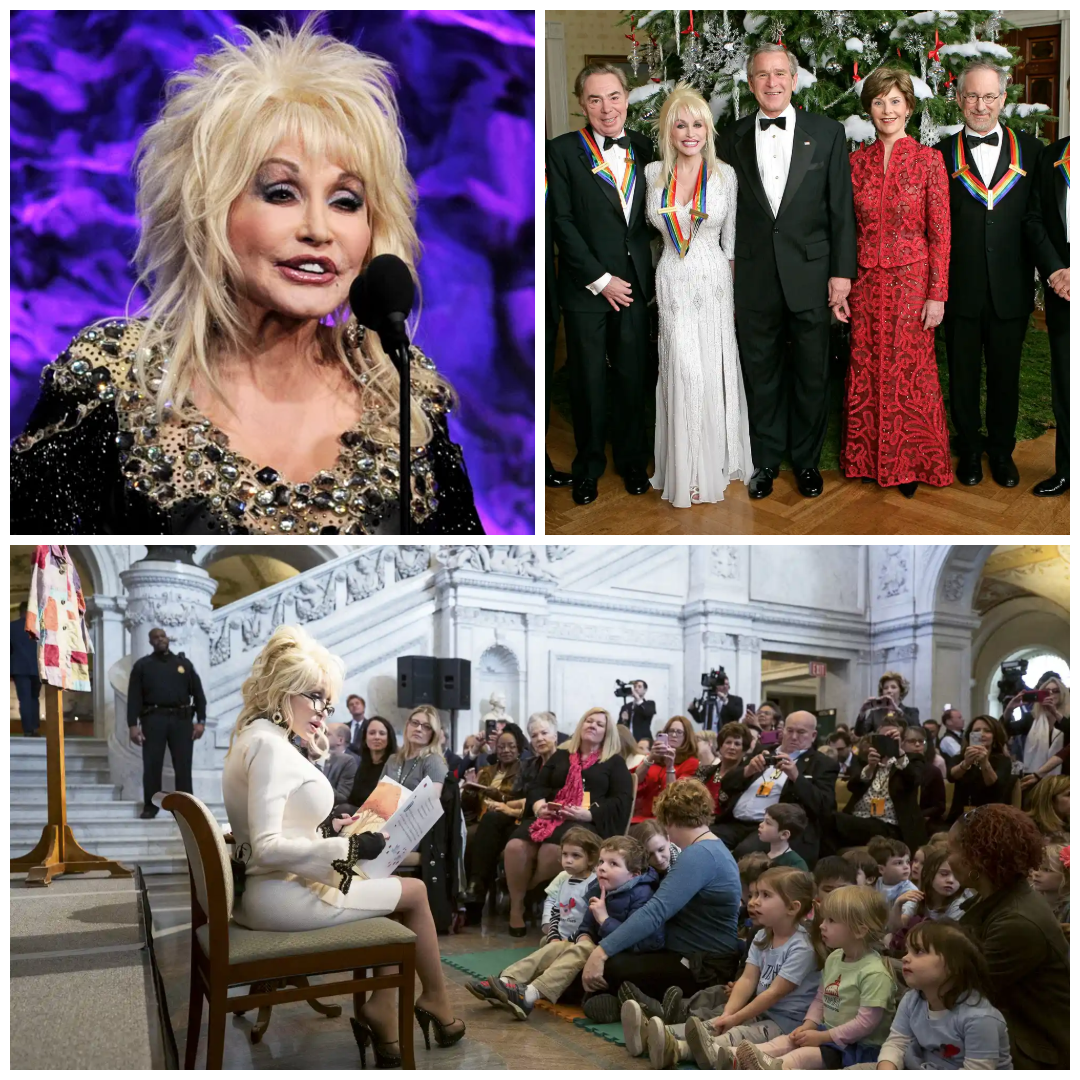
But when the conversation turned to partisan allegiance, she usually stepped away.:max_bytes(150000):strip_icc():focal(849x379:851x381):format(webp)/Dolly-Parton-Speaking-GLAAD-73db00681e0e49b48b10f008020cd8bf.jpg)
She Knew People Put Her on a Pedestal
Parton’s caution was partly rooted in the unusual relationship she had developed with her audience.
By 2021, she admitted that being held up as a moral authority could actually frighten her.
Fans often saw qualities in her that they connected with themselves, she explained. She did not believe people came to her simply because they wanted to observe Dolly Parton the celebrity. They found pieces of their own lives, values and struggles reflected in her.
That gave her words influence.
It also gave them weight.
Parton viewed her ability to connect with people as a gift from God and said she felt a responsibility to handle that gift carefully.
Her approach became especially visible during the COVID-19 pandemic.
Parton donated $1 million to Vanderbilt University Medical Center, helping fund research connected to Moderna’s COVID-19 vaccine.
She later downplayed the praise she received for her contribution, saying she probably received more credit than she deserved and was simply grateful to play a role in confronting a crisis affecting so many people.
The vaccine itself eventually became entangled in partisan arguments and conspiracy theories.
Parton, however, resisted becoming a political symbol for either side.
That was consistent with a pattern that lasted through multiple presidential administrations.
She Came Close to Politics — Then Usually Stepped Away:max_bytes(150000):strip_icc():focal(999x0:1001x2):format(webp)/dolly-parton-reading-to-kids-library-of-congress-111125-5b3d50c4ef5549abb87fb6a087050137.jpg)
During the 2016 presidential campaign, Parton was asked about Hillary Clinton.
She said Clinton might make as good a president as anyone and expressed enthusiasm about the possibility of a woman doing the job well.
But she stopped short of endorsing her.
Instead, Parton turned the Clinton-Donald Trump contest into a joke, saying Americans could expect “presidential mood swings” regardless of which candidate won.
That same year, longtime friend Kenny Rogers jokingly described Parton as the Donald Trump of country music.
Again, she declined to turn the comparison into a political discussion.
Her response focused instead on one obvious similarity: the hair.
Parton maintained that distance even when presidential honors were involved.
During Trump’s first term, she declined the Presidential Medal of Freedom twice. One reason was the declining health of her husband, Carl Dean, who later died at 82.
She subsequently declined the same honor when President Joe Biden was in office.
Former President Barack Obama later admitted that not awarding Parton the medal during his own presidency had been an oversight.
Parton was hardly disconnected from presidents altogether. She visited the White House in 2006 while George W. Bush was president as one of that year’s Kennedy Center honorees, and a photograph also captured her with President Jimmy Carter in 1979.
But none of those associations turned her into a reliable public surrogate for one political party.
That appeared to be exactly how she wanted it.
She Was More Comfortable Talking About What She Was For
Avoiding partisan politics did not mean Parton remained silent about everything controversial.
She repeatedly used her voice when a subject connected with values she considered fundamental.
One of those causes was childhood literacy.
Her Imagination Library, launched in 1995, eventually distributed more than 300 million books to children around the world.
Parton once described herself as almost “addicted” to the feeling of helping others. The satisfaction came from knowing something she had done could improve somebody else’s life.
The program earned praise from politicians across party lines after her death.
Kentucky Gov. Andy Beshear remembered Parton as an American icon who brought people together and highlighted the Imagination Library’s impact on children in his state.
President Trump also honored Parton after her death, calling her irreplaceable and ordering U.S. flags lowered to half-staff for a week.
That bipartisan reaction reflected something unusual about the public identity Parton had carefully protected.
People could disagree fiercely about politics and still feel that Dolly belonged to them.:max_bytes(150000):strip_icc():focal(742x182:744x184):format(webp)/Dolly-Parton-GeorgeW.BushLauraBush-Smokey-Robinson-StevenSpielbergZubinMehta-96cac2ab8f2240febca5807ea41ba72a.jpg)
There Were Issues She Would Not Avoid
Parton’s reluctance to enter partisan fights had limits.
When she believed the issue involved accepting people for who they were, she was much more direct.
She publicly supported gay marriage as early as 2009, six years before the Supreme Court legalized it nationwide.
In 2016, Parton explained that she believed people should be accepting and loving rather than judgmental. She emphasized her belief that everyone was one of God’s children and deserved the freedom to be themselves.
She spoke again in 2023 after Tennessee passed laws targeting transgender people.
Parton returned to the same principle: judgment ultimately belonged to God, not to other people.
Those statements were political in effect, but Parton framed them less as allegiance to a party than as expressions of her faith and her broader philosophy of acceptance.
That was an important difference in the way she saw her role.
She did not want to tell Americans which political team to join.
She was willing to tell them how she believed people should treat one another.
Even the Idea of President Dolly Became a Joke
By 2023, Parton was asked whether she might ever run for president herself.
Her answer was unmistakably Dolly.
She joked that the White House had already had enough “boobs” and said she had no interest in the job.
Then she made a more serious point.
Parton did not consider politics her field.
She believed she was qualified to do something else: write songs, communicate with people, encourage acceptance and perhaps point listeners toward a better direction.
That was the lane she chose.
For an entertainer whose career lasted through vastly different political eras, the decision helped preserve something rare.
Parton could appear at the White House, receive praise from Democrats and Republicans, support LGBTQ+ rights, fund medical research and advocate for children without allowing herself to become permanently branded as a spokesperson for a political party.
Her restraint was not the absence of conviction.
It was a conviction of its own.
Dolly Parton believed influence should be handled carefully — and that faith, fame and personal beliefs could be used to help people without becoming weapons against those who saw the world differently.