STEPHEN SCHNEIDER’S DEFENSE CHALLENGES MORE THAN HIS ALCOHOL LEVEL IN FATAL BOAT CR@SH
STEPHEN SCHNEIDER’S DEFENSE CHALLENGES MORE THAN HIS ALCOHOL LEVEL IN FATAL BOAT CRASH
BARNEGAT BAY, N.J. — The legal battle surrounding Stephen Schneider is beginning to focus on more than the 64-year-old grandfather’s reported alcohol level.
Schneider is facing charges stemming from the July 19 boat crash on Barnegat Bay that claimed the lives of his grandchildren, 9-year-old Mya Golabek and 7-year-old Sigmund “Siggy” Golabek.
Prosecutors have pointed to a reported blood alcohol concentration of 0.16% as significant evidence in the case. But Schneider’s defense team is examining another critical question: what could actually be seen from the helm in the moments before the crash?
 DEFENSE EXAMINES THE CHANNEL MARKER
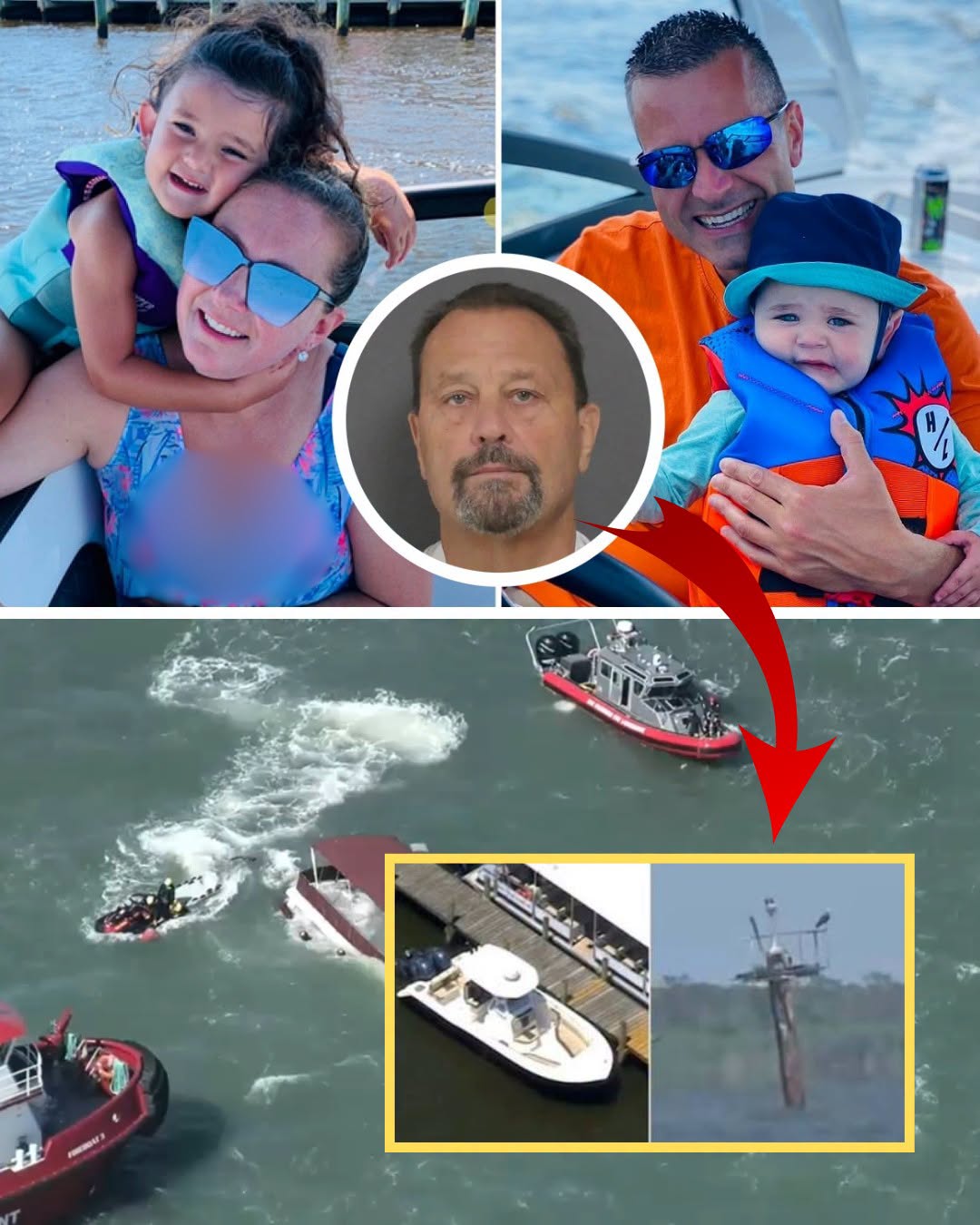
According to the defense, investigators must consider the physical conditions surrounding the collision, including the channel marker buoy that Schneider’s boat struck.
The visibility of the marker at night could become an important issue as attorneys reconstruct the accident.
The defense is expected to examine factors such as lighting, visibility, the boat’s position and the surrounding conditions to determine what Schneider could reasonably have seen while operating the vessel.
That could become significant as prosecutors and defense attorneys present competing explanations for what happened in the seconds before the collision.
 THE ALCOHOL EVIDENCE
The reported 0.16% BAC remains a major part of the prosecution’s case.
Schneider was accused of operating the approximately 30-foot vessel while impaired when the boat collided with a navigational marker in Barnegat Bay.
The crash sent the children into the water.
However, a high BAC alone does not resolve every question surrounding a boating accident. The defense can challenge how the evidence was obtained, what it establishes and whether other circumstances contributed to the collision.
A FAMILY TRAGEDY AT THE CENTER OF THE CASE
Mya and Sigmund were Schneider’s grandchildren.
Their deaths have turned what might otherwise have been a boating-crash prosecution into an intensely emotional family case.
Schneider’s family has also emphasized the tragedy’s accidental nature, while prosecutors are pursuing criminal charges based on their allegations about his conduct.
Schneider is presumed innocent unless proven guilty in court.
WHAT THE COURT MAY HAVE TO DETERMINE
As the case moves forward, attorneys could focus on several competing questions.
How impaired was Schneider at the time of the crash?
What were the visibility and lighting conditions on Barnegat Bay?
How clearly could the channel marker be seen from the helm?
And ultimately, what caused the boat to collide with the marker?
Those questions could become central to the upcoming proceedings.
The defense’s focus on the physical environment does not eliminate the prosecution’s alcohol evidence. Instead, it suggests that attorneys are preparing to argue that the circumstances of the crash must be considered as a whole.
THE NEXT STAGE OF THE LEGAL BATTLE
The case now appears poised to become a fight over both Schneider’s condition and the circumstances surrounding the collision.
For prosecutors, the reported BAC could provide powerful evidence supporting their allegations.
For the defense, the visibility of the channel marker and the conditions on the water could provide another explanation for how the crash occurred.
The courtroom battle over Mya and Sigmund’s deaths may ultimately come down to more than a number on a toxicology report — it could also depend on what Stephen Schneider could actually see from the helm that night.