STEPHEN SCHNEIDER’S DEFENSE OPENS A SECOND FRONT — NOW THE CHANNEL MARKER IS UNDER SCRUTINY
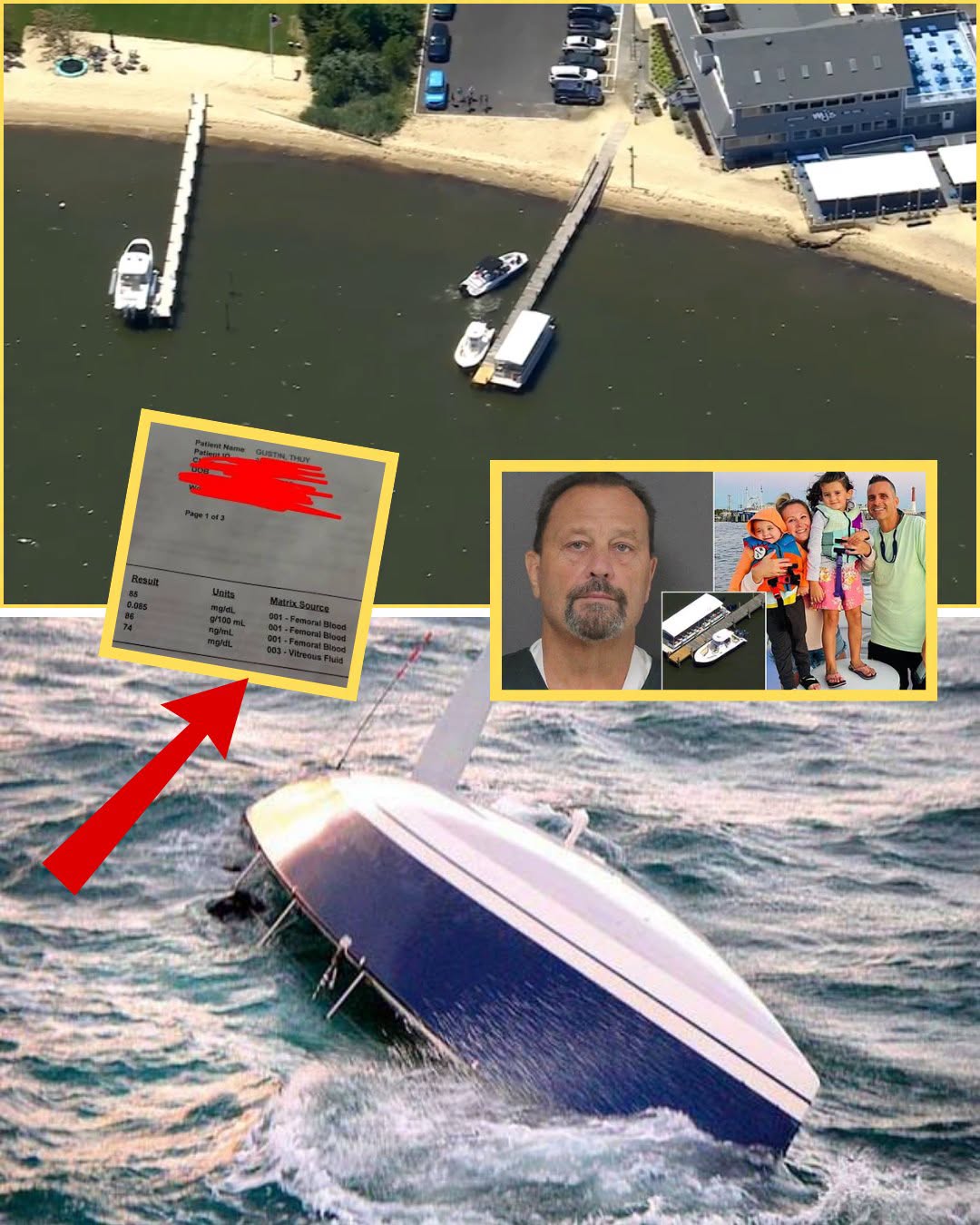
STEPHEN SCHNEIDER’S DEFENSE OPENS A SECOND FRONT — NOW THE CHANNEL MARKER IS UNDER SCRUTINY
The legal battle surrounding Stephen Schneider is moving beyond one of the prosecution’s strongest pieces of evidence.
Schneider, 64, is facing charges following the July 19 boating collision on New Jersey’s Barnegat Bay that claimed the lives of his two grandchildren, 9-year-old Mya Bella Golabek and 7-year-old Sigmund “Siggy” Paul Golabek.
Prosecutors say Schneider’s blood alcohol concentration was approximately 0.16%, twice New Jersey’s legal limit for operating a vessel.
But his defense is now looking closely at another question:
What could Schneider actually see from the helm that night?
 THE CHANNEL MARKER BECOMES A KEY FOCUS
Schneider’s boat struck an Intracoastal Waterway channel marker shortly after 9 p.m.
According to authorities, the impact threw Mya and Sigmund from the vessel.
Both children were wearing life jackets, but they were later found in the water and could not be saved.
At a recent court hearing, Schneider’s attorney William Cunningham indicated that investigators were still examining whether the channel marker was illuminated at the time of the collision.
That issue could become an important part of the defense strategy.
If the marker was difficult to see under the nighttime conditions, attorneys could argue that the circumstances surrounding the collision were more complicated than the alcohol evidence alone suggests.
 PROSECUTORS HAVE A VERY DIFFERENT THEORY
The prosecution’s case centers heavily on Schneider’s reported BAC.
Authorities say his blood alcohol level was approximately 0.16 after the crash — twice the legal limit.
Prosecutors argue that the level was consistent with significant impairment and that Schneider should not have been operating the boat under those conditions.
That evidence gives prosecutors a straightforward narrative:
Alcohol.
Impaired operation.
A collision with a fixed navigational marker.
And two children lost from the boat.
The defense is now attempting to add another layer to that timeline.
WHAT DID SCHNEIDER SEE?
The question of visibility could become crucial.
A nighttime boating collision can involve numerous factors, including lighting, distance, angle of approach, surrounding lights and the operator’s ability to identify a navigational aid in time to react.
Schneider’s attorneys may seek evidence showing precisely how the marker appeared from the helm immediately before the collision.
They could also examine the boat’s navigation equipment and other physical conditions surrounding the crash.
The objective would be to determine whether the marker was clearly visible and whether a sober operator would necessarily have detected it under the same circumstances.
That does not eliminate the BAC evidence.
But it could create a more complicated picture of what happened during the final moments before impact.
THE BOAT WAS CARRYING TWO CHILDREN
Mya and Sigmund had been spending time with their grandparents after a family dinner.
The children ultimately rode home with Schneider and his wife aboard their Tidewater vessel.
The trip was expected to be short.
Instead, the boat struck the channel marker, sending both children into the water.
The tragedy has left their parents facing an unimaginable loss.
Their father has reportedly asked the court to allow Schneider to remain released while the case proceeds, describing him as a loving grandfather and emphasizing the family’s need to grieve together.
THE DEFENSE IS NOT IGNORING THE BAC
Schneider’s lawyers are not simply arguing that the alcohol evidence does not exist.
Instead, the defense appears to be examining whether the entire crash can be explained by impairment alone.
That distinction could matter enormously.
A BAC of 0.16 is powerful evidence for the prosecution.
But criminal responsibility ultimately depends on the complete circumstances surrounding the alleged conduct.
The defense can challenge the state’s reconstruction by examining visibility, navigation, the marker, the boat and Schneider’s actions immediately before and after the impact.
THE NIGHTTIME CONDITIONS COULD BECOME A COURTROOM BATTLE
The marker itself may eventually become one of the most closely examined pieces of physical evidence.
Was its light functioning?
How far away was it visible?
What was the angle of approach?
Were there other sources of light around the water?
How much time would an operator have had to react?
And what information was available through the boat’s navigation equipment?
Those questions could lead to competing testimony from navigation and boating experts.
The prosecution may argue that the marker was a known navigational hazard that should have been avoided.
The defense may argue that investigators need to establish exactly what Schneider could see before concluding why he failed to avoid it.
RELEASED — BUT FACING SERIOUS CHARGES
A judge recently granted Schneider conditional release despite prosecutors arguing that he should remain detained because of the reported BAC and the severity of the allegations.
Among his conditions, Schneider is prohibited from operating a boat or motor vehicle while he completes a court-ordered assessment.
He is charged with two counts of death by vessel, along with operating a vessel under the influence and reckless operation.
He is due back in court on September 15.
TWO PIECES OF EVIDENCE, ONE CRITICAL QUESTION
The case is now developing around two very different forms of evidence.
On one side:
The blood.
The reported 0.16% BAC is a major part of the prosecution’s case.
On the other:
The physical scene.
The channel marker, its lighting, the nighttime conditions and what Schneider could see from the helm may become central to the defense.
The two sides are likely to present very different explanations for the same few seconds.
Prosecutors may argue that alcohol impaired Schneider and contributed directly to the collision.
The defense may argue that investigators must consider every physical condition surrounding the crash before determining responsibility.
THE FINAL SECONDS COULD MATTER MOST
Mya and Sigmund were on their way home with their grandparents.
Then, shortly after 9 p.m., the boat struck the marker.
In an instant, the children were thrown into the darkness of the water.
Now investigators and attorneys are reconstructing those final moments piece by piece.
The BAC.
The boat.
The marker.
The lighting.
The visibility.
And the actions of the person at the helm.
The defense’s second battlefront could ultimately come down to one question:
Was this collision caused solely by Schneider’s alleged impairment — or did the physical conditions on the water also play a significant role?
That question remains unresolved.
And as the case moves toward its next court proceedings, the answer could become one of the most important issues in determining Stephen Schneider’s legal responsibility for the tragedy.