Frank Beard, the Rhythmic Force Behind ZZ Top for More Than Five Decades, Dies at 77
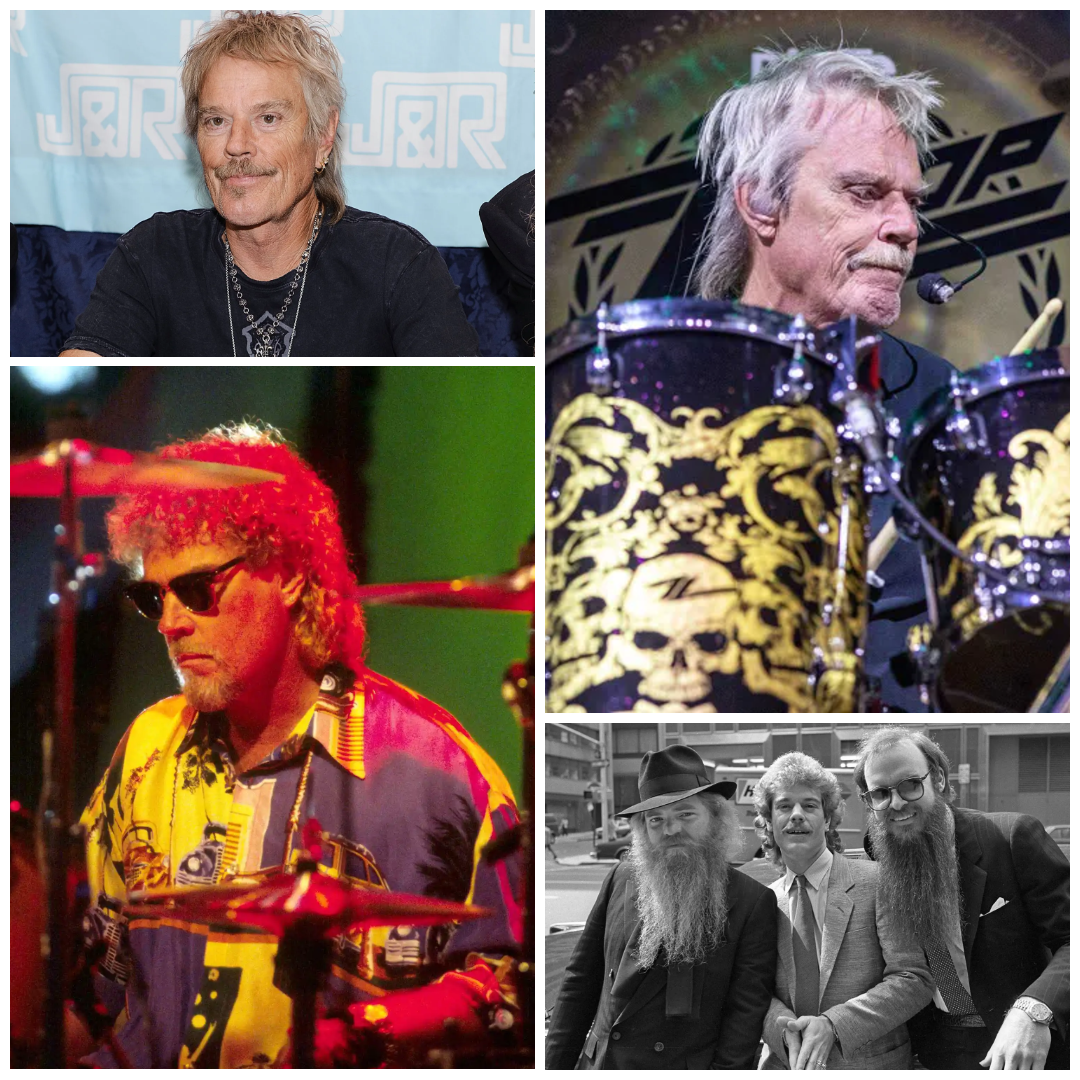
For more than half a century, Frank Beard sat behind the drum kit as ZZ Top built one of rock music’s most recognizable sounds. His steady backbeat carried the Texas trio through changing decades, major albums, packed tours and the loss of longtime bandmate Dusty Hill.
Now ZZ Top is moving forward without another piece of its classic lineup.
Beard died Monday, Aug. 17, at age 77 while receiving hospice care at his ranch in Richmond, Texas. A cause of death has not been disclosed.
The news came after a difficult stretch for the band. Only days earlier, Beard had stepped away from ZZ Top’s ongoing summer tour because of illness, a development that followed an unexpected concert cancellation and another health-related absence earlier in his life.
Billy F. Gibbons, ZZ Top’s longtime singer and guitarist, remembered Beard not simply as a bandmate but as a “great friend and collaborator.” He also praised Beard as a naturally innovative drummer and a deeply Texan figure whose unmistakable rhythm had been essential to the group’s music.
Gibbons said the band intends to carry on, something he indicated Beard himself had wanted.:max_bytes(150000):strip_icc():focal(749x0:751x2):format(webp)/Frank-Beard-drummer-081126-1-d7b1b5b1f9594ea389f21e3f5ec91607.jpg)
A Troubling Turn During ZZ Top’s Summer Tour
The final weeks of Beard’s life brought growing signs that something was wrong.
ZZ Top had been in the middle of its The Big One! summer U.S. tour when the band abruptly canceled a planned Aug. 5 performance at the Hollywood Bowl in Los Angeles. The cancellation was announced the night before the concert.
At the time, the group referred to unexpected personnel issues that made the appearance impossible. Gibbons later described the circumstances as obstacles the band could not overcome and asked fans to remain patient during what was then presented as a brief interruption.
On Aug. 11, it became known that Beard was taking leave because of illness. Drummer Michael Monahan was brought in to fill his place at the remaining performances.
Beard had also stepped away from touring previously, taking a leave in March for what was described as a health procedure.
Less than a week after the latest leave was announced, Beard died at his Texas ranch.
Following his death, ZZ Top canceled upcoming concerts in Salt Lake City and Colorado Springs. The band planned to resume the tour with two performances at Austin City Limits, a venue Beard particularly liked in a city that had become something of a second home to him.
For a musician whose identity was so closely connected to Texas, returning to Austin carries particular meaning as the band enters its next chapter without him.:max_bytes(150000):strip_icc():focal(839x239:841x241):format(webp)/Frank-Beard-3-081826-67a338f98cf046dcaa79df60a7ae0645.jpg)
A Texas Drummer From the Beginning
Beard’s connection to music started long before ZZ Top became famous.
Born in 1949 and raised in Irving, Texas, he began playing drums at 15 while attending Irving High School. Not long afterward, he met Dusty Hill, beginning a musical partnership that would eventually become central to one of rock’s longest-running bands.
During their early years, Beard and Hill backed blues musician Lightnin’ Hopkins at folk venues. They also performed together in several groups, including Outlaws, the Cellar Dwellers, the Warlocks and American Blues.
When ZZ Top formed in 1969, Beard soon joined alongside Hill, helping establish the lineup that would become synonymous with the band for decades.
While Gibbons and Hill became instantly recognizable to generations of fans for their enormous beards and stage presence, Frank Beard provided the pulse from behind them.
His contribution was less about occupying the center of the stage than making everything happening on that stage move.
Gibbons’ tribute emphasized exactly that point, crediting Beard’s signature backbeat as a key part of ZZ Top’s enduring sound.:max_bytes(150000):strip_icc():focal(809x659:811x661):format(webp)/Frank-Beard-4-081826-b122462a2f9146b694341c56829a6a45.jpg)
Success, Struggle and a Remarkable Second Act
Beard’s long career was not without difficult periods.
During the earlier part of his life in music, he struggled with addiction and substance abuse. Eventually, he stepped away for three years while getting sober.
He returned to a career that would stretch across decades.
ZZ Top ultimately released 15 studio albums, with records including Tres Hombres, Tejas, Eliminator, Afterburner and Recycler forming part of the band’s extensive catalog. The group’s combination of blues roots, hard-driving rock and unmistakable personality carried it through multiple generations of listeners.
In 2004, ZZ Top was inducted into the Rock & Roll Hall of Fame, cementing the group’s place in rock history.
But the band eventually faced a loss that changed its famous three-man lineup.
Hill died in 2021 at age 72. His final studio record with the band was 2012’s La Futura. Elwood Francis later became part of ZZ Top’s touring lineup on bass.
Beard and Gibbons continued.
Now, five years after Hill’s death, Gibbons and Francis are facing another goodbye.:max_bytes(150000):strip_icc():focal(708x393:710x395):format(webp)/Frank-BEARD-and-ZZ-TOP-and-Dusty-HILL-and-Billy-GIBBONS-081826-5e778513defd460d89d1318f109aef67.jpg)
The Family Behind the Musician
Away from the stage, Beard built a family life as his career with ZZ Top continued.
He married Debbie Meredith in 1982. The couple welcomed twin sons, Rory and Nico, in 1985, and they also raised Beard’s daughter from a previous marriage.
His death closes an extraordinary chapter not only for his family but for a band built around longevity.
ZZ Top survived shifts in popular music, personal struggles and the death of one of its founding figures while maintaining a connection to the sound and personality that had defined it from the beginning.
Beard was there for nearly all of it.
The group will continue performing, honoring what Gibbons said were Beard’s wishes. Yet every future ZZ Top show will inevitably carry the absence of the drummer whose rhythm helped hold the band together for more than five decades.
For a musician who spent much of his career seated behind two of rock’s most visually famous performers, Beard’s legacy can be heard in the thing that never needed to demand attention: the beat underneath it all.