LUCY LETBY CASE ROCKED BY NEW MEDICAL EVIDENCE AS EXPERTS CHALLENGE KEY INSULIN TESTIMONY
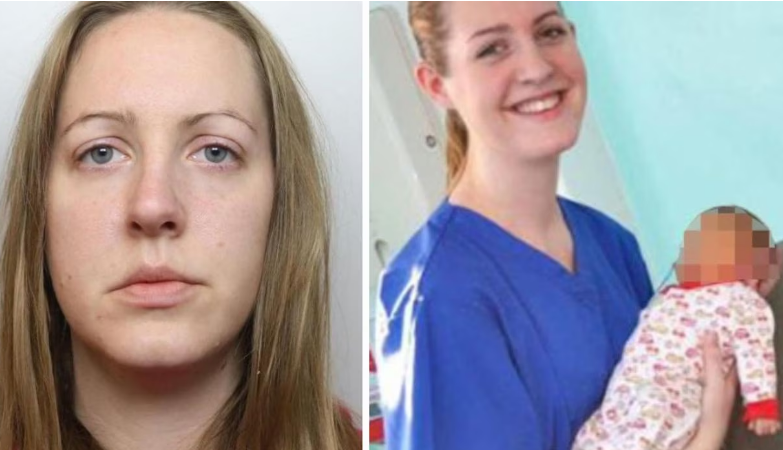
LUCY LETBY CASE ROCKED BY NEW MEDICAL EVIDENCE AS EXPERTS CHALLENGE KEY INSULIN TESTIMONY
The Lucy Letby case is facing renewed scrutiny after medical experts raised fresh questions about some of the scientific evidence that helped prosecutors build their case against the former neonatal nurse.
Letby is serving whole-life prison sentences after being convicted of murdering seven babies and attempting to murder seven others at the Countess of Chester Hospital in England.
But while her convictions remain in place, a growing group of medical and scientific experts has challenged important aspects of the evidence presented at trial.
The dispute has now reached the Criminal Cases Review Commission, which is examining whether the case should be sent back to the Court of Appeal.
And at the center of the controversy is one of the most important pieces of scientific evidence used against Letby:
Insulin.
 THE INSULIN EVIDENCE UNDER THE MICROSCOPE
Two of Letby’s convictions involved allegations that babies had been deliberately poisoned with insulin.
At trial, prosecutors argued that abnormal insulin and C-peptide results demonstrated that the infants had been given insulin.
But independent experts have since questioned whether the test results can support such a definitive conclusion.
A major analysis published by experts argued that there was “no scientific justification” for stating that Letby definitely poisoned the babies with insulin and described the level of reasonable doubt surrounding those convictions as very strong.
The significance is enormous because the insulin cases were presented as some of the clearest scientific evidence supporting the prosecution’s theory.
If that interpretation is successfully challenged, Letby’s defense could argue that a central pillar of the prosecution case has been weakened.
NEW REPORTS HAVE REIGNITED THE LEGAL FIGHT
Letby’s legal team has submitted extensive expert material to the CCRC.
The commission confirmed that it received an application on her behalf in February 2025 and has continued reviewing the case.
The CCRC’s role is not to decide whether Letby is innocent.
Instead, it must determine whether there is a real possibility that her convictions might not be upheld if the case were referred to the Court of Appeal.
That distinction is crucial.
Letby’s convictions have not been overturned.
But the scientific debate surrounding them has intensified.
A KEY PROSECUTION EXPERT ALSO FACES QUESTIONS
Another development has added fuel to the controversy.
Professor Peter Hindmarsh, a prosecution expert who gave evidence concerning the alleged insulin poisonings, was subject to a professional fitness-to-practise investigation by the General Medical Council while Letby’s trial was underway.
The investigation reportedly began on the same day he started giving evidence.
The prosecution and police have said they were not aware of the investigation at the time.
The revelation does not automatically invalidate his evidence.
But it has raised questions about what information was available to the court and whether the jury should have been aware of the investigation.
That issue is now part of the wider debate over the reliability of the evidence used at trial.
 COULD MEDICAL FAILURES HAVE PLAYED A ROLE?
One of the most explosive questions surrounding the case is whether some of the babies’ collapses could have resulted from underlying medical conditions or failures within the hospital rather than deliberate acts.
Critics of the original prosecution theory have pointed to the vulnerability of extremely premature and seriously ill infants, along with concerns about staffing, treatment and the hospital environment.
Those issues are also being examined through the wider public inquiry into events surrounding the Countess of Chester Hospital.
However, there is an important distinction between hospital failings existing and those failings actually causing a particular infant’s death.
The evidence must be examined case by case.
THE “SCAPEGOAT” THEORY
Letby’s supporters have argued that investigators became increasingly focused on her after a cluster of unexpected collapses occurred on the neonatal unit.
They claim this created a form of tunnel vision in which investigators looked for evidence connecting Letby to the babies rather than fully considering alternative medical explanations.
That argument remains fiercely disputed.
The original prosecution case relied on multiple categories of evidence, including medical testimony, Letby’s presence on the unit, clinical records and other circumstantial evidence.
A jury heard that evidence and convicted her.
The current challenge is therefore not simply about whether one medical test was interpreted correctly.
It is about whether newly presented expert evidence is strong enough to undermine the safety of the convictions as a whole.
THE CCRC HAS NOT DECLARED A MISCARRIAGE OF JUSTICE
Despite the explosive language surrounding the case online, the legal position remains unchanged.
The CCRC has not concluded that Letby was wrongfully convicted.
It has not declared her innocent.
And it has not ordered a retrial.
The commission is still examining the material submitted by her legal team.
That means claims that new evidence has already “proved” a miscarriage of justice go beyond what has been officially established.
What can be said is that serious questions have been raised by independent experts about portions of the medical evidence.
ANOTHER MAJOR DECISION HAS ALREADY BEEN MADE
While the CCRC review continues, prosecutors recently confirmed that Letby will not face additional charges over six further cases involving babies who experienced collapses.
An independent review upheld the decision not to prosecute because the evidential threshold for additional charges was not met.
That decision does not affect the convictions for which Letby is currently serving her sentence.
But it has added another layer to the ongoing public debate.
THE CASE NOW HAS TWO VERY DIFFERENT NARRATIVES
For prosecutors, the original evidence established that Letby deliberately harmed vulnerable infants.
For her defense and some independent experts, the medical evidence may have been interpreted too confidently, while alternative explanations may not have received sufficient weight.
Those two narratives now collide before the CCRC.
The commission will ultimately have to decide whether the new material is capable of changing the legal position.
WHAT HAPPENS NEXT?
If the CCRC concludes that there is a real possibility the convictions are unsafe, it could refer the case to the Court of Appeal.
That would open another major legal battle.
If it does not, Letby’s existing convictions remain in force unless another legal avenue becomes available.
For now, there is no final answer.
But the scientific debate is becoming impossible to ignore.
The insulin evidence is being reexamined.
The testimony of key experts is under renewed scrutiny.
Hospital conditions and possible alternative medical explanations remain subjects of intense debate.
And Letby’s legal team continues its effort to persuade the CCRC that the convictions deserve another look.
THE QUESTION THAT COULD CHANGE EVERYTHING
The most important issue is no longer simply whether Lucy Letby was present when babies became critically ill.
It is whether the medical evidence used to explain why those babies deteriorated was interpreted correctly.
If the courts ultimately determine that critical scientific evidence was fundamentally unreliable, the consequences could be enormous.
But that decision has not been made.
For now, Lucy Letby remains convicted.
And the extraordinary legal and scientific battle over the evidence continues.
The next major chapter may come when the CCRC decides whether this case belongs back before the Court of Appeal.