LINDSAY CLANCY’S FATE NOW IN JURY’S HANDS AS PROSECUTION AND DEFENSE CLASH OVER HER STATE OF MIND
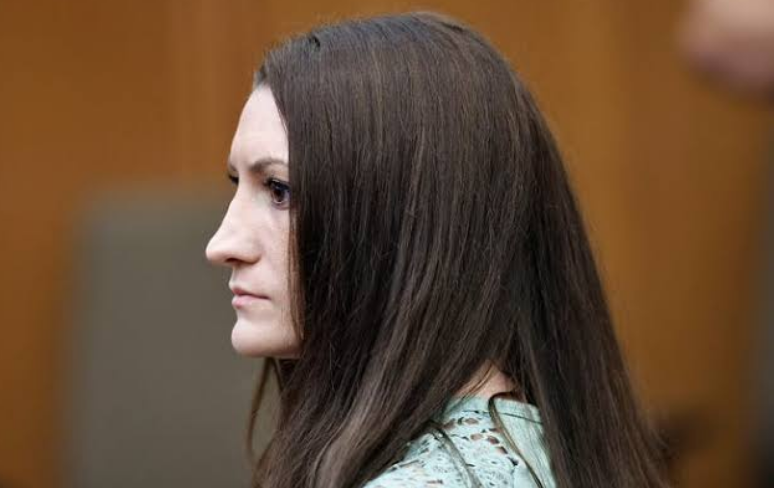
LINDSAY CLANCY’S FATE NOW IN JURY’S HANDS AS PROSECUTION AND DEFENSE CLASH OVER HER STATE OF MIND
PLYMOUTH, MASS. — After a trial filled with emotional testimony, psychiatric evidence and deeply conflicting accounts of what happened inside a Massachusetts home, the Lindsay Clancy case has reached its most consequential moment.
At 12:34 p.m. EDT, jurors began deliberating, placing the fate of the mother accused of killing her three young children in their hands.
But the jury is not being asked only to determine whether Clancy committed the acts prosecutors accuse her of.
The central question is far more complicated:
Was Lindsay Clancy legally responsible for her actions at the time?
That question has divided the courtroom throughout the trial.
 TWO COMPLETELY DIFFERENT PORTRAITS
The defense has portrayed Clancy as a devoted mother overwhelmed by a devastating psychiatric crisis.
Attorney Kevin Reddington argued that she was suffering from severe mental illness and psychosis and that her condition had fundamentally altered her ability to understand and control her behavior.
Defense experts testified that Clancy was experiencing psychosis.
Reddington also challenged the medical care she received before the tragedy, arguing that warning signs were not adequately recognized or addressed.
For the defense, the case cannot be understood simply by looking at the horrific outcome.
Jurors must consider what was happening inside Clancy’s mind at the time.
PROSECORS SEE SOMETHING VERY DIFFERENT
The Commonwealth presented a sharply contrasting narrative.
Prosecutors acknowledged that Clancy was struggling with depression and serious emotional difficulties.
But they argued that she nevertheless understood right from wrong and remained capable of controlling her conduct.
Their case focused heavily on what happened before the children were harmed.
Prosecutors argued that Clancy deliberately created an opportunity to be alone with her children by sending her husband, Patrick, out on errands.
They pointed to her communications, internet searches and other actions as evidence that she had been thinking about what she was going to do.
To prosecutors, those details suggested planning rather than an uncontrollable psychotic episode.
 THE CHILDREN AT THE CENTER OF THE CLOSING ARGUMENT
The prosecution’s final appeal to jurors became intensely personal.
Rather than focusing exclusively on psychiatric testimony and legal definitions, prosecutors reminded jurors who the victims were.
Cora wanted to become a doctor.
Dawson wanted to become a firefighter.
And Callan, the youngest, “never got a chance to dream.”
The Commonwealth argued that Clancy continued strangling the children long enough to ensure they would not survive.
Prosecutors then asked the jury to find her guilty.
THE DEFENSE POINTS TO WHAT HAPPENED AFTERWARD
Reddington’s closing argument also centered on Clancy’s own actions after the children were harmed.
He pointed to the severity of her suicide attempt, arguing that she went through a second-story window and suffered catastrophic injuries that left her paralyzed.
The defense has argued that those injuries undermine the prosecution’s suggestion that the attempt was staged or carefully calculated.
In their view, Clancy’s actions demonstrate the depth of the psychiatric crisis she was experiencing.
WHAT THE JURY MUST ACTUALLY DECIDE
The judge’s instructions gave jurors an important framework.
The Commonwealth must prove beyond a reasonable doubt not only that Clancy committed the charged acts, but also that she was criminally responsible when they occurred.
Under Massachusetts law, a defendant may be found not guilty by reason of insanity if a mental disease or defect left that person unable to appreciate the wrongfulness of the conduct or unable to conform their behavior to the law.
That means mental illness alone does not automatically determine the outcome.
The jury must decide whether Clancy’s condition reached the legal threshold required for an insanity defense.
THE BATTLE OVER HER MIND
That distinction has become the defining issue of the trial.
The prosecution essentially says:
She was suffering, but she still knew what she was doing.
The defense says:
Her psychiatric illness had reached a point where she could no longer fully understand or control her actions.
The jury now has to determine which interpretation is supported by the evidence and satisfies the law.
A TRIAL BUILT AROUND COMPETING EVIDENCE
Jurors have heard testimony concerning Clancy’s mental health, her medical treatment, her behavior before the incident and the events surrounding the children’s deaths.
They have also heard competing expert opinions.
The prosecution’s interpretation of her communications and actions has been challenged by the defense, while prosecutors have questioned the idea that severe mental illness necessarily eliminated her ability to distinguish right from wrong.
The jury must now weigh those conflicting accounts.
THE WAIT BEGINS
There is no guaranteed timetable for deliberations.
Jurors could reach a decision relatively quickly, or they could spend considerably longer reviewing the evidence and discussing the legal instructions.
Until they return a verdict, the outcome remains unknown.
The case has already generated intense national attention because it raises difficult questions about motherhood, mental illness, medical treatment and criminal responsibility.
But inside the courtroom, the decision now belongs exclusively to the jury.
THREE CHILDREN, ONE LIFE-CHANGING VERDICT
Cora, Dawson and Callan are at the heart of everything the jury has heard.
Their lives ended, and their family has been left to live with an irreversible loss.
At the same time, Clancy’s defense is asking jurors to confront a different question — whether the woman responsible for the acts was legally capable of understanding their wrongfulness or controlling her behavior.
Those competing realities now collide in the jury room.
At 12:34 p.m., the courtroom handed the case to the jurors.
Now they must decide.
Was Lindsay Clancy a mother experiencing a devastating psychiatric crisis beyond her ability to control?
Or was she struggling with mental illness while still retaining the legal capacity to understand and control her actions?
The verdict has not yet been reached.
For now, Massachusetts waits.