“ONLY THREE BEERS”: STEPHEN SCHNEIDER’S CLAIM COLLIDES WITH 0.16 BAC RESULT IN DEADLY BOAT CRASH
“ONLY THREE BEERS”: STEPHEN SCHNEIDER’S CLAIM COLLIDES WITH 0.16 BAC RESULT IN DEADLY BOAT CRASH
BARNEGAT BAY, N.J. — Stephen Schneider says he had only three beers.
But prosecutors are pointing to a very different number.
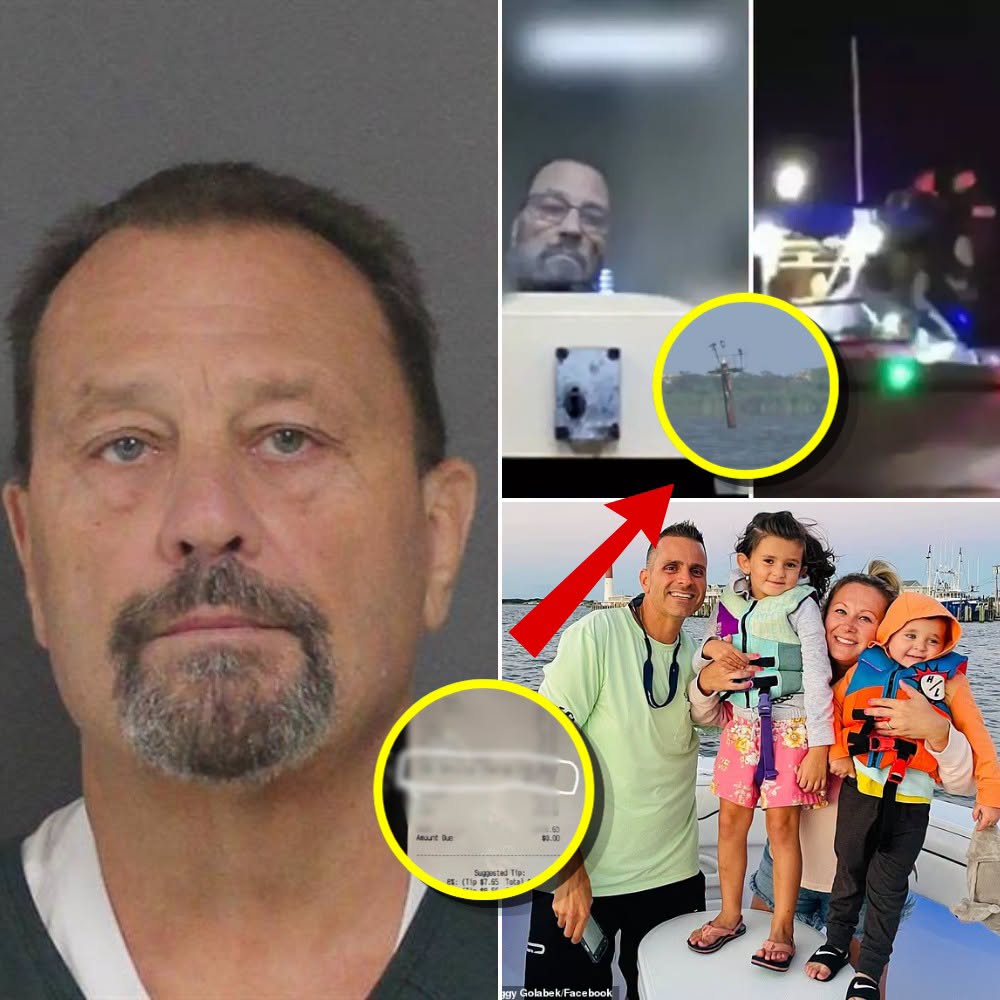
A 0.16 blood-alcohol reading has emerged as one of the most closely watched pieces of evidence in the case against the 64-year-old New Jersey boater, who is accused of being behind the wheel when his 28-foot boat struck a channel marker in Barnegat Bay.
The collision resulted in the deaths of Schneider’s two young grandchildren, Mya and Sigmund, turning what was supposed to be a family outing into a devastating tragedy.
Now, the stark difference between Schneider’s account of his drinking and the reported toxicology result could become a central issue in the legal battle.
 SCHNEIDER SAYS IT WAS ONLY THREE BEERS
According to reports, Schneider told investigators that he had consumed three beers over approximately two hours during a family dinner.
His wife, daughter, son-in-law and grandchildren were reportedly with him before the group went out on the water.
Schneider then took control of the family’s 28-foot Tidewater Custom 280.
What happened next would change the family forever.
The boat struck a channel marker in the darkness.
Mya and Sigmund, who were reportedly positioned toward the bow, were no longer aboard after the impact.
The family began searching for them in the water.
Schneider reportedly entered the water himself as the search continued.
 THE 0.16 RESULT
The defense and prosecution are now facing a critical question:
How does Schneider’s claim of three beers square with the reported 0.16 BAC result?
A blood-alcohol concentration of 0.16% is approximately twice New Jersey’s legal limit for operating a motor vehicle.
But the case involves a boat, not a car, and the precise legal standards and evidentiary issues surrounding boating under the influence are matters for the court.
The reported BAC nevertheless gives prosecutors a potentially powerful piece of evidence.
They can argue that Schneider’s level of intoxication was substantially greater than his description of his drinking suggested.
The defense, meanwhile, has reasons to scrutinize how and when the blood sample was collected, how it was analyzed and what the result can actually establish about Schneider’s condition at the moment of the collision.
THE CHANNEL MARKER BECOMES ANOTHER BATTLEFRONT
Alcohol is not the only issue under examination.
Schneider’s attorneys are also challenging the physical circumstances surrounding the crash.
A major question is the channel marker itself — including its visibility in nighttime conditions.
The defense is examining whether the marker could have been difficult to see from the helm and whether environmental and navigational conditions contributed to the collision.
That creates a second potential battlefield.
The prosecution can focus on Schneider’s reported BAC.
The defense can focus on what he could realistically see from the boat.
The ultimate question is whether the evidence proves that Schneider’s actions were the cause of the catastrophic collision beyond the required legal standard.
THE MOMENT THE CHILDREN DISAPPEARED
Perhaps the most haunting detail in the case involves what happened immediately after the collision.
According to reports, Schneider did not initially realize that Mya and Sigmund had fallen from the boat.
After the collision, the children were no longer aboard.
The family then realized they were missing and began searching in the darkness.
Schneider reportedly went into the water himself.
For investigators, that sequence is important because it helps establish the timeline — from the impact, to the realization that the children were missing, to the search that followed.
For the family, it represents an unimaginable nightmare.
A routine evening on the water had suddenly become a desperate search.
WHAT COULD THE DEFENSE ARGUE?
The defense does not necessarily have to prove that Schneider was completely sober.
Instead, attorneys can challenge whether prosecutors have established exactly what caused the collision and whether the evidence satisfies the legal requirements of the charges.
That could include questions about:
- The accuracy and timing of the BAC testing
- The circumstances surrounding the blood draw
- The visibility of the channel marker
- Lighting and nighttime conditions
- Schneider’s position and line of sight
- The boat’s speed and direction
- The exact sequence of events immediately before impact
Each detail could become significant as the case moves forward.
PROSECUTORS HAVE A SIMPLE NUMBER TO POINT TO
For the prosecution, however, the 0.16 figure is difficult to ignore.
It provides a concrete laboratory result that can be placed alongside Schneider’s own statement that he consumed only three beers.
The prosecution may argue that the two accounts do not fit together.
The defense will have the opportunity to challenge the significance of that result and present alternative explanations for the collision.
Ultimately, jurors — if the case reaches that stage — will have to determine which evidence they find credible.
A FAMILY DINNER THAT ENDED IN TRAGEDY
The details make the case particularly painful.
This was reportedly a family gathering.
A grandfather.
His daughter.
His son-in-law.
His wife.
And two grandchildren.
They were together for dinner before heading onto the water.
Then came the collision.
Mya and Sigmund were lost.
And a family outing became the center of a criminal investigation.
THE CASE MAY COME DOWN TO MORE THAN ALCOHOL
The prosecution’s theory could place heavy emphasis on Schneider’s reported BAC.
But the defense is signaling that it intends to make the case about more than alcohol.
Visibility.
Navigation.
The channel marker.
The boat’s position.
The nighttime environment.
And the precise moments surrounding the collision.
Those issues could determine whether the case is ultimately viewed as a straightforward impaired-boating prosecution or as a far more complicated dispute over what actually caused the crash.
For now, one contradiction sits at the center of the story:
Schneider says he had three beers.
The reported blood test showed 0.16.
And somewhere between those two facts lies a question that could become decisive in court:
What really happened during the final moments before the boat struck the marker?