LUCY LETBY CASE ERUPTS AGAIN AS NEW INSULIN EVIDENCE PUTS KEY TRIAL TESTS UNDER FRESH SCRUTINY
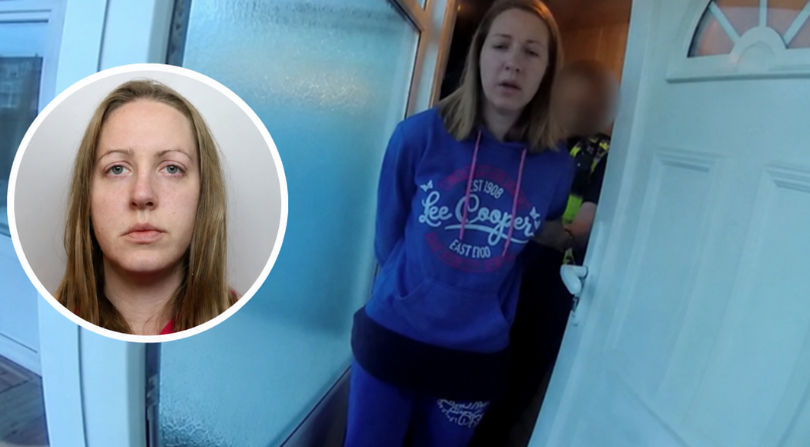
LUCY LETBY CASE ERUPTS AGAIN AS NEW INSULIN EVIDENCE PUTS KEY TRIAL TESTS UNDER FRESH SCRUTINY
LONDON — The Lucy Letby case is once again under intense scrutiny as newly submitted expert evidence challenges part of the medical evidence that helped prosecutors build their case against the former neonatal nurse.
Letby remains convicted and is serving whole-life sentences for the murders of seven babies and the attempted murders of several others at the Countess of Chester Hospital.
But behind the scenes, her legal team continues to argue that important scientific evidence presented at trial deserves a second look.
And one of the most closely watched issues is insulin.
 A 100-PAGE REPORT REACHES THE CCRC
On July 9, 2026, Letby’s legal team submitted a new 100-page analysis to the Criminal Cases Review Commission.
The report was prepared by consultant neonatologist Neil Aiton and statistician Hilde Wilkinson-Herbots.
According to publicly reported details, the experts challenge aspects of the evidence given at trial by prosecution insulin expert Professor Peter Hindmarsh.
Among the issues raised are questions about the interpretation of insulin results in two of the babies involved in the case and whether alternative explanations received sufficient consideration.
The report also reportedly questions how the alleged insulin administration could have occurred in circumstances where Letby was not working on some of the relevant shifts.
The full report has not been publicly released, meaning its arguments cannot yet be independently assessed in full.
But its submission has added another layer to an already extraordinary post-conviction battle.
WHY THE INSULIN EVIDENCE MATTERS
The insulin allegations involving Baby F and Baby L were among the most significant parts of the prosecution case.
Prosecutors alleged that the babies were deliberately given insulin, causing dangerous changes in their blood sugar levels.
Unlike some of the other allegations against Letby, these cases involved laboratory results that prosecutors argued were evidence of deliberate poisoning.
The defense has now raised questions about whether those results necessarily prove that conclusion.
That distinction is crucial.
An abnormal insulin reading may indicate a serious medical problem — but the legal question is whether the evidence proves that someone deliberately caused it.
 NEW SCIENTIFIC QUESTIONS HAVE EMERGED
The July report is not the only new development.
In April 2026, peer-reviewed research by Professor Geoffrey Chase and Helen Shannon examined insulin measurements in premature babies.
Their work suggested that naturally occurring biological mechanisms can produce elevated insulin readings in some premature infants and that insulin-binding antibodies may affect measured levels.
The researchers did not establish that Letby was innocent or that the babies were not given exogenous insulin.
Rather, their work raises a narrower scientific question: whether the laboratory results alone can establish deliberate administration.
That distinction is now central to the wider debate.
THE CONVICTIONS STILL STAND
Despite the renewed scrutiny, there has been no finding that Letby’s convictions are unsafe.
The Criminal Cases Review Commission has been reviewing her case since her preliminary application was received in February 2025.
The commission has stressed that its role is not to decide whether Letby is innocent or guilty.
Instead, it must determine whether there is a real possibility that a conviction would not be upheld if new evidence or arguments were considered by an appeal court.
If the CCRC believes that threshold is met, it can refer the case back to the Court of Appeal.
Until that happens, Letby’s convictions remain legally valid.
QUESTIONS GO BEYOND INSULIN
The latest controversy is part of a much broader examination of the evidence.
Critics of the convictions have questioned the interpretation of medical events, statistical evidence, staff rosters and the circumstances surrounding the babies’ collapses.
A 14-member international panel of neonatologists previously concluded that, in the cases it reviewed, it found no medical evidence of deliberate harm.
Those conclusions have become an important part of the post-trial debate, although they do not themselves overturn a criminal conviction.
The prosecution’s case, meanwhile, was tested extensively at trial, and Letby’s convictions were upheld following appeals.
THE THIRLWALL REPORT IS NOW DAYS AWAY
Another major development is approaching.
The Thirlwall Inquiry, which examined the events and institutional response at the Countess of Chester Hospital, is scheduled to publish its final report on September 15, 2026, in Liverpool.
The inquiry is separate from the criminal appeal process.
It cannot overturn Letby’s convictions.
But its findings could provide important information about staffing, hospital management, clinical concerns and how the deaths and collapses were handled before police became involved.
The inquiry has already examined a huge volume of evidence surrounding the neonatal unit.
A CASE THAT REFUSES TO DISAPPEAR
Letby’s convictions transformed her from a neonatal nurse into one of the most notorious figures in modern British criminal justice.
Now, years after her arrest and conviction, the case has entered another complicated phase.
The legal battle is no longer taking place inside a courtroom filled with witnesses and jurors.
Instead, scientists, statisticians, lawyers and investigators are examining old evidence with new questions.
At the center of the latest dispute is a deceptively simple issue:
What exactly did the insulin results prove?
The prosecution’s interpretation helped support the case against Letby.
New experts argue that the medical evidence deserves greater scrutiny and that alternative explanations may not have been adequately considered.
The CCRC must now decide whether those arguments are strong enough to justify sending the case back to the Court of Appeal.
THE NEXT CHAPTER COULD BE CRITICAL
For now, nothing has been overturned.
Lucy Letby remains convicted.
The CCRC has not declared her innocent.
And the new expert report is an argument for further examination — not a judicial finding that the original verdict was wrong.
But with a major new insulin analysis before the CCRC and the Thirlwall Inquiry’s final report due on September 15, the case is entering another potentially pivotal period.
After years of courtroom battles, the question surrounding Lucy Letby is no longer simply what the original jury believed.
It is whether the evidence can withstand a second, increasingly detailed examination.
And as the September report approaches, the world is once again watching one of Britain’s most controversial criminal cases unfold.