LINDSAY CLANCY JURY STUNNED BY 11-1 SPLIT — DEFENSE LAWYER SAYS ONE JUROR “REFUSES TO LISTEN TO THE LAW”
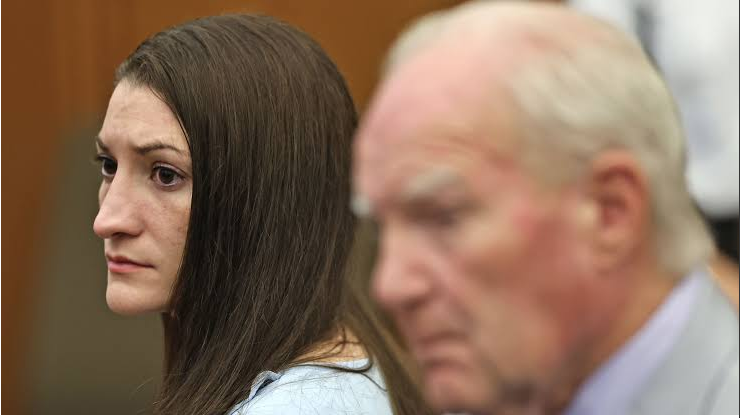
LINDSAY CLANCY JURY STUNNED BY 11-1 SPLIT — DEFENSE LAWYER SAYS ONE JUROR “REFUSES TO LISTEN TO THE LAW”
The Lindsay Clancy trial has reached a dramatic breaking point.
After six days of deliberations, the jury still cannot agree on a verdict.
And according to Clancy’s defense attorney, the disagreement may now come down to just one juror.
Attorney Kevin Reddington told reporters that the jury appeared to be split 11-1, with one juror allegedly refusing to follow the judge’s instructions concerning the legal standard of reasonable doubt.
Reddington has fiercely opposed the possibility of a mistrial, saying he believes the defense presented a strong case.
But the judge refused his request to remove the juror.
Now, all eyes are on what happens next.
:max_bytes(150000):strip_icc():focal(886x640:888x642):format(webp)/lindsay-clancy-trial3-9326-b486bdcc6dcf409990e5bd6aaab24ded.jpg) SIX DAYS — AND STILL NO VERDICT
SIX DAYS — AND STILL NO VERDICT
Clancy’s jury began deliberating on August 27.
By Thursday, September 3, jurors had spent more than 35 hours trying to reach a unanimous decision.
They had already informed the court that they were deadlocked.
Judge William Sullivan instructed them to continue deliberating, hoping they could resolve their differences.
But the stalemate continued.
The case has now reached the point where a mistrial is a genuine possibility if the jury cannot reach a unanimous verdict.
 THEN CAME THE BOMBSHELL JURY NOTE
The courtroom drama intensified after the jury foreperson sent a note raising concerns about one member of the panel.
According to Reddington, the note indicated that one juror was refusing to follow the judge’s instructions about reasonable doubt.
The defense immediately pushed for that juror to be removed.
Reddington argued that allowing the situation to continue could prevent the entire panel from reaching a verdict.
He later told reporters that it would be a “real shame” if the case ended in a mistrial because one juror refused to follow the court’s instructions.
THE JUDGE SAID NO
Judge Sullivan took a different approach.
He questioned jurors individually about whether they were capable of following his instructions.
The jurors indicated that they could.
That left the judge unwilling to side with either the alleged holdout juror or the other members of the panel.
Sullivan emphasized that removing a juror from a deliberating jury is an extremely sensitive matter.
He ultimately declined to remove anyone.
Instead, he reminded the entire jury about the legal definition of reasonable doubt and ordered them back into deliberations.
WHAT DOES “REASONABLE DOUBT” MEAN?
The judge specifically reminded jurors that prosecutors must prove criminal responsibility beyond a reasonable doubt.
But that does not mean prosecutors must eliminate every imaginable possibility.
Sullivan told jurors that proof beyond a reasonable doubt does not require proof beyond all possible doubt.
That legal distinction is now at the center of the jury dispute.
The defense appears to believe the disagreement could be decisive.
The prosecution, meanwhile, argued that the judge’s questioning was appropriate and that outsiders cannot know exactly what is happening inside the jury room.
CLANCY DOES NOT DENY WHAT HAPPENED
One of the most unusual aspects of this case is that the central dispute is not simply whether Clancy was responsible for the physical acts.
Clancy has admitted that she harmed her three children.
Her defense is based on lack of criminal responsibility.
Her attorneys argue that she was experiencing severe postpartum psychosis and was affected by psychiatric medications when the children died.
They contend that her mental state prevented her from understanding the nature or wrongfulness of what she was doing.
Prosecutors have presented a dramatically different picture.
They argue that Clancy was suffering from depression but was not psychotic and that she deliberately planned what happened.
The question for the jury is therefore whether Clancy should be held criminally responsible under Massachusetts law.
THREE CHILDREN AT THE CENTER OF THE CASE
The case involves Clancy’s three children:
Cora, 5.
Dawson, 3.
Callan, 8 months.
They were found at the family’s Massachusetts home in January 2023.
Clancy subsequently attempted suicide by jumping from a second-story window, leaving her paralyzed.
She has remained at Tewksbury Hospital since the incident.
For more than three years, the case has generated intense public debate about postpartum mental illness, psychiatric treatment and criminal responsibility.
Now, that debate has moved into a jury room.
THE DEFENSE SAYS IT WON THE CASE
Reddington has repeatedly expressed confidence in his defense.
After the jury became deadlocked, he reportedly said he was proud of the case he presented and used unusually blunt language to describe his performance against prosecutors.
He has also made clear that he does not want a mistrial.
That may seem surprising given the uncertainty surrounding the jury.
But a mistrial would mean the case could potentially be tried again.
And a second trial could give prosecutors another opportunity to present their evidence.
Legal experts have previously said a retrial would be highly likely if the first trial ended without a verdict because of the extraordinary seriousness of the allegations.
FIVE POSSIBLE OUTCOMES
The jury has five possible verdict options.
They can find Clancy:
- Guilty of first-degree murder
- Guilty of second-degree murder
- Guilty of manslaughter
- Not guilty by reason of lack of criminal responsibility
- Not guilty
A first-degree murder conviction could result in life imprisonment without parole.
A verdict of not guilty by reason of lack of criminal responsibility would lead to a psychiatric evaluation and could result in long-term institutionalization rather than a conventional prison sentence.
THE NEXT HOURS COULD CHANGE EVERYTHING
For now, there is no verdict.
The jury has been instructed to continue deliberating.
The judge has refused to remove the disputed juror.
And the courtroom remains on edge.
If the 12 jurors eventually reach an agreement, Clancy’s fate could finally be decided.
If they cannot, Judge Sullivan could declare a mistrial.
That would not mean Clancy had been found innocent.
It would mean the jury was unable to reach the unanimous decision required to resolve the case.
And then, after more than three years of waiting, the Lindsay Clancy case could be heading toward an entirely new chapter.
One juror.
Eleven on the other side.
No verdict.
And a family still waiting for an answer.