“THIS IS ARROGANCE” — SAFETY DIRECTOR SENTENCED AFTER 5-YEAR-OLD BOY DIES IN HYPERBARIC CHAMBER FIRE
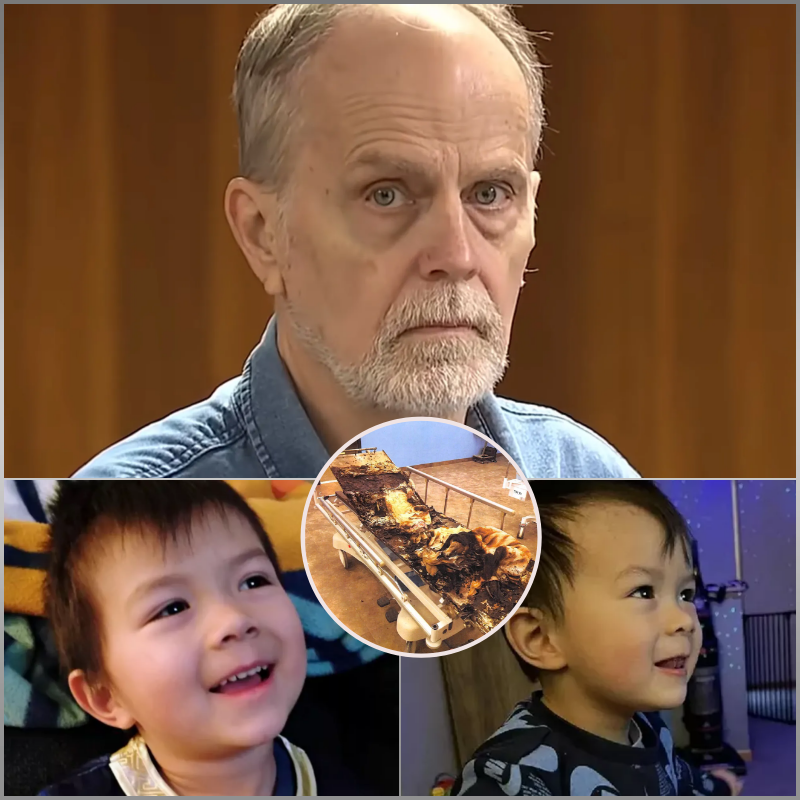
“THIS IS ARROGANCE” — SAFETY DIRECTOR SENTENCED AFTER 5-YEAR-OLD BOY DIES IN HYPERBARIC CHAMBER FIRE
JEFFREY MOSTELLER WILL SPEND AT LEAST 19 MONTHS IN PRISON AFTER A 5-YEAR-OLD BOY DIED IN A FIRE INSIDE A HYPERBARIC OXYGEN CHAMBER.
A 5-year-old boy went into a Michigan medical facility for treatment.
He never came home.
Now, more than a year after his death, the man responsible for safety at the facility has been sentenced to prison — after admitting that he failed to take action over a safety measure that prosecutors said could have prevented the tragedy.
The case has left a family devastated and raised serious questions about how basic safety rules were handled inside the facility.
:max_bytes(150000):strip_icc():focal(785x355:787x357):format(webp)/thomas-cooper-031125-6129207c615b48abbcc993487c2bdf0c.jpg) THOMAS COOPER WAS ONLY 5
THOMAS COOPER WAS ONLY 5
Thomas Cooper was receiving hyperbaric oxygen therapy at The Oxford Center in Troy, Michigan, on January 31, 2025.
During the treatment, the chamber suddenly caught fire.
Investigators said a spark inside the oxygen-rich environment ignited the fire, causing the chamber to erupt in flames.
Thomas died inside.
His mother was also injured as she desperately tried to get her son out of the chamber.
The tragedy quickly became the subject of a criminal investigation.
And investigators eventually focused on the facility’s safety practices.
THE SAFETY DEVICE THAT WASN’T BEING USED
One of the most important issues was a grounding strap.
The straps are designed to safely discharge static electricity and reduce the risk of a spark inside a hyperbaric chamber.
According to prosecutors and testimony presented in the case, the Oxford Center was not using the required grounding straps during treatments.
Investigators said the practice went against safety guidance from the National Fire Protection Association, the chamber manufacturer’s instructions and the facility’s own training materials.
And Jeffrey Mosteller, who was the center’s safety director, knew the straps were supposed to be used.
But prosecutors said he failed to correct the practice.
That failure became central to the criminal case against him.
:max_bytes(150000):strip_icc():focal(769x0:771x2):format(webp)/Thomas-Cooper-hyperbaric-092225-92f5e28bbb6645b8aa2f1523acc78a6a.jpg) “THIS IS ARROGANCE”
“THIS IS ARROGANCE”
During Mosteller’s sentencing, Oakland County Circuit Court Judge Kwamé Rowe delivered a blistering assessment.
He described the failure to use grounding straps as “arrogance.”
The judge said Mosteller appeared to have acted as though he knew better than the national fire code, the manufacturer’s safety manual and his own training and experience.
The message from the courtroom was clear:
A safety director’s job was to recognize the danger and insist that the proper precautions were followed.
According to prosecutors, that did not happen.
And a child paid the ultimate price.
MOSTELLER PLEADED NO CONTEST
Mosteller, 66, pleaded no contest to involuntary manslaughter in July.
Under the plea agreement, a separate second-degree murder charge was dismissed.
On August 31, he was sentenced to 19 months to 15 years in prison.
He became the first of four defendants charged in connection with Thomas’ death to complete his criminal proceedings.
Three others are still awaiting trial.
They include Oxford Center CEO Tamela Peterson, operations manager Gary Marken and chamber operator Aleta Moffitt.
Peterson and Marken face involuntary manslaughter and second-degree murder charges, while Moffitt faces involuntary manslaughter and a charge involving an allegedly false medical record.
The charges against those defendants remain allegations, and they are presumed innocent unless proven guilty in court.
“A HORRIFIC MISTAKE”
Mosteller did not make a personal statement in court.
His attorney, Alona Sharon, told the judge that Mosteller cared deeply about Thomas and had developed a strong rapport with him.
She described him as someone who did not intend to put the boy’s life in danger.
But she acknowledged that he had made a “horrific mistake” and failed to take corrective action over the grounding-strap issue.
Prosecutors did not argue that Mosteller intentionally wanted Thomas to die.
Instead, they focused on the consequences of failing to follow safety requirements in an environment where a small spark could become catastrophic.
HIS FAMILY COULDN’T FACE THE COURTROOM
Perhaps one of the most heartbreaking details came during the sentencing itself.
Thomas’ family did not attend.
They did not deliver a victim-impact statement.
Assistant Attorney General Chris Kessel told the court that the family simply was not in a place where they could participate in the proceedings.
The loss remained too painful.
For them, this was not simply a criminal case.
It was the death of a 5-year-old child.
A DEATH THAT PROSECUTORS SAY COULD HAVE BEEN PREVENTED
Michigan Attorney General Dana Nessel has described Thomas’ death as preventable.
The case has also raised broader questions about the safety of hyperbaric oxygen therapy and the responsibility of facilities that provide the treatment.
A hyperbaric chamber operates in an oxygen-rich environment, making fire prevention especially critical.
The prosecution’s argument was ultimately simple:
When safety rules exist to prevent a foreseeable danger, ignoring them can have devastating consequences.
In Thomas Cooper’s case, that danger became reality.
BUT THE CASE IS NOT OVER
Mosteller’s sentencing closes only one chapter.
Three other defendants are still awaiting trial.
Thomas’ family is also pursuing a separate civil case connected to his death.
And the tragedy continues to raise questions about what happened inside the Oxford Center before the chamber caught fire — and why safety measures that experts considered necessary were not being followed.
A little boy entered the facility expecting treatment.
Instead, his final moments unfolded inside a chamber that was supposed to be used for his care.
More than a year later, his family is still living with the consequences.
And the judge’s words now stand over the case:
“This is arrogance.”
Because according to prosecutors, this was not simply a tragic accident.
It was a series of safety decisions — and one of those decisions ended with a 5-year-old boy losing his life.