Boy, 7, Complained of ‘Pins and Needles’ While Swimming. It Was Actually a Stroke That Nearly Killed Him
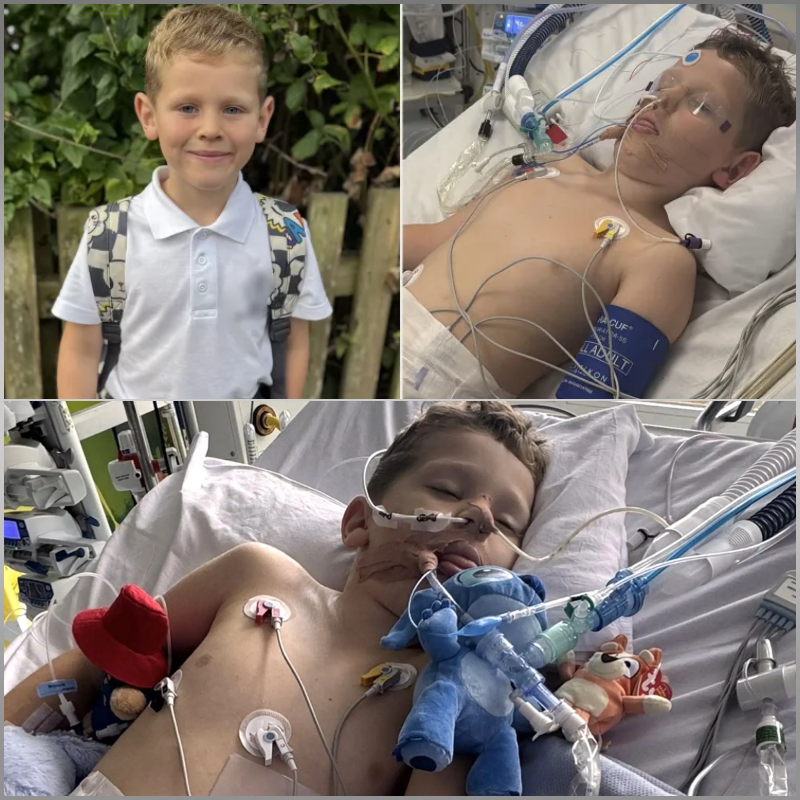
A 7-year-old boy is recovering after his mother says an episode of weakness and tingling turned out to be an early warning sign of a stroke that nearly claimed his life.
Evangelynne Williams said her son, Junior Fahr, first experienced “pins and needles” along the left side of his body while swimming on May 12, according to Kennedy News and Media. The mom of one, 27, entered Fahr’s symptoms into ChatGPT and then rushed him to the hospital when she read they could be signs of a stroke.
Williams, who lives in Portslade, East Sussex, in England, said her son was examined at the University Hospitals Sussex but did not undergo imaging at the time. “They did a couple of little tests with his fingers, didn’t do a scan or anything, and then sent us home,” she said.
Junior Fahr.Kennedy News and Media
Williams said she was told to return if Fahr experienced similar symptoms again.
Six weeks later, on June 25, Fahr woke up feeling ill and began vomiting. “He woke up and was complaining of feeling sick, [then] he was sick a couple of times,” Williams recalled.
Our new app is here! Free, fun and full of exclusives. Scan to download now!
She took him back to the hospital, where his condition rapidly deteriorated. “He was very delirious. He was laughing, was unable to walk or hold his body weight up […] and his eyes were shut. He was completely non-responsive,” the mom said.
Williams added that her son was also drooling heavily. “He was dribbling, [too]. We must have used about a thousand tissues because we were constantly wiping his face,” she said.
She further explained that they initially spent hours in a room in the children’s emergency room department and he was offered medication for nausea.
Junior Fahr (center) with his parents.Kennedy News and Media
Williams said hospital staff told them there was nothing seriously wrong with Fahr — at which point his symptoms became even more severe. “[Then] it almost looked as if he was having seizures and he was crying out in pain,” she said.
Williams said the situation changed after her own mother arrived at the hospital and firmly pushed for Fahr to be assessed again. “It wasn’t until my mom came [that he was checked over by a senior staff member],” she said, adding, “She was very firm.”
“It’s lucky she did come because, if she didn’t come, I reckon he’d be dead,” Williams added.
Junior Fahr.Kennedy News and Media
According to Williams, a more senior staff member soon became involved. “They finally got someone else in — she was higher up [and] was like, ‘Right, we’re going to get him into the adult resuscitation,’ ” she recalled, adding her son “got wheeled into [there], and I would say within two seconds of being in that room he must have had about ten to 15 doctors around him.”
Doctors ultimately discovered that Fahr had suffered a stroke caused by a blocked artery in his brain, the mother said.
Williams said the diagnosis came as a complete shock. “I didn’t in a million years think it was a stroke. I didn’t even know children could have strokes,” she said.
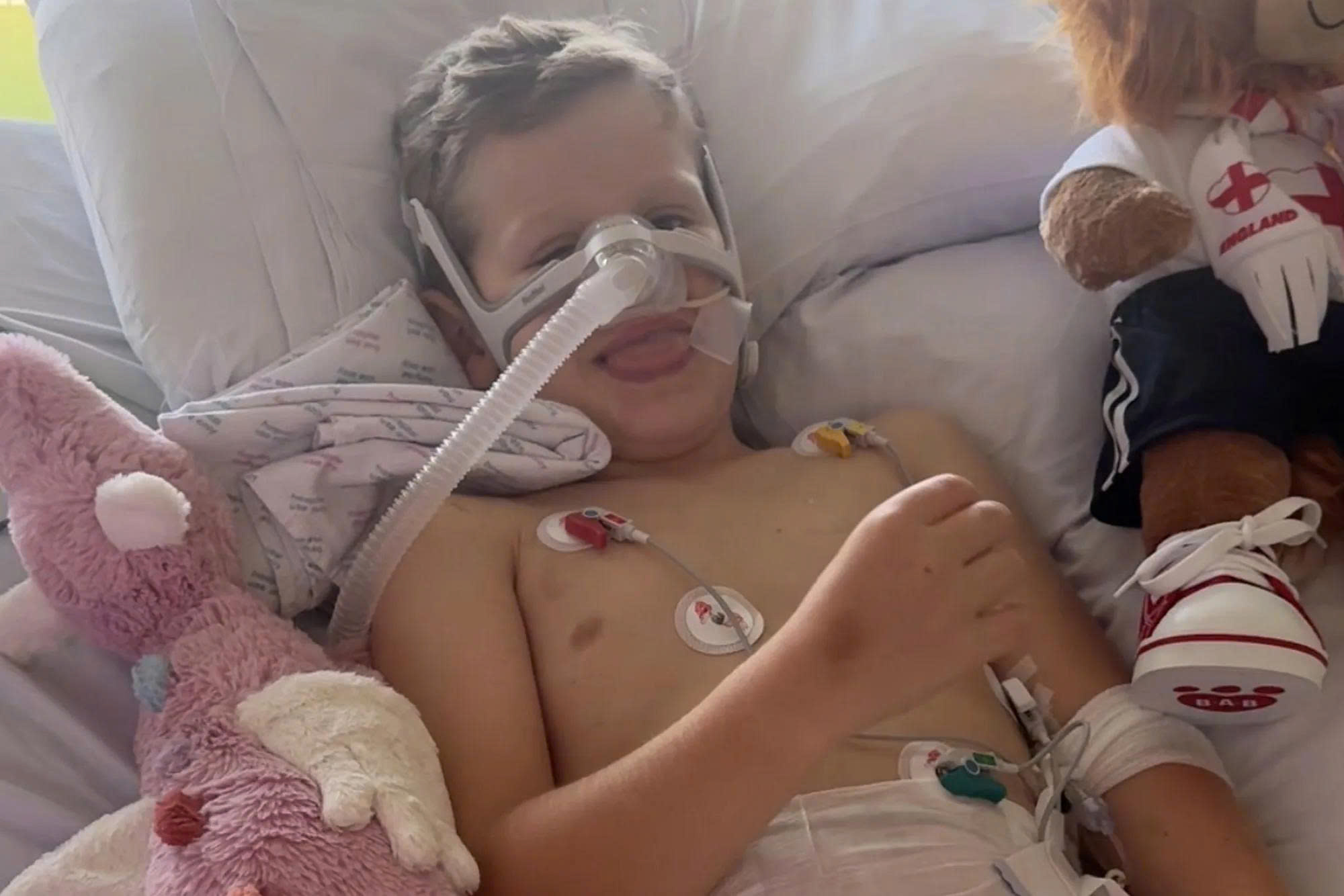
Williams’ son was rushed to another hospital where he underwent surgery to remove the clot from his brain. He was then placed in a medically induced coma for three weeks. “When he was asleep in the ICU in the coma I genuinely thought I was going to wake up and it was a bad dream,” his mother recalled.
Junior Fahr.Kennedy News and Media
Williams went on to say that she is convinced her own mother’s intervention at the initial hospital helped save Fahr’s life. “If my mom didn’t come in when she came in, I don’t think he would still be here because we would have just been left in that room — and with a stroke, every second counts,” she said.
Fahr, whose mother also said she complained of headaches beginning in December 2025, remained in the hospital until Tuesday, Aug. 11.
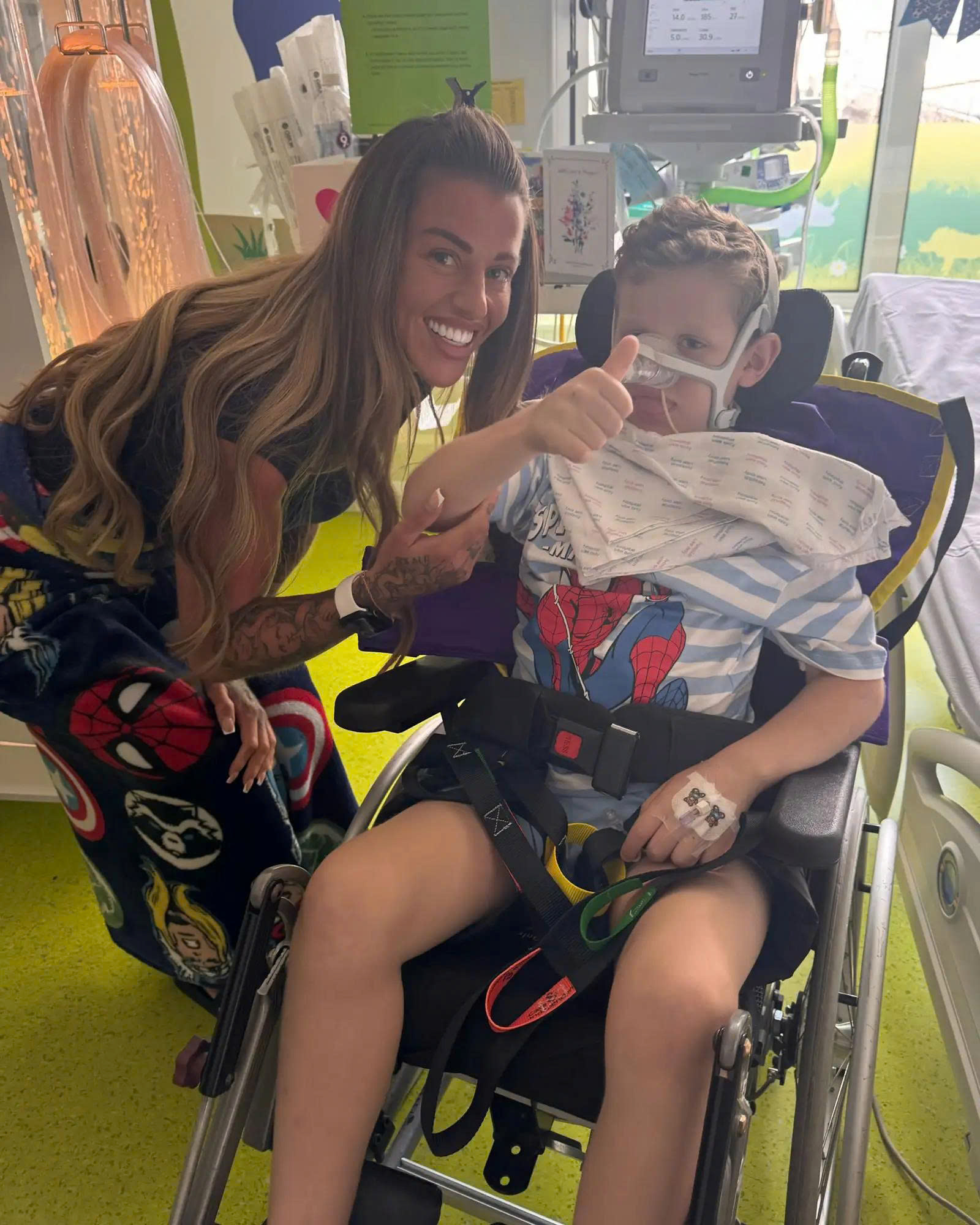
Williams said that while her son is now able to walk and talk again, he sustained brain damage from the stroke that has significantly altered his development. “He’s got brain damage, so his behavior now — it’s almost like he’s gone back four five years,” she said.
Evangelynne Williams (left) and son Junior Fahr (right).Kennedy News and Media
Williams has since established a GoFundMe, which was launched on Sunday, Aug. 9, to help cover the cost of services like private physiotherapy, specialist rehabilitation, speech and language therapy, and “any additional support that will help Junior during his rehabilitation and recovery.”
“Day after day, Junior has shown incredible strength, determination and a fighting spirit that makes me so proud,” she wrote. “He has done things that once felt impossible. He is communicating, moving, showing his personality and continuing to make progress in his recovery.”
Related Stories
11-Year-Old Girl Suffers Massive Stroke At School: ‘Mommy, I Don’t Feel Good’ (Exclusive)
Teen, 18, Self-Diagnosed Stroke and Saved Her Own Life After She Says Doctors Misdiagnosed Heart Condition as ‘Anxiety’
Williams went on to say that by sharing her son’s story she “can help raise awareness of pediatric strokes,” which she said “can sometimes be subtle or difficult to recognize.”
“Symptoms can include sudden weakness or numbness (such as pins and needles) on one side of the body, difficulty walking or using an arm or leg, changes in speech or communication, facial weakness, problems with balance, seizures, unusual drowsiness, severe or unusual headaches, vision changes, or a child suddenly seeming different from their usual self,” she added.
In a statement to PEOPLE, a spokesperson for University Hospitals Sussex apologized to Fahr and his family and said the hospital is reviewing the care he received. “We extend our sincere apologies to Junior and his family, and fully appreciate how difficult this must have been for them,” the spokesperson said.
Never miss a story — sign up for PEOPLE’s free daily newsletter to stay up-to-date on the best of what PEOPLE has to offer, from celebrity news to compelling human interest stories.
“We are investigating Junior’s care so that we can fully understand the circumstances, and try to identify whether there is any learning that could help improve our care in the future. We will do all we can to support Junior and his family, listen to their concerns, and talk with them whenever they feel ready to speak with us,” the spokesperson added.