HOME OFFICE WHISTLEBLOWER CLAIMS “JUST ONE IN 100” ASYLUM CLAIMS ARE GENUINE — AS OFFICIAL WARNS SYSTEM IS “MASSIVELY DYSFUNCTIONAL”
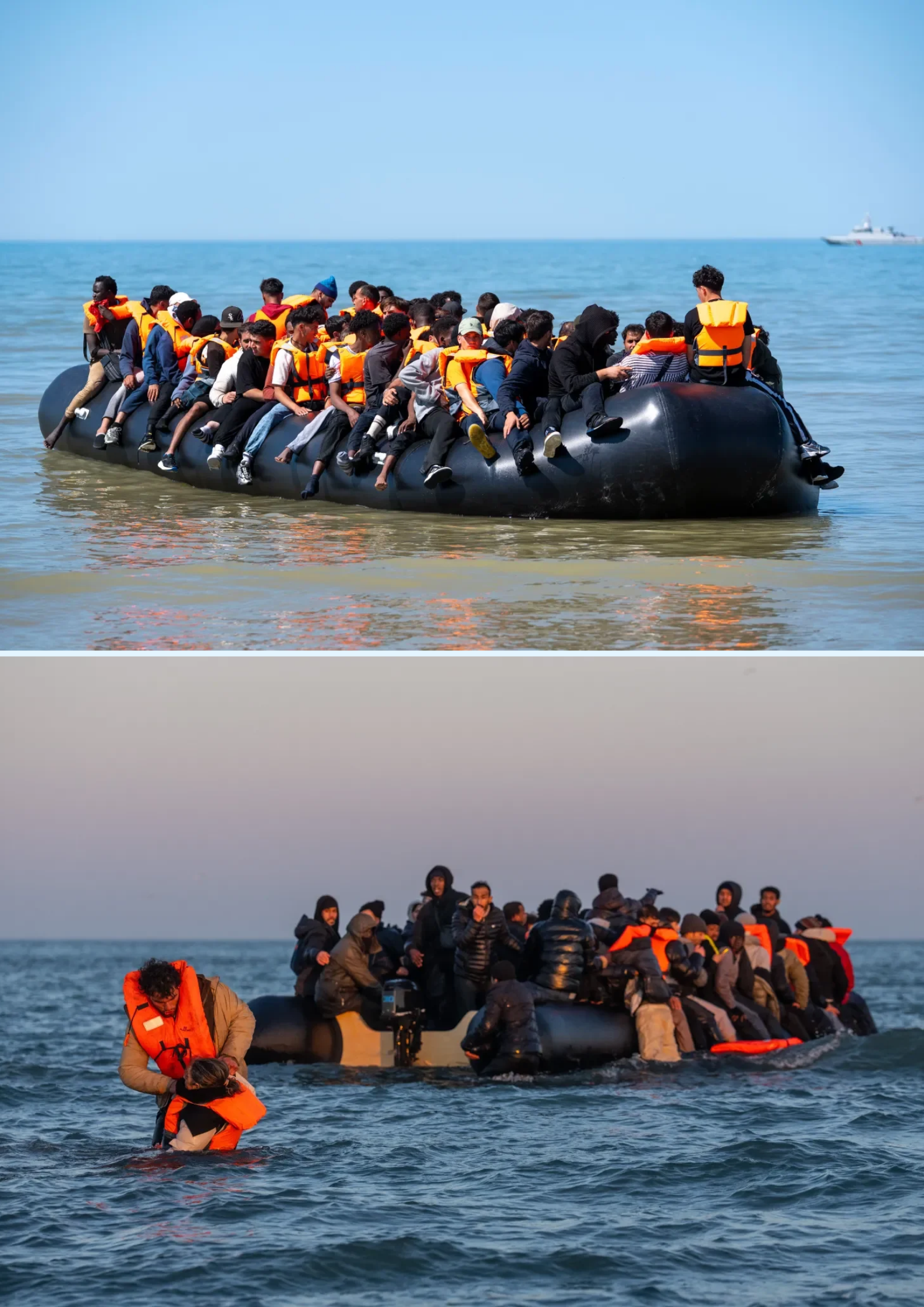
HOME OFFICE WHISTLEBLOWER CLAIMS “JUST ONE IN 100” ASYLUM CLAIMS ARE GENUINE — AS OFFICIAL WARNS SYSTEM IS “MASSIVELY DYSFUNCTIONAL”
A senior Home Office decision-maker claims Britain’s asylum system is being overwhelmed by fabricated stories, recycled evidence and what officials allegedly call “package claims.”
The explosive allegations come from an anonymous whistleblower known only as “J”, who says he has worked for years assessing asylum applications and has reviewed thousands of cases.
His claim is extraordinary.
According to J, “at best” just one per cent of asylum seekers are genuine — a figure that has not been independently verified and which the Home Office has not accepted.
But he says the problem goes far beyond individual applications.
He alleges that entire groups of applicants from some countries have been using remarkably similar stories and supporting documents to strengthen their claims.
 “THE SAME SCRIPT”
J claims officials have repeatedly encountered what they describe as “package claims” — applications containing similar narratives, evidence and explanations.
Among the examples he described were Iraqi Kurdish applicants who allegedly claimed they had been romantically involved with the daughter of the prime minister of the Kurdistan Region.
J said the number of people making the same claim had allegedly reached the hundreds, becoming a “running joke” among some colleagues.
He also claimed that hundreds of Pakistani applicants had alleged they were at risk because of same-sex relationships with the same man, with supporting letters allegedly provided to back up their stories.
And he raised concerns about applications from Bangladesh.
According to J, some applicants claimed to have been political opponents of the former governing Awami League but allegedly struggled to provide basic information about the party or its policies.
THE INTERVIEW SYSTEM UNDER FIRE
J says the way asylum applications are assessed creates an opportunity for dishonest applicants to prepare their stories.
Applicants initially undergo a brief screening interview, where basic information about their circumstances is recorded.
But the more detailed substantive interview can take place months later.
J argues that this gap gives applicants time to obtain advice, construct a detailed account and potentially gather fabricated evidence before their main interview.
He believes applicants should be required to explain their reasons for seeking asylum much earlier in the process.
He also claims some applicants use medical excuses to delay interviews, allegedly giving them additional time to prepare.
 “FAKE POLICE DOCUMENTS”
The whistleblower also alleged that decision-makers have encountered supporting documents that appeared suspicious.
He claimed some Bangladeshi applications included alleged police documents using the same judge’s name, magistrate and location repeatedly.
However, there is a major complication.
Home Office officials are restricted from contacting an applicant’s country of origin to verify certain information because doing so could potentially expose a genuine asylum seeker to danger.
The Home Office says those confidentiality obligations are an important part of protecting legitimate applicants.
A SYSTEM THAT “FAVOURS APPROVAL”?
J also accused the department of having an internal culture that can make granting asylum easier than refusing it.
He claimed approving a case can take relatively little time, while rejecting an application requires decision-makers to address the applicant’s individual claims in much greater detail.
He also criticized instructions for officials to refer to asylum seekers as “customers,” arguing that the terminology reflected a wider cultural problem within the system.
The Home Office has rejected the broader allegations.
A spokesperson said asylum applications are assessed individually by trained decision-makers, who consider the applicant’s account, supporting documents and relevant information about conditions in the country of origin.
The department also said established procedures exist to assess credibility and identify fraud.
THE NUMBERS HAVE CHANGED
Official figures show that the proportion of asylum applications resulting in refugee protection has fallen sharply in recent years.
According to the figures cited in the reports, 42,394 people were granted refugee protection from 115,394 initial decisions in the year to June 2026 — around 37 per cent.
That compares with a rate of roughly 76 per cent in 2022.
But those figures do not establish that most rejected or unsuccessful claims were fraudulent.
The Home Office says each case must be assessed on its own evidence.
A BIGGER QUESTION FOR BRITAIN
The allegations arrive as Britain faces intense political and public debate over immigration, asylum accommodation and Channel crossings.
The Home Office says it is working to speed up decisions and tackle fraudulent applications while protecting people with genuine claims.
The department has also launched an investigation following previous reporting about immigration advisers and lawyers allegedly helping people make fraudulent asylum claims.
For now, J’s most explosive allegation remains exactly that — an allegation from an anonymous whistleblower, not an independently verified statistic.
But his account raises uncomfortable questions about how Britain distinguishes genuine refugees from people attempting to exploit the system.
And if even part of what he describes is accurate, the issue may be much bigger than a few isolated fraudulent applications.
It could point to a system struggling to tell the difference between a genuine story and one that has simply been rehearsed.