ONE TRACKING DEVICE. ONE CRITICAL DETAIL. AND NEW QUESTIONS ABOUT SAYLOR HAYES’ FINAL HOURS
ONE TRACKING DEVICE. ONE CRITICAL DETAIL. AND NEW QUESTIONS ABOUT SAYLOR HAYES’ FINAL HOURS
INVESTIGATORS SAY SAYLOR HAYES’ PARENTS TOLD SEARCHERS TO USE A PROJECT LIFESAVER TRANSMITTER — BUT THE DEVICE WAS ACTUALLY MORE THAN 300 MILES AWAY IN VIRGINIA
The search for five-year-old Saylor Hayes quickly became a massive multi-agency operation.
Hundreds of people joined the effort after the nonverbal autistic child disappeared from her family’s rental home in Pawleys Island, South Carolina, on August 30.
But investigators say one detail given to searchers turned out to be critically important — and potentially misleading.
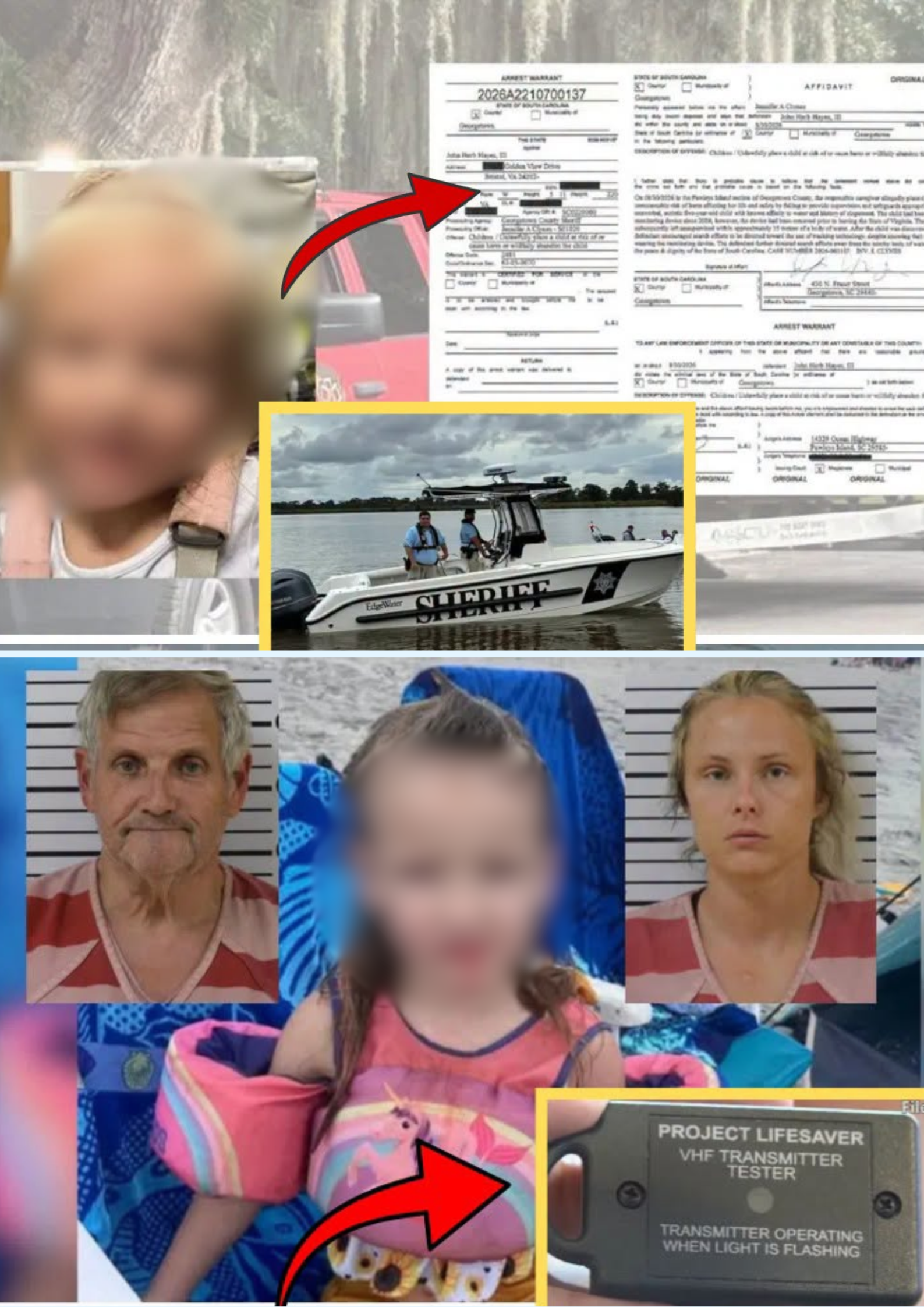
Saylor had been enrolled in Project Lifesaver, a program designed to help locate people at risk of wandering.
Her parents reportedly indicated that she had the tracking device.
Searchers acted accordingly.
But the transmitter was not with Saylor.
It was reportedly found inside a vehicle at the family’s home in Virginia, more than 300 miles away.
 THE DEVICE THAT SEARCHERS WERE LOOKING FOR
Saylor had reportedly been part of the Project Lifesaver program since 2024.
The system uses a small transmitter that can emit a radio signal, allowing specially equipped law-enforcement teams to locate a missing person.
Authorities have said the device was working and had been on Saylor’s ankle as recently as August 11.
But sometime before the family left Virginia for their South Carolina vacation, the transmitter was removed.
Investigators say it was later discovered inside a vehicle at the family’s Virginia property.
Exactly when and how it was removed remains an important part of the investigation.
Virginia authorities have also explained that the transmitter is not simply unclipped like an ordinary bracelet; the band must be physically cut to remove it.
 SEARCHERS EXPECTED A SIGNAL
When Saylor disappeared, the tracking technology became an obvious potential lifeline.
Authorities deployed equipment capable of detecting the Project Lifesaver signal.
But there was no signal from the area where Saylor had vanished.
Instead, investigators eventually discovered the transmitter was still in Virginia.
That meant the technology many searchers believed could help locate Saylor was never actually traveling with her.
People Magazine reported that investigators allege Saylor’s parents encouraged searchers to use the tracking system despite knowing she was not wearing the transmitter.
That allegation has become one of the most closely scrutinized details in the case.
THEN THERE WAS THE WATER
Another detail in the arrest records has drawn even more attention.
According to the allegations outlined by investigators, Saylor’s father directed searchers away from a nearby body of water during the early stages of the search.
The water was reportedly only about 15 meters from the property where Saylor had disappeared.
That detail is particularly significant because authorities say Saylor had a known attraction to water and a history of wandering away.
She was eventually found in the water behind the family’s rental property.
The preliminary autopsy later found pulmonary edema, consistent with drowning, although officials said the final cause of death remained pending at that stage.
THE SEARCH WENT ON FOR HOURS
The disappearance triggered an enormous response.
Law enforcement officers, firefighters, divers, drones, helicopters, search dogs and local residents joined the effort.
People searched neighborhoods and waterways around the rental property.
Residents were urged to check security footage and examine areas where Saylor might have wandered.
But Saylor was ultimately found the following morning in nearby water.
The discovery came after an overnight search involving hundreds of people and multiple agencies.
WHAT INVESTIGATORS SAY THE PARENTS DID
Saylor’s parents, John Herb Hayes III and Geordyn Nichole Hayes, have been charged with unlawfully placing a child at risk and willfully abandoning a child.
According to the arrest affidavit, investigators allege the couple failed to provide appropriate supervision and safeguards for a severely nonverbal five-year-old who was known to wander and had an attraction to water.
The charges are allegations, and the couple is entitled to the presumption of innocence unless proven guilty in court.
But prosecutors now have several unusual details to examine:
Why was Saylor’s tracking device left behind in Virginia?
Why were searchers reportedly encouraged to rely on a device that was not with her?
And why does the arrest record allege that the search was directed away from nearby water?
ONE DETAIL CHANGES THE SEARCH — BUT NOT YET THE WHOLE STORY
The discovery of the transmitter in Virginia does not, by itself, establish what happened to Saylor.
Nor does it answer exactly why the device was removed or who removed it.
But investigators say the discrepancy between what searchers were led to expect and where the transmitter was actually found is significant.
Saylor was ultimately located in the very environment authorities knew could pose a danger to a child with her history.
Now, investigators are left reconstructing the family’s movements, statements and decisions minute by minute.
Because in a case where every minute mattered, one missing device — and one disputed detail about where searchers were directed — could become a crucial part of the story.
And the biggest question remains:
What happened during the hours between Saylor disappearing and being found in the water?