If Antoinette Forbes Didn’t Take Her Car, Phone or Wallet — How Did She Leave Her Home?

When a person chooses to leave home, there are certain things most people instinctively take with them.
A phone. A wallet. Car keys. Personal belongings.
And if they have a dog depending on them, they usually make some kind of arrangement for the animal.
That is what makes the disappearance of 53-year-old Washington, D.C., woman Antoinette Forbes so difficult for her family to understand.
Forbes has been missing since Sept. 4, and the circumstances surrounding her disappearance have raised a question that seems simple but has become increasingly difficult to answer:
If she did not take her car, phone or wallet, how did she leave her home?
Her vehicle was reportedly still parked outside.
Her phone remained behind.
So did her wallet and other personal belongings.
And perhaps most troubling to those who know her, her dog was left alone.
More than a week later, friends and loved ones were still searching for answers.
Nearly Everything She Would Normally Need Was Left Behind
The mystery does not begin with what investigators have found.
It begins with what Forbes apparently did not take.
According to her family, Forbes disappeared from her Washington, D.C., home on Sept. 4 under circumstances they say are completely inconsistent with her normal behavior.
Her car remained at the residence, immediately raising questions about whether she ever drove away.
Her cellphone was also reportedly inside the home.
For most people, leaving without a phone would already be unusual, especially if they expected to be gone for any meaningful length of time.
Then there was her wallet.
That was left behind too.
Together, the items create a troubling puzzle.
Without her car, did Forbes leave on foot?
Did someone pick her up?
Did she enter another vehicle willingly?
Or did something happen before she had the opportunity to gather her belongings?
At this stage, there is no publicly confirmed answer to those questions.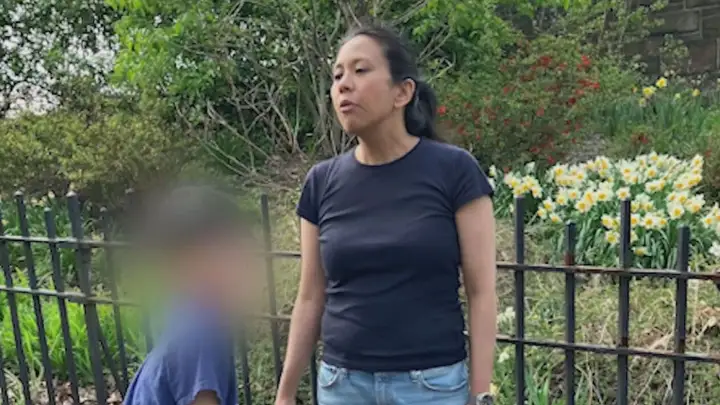
Her Dog May Be One of the Most Emotionally Powerful Clues
Forbes’ family has also focused on another detail: her dog was left behind alone.
That fact matters because families often know the routines that outsiders do not.
They know whether someone regularly leaves home unexpectedly.
They know how attached that person is to a pet.
They know whether it would be normal for them to disappear for hours — or days — without arranging care.
Forbes’ relatives have said the idea that she simply decided to vanish does not fit the woman they know.
The dog, in particular, has become a symbol of why they find a voluntary disappearance so difficult to believe.
Someone can forget a phone.
Someone can occasionally leave a wallet behind.
A person may even decide not to use their car.
But when all of those details appear together — along with a pet left unattended — the situation becomes much harder for loved ones to explain as an ordinary departure.
None of that proves what happened.
But it helps explain why the family is so alarmed.
Police Classified Her as “Critically Missing”
Authorities have classified Forbes as critically missing, reflecting the seriousness surrounding the search.
Her family has said the residence was being treated as an active crime scene, adding another layer of concern to the case.
That description, however, does not by itself establish that a crime occurred.
Investigators sometimes take extensive precautions in a missing-person case because a residence may contain evidence that helps reconstruct a person’s last known movements.
The key questions are likely to be basic ones.
When was Forbes last reliably seen?
Who last spoke with her?
Was there surveillance footage showing anyone arriving at or leaving the residence?
Did neighbors hear or notice anything unusual?
Was another vehicle seen nearby?
And is there any digital or physical evidence indicating where she went after Sept. 4?
For now, the public picture remains incomplete.
The Missing Car Trip That Apparently Never Happened
For many people following the case, Forbes’ parked vehicle is one of the most important details.
If she had planned to go somewhere on her own, the car would have offered the easiest explanation.
But it apparently never left with her.
That dramatically narrows the possibilities surrounding her departure.
Perhaps Forbes walked somewhere nearby.
Perhaps she accepted a ride.
Perhaps public transportation was involved.
Or perhaps her disappearance did not unfold in the way anyone initially expected.
Each scenario creates its own trail investigators could potentially examine through cameras, witness accounts, transportation records or other evidence.
But the longer Forbes remains missing, the more urgent the search becomes.
Friends Were Still Searching More Than a Week Later
By Sept. 13 — nine days after Forbes disappeared — friends were still actively searching.
That continued effort reflects both the concern surrounding the case and the lack of a clear explanation.
Missing-person searches can become especially difficult in large cities.
Washington, D.C., contains dense residential areas, busy roads, public transit systems, parks and countless cameras — but also an enormous number of daily movements that investigators may need to sort through.
One small detail can become crucial.
A neighbor remembering an unfamiliar vehicle.
A camera capturing someone leaving at a specific time.
A witness recalling a conversation.
A transaction or digital signal establishing a timeline.
Until investigators determine how Forbes left her home, however, the case remains centered on an unsettling absence of ordinary evidence.
Could the Things Left Behind Help Reconstruct What Happened?
The items inside Forbes’ home may ultimately be as important as anything found outside it.
A phone can contain recent calls, messages and location information.
Personal belongings can help investigators determine whether someone appeared to be preparing for a trip.
A parked vehicle may contain clues about the last time it was used.
Even routine household details can help establish whether a departure appeared planned, rushed or completely unexpected.
That does not mean every abandoned item points to foul play.
There are many reasons people leave belongings behind.
But investigators do not examine each detail in isolation.
They look at the full pattern.
In Forbes’ case, that pattern is what has captured attention:
Her car was still there.
Her phone was still there.
Her wallet was still there.
Her dog was still there.
But Antoinette Forbes was gone.
Her Family Says Walking Away Does Not Make Sense
Forbes’ relatives have made clear that they do not believe her disappearance fits her normal life.
That distinction matters.
Missing-person investigations often begin by determining whether a person may have intentionally left and simply stopped communicating.
Family members cannot know every private decision someone may make, but they can provide investigators with valuable information about habits, relationships, responsibilities and recent behavior.
In this case, Forbes’ family sees the circumstances as deeply out of character.
And until there is evidence showing where she went or how she left, the unanswered questions remain.
Was she alone when she disappeared?
Did someone come to the house?
Did she expect to return quickly?
Was she seen after leaving the property?
And why were the basic items most people carry every day still sitting at home?
For Antoinette Forbes’ family and friends, those are no longer abstract questions.
They are the clues at the center of a search that has now stretched beyond a week.
A car can be traced.
A phone can be examined.
A wallet can tell investigators what someone did not take.
But none of those things, by themselves, explains the most important mystery of all:
How did Antoinette Forbes leave her home — and where did she go afterward?