🚨 NOLAN WELLS NEVER CAME HOME — THE BOAT LEFT HORN ISLAND WITHOUT HIM. TWO DAYS LATER, HIS BODY WAS FOUND.
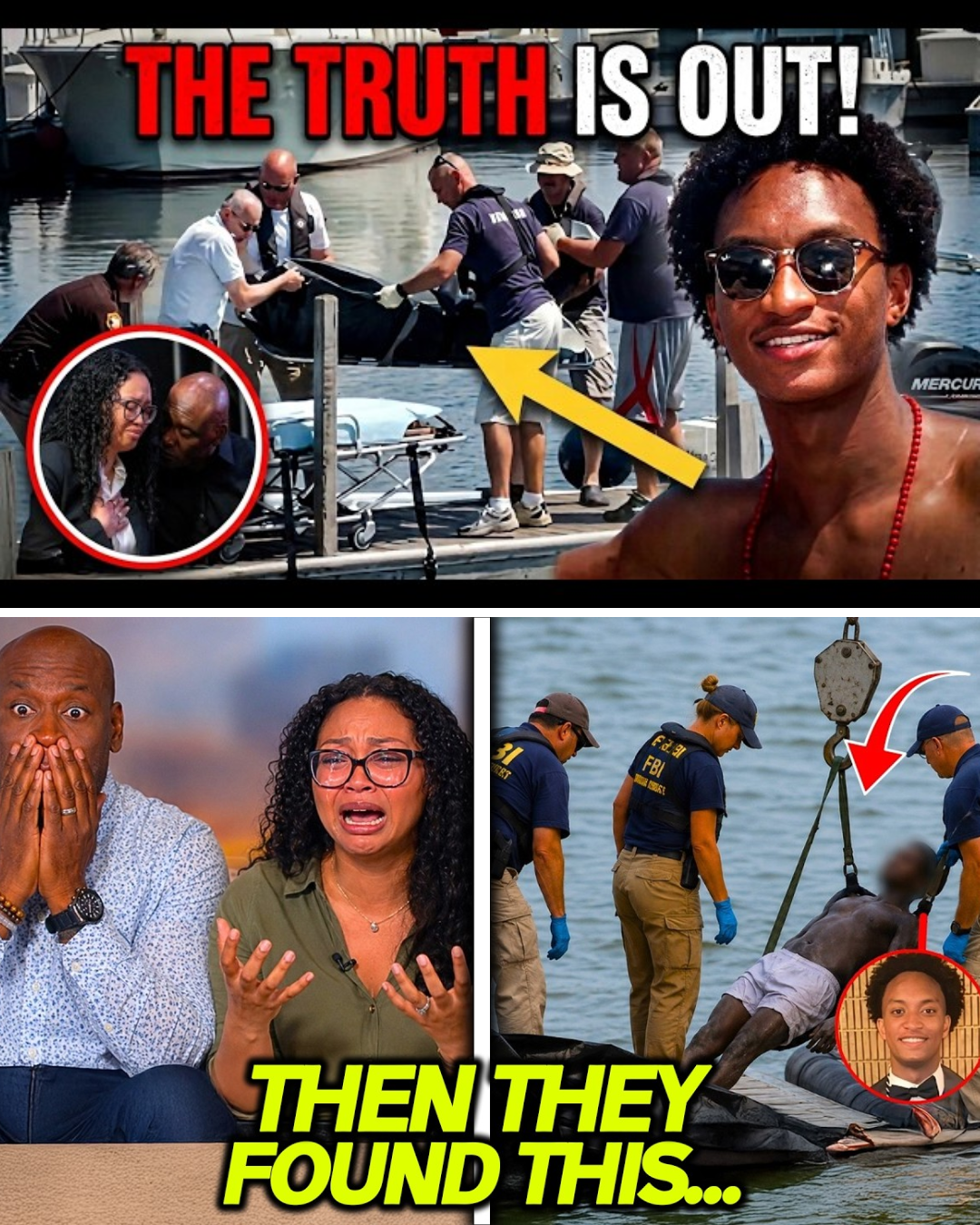
🚨 NOLAN WELLS NEVER CAME HOME — THE BOAT LEFT HORN ISLAND WITHOUT HIM. TWO DAYS LATER, HIS BODY WAS FOUND.
He was 18 years old.
He went to Horn Island with friends to celebrate the Fourth of July.
He was expected to come home with them.
He didn’t.
Instead, the boat carrying the group left the island without Nolan Wells.
Two days later, searchers found his body in the waters near Horn Island.
Authorities initially suspected drowning and said there was no initial indication of foul play.
But months later, one central question remains:
What actually happened to Nolan during those final hours?
The answer has not yet been established.
And that uncertainty has turned a tragic holiday outing into a case surrounded by questions about a boat, a distress call, GPS records, conflicting accounts and an inconclusive independent autopsy.
THE FOURTH OF JULY TRIP THAT NEVER ENDED
Nolan Xavier Wells was 18 and from Ocean Springs, Mississippi.
He was a college student and football player who had recently completed his freshman year at Southwest Mississippi Community College.
On July 4, 2026, he traveled by boat with friends to Horn Island, an uninhabited barrier island off the Mississippi coast.
It was supposed to be a holiday trip.
Friends.
Sun.
Water.
The Fourth of July.
But sometime that afternoon, Nolan became separated from the group.
According to information given to investigators, several people who traveled to the island said Nolan remained there while they returned to the mainland.
They reportedly told authorities that he was with an unknown woman and had chosen to stay behind.
Nolan’s family has strongly questioned that explanation.
His father, Elmore Wonsley, said Nolan was someone who stayed with the group.
“If you be with me, you come back with me,” his father told CBS News.
For his family, that simple detail has become one of the biggest unanswered questions in the entire case.
THEN THE BOAT LEFT
GPS data obtained by CBS News provides a detailed timeline of the vessel’s movements.
The boat left the mainland at approximately 9:56 a.m.
It reached Horn Island around 11:14 a.m.
The vessel remained stationary for several hours.
Then, at approximately 4:31 p.m., it began moving away from the island.
Nolan was not on board.
The boat initially traveled slowly.
Later, its speed increased dramatically before it returned to shore.
The GPS record doesn’t explain why Nolan remained behind.
It doesn’t prove what happened on the island.
But it provides investigators with something extremely valuable:
a timeline that can be compared with witness statements and other evidence.
And that timeline has become one of the most closely examined pieces of information surrounding the case.
THEN CAME THE DISTRESS CALL
Another detail made the mystery even more complicated.
A distress call was made from a boat near Horn Island that afternoon.
The caller reported that the vessel was taking on water and requested assistance.
Mississippi authorities later released the recording.
The family of Nolan Wells has now hired audio engineers to examine it.
Why?
Because Nolan’s final known hours overlap with the period surrounding the boat’s reported mechanical problems.
The existence of the distress call does not establish that anything criminal happened.
But it raises questions investigators can potentially answer by comparing the audio with the GPS data and witness accounts.
Who was on the boat?
Exactly when was the call made?
Where was the vessel at that moment?
And was Nolan already alone on the island?
Those questions remain part of the broader effort to reconstruct the timeline.
THE MOST IMPORTANT QUESTION: HOW DID NOLAN DIE?
Nolan’s body was found on July 6.
Authorities initially believed he had drowned.
But the family’s independent autopsy did not establish drowning as a definitive cause of death.
Instead, the preliminary independent examination listed the cause and manner of death as undetermined pending investigation.
The independent pathologist also said he could not rule out the possibility that nonaccidental factors contributed to Nolan’s death.
That finding has generated enormous public attention.
But it is important to understand what it does — and does not — mean.
It does not prove homicide.
It does not identify a suspect.
It does not establish that another person caused Nolan’s death.
It means the available examination could not conclusively determine what happened.
The official investigation and medical examination therefore remain crucial.
WHY WAS THE AUTOPSY SO DIFFICULT?
There was a major forensic obstacle.
Nolan’s body had undergone decomposition by the time the independent examination was performed.
The pathologist said this made it difficult to determine whether certain injuries were present.
The examination also could not fully assess whether water was present in the airway and lungs.
Parts of Nolan’s throat were retained by the state medical examiner, which also limited the independent examination’s ability to evaluate possible neck injuries.
Those limitations matter.
They explain why an autopsy could raise questions without providing a definitive answer.
And they are precisely why investigators still need the official autopsy and toxicology findings.
THEN SOCIAL MEDIA TOOK OVER
As the investigation continued, the internet began creating its own theories.
Photographs and videos from Horn Island circulated.
People began analyzing timestamps.
Others examined boat movements.
Some attempted to identify people appearing in photographs.
Others created timelines from social-media posts.
The case quickly became a kind of online detective story.
But investigators and organizations involved in the search have warned about misinformation.
The United Cajun Navy later released a report containing photographs, GPS information and other material gathered during the search.
The organization also warned that AI-generated photographs, videos and documents had circulated online as if they were authentic evidence.
That warning is particularly important.
Because once a theory goes viral, it can become difficult to distinguish evidence from speculation.
RACE BECAME PART OF THE STORY
Nolan was Black.
The group he traveled with was predominantly white.
That fact became an important part of the national conversation surrounding his death.
Questions about race, trust, Mississippi’s history and law enforcement quickly became intertwined with the case.
Nolan’s family has sought answers while the case has attracted attention from civil-rights figures and national media.
But there is an important distinction between discussing those concerns and claiming that race caused Nolan’s death.
At present, there has been no public finding establishing that Nolan was killed because of his race.
There has also been no public finding that any member of the group caused his death.
Those conclusions require evidence.
And the investigation has not publicly reached them.
THE FRIENDS’ ACCOUNT
One of the most important unresolved issues is the explanation for why Nolan did not return with the group.
According to preliminary information obtained by ABC News, friends told authorities that Nolan remained on the island and was in the company of an unknown female.
The same reporting says the friends also told authorities that the boat was taking on water and they needed to return to shore.
Those details are central because they create a precise question for investigators:
What happened between the moment the group left Nolan behind and the moment he was reported missing?
That window could hold the answer.
Or it could ultimately reveal nothing more than a tragic accident.
At this point, the public doesn’t know.
THE FAMILY HAS NOT STOPPED LOOKING FOR ANSWERS
Nolan’s parents have repeatedly said they want a complete investigation.
His mother, Christine Wonsley, has pleaded publicly for anyone with information to come forward.
The family’s attorney has sought additional examination of the distress-call recording and other evidence.
Their position is clear:
They don’t believe enough questions have been answered.
“We will not rest until we get answers,” Christine Wonsley said.
For the family, this isn’t an internet mystery.
It’s their son.
A teenager who left home for a holiday and never came back.
AND THEN CAME THE THREATS
The online attention surrounding the case has also had serious consequences.
As theories spread, people connected to Nolan’s final hours reportedly faced harassment and threats.
More recently, a Mississippi grand jury indicted a man accused of making death threats against people connected to the case. The charges concern alleged threats, not Nolan’s death itself.
That distinction matters.
There are currently no reported criminal charges establishing that someone murdered Nolan.
Threats made by outsiders after the case became controversial are a separate matter.
But they demonstrate just how intensely the case has affected people beyond Nolan’s immediate family.
WHAT WE KNOW
Nolan Wells went to Horn Island on July 4.
He traveled there by boat with friends.
The group later returned to the mainland without him.
A distress call was made from a boat reporting that it was taking on water.
GPS data tracks the vessel’s movements.
Nolan was reported missing.
His body was found on July 6.
Authorities initially suspected drowning.
An independent autopsy did not establish a definitive cause or manner of death.
And investigators continue to examine what happened.
These are the pieces of the story that can currently be supported by reporting and available records.
WHAT WE STILL DON’T KNOW
Did Nolan voluntarily remain on the island?
Who was the unknown woman mentioned by witnesses?
What exactly happened after the group departed?
Was the distress call connected to the circumstances of Nolan’s disappearance?
What does the complete GPS timeline reveal?
What will the official autopsy and toxicology results show?
And most importantly:
How did Nolan Wells die?
Those questions remain open.
THE LAST HOURS OF AN 18-YEAR-OLD
Perhaps the hardest part of the story is how ordinary the beginning was.
It was the Fourth of July.
Nolan was 18.
He was with friends.
He was enjoying a summer day on the Mississippi coast.
Nobody knew that before the weekend was over, his family would be searching for him.
Nobody knew that his final hours would become the subject of national headlines.
And nobody knew that months later, the most basic question would still remain unanswered.
What happened to Nolan after the boat left Horn Island?
The internet has produced theories.
The family wants evidence.
And investigators still have to determine what the evidence means.
Until that happens, Nolan’s death remains an unresolved tragedy — one that has left his family waiting for an answer that no viral post can provide.
**They know where Nolan was found.
What they still don’t know is what happened to him before he got there.**