BRITISH CAVE DIVER ANDREW RICE FOUND DEAD 270FT UNDERWATER AFTER TWO-DAY SEARCH IN FRANCE
BRITISH CAVE DIVER ANDREW RICE FOUND DEAD 270FT UNDERWATER AFTER TWO-DAY SEARCH IN FRANCE
CALES, FRANCE — A British cave diver has been found dead deep inside a dangerous underwater cave system in southwestern France, two days after he disappeared during an exploration dive.
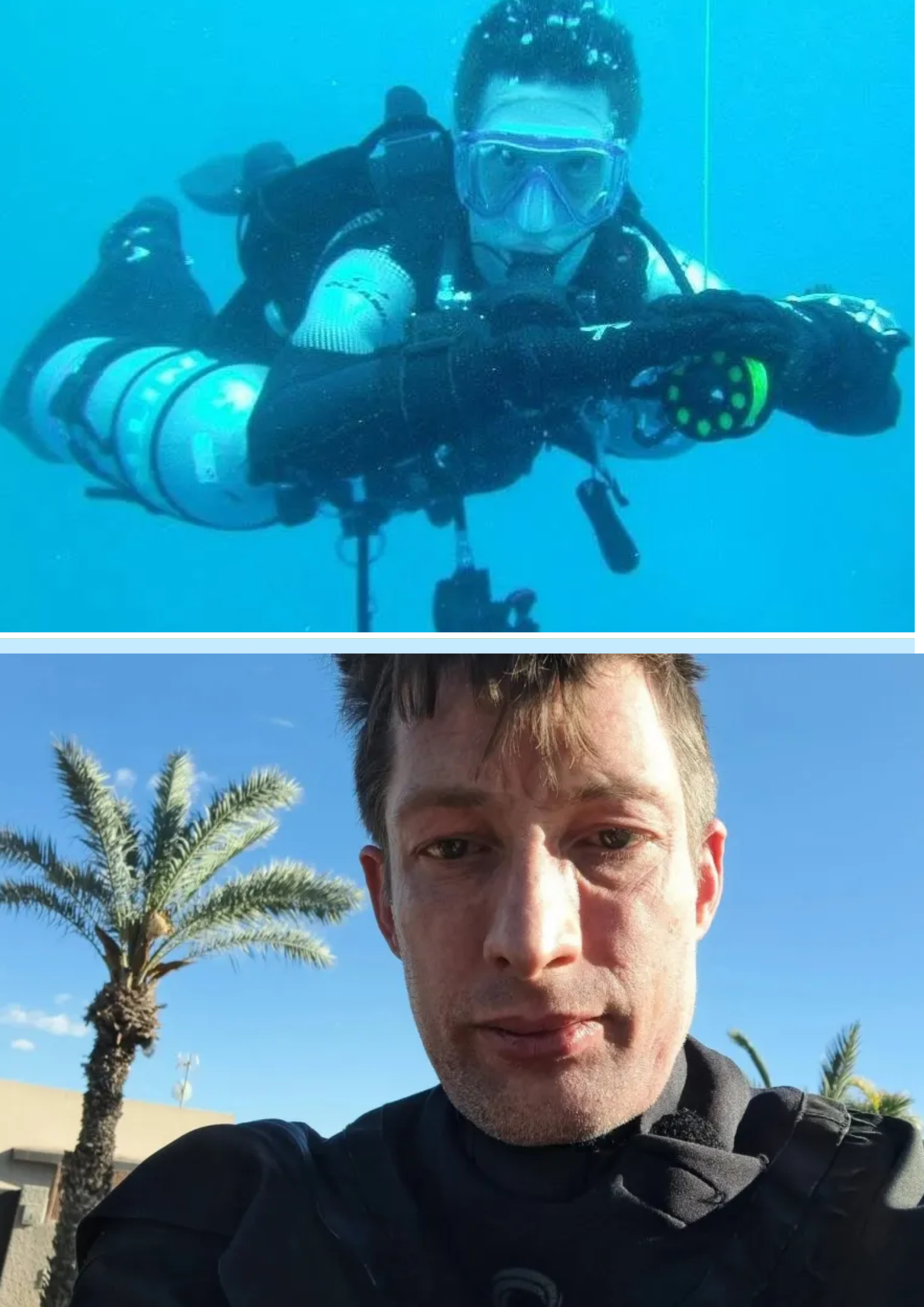
The diver has been identified as Andrew Rice, 43, from Stroud, Gloucestershire, an experienced cave diver who had travelled to the Lot region as part of a group exploring the area’s complex underwater cave systems.
His body was discovered on September 20, approximately 88 metres (270 feet) below the surface, inside the Gouffre de Saint-Sauveur near the village of Calès.
French authorities have opened an investigation into the circumstances of his death.
 DIVER FAILED TO RETURN FROM CAVE
Andrew entered the Saint-Sauveur resurgence at approximately 3:30 p.m. on Friday, September 18, during an expedition involving a group of experienced British cave divers.
Reports indicate that the group consisted of eight divers, with Andrew entering the deeper section of the underwater system alongside two other divers.
The other divers eventually returned safely.
But Andrew failed to emerge from the cave.
Concern grew as the expected return time passed, and the alarm was raised at approximately 8 p.m.
A major rescue operation was immediately launched.
 MASSIVE UNDERWATER SEARCH
French emergency services mobilised specialist cave divers, firefighters, gendarmes and members of the country’s specialist cave-rescue organisation.
The operation was particularly difficult because of the unusual configuration of the submerged cave system.
Rescuers initially searched deep sections of the cave, including an underwater air chamber located at roughly 260 feet below the surface, after authorities considered the possibility that Andrew might have reached the chamber and taken refuge there.
There was no sign of him.
Authorities believed that Andrew had entered the cave with enough breathing gas to remain underwater for approximately eight hours.
A separate gas cylinder positioned as part of the diving operation was also reportedly found unused.
BODY FOUND AFTER TWO DAYS
Search operations continued through difficult underwater passages.
Specialist teams returned to the cave with additional equipment as rescuers pushed further into the system.
On Sunday, September 20, two days after Andrew disappeared, rescuers finally located his body.
He was found at a depth of around 88 metres, or approximately 270 feet, inside a narrow section of the cave.
According to reports, Andrew had become entangled in a guideline used by divers to navigate the submerged passages.
The situation was made even more difficult because disturbed clay and sediment had clouded the water, severely reducing visibility for the rescue teams.
BODY COULD NOT IMMEDIATELY BE RECOVERED
Finding Andrew was only part of the rescue challenge.
Because of the depth, narrow passages and difficult configuration of the cave, rescuers were unable to immediately bring his body back to the surface.
Cahors public prosecutor Clara Ribeiro said the particular characteristics of the site had made the recovery operation extremely complicated.
A further attempt was expected to be made using specialist equipment.
The body remained inside the cave while authorities worked on a safe recovery operation.
EXPERIENCED DIVER REMEMBERED BY FRIENDS
News of Andrew’s death prompted emotional tributes from friends and fellow divers.
Those who knew him described their shock at the tragedy and paid tribute to an experienced diver whose death has left members of the diving community devastated.
One friend wrote that they were “totally gutted” and said it was difficult to accept that they would never see Andrew again.
Others described the incident as tragic and sent condolences to his fellow divers and loved ones.
INVESTIGATION INTO HIS DEATH
Authorities have not yet established exactly how Andrew died.
An investigation has been opened to determine the circumstances and cause of the death.
The discovery that he had become entangled in a guideline provides an important detail about the final stage of the search, but authorities have not publicly confirmed that this was the cause of death.
The investigation remains ongoing.
WHY THE CAVE SYSTEM IS SO DANGEROUS
The Gouffre de Saint-Sauveur is a recognised cave-diving site in the Lot region of southwestern France.
Unlike ordinary open-water diving, cave diving involves navigating underwater passages where divers can be surrounded by rock and may have no direct route to the surface.
The environment can become particularly dangerous when visibility deteriorates.
In Andrew’s case, rescuers reportedly encountered thick sediment and clay that turned the water extremely cloudy, making an already difficult search even more challenging.
Even specialist rescue teams faced significant risks while attempting to reach the deepest sections of the cave.
A TWO-DAY SEARCH ENDS IN TRAGEDY
For two days, rescuers searched the underground network in the hope that Andrew might still be alive.
Teams examined deep passages and an underwater air chamber while working against difficult conditions and the limitations of the equipment available.
Those hopes ultimately ended when Andrew’s body was discovered deep inside the cave on September 20.
His death has since prompted an outpouring of grief among friends and fellow divers.
The investigation into what happened remains underway, while specialist teams continue to deal with the challenging task of recovering his body from the cave.
Andrew Rice was 43 years old.