Capt. Sully Opens Up About the Subtle Memory Changes That Led to His Alzheimer’s Diagnosis

For Capt. Chesley “Sully” Sullenberger III, the first warning signs were not dramatic. There was no single frightening moment that immediately told him something was wrong.
Instead, the changes arrived quietly.
Names became harder to remember, even when they belonged to people he knew. He sometimes repeated himself without realizing he had already said the same thing earlier. His calendar, once simply a tool for organization, became something he increasingly depended on to keep track of daily commitments.
Those small changes eventually became part of a much larger reality for the 75-year-old pilot best known for the “Miracle on the Hudson.”
Sullenberger was diagnosed with early-stage Alzheimer’s disease in August 2025. Now, more than a year later, he is speaking openly about the symptoms that first caught his attention, the emotional impact of the diagnosis and the way he and his family are preparing for an uncertain future.
The Changes Were Easy to Dismiss at First
Sullenberger said one of the earliest differences he noticed involved remembering names.
People he had known for years suddenly became more difficult to place quickly. At other times, he would forget ordinary things he previously would have remembered without effort.
Then came another clue: repetition.
He sometimes found himself saying something again without realizing he had already mentioned it an hour earlier.
His wife of 37 years, Lorrie Sullenberger, also noticed changes, but she said the symptoms were subtle enough that they could initially be explained away.
What made the situation difficult, she explained, was that the early signs did not resemble the advanced Alzheimer’s symptoms people often see portrayed publicly.
Nothing initially looked extreme.
The changes were simply unusual for Sully.
That distinction eventually became important for the couple. Lorrie said families should pay attention not only to dramatic memory loss, but to behaviors that seem noticeably different from what is normal for a particular person.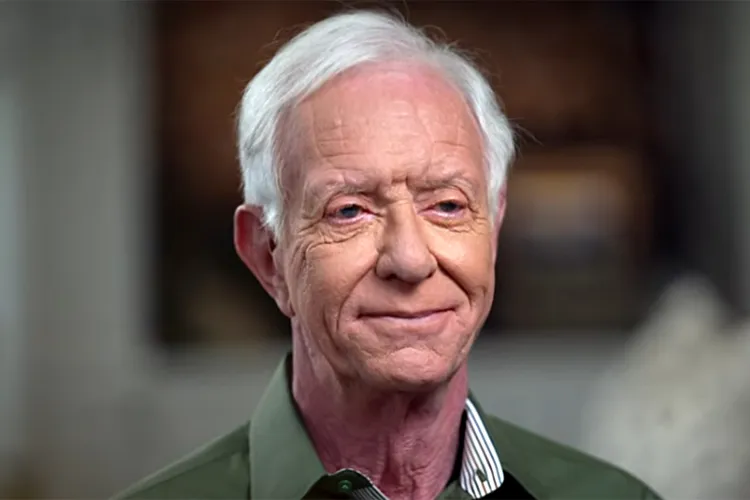
A Diagnosis That Brought Shock and Anger
When the diagnosis came in August 2025, Sully and Lorrie went through the emotions many families experience after receiving life-changing medical news.
There was shock.
There was anger.
And there was the inevitable question: Why me?
The couple initially considered keeping the diagnosis private.
Lorrie said their first instinct was much like that of many families facing Alzheimer’s — to handle it quietly and protect their personal lives.
But she eventually reconsidered.
She told her husband that Alzheimer’s was a disease, not something that reflected negatively on his character, and suggested that speaking openly might help other people feel less isolated.
Sullenberger ultimately agreed.
He first publicly disclosed his early-stage diagnosis in July 2026 and later discussed it in greater detail during his first broadcast interview about the disease.
Rather than presenting himself as someone untouched by fear, he acknowledged that the situation is difficult.
At the same time, he made clear that he does not intend to surrender to it.
The Man Who Saved 155 Lives Is Using a Familiar Mindset
Sullenberger became a national figure on January 15, 2009, when US Airways Flight 1549 struck birds shortly after departing New York’s LaGuardia Airport.
Both engines of the Airbus A320 lost power.
With only minutes to respond, Sullenberger and first officer Jeff Skiles guided the aircraft onto the Hudson River.
All 155 passengers and crew members survived.
That emergency required Sullenberger to rapidly determine what mattered most, discard distractions and execute a plan under extraordinary pressure.
More than 17 years later, he says that same mental framework is helping him face Alzheimer’s.
He described the 2009 landing as a situation in which every second mattered and every life had to be protected. Now, although the challenge is entirely different, he says he is again trying to focus on the highest-priority issues first.
Everything else, he suggested, can wait.
When asked whether surviving such a high-pressure experience had prepared him for the diagnosis, Sullenberger said he had already lived through harder moments.
That does not mean he views Alzheimer’s casually. Rather, he appears to be approaching it in the way he has approached major challenges throughout his life: understand the situation, make a plan and concentrate on what can still be done.
Treatment Is Focused on Slowing the Disease
Sullenberger currently receives a monthly infusion treatment.
The goal is not to cure Alzheimer’s or stop its progression completely.
Instead, he said the treatment is intended to slow the disease.
He is realistic about what that means.
The condition is still progressing, and he understands that the changes are expected to continue.
That reality is one reason he has become so outspoken about the importance of early diagnosis.
His message is simple: if something feels wrong, get evaluated.
The sooner Alzheimer’s is identified, he believes, the more options a person may have.
His own early signs — difficulty recalling names, forgetting things he normally would remember and repeating himself — may sound small when viewed individually.
Together, however, they became evidence that something in his everyday functioning had changed.
His Greatest Concern Includes His Wife
Sullenberger’s thoughts about the future are not focused only on himself.
He is also deeply aware of what the progression of Alzheimer’s could mean for Lorrie.
During their conversation about the disease, he told her directly that he worries about the burden caregivers carry.
He knows that if his condition advances, her responsibilities could become significantly greater.
Lorrie, for her part, is trying not to look too far ahead.
Her current approach is to take life one day at a time because she simply does not know exactly what the next stage will bring.
That uncertainty has become one of the hardest parts for their family.
Their daughter Kelly explained that the Sullenbergers are accustomed to being prepared. Planning ahead is deeply ingrained in how they operate.
Alzheimer’s challenges that instinct.
It is a disease whose progression cannot be mapped with the precision of a flight plan.
For a family that values preparation, not knowing exactly what comes next has been especially difficult.
Family Time Has Become the Priority
Sully and Lorrie are parents of two, and their children and grandchildren have become an even greater focus since the diagnosis.
Kelly said being together is now the family’s priority.
The shift reflects a broader change in how the Sullenbergers are thinking about time.
There are treatments to manage, appointments to track and future caregiving questions to consider, but there are also ordinary moments with children and grandchildren that now carry greater significance.
For Sully, the diagnosis has not ended his desire to contribute publicly.
In fact, he sees another opportunity to help.
Following the 2009 Hudson River landing, he believed that he, Skiles and others involved had been able to make a meaningful difference beyond the emergency itself.
Now he hopes his openness about Alzheimer’s may do something similar.
By speaking about early symptoms, testing, treatment and caregiving, he wants his experience to be useful to others confronting the same disease.
Facing an Uncertain Future Without Giving Up
Sullenberger is preparing to be inducted into the National Aviation Hall of Fame, another milestone in a life defined by aviation and one extraordinary emergency that became known around the world.
But his current challenge is far less predictable.
There is no cockpit checklist that can tell him exactly what Alzheimer’s will look like years from now.
There is no precise timeline.
There is only treatment, family support and the determination to continue making the most of the time ahead.
When asked what worries him most, Sullenberger answered using the language that has always come most naturally to him.
He described Alzheimer’s as potentially his “last flight.”
Even then, however, his response was not one of defeat.
If this must be the final journey, he said, he intends to face it at full strength.
For the man who once had just 208 seconds to make decisions that saved 155 lives, the challenge now is different: living deliberately with a disease that offers no simple landing point.
And once again, Sully Sullenberger is choosing to focus on what matters most.