SERIAL KI//ER OR POSSIBLE MISCARRIAGE OF JUSTICE? THE LUCY LETBY DEBATE CONTINUES
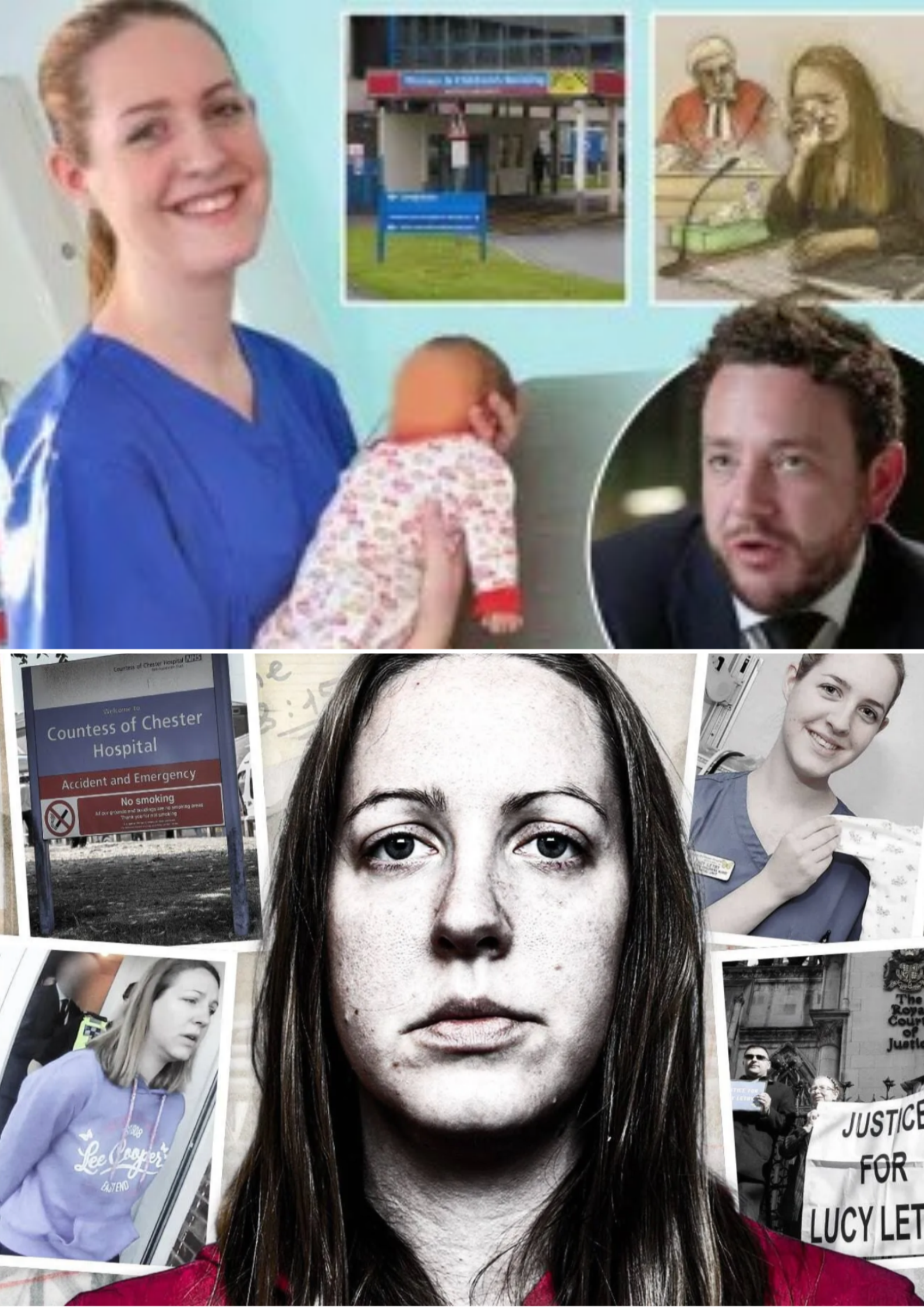
SERIAL KILLER OR POSSIBLE MISCARRIAGE OF JUSTICE? THE LUCY LETBY DEBATE CONTINUES
Lucy Letby remains one of Britain’s most controversial criminal cases, more than three years after she was convicted of murdering seven babies and attempting to murder several others at the Countess of Chester Hospital.
Letby was found guilty in 2023 of seven murders and seven attempted murders involving babies who were in the hospital’s neonatal unit between June 2015 and June 2016.
In 2024, she was convicted at a retrial of another attempted murder charge involving Baby K.
She is serving 15 whole-life orders and continues to maintain her innocence. Her appeals against the convictions have so far been unsuccessful.
But the case has not disappeared from public debate.
In recent years, doctors, scientists, statisticians and other specialists have questioned aspects of the medical and statistical evidence presented during Letby’s trials.
At the same time, the recently published Thirlwall Inquiry uncovered serious failures in the hospital’s management and safeguarding systems.
Those developments have intensified questions about the case — but they have not overturned Letby’s convictions.
 WHAT DID THE JURY HEAR?
The prosecution case centred heavily on medical evidence concerning the sudden collapses and deaths of babies on the neonatal unit.
Prosecutors argued that Letby deliberately harmed babies using several methods, including injecting air into their bloodstream, administering excessive amounts of milk and poisoning two babies with insulin.
The prosecution also relied on medical records, nursing notes, staffing patterns and evidence about Letby’s presence when babies deteriorated.
Unlike some high-profile criminal cases, there was no eyewitness who testified to seeing Letby deliberately attack a baby, and the prosecution case relied substantially on expert interpretation of medical evidence.
The jury ultimately convicted her of the offences.
Letby has consistently denied harming any of the babies.
 WHY HAS THE MEDICAL EVIDENCE BEEN QUESTIONED?
Since the convictions, a group of medical and scientific experts has argued that some of the babies’ collapses could potentially have had natural or medical explanations.
One of the most prominent critics has been Professor Shoo Lee, a Canadian neonatologist whose work has been cited in arguments challenging aspects of the prosecution’s theory concerning air embolism.
Other experts have examined the insulin evidence involving two babies and questioned whether the laboratory results necessarily demonstrated deliberate poisoning.
Letby’s legal team has submitted material from international experts to the Criminal Cases Review Commission, arguing that the scientific evidence relied upon at trial was fundamentally flawed.
Her barrister Mark McDonald has said the new evidence comes from experts in areas including insulin, endocrinology and laboratory medicine and argues that the evidence concerning Babies 6 and 12 was unreliable.
However, these arguments remain arguments for the defence, not findings that have overturned the convictions.
TWO DEFENCE EXPERTS RECENTLY RAISED THEIR OWN CONCERNS
One of the most recent developments has added another layer to the debate.
Helen Shannon, a chemical engineering expert, and Professor Geoff Chase, a bioengineering expert, withdrew from Letby’s defence team in September 2026.
The pair had previously produced a major report questioning the evidence used to convict Letby of poisoning two babies with insulin.
They said they continued to stand by their assessment that it was “very unlikely” that the two babies had been poisoned with insulin.
However, they said they could not support some other arguments being advanced by the defence because they believed those arguments had fundamental scientific problems.
Letby’s lawyer rejected the suggestion that their withdrawal undermined the wider defence case.
He argued that the case was supported by evidence from a broader group of international specialists and that it did not depend on the work of any single expert.
THE THIRLWALL INQUIRY FOUND SERIOUS HOSPITAL FAILURES
A separate development has also dramatically changed the context surrounding the case.
The Thirlwall Inquiry, led by Lady Justice Kathryn Thirlwall, investigated how the Countess of Chester Hospital responded to concerns about baby deaths and collapses.
Its final report, published in September 2026, found profound failures in management, governance and safeguarding.
The inquiry said there had been a “complete failure to protect babies” and found that some collapses and deaths could have been avoided if safeguarding procedures had been followed.
It also found a prolonged delay by senior managers in contacting police after concerns about Letby had been raised.
Doctors who had raised concerns were not properly listened to, while internal reviews failed to address whether deliberate harm might be occurring.
The findings have prompted further scrutiny of how the hospital handled the situation before Letby’s arrest.
But the inquiry did not decide whether Letby was guilty or innocent.
Its purpose was to examine institutional failures and determine how similar failures could be prevented in the future.
DOES THE INQUIRY PROVE LETBY WAS INNOCENT?
No.
The Thirlwall Inquiry’s findings about hospital management do not overturn the criminal convictions.
The inquiry found serious failures in the way concerns were handled, but it was not an appeal court and did not reassess the evidence that led juries to convict Letby.
At the same time, the inquiry’s findings provide important context for questions about what was happening inside the neonatal unit during the period when babies were dying or collapsing.
That distinction is important: evidence of institutional failure is not, by itself, proof that Letby was wrongly convicted.
THE CCRC IS NOW EXAMINING THE CASE
Letby’s case is currently being reviewed by the Criminal Cases Review Commission (CCRC), the independent body responsible for investigating possible miscarriages of justice in England, Wales and Northern Ireland.
The CCRC confirmed in February 2026 that a review of Letby’s convictions was underway.
It stressed that its role is not to decide whether someone is innocent or guilty.
Instead, it considers whether new evidence or new arguments create a real possibility that a conviction would not be upheld by an appeal court.
The commission has received multiple expert reports and further submissions from Letby’s legal team.
There is currently no announced date for the conclusion of the review.
NO NEW CRIMINAL CHARGES
Meanwhile, prosecutors have also reviewed whether Letby should face additional charges relating to other babies.
In January 2026, the Crown Prosecution Service decided that no further criminal charges should be brought against her.
That decision was subsequently challenged under the Victims’ Right to Review procedure.
In August 2026, an independent CPS prosecutor completed the review and upheld the decision not to bring six further attempted-murder charges.
The decision does not establish either innocence or guilt beyond the existing convictions.
It means prosecutors concluded that the evidential and legal threshold for additional charges was not met.
THE DEBATE IS FAR FROM OVER
The Lucy Letby case now involves several separate questions.
The first is the criminal verdicts reached by juries, which remain in force.
The second concerns the medical and scientific evidence used at trial, some of which is now being challenged by specialists.
The third concerns the failures inside the Countess of Chester Hospital, which the Thirlwall Inquiry found were extensive and prolonged.
And the fourth is whether the new material submitted to the CCRC is sufficient to justify sending Letby’s convictions back to the Court of Appeal.
For now, none of those questions has produced a judicial finding that Letby was wrongly convicted.
She remains imprisoned under 15 whole-life orders.
But the continuing review means the scientific and legal debate surrounding one of Britain’s most closely watched criminal cases is not over.
The ultimate question of whether any of Letby’s convictions should be revisited now rests with the established legal process — including the CCRC and, if a referral is made, the Court of Appeal.