AILEEN WUORNOS’ FINAL MOMENTS: THE LAST WORDS OF THE WOMAN WHO BECAME ONE OF AMERICA’S MOST NOTORIOUS FEMALE KI//ERS
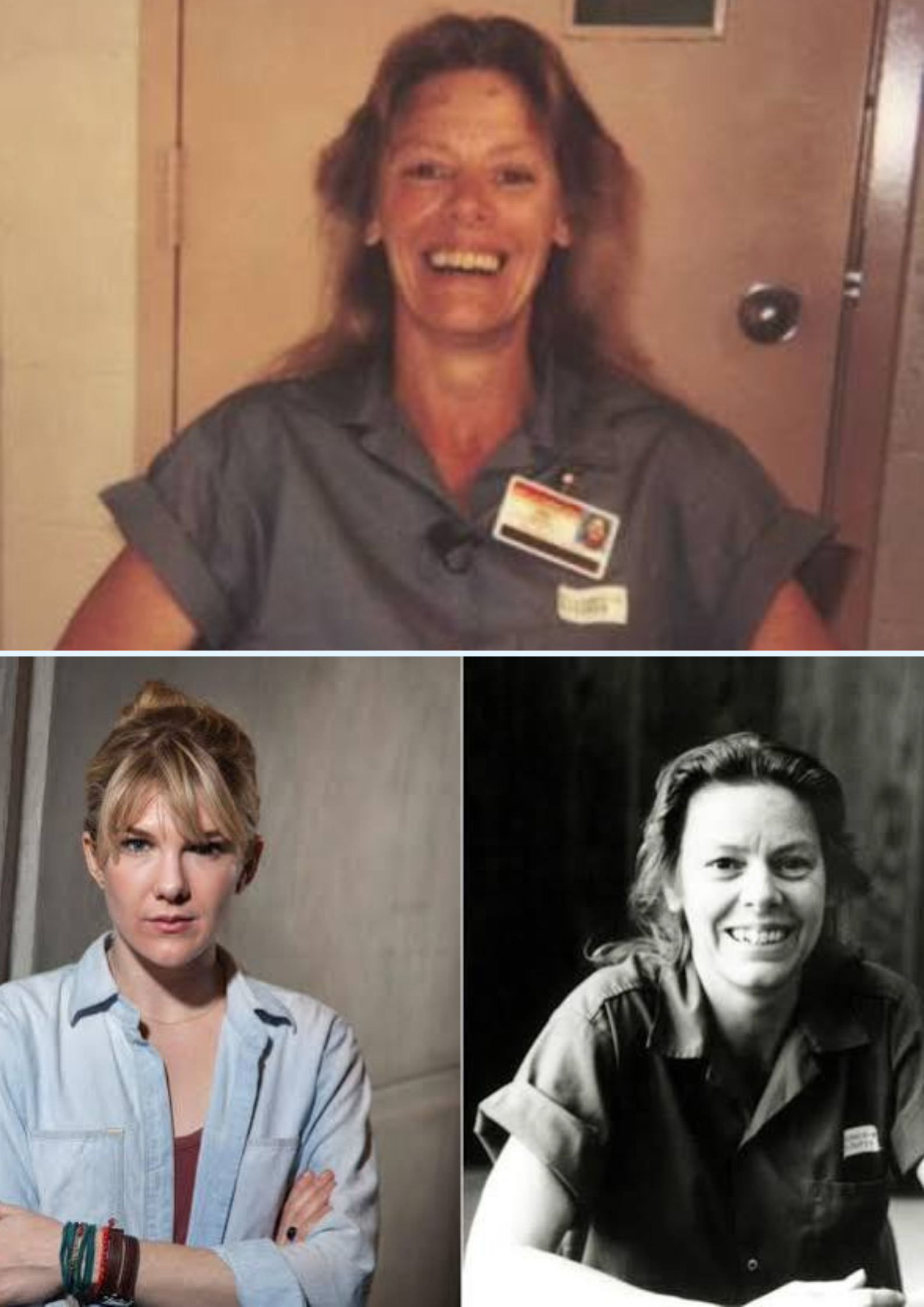
AILEEN WUORNOS’ FINAL MOMENTS: THE LAST WORDS OF THE WOMAN WHO BECAME ONE OF AMERICA’S MOST NOTORIOUS FEMALE KILLERS
STARKE, FLORIDA — On the morning of October 9, 2002, Aileen Wuornos walked into Florida’s death chamber for the final time.
The 46-year-old convicted murderer had spent years on death row after being convicted of killing men along Florida highways in the late 1980s.
Now, after abandoning her remaining appeals, she was about to become one of the few women executed in the United States since the reinstatement of the death penalty.
Behind the witness-area glass were journalists, officials and relatives connected to the victims.
When the curtain opened, Wuornos briefly looked toward the witnesses.
Then came the question that would make her final moments part of the historical record:
Did she have anything to say?
She did.
And her final statement was anything but conventional.
 HER FINAL WORDS
Witnesses later reported that Wuornos spoke softly.
Her final statement referred to Jesus and the 1996 science-fiction film “Independence Day.”
“I’d just like to say I’m sailing with the Rock and I’ll be back like Independence Day with Jesus, June 6, like the movie, big mother ship and all,” she said.
She then repeated:
“I’ll be back. I’ll be back.”
The unusual statement was reported by journalists who witnessed the execution.
Wuornos had been known for making unusual and sometimes difficult-to-follow statements during the final period of her life.
Her execution came after years of legal proceedings and questions surrounding her mental health.
THE WOMAN BEHIND THE CASE
Wuornos had been convicted of killing several men in Florida between 1989 and 1990.
During her initial trial, she claimed that the killings had occurred in self-defense.
She later changed her account and admitted killing the men.
Wuornos was ultimately convicted of multiple murders and sentenced to death.
Her case attracted enormous public attention, partly because female serial killers were comparatively rare and partly because of the disturbing circumstances surrounding the killings.
Her story later became the subject of books, documentaries and the Academy Award-winning film “Monster,” in which Charlize Theron portrayed Wuornos.
But behind the media attention was a complicated legal case involving questions about Wuornos’ psychological state.
QUESTIONS ABOUT HER MENTAL HEALTH
In the months leading up to the execution, attempts were made to stop it on the grounds that Wuornos might not be mentally competent.
Several experts had previously expressed concerns about her mental health.
Florida nevertheless proceeded with the execution after state-appointed psychiatrists determined that she was competent to be executed.
Governor Jeb Bush signed the death warrant.
Wuornos herself had stopped pursuing further appeals and had indicated that she wanted the execution to proceed.
That decision made her what is sometimes referred to as a “volunteer” for execution — a condemned prisoner who chooses not to continue fighting the death sentence through the courts.
THE EXECUTION
On the morning of October 9, Wuornos was strapped to a gurney inside Florida State Prison.
The lethal injection was administered at approximately 9:30 a.m.
According to contemporary reporting, she was pronounced dead at 9:47 a.m.
The Washington Post reported that 29 witnesses were present, while CNN’s pre-execution report described 24 witnesses, including media representatives and relatives of victims. The difference appears to reflect different methods of counting witnesses and officials present around the execution.
The execution itself was conducted behind the death-chamber curtain, with witnesses watching through the designated viewing area.
There was no dramatic last-minute attempt to stop the execution.
Wuornos’ appeals had already been abandoned.
HER FINAL NIGHT
Before her execution, Wuornos spent her final hours in prison.
She reportedly ate a traditional Southern-style meal consisting of barbecued chicken, mashed potatoes, tomato slices, apple crisp and iced tea.
She also spent time with a family friend.
According to CNN’s reporting before the execution, prison officials described her as talkative during her final hours.
Wuornos also read the Bible before her death, although she did not have a member of the clergy present with her in the death chamber.
REACTION FROM A VICTIM’S FAMILY
The execution brought a complicated mixture of emotions for relatives of Wuornos’ victims.
One victim’s daughter, Terry Griffiths, watched the execution.
Afterward, she described Wuornos’ death as extremely quick and said she believed Wuornos should have suffered more.
For the families who had spent years living with the consequences of the killings, however, the execution represented the end of a long legal process.
A FINAL CHAPTER
Aileen Wuornos’ death brought an end to one of the most closely watched murder cases in modern Florida history.
She had gone from a troubled childhood and years of instability to becoming one of America’s most notorious female murderers.
Her crimes, trials, mental-health evaluations and eventual execution continued to generate debate long after her death.
But inside the Florida death chamber on October 9, 2002, there was only one final moment left.
The curtain opened.
Wuornos looked toward the witnesses.
She delivered a strange final statement invoking Jesus and Independence Day.
Then the lethal injection began.
At 9:47 a.m., Aileen Wuornos was pronounced dead.
Her final words — “I’ll be back. I’ll be back.” — would become one of the most remembered parts of the story.