SERIAL K//ER OR POSSIBLE MISCARRIAGE OF JUSTICE? THE LUCY LETBY DEBATE CONTINUES
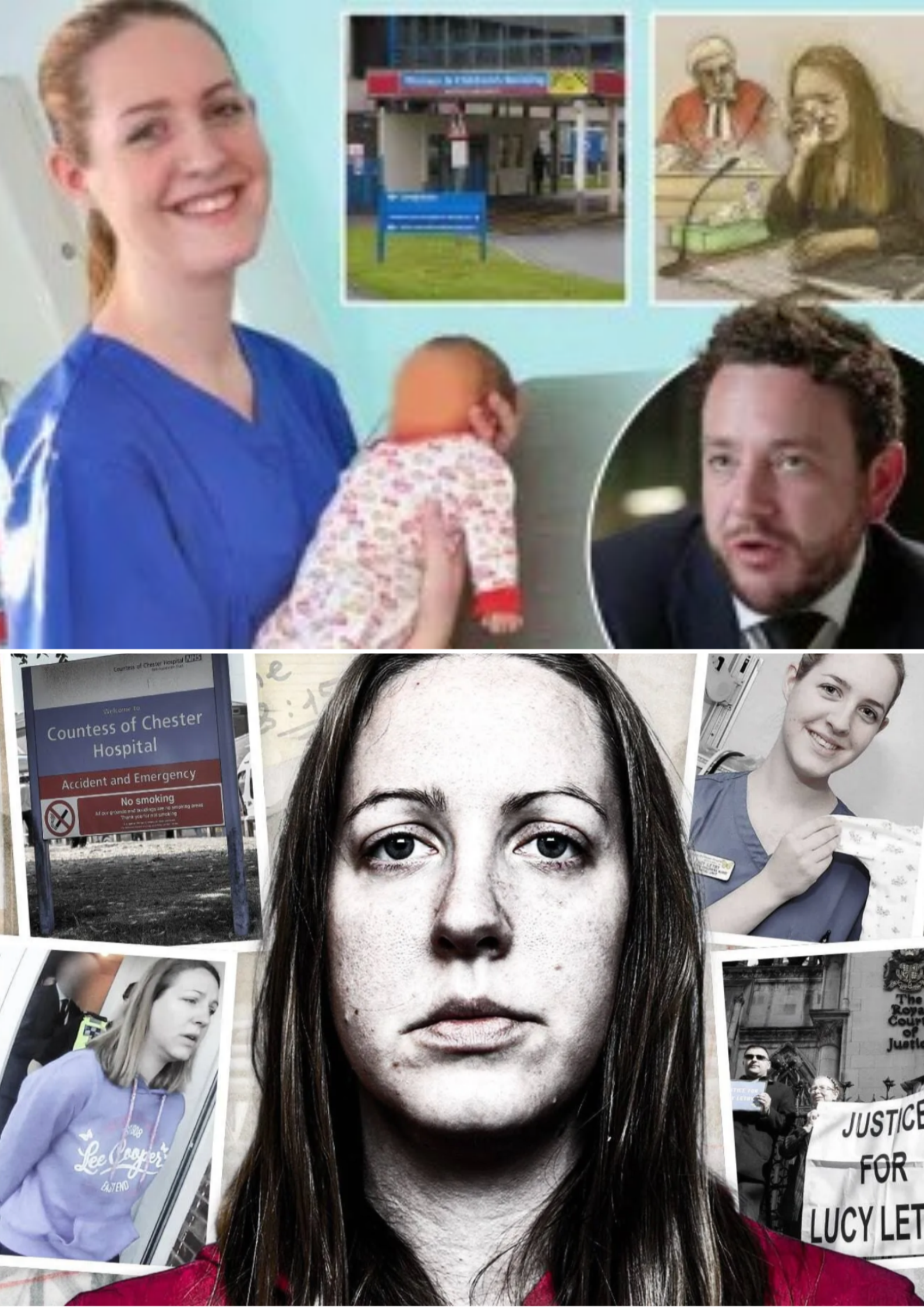
SERIAL KILLER OR POSSIBLE MISCARRIAGE OF JUSTICE? THE LUCY LETBY DEBATE CONTINUES
Lucy Letby remains one of the most closely scrutinised criminal cases in modern Britain.
The former neonatal nurse was convicted in 2023 of murdering seven babies and attempting to murder seven others at the Countess of Chester Hospital. In 2024, she was convicted of another count of attempted murder following a retrial, bringing the total number of attempted-murder convictions to seven.
She was given whole-life orders and remains in prison.
Yet, years after the original convictions, the case continues to generate fierce debate over the medical evidence, the interpretation of statistics and the failures within the hospital where the babies became critically ill or died.
Letby continues to maintain her innocence.
Meanwhile, the Criminal Cases Review Commission is examining her convictions after receiving extensive new material from her legal team.
The result of that review is not yet known.
 WHAT WAS LUCY LETBY CONVICTED OF?
Letby worked as a neonatal nurse at the Countess of Chester Hospital in Cheshire.
Between June 2015 and June 2016, a number of babies in the neonatal unit suffered unexpected collapses and deaths.
Following a trial lasting more than 10 months, a jury at Manchester Crown Court convicted Letby in August 2023 of seven murders and seven attempted murders.
The prosecution case was that she deliberately harmed babies in her care through a number of methods, including injecting air into their bloodstream or stomachs and administering insulin.
The prosecution’s case was circumstantial and relied heavily on medical evidence, alongside other evidence including Letby’s work patterns, records and a handwritten note that prosecutors argued was significant. The Court of Appeal’s account of the case records that the prosecution alleged Letby was the only person present when each baby was harmed.
Letby denied murdering or attempting to murder the babies.
The defence argued that the babies’ collapses and deaths could have resulted from their underlying medical conditions, the difficulties involved in caring for extremely premature and vulnerable infants, sub-optimal care, or a combination of factors.
 THE 2024 RETRIAL
The original trial did not resolve every allegation.
The jury could not reach verdicts on six additional attempted-murder counts, while Letby was acquitted of two others.
Prosecutors later decided to pursue a retrial on one of the unresolved counts.
In July 2024, Letby was convicted of attempting to murder another baby and received another whole-life order.
Her subsequent appeal against that conviction was unsuccessful.
The Court of Appeal also rejected her earlier applications challenging the 2023 convictions, including an application to introduce fresh evidence.
That means her convictions remain legally intact.
But the debate surrounding the evidence did not end.
WHY HAVE EXPERTS QUESTIONED THE CASE?
In the years since the trials, a number of medical and statistical experts have publicly questioned aspects of the scientific reasoning used during the case.
One of the most heavily debated issues concerns the alleged insulin poisonings.
Experts supporting Letby’s legal challenge have argued that some of the medical evidence used to interpret the babies’ collapses may have been unreliable or open to alternative explanations.
The defence has also challenged aspects of the prosecution’s interpretation of neonatal physiology and the causes of sudden deterioration.
These arguments do not themselves overturn a criminal conviction.
For that to happen, they would need to succeed through the appropriate legal process.
The Court of Appeal has already rejected Letby’s previous applications for permission to appeal. However, the court’s 2024 judgment made clear that it was dealing with the grounds of appeal before it and was not undertaking a fresh review of every scientific criticism subsequently raised in public debate.
THE ROLE OF THE CCRC
The most significant current development is taking place outside the public inquiry and inside the Criminal Cases Review Commission.
The CCRC received a preliminary application concerning Letby’s convictions in February 2025.
Further expert reports and submissions were subsequently provided, with additional defence material continuing to arrive into 2026.
In February 2026, the CCRC confirmed that a review of Letby’s convictions was underway.
Importantly, the commission stressed that it does not decide whether someone is innocent or guilty.
Its role is to investigate potential miscarriages of justice and, where new evidence or argument creates a real possibility that a conviction may not be upheld, refer a case back to an appellate court.
There has been no announcement that the CCRC has referred Letby’s convictions back to the Court of Appeal.
There has also been no decision overturning her convictions.
TWO EXPERTS WITHDRAW FROM THE DEFENCE TEAM
The debate intensified again in September 2026 when two experts who had supported Letby’s defence withdrew from her team.
Helen Shannon and Geoff Chase reportedly expressed concerns about the scientific credibility of some arguments being advanced in connection with the case.
However, their withdrawal did not mean they had abandoned every criticism of the prosecution evidence.
According to reporting by The Guardian, the experts continued to maintain their position that it was highly unlikely that two babies had been poisoned with insulin, while objecting to other arguments that they considered scientifically problematic.
The development illustrates how complicated the scientific dispute has become.
There is no single unified group of experts arguing one position against another.
Instead, individual specialists have expressed different views about different aspects of the evidence.
THE THIRLWALL INQUIRY
Another major development came on September 15, 2026, when Lady Justice Kathryn Thirlwall published the final report of the Thirlwall Inquiry.
The inquiry was established after Letby’s convictions to examine what happened at the Countess of Chester Hospital, including how concerns about babies’ collapses and deaths were handled by doctors, nurses, managers and external organisations.
Its findings were highly critical of hospital management and safeguarding.
The inquiry described dysfunctional management and governance, a serious disconnect between hospital leadership and clinicians, and failures to understand fundamental safeguarding principles.
It concluded that some collapses and deaths could have been prevented if safeguarding procedures had been followed and concerns had been acted upon sooner.
The report also found that senior managers delayed contacting police and that clinicians who raised concerns were not properly listened to.
At one point, plans were even formulated to return Letby to the neonatal unit, although those plans were later abandoned.
BUT THE INQUIRY DID NOT DECIDE WHETHER LETBY WAS INNOCENT
This distinction is crucial.
The Thirlwall Inquiry did not conduct a fresh trial of Letby.
Lady Justice Thirlwall explicitly stated that the inquiry was not an investigation into Letby’s criminal convictions or her guilt.
She also said the inquiry had not examined the detailed expert evidence presented during the criminal trials.
Instead, its focus was on what hospital staff and management knew at the time, what action they took, and what should have been done to protect babies.
The inquiry therefore cannot be interpreted as either confirming or overturning Letby’s convictions.
Its findings about hospital failures and its findings about Letby’s criminal liability are separate issues.
WHAT ABOUT THE HOSPITAL’S STAFFING PROBLEMS?
Staffing and workload have also become part of the wider discussion.
During the criminal proceedings, the defence argued that the neonatal unit had experienced an increase in admissions and that the babies being treated included infants with increasingly complex medical needs.
The Court of Appeal’s summary of the original defence case records arguments concerning staffing pressures and the increased demands placed on the unit.
Supporters of Letby’s case have subsequently argued that these factors deserved greater consideration when interpreting the medical events.
The prosecution, however, presented the collapses and deaths as a pattern of deliberate harm rather than simply the result of a struggling neonatal service.
That disagreement remains central to the broader debate.
NEW ALLEGATIONS DID NOT LEAD TO MORE CHARGES
The controversy has also continued because investigators examined additional allegations after Letby’s original convictions.
In January 2026, the Crown Prosecution Service announced that it would bring no further criminal charges against Letby in relation to additional deaths and non-fatal collapses involving babies at the Countess of Chester Hospital and Liverpool Women’s Hospital.
The CPS said it had considered allegations involving nine babies and concluded that the evidential test for prosecution was not met.
Six families subsequently requested reviews of the decision.
In August 2026, the CPS confirmed that an independent prosecutor had reconsidered the evidence and upheld the decision not to bring further charges.
This decision did not affect Letby’s existing convictions.
It simply meant that prosecutors did not consider the available evidence sufficient to bring additional criminal cases.
A CASE STILL DIVIDING OPINION
The Lucy Letby case now exists at the intersection of two very different questions.
The first is a legal question:
Are the convictions safe in law?
At present, the convictions stand.
The Court of Appeal has previously rejected Letby’s applications, and no court has overturned her convictions.
The second is a scientific and evidential question:
Could new evidence or new interpretations of the medical evidence eventually lead to the case being reconsidered?
That question remains open because the CCRC review is ongoing.
It is not possible to say what conclusion the commission will reach.
WHAT HAPPENS NEXT?
For now, Lucy Letby remains imprisoned under whole-life orders.
The CCRC continues to examine the material submitted on her behalf.
If the commission concludes that there is a real possibility that one or more convictions may not be upheld, it can refer the case to an appellate court.
If it does not, the existing convictions remain in place unless another legal route succeeds.
Meanwhile, the findings of the Thirlwall Inquiry are likely to remain an important part of the historical record of what happened at the Countess of Chester Hospital.
The report has identified profound failures in management, governance and safeguarding and has made recommendations intended to prevent similar failures in neonatal care.
But it has not answered the question at the centre of the continuing public argument: whether Lucy Letby’s convictions will ultimately withstand the scientific and legal challenges now being pursued.
For the families of the babies involved, the debate is not an abstract argument about statistics or medical evidence.
The inquiry itself stressed that real families suffered the unexpected deaths and collapses of their babies and urged commentators to remember their dignity and the continuing impact of what happened.
For Letby’s legal team, the focus is now on whether new evidence and arguments can pass the demanding legal threshold required for a conviction to be reconsidered.
And for the CCRC, the task is narrower still: to determine whether the material before it creates a real possibility of a miscarriage of justice.
Until that process reaches a conclusion, Lucy Letby remains convicted of seven murders and seven attempted murders.
The debate over how the evidence was interpreted, however, is far from over.