My Mother Poured a Mimosa Over My Head at the Country Club — Six Hours Later, My Brother Begged Me to Make the Video Disappear
PART 1
My mother called me trash in front of an entire country club, poured her mimosa over my head, and my siblings pulled out their phones to film me instead of helping.
I didn’t scream.
I didn’t throw the glass back.
I didn’t even wipe the champagne dripping from my eyelashes.
I just looked at my family, realized something inside me had finally gone quiet, and walked away.
Six hours later, my brother was calling me in tears, begging me to make a video disappear.
But that morning, he had been laughing.
The country club smelled exactly the way I remembered—lemon polish, expensive perfume, fresh coffee, and the strange coldness of people trying very hard to look happy.
My mother adored the place.
Every first Sunday of the month, she reserved the same long table beside the windows and assembled our family like an advertisement.
Kevin wore a pressed shirt and talked loudly about commercial real estate.
Melissa arrived with perfect hair and a handbag my mother made sure everyone noticed.
Daniel showed photographs from Bali and somehow avoided mentioning that Dad had paid for most of the trip.
And my mother sat at the center of it all, smiling like she had personally built every success around that table.
I had avoided those brunches for almost three years.
Not because I was too busy.
Because I was exhausted.
I had built a cybersecurity company from almost nothing, sold it, remained through the transition, and then started working on another platform designed to protect small businesses and rural medical clinics.
My family called that “getting lucky.”
My mother had once told me computer science was an embarrassing career choice for a woman.
After my company succeeded, she changed the story.
Apparently, I had simply been “in the right place at the right time.”
There was only one reason I came that Sunday.
Grandma.
She was turning ninety.
She had helped pay my college tuition when my parents refused.
When everyone else looked at me and saw a daughter who needed fixing, Grandma saw someone worth betting on.
So when she called me three days earlier and whispered, “Sarah, please come. I would really like you there,” I couldn’t say no.
I wore dark jeans, a cream sweater, and drove my eight-year-old Honda.
Apparently, that alone was enough to offend my mother.
Kevin spotted me first.
“Well, look who finally decided to visit the common people.”
Several relatives laughed.
I kept walking.
Then Melissa leaned toward the window.
“Oh my God. Sarah, is that seriously still your Honda?”
Kevin craned his neck dramatically.
“The millionaire drives herself?”
More laughter.
My mother looked me up and down.
Not warmly.
Evaluatingly.
“You embarrass me sometimes.”
I stopped beside the table.
“Good morning to you too.”
She pointed toward the parking lot.
“Melissa drives a Mercedes. Kevin has a Range Rover. Daniel understands presentation. And you show up looking like…”
Her eyes dropped to my sweater.
“…that.”
Grandma’s face changed.
She looked embarrassed for them.
That hurt worse than anything my mother said.
The only open seat was at the far end of the table, nowhere near Grandma.
I sat down anyway.
For nearly forty minutes, I barely spoke.
Kevin bragged about deals at his father-in-law’s real estate company.
Melissa described one of her husband’s legal victories.
Daniel passed his vacation pictures around.
Then Grandma leaned across the table.
“Sarah, sweetheart, how is the new company?”
I smiled.
“We just closed our second angel round.”
Grandma’s eyes brightened.
“And the medical project?”
“We’re preparing deployment for more than two hundred rural clinics. If everything stays on schedule, some of them will finally have security systems comparable to much larger hospitals.”
Grandma squeezed my hand.
“That sounds important.”
I never even got to thank her.
My mother’s fork hit her plate.
Hard.
“Always trying to play the saint.”
The conversations around us stopped.
I turned slowly.
“What?”
She waved one manicured hand toward me.
“You made millions, Sarah. Millions. Yet you drive that ridiculous car. You live in a little townhouse. You come here dressed like some thrift-store clerk.”
“Mom—”
“No. Everybody sees it.”
Her voice rose.
“You want people to think you’re humble. You want everyone to admire how little you care about money.”
Kevin smirked.
Melissa lowered her glass, already enjoying the show.
My mother leaned forward.
“You think you’re better than this family, don’t you?”
I felt Grandma’s fingers tighten around mine.
For years, I had swallowed comments like that.
Not today.
“I don’t think I’m better than anyone.”
My mother scoffed.
I continued calmly.
“I just don’t need a four-thousand-dollar watch to know what my time is worth.”
Silence.
Absolute silence.
Daniel glanced at his watch.
Kevin’s smile disappeared.
My mother’s face changed.
Her cheeks flushed crimson.
Her chair screamed against the hardwood as she stood.
Then she looked directly at me.
“You ungrateful little trash.”
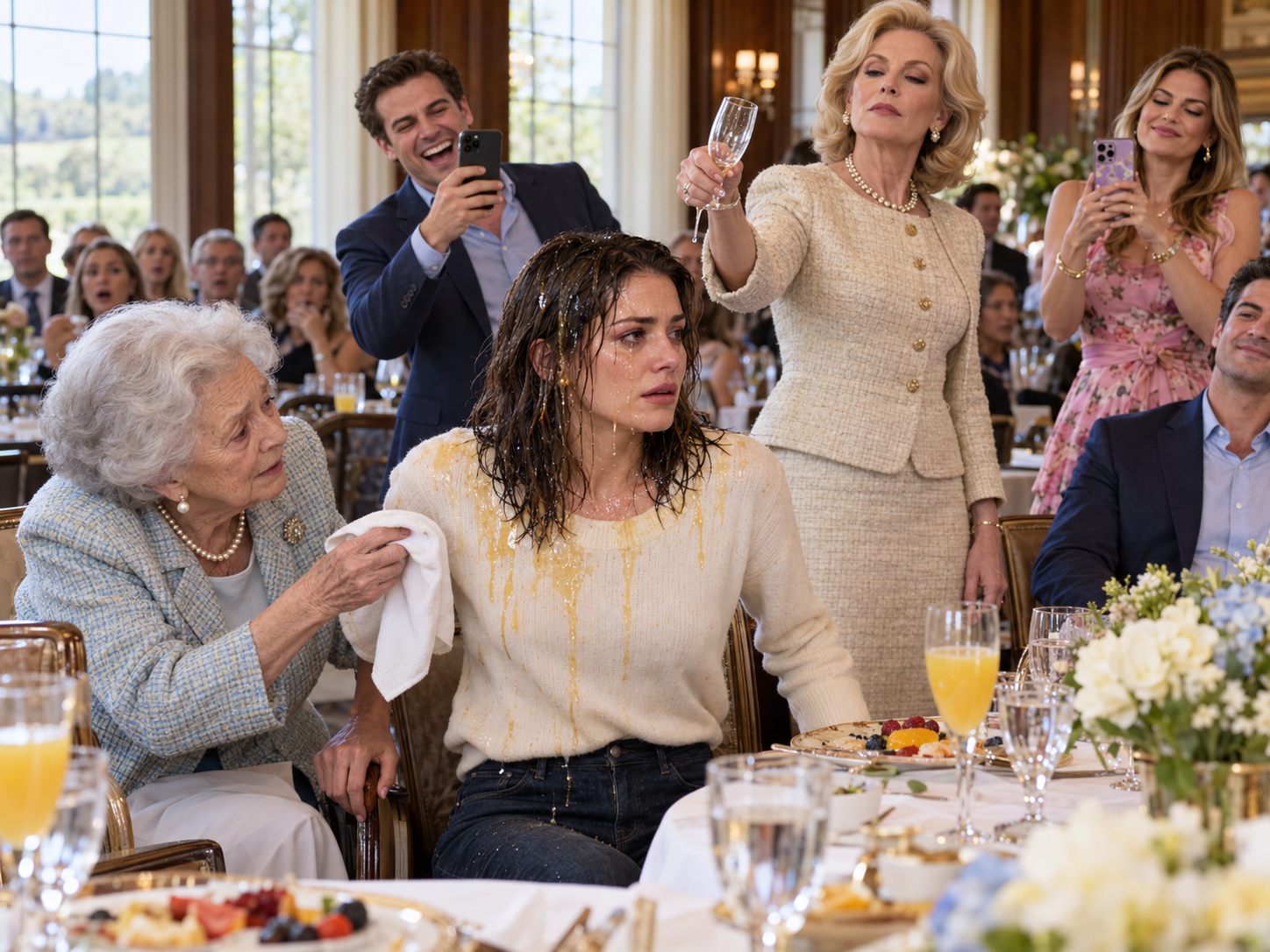
Before I understood what she was doing, she grabbed her champagne flute.
Cold liquid crashed over my head.
Champagne.
Orange juice.
Sticky sweetness ran through my hair, across my forehead, down my neck, soaking the cream sweater Grandma had complimented when I arrived.
The citrus burned my eyes.
I heard somebody gasp from another table.
And then—
Laughter.
Kevin’s laughter.
I opened my eyes.
He had his phone pointed directly at me.
Recording.
Melissa already had hers out too.
Daniel leaned toward Kevin.
“Send that to the group.”
Kevin zoomed closer.
“Look at the tech mogul now!”
Melissa laughed so hard she covered her mouth.
Kevin kept filming.
“Post that on LinkedIn, sis!”
Something inside me broke.
Not loudly.
Quietly.
Permanently.
Only Grandma moved to help me.
Her trembling hands reached for a napkin.
“Eleanor! Kevin! Stop this immediately! Have you all lost your minds?”
I caught her wrist gently.
She looked at me with tears in her eyes.
I leaned down and kissed her cheek.
“Happy birthday, Grandma.”
My voice barely shook.
“I love you.”
Then I looked once at the people around that table.
My mother standing beside her empty glass.
Kevin still holding his phone.
Melissa smiling.
Daniel pretending this was harmless.
“But I am never sitting at this table again.”
I walked out without wiping my face.
Through the dining room.
Past the staring guests.
Past two waiters who looked like they wanted to say something but didn’t.
Into the parking lot.
I got into my old Honda and drove home.
I showered.
Changed clothes.
Opened my laptop.
And worked.
I muted the family group chat and spent the afternoon coding because there was nothing left I wanted to hear from any of them.
Around 6:30 that evening, my phone suddenly started vibrating across my desk.
Kevin.
Decline.
Melissa.
Decline.
Daniel.
Decline.
Then Dad called.
That made me stop.
My father almost never called me directly.
A second later, Kevin called again.
Then again.
Then a message appeared.
PLEASE PICK UP.
Another followed.
YOU HAVE TO FIX THIS.
Then:
DELETE IT. TELL THEM TO TAKE IT DOWN.
I stared at the screen.
Delete what?
I opened my laptop and checked social media.
And there I was.
Sitting at the country club.
Mimosa running down my face.
Kevin had uploaded the video publicly with the caption:
“When the ‘successful’ sister gets put in her place.”
But something had happened after he posted it.
Something Kevin clearly hadn’t expected.
The video had already passed two million views.
And underneath it was another post.
A repost from a name I recognized immediately.
A name connected to one of the most powerful investment companies in the country.
I stared at the screen as my stomach tightened.
Because suddenly I understood why Kevin sounded terrified.
He had posted the video expecting people to laugh at me.
He had never stopped to wonder who might be watching.
PART 2
The name above the repost was Jonathan Whitmore.
Founder of Whitmore Capital.
Billionaire investor.
Former board chairman of the cybersecurity company I had sold three years earlier.
And, more importantly, one of the people reviewing the final institutional round for my new company.
His caption contained only two sentences.
“I’ve worked with Sarah Bennett for seven years. She is one of the most disciplined founders I have ever known.”
Then:
“The behavior shown in this video says nothing about Sarah—and quite a lot about everyone else in the room.”
I stared at the screen.
Then refreshed it.
Three million views.
Comments were appearing faster than I could read them.
At first, I expected mockery.
The internet usually rewarded cruelty.
Instead, strangers were dissecting everything.
The fact that I never raised my voice.
Grandma reaching for the napkin.
Kevin laughing.
Melissa filming.
My mother’s face after she emptied the glass over my head.
Someone had slowed the footage down.
Someone else had isolated the audio.
Another person had posted a frame of Grandma staring at my siblings with obvious disgust.
Then people started asking who Kevin was.
That was when my phone began ringing without pause.
Kevin.
Dad.
Kevin again.
Melissa.
Mom.
Daniel.
Unknown number.
Kevin.
I finally answered.
Not because I wanted to.
Because I wanted the phone to stop vibrating.
Kevin’s voice exploded through the speaker.
“What the hell are you doing?”
I leaned back in my chair.
“Working.”
“Don’t do this, Sarah.”
“Do what?”
“You know exactly what.”
“No. I actually don’t.”
He breathed hard.
“The video.”
“You posted it.”
“That’s not what I mean.”
I glanced at the view counter.
4.1 million.
“What do you mean?”
“I need you to make a statement.”
“A statement saying what?”
“That it was a family joke.”
I said nothing.
Kevin rushed forward.
“Just say Mom was kidding. Say we were all having fun. Say people are taking it out of context.”
“Was Grandma having fun?”
Silence.
“Sarah—”
“Was I?”
“You always do this.”
There it was.
Even while panicking, Kevin found a way to blame me.
“Do what?”
“Act morally superior.”
“I haven’t said anything publicly.”
“That’s the problem!”
I almost laughed.
“So now I’m hurting you by not lying for you?”
“You don’t understand.”
His voice dropped.
Something changed.
This wasn’t anger anymore.
It was fear.
“My company saw it.”
That explained part of it.
Kevin worked as regional acquisitions director for Harrington-Lowe Commercial, a large real estate development group owned by his father-in-law.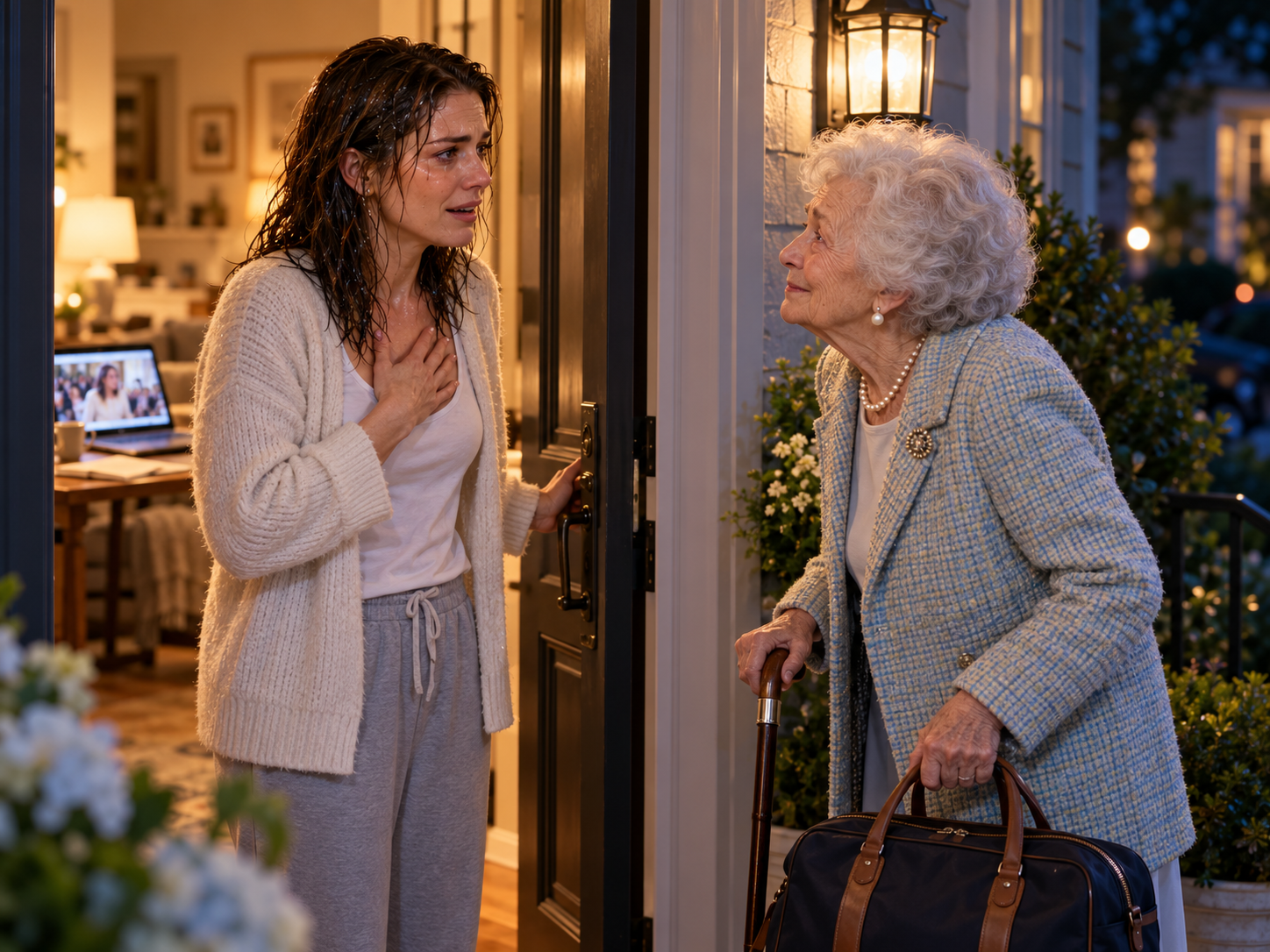
His career was built on polished lunches, investor dinners, and convincing very wealthy people that Kevin Bennett was a responsible adult.
I opened another browser tab.
His name was already trending.
“Then maybe you should call them.”
“I did.”
“What did they say?”
Nothing.
Then:
“They’ve suspended me.”
I looked at the ceiling.
Not with pleasure.
Not exactly.
But something in me felt strangely balanced.
“Temporarily?”
“They said pending review.”
“Okay.”
“Okay?”
He almost screamed it.
“You think this is okay?”
“I think actions have consequences.”
“It was Mom who poured the drink!”
“And you filmed it.”
“She’s our mother!”
“You laughed.”
“We all laughed!”
“Yes.”
The word landed harder than shouting would have.
Kevin fell silent.
I continued.
“You filmed me while Mom humiliated me. Then you uploaded it publicly because you wanted strangers to laugh too.”
“It wasn’t supposed to go viral.”
“That doesn’t make it better.”
“I deleted the original.”
“The internet has copies.”
“Then call Whitmore.”
“No.”
“Sarah.”
“No.”
“You know him.”
“Yes.”
“You could ask him to delete the repost.”
“I could.”
“So do it.”
“I won’t.”
Kevin inhaled sharply.
“You’re ruining my life.”
I looked at the family group chat.
My mother had written seventeen messages.
Most contained the words disrespectful, vindictive, selfish, embarrassing.
Not one contained sorry.
“You uploaded the video, Kevin.”
“You could stop this.”
“That isn’t the same thing.”
He began crying.
Actual crying.
My brother, who six hours earlier had zoomed his camera toward my face while orange juice dripped from my eyelashes, was crying because the humiliation had changed direction.
“Please.”
His voice cracked.
“Dad says the country club might revoke our membership. Melissa’s firm called her husband. Daniel lost a sponsorship. Mom’s getting messages.”
That made me sit forward.
“People are contacting Mom?”
“Yes.”
“Threatening her?”
Kevin hesitated.
“Some.”
My anger vanished instantly.
“I don’t support that.”
“Then fix it!”
“No. I said I don’t support threats. I didn’t say I’m responsible for them.”
“People are destroying us!”
I closed my eyes.
“Kevin, listen carefully. I will not lie about what happened. I will not call Jonathan. I will not pretend it was a joke. But if anyone is threatening Mom, send me screenshots. I’ll publicly tell people to stop.”
That confused him.
“Why would you do that?”
Because despite everything, I didn’t want revenge.
I wanted distance.
There was a difference.
“Because I don’t want anybody threatened.”
I hung up.
Thirty seconds later, my father called again.
This time, I answered.
“Sarah.”
His voice sounded older than I remembered.
“Dad.”
“We need to talk.”
“Okay.”
“Your mother is devastated.”
I waited.
He said nothing else.
“So?”
“So what?”
“Is that the whole conversation?”
“Sarah, this has gotten out of control.”
“No. It became public.”
“That’s what I mean.”
Interesting.
Not the drink.
Not the insults.
Not the laughter.
The publicity.
“Did Mom tell you what happened?”
“I was there.”
I went still.
I had almost forgotten.
Dad had been at the far end of the table.
Mostly silent.
Reading something on his phone.
I remembered seeing him look up after the glass hit me.
Then down again.
“You watched her pour a drink over my head.”
He sighed.
“Your mother lost her temper.”
“You watched Kevin film it.”
“I told him later it was immature.”
“Later.”
“Sarah—”
“Did you think it was wrong when it happened?”
Another pause.
“I didn’t want to create a bigger scene.”
There are sentences that permanently rearrange your understanding of someone.
That was one.
My father hadn’t failed to notice.
He had calculated the social cost of defending me and decided silence was cheaper.
“I understand.”
“No, you don’t.”
“I think I finally do.”
I ended the call.
Then my doorbell rang.
I checked the security camera.
Grandma.
Standing outside with her cane.
Beside her was a taxi driver holding a small overnight bag.
I was out of my chair before I realized I was moving.
I opened the door.
“Grandma?”
She looked exhausted.
But determined.
“I need somewhere to sleep tonight.”
My heart stopped.
“What happened?”
She lifted her chin.
“I told your mother exactly what I thought of her behavior.”
I stepped aside.
Grandma walked into my townhouse.
The taxi driver carried in her bag.
I paid him, locked the door, and turned around.
Grandma had already lowered herself carefully onto my sofa.
“What did Mom do?”
“She told me I was overreacting.”
I knelt in front of her.
Grandma’s mouth trembled.
“So I told her she had spent thirty-five years teaching her children that cruelty counted as confidence as long as the room laughed.”
I had never heard Grandma speak that way.
“She asked me whose side I was on.”
I swallowed.
“And?”
Grandma reached for my hand.
“I told her the side that still had some decency left.”
For the first time that day, I cried.
Not because of the video.
Not because of my mother.
Because someone had finally chosen me without asking what it would cost them.
Grandma squeezed my fingers.
Then she said something I wasn’t prepared for.
“There’s something else you need to know.”
I wiped my face.
“What?”
She looked toward my laptop.
The viral video was still paused on the screen.
“This family has been using your name for years.”
My breathing slowed.
“What does that mean?”
Grandma stared at me.
“I think Kevin has been telling investors that you’re involved in his projects.”
I laughed once because the sentence was too absurd to understand.
“I’m not.”
“I know.”
Grandma’s expression didn’t change.
“But I’m not sure they do.”
PART 3
The next morning, I discovered that humiliation had been the smallest problem my brother created.
Grandma slept in my guest room.
I barely slept at all.
At 5:40 a.m., I was sitting at my kitchen island with coffee, searching through corporate filings.
Kevin had formed six separate limited liability companies over the previous four years.
That alone wasn’t strange.
Commercial real estate deals were often structured through individual entities.
What was strange was the investor material.
A cached brochure surfaced in a search result connected to one of Kevin’s older developments.
The brochure described the Bennett family as “a multigenerational entrepreneurial group with deep experience in technology, law, finance, and commercial development.”
Under a section titled Advisory Network were photographs.
Kevin.
Melissa.
Daniel.
My father.
And me.
My photograph had been pulled from an old conference panel.
Beneath it:
Sarah Bennett — Technology Founder & Strategic Advisor
I stared at the screen.
I had never advised Kevin on anything.
I downloaded the document.
Then another.
And another.
My name appeared in three investor decks.
In one, Kevin described me as a “technology partner supporting risk analysis and data security.”
Completely false.
In another, my previous company’s logo appeared next to mine.
That company was now owned by a publicly traded corporation.
Using its name without authorization was not a harmless exaggeration.
My phone rang.
Jonathan Whitmore.
I answered immediately.
“Jonathan.”
“Sarah.”
His voice was quiet.
“Are you all right?”
“I’ve had better Sundays.”
“I imagine.”
There was a pause.
“I’m sorry that video happened.”
“Thank you.”
“And before you ask, I reposted it because I was angry.”
“I wasn’t going to ask.”
“You’re allowed to be angry at me too.”
“I’m not.”
“Well, you might be in ten minutes.”
I frowned.
“Why?”
“Because Kevin called my office at seven fifteen this morning.”
I nearly dropped the coffee.
“What?”
“He said the video misrepresented your relationship.”
“He called you?”
“Three times.”
“What did he want?”
“First, he wanted me to delete the repost. When that failed, he said you had authorized him to handle the matter.”
My stomach turned.
“I absolutely did not.”
“I know.”
Then Jonathan’s voice changed.
More formal.
“There is another reason I’m calling.”
I already knew.
“You found the decks.”
“I found one.”
“I found three.”
Silence.
“That’s worse.”
“Yes.”
“You were never an advisor?”
“No.”
“Investor?”
“No.”
“Technology partner?”
“No.”
“Did you authorize use of your photograph?”
“No.”
“Your old company’s brand?”
“Obviously not.”
Jonathan exhaled.
“Sarah, one of the funds participating in two of those projects is affiliated with us.”
My entire body went cold.
“What?”
“Minor exposure. Different division. I didn’t recognize the structure until compliance flagged it this morning.”
I walked away from the kitchen island.
“How much money?”
“I can’t discuss other investors’ confidential positions yet. But enough that this will require lawyers.”
Of course it would.
It always amazed me how one cruel moment could rip open doors you didn’t know existed.
“Jonathan.”
“Yes?”
“Do you think Kevin committed fraud?”
“I’m not going to make that conclusion on a phone call.”
Fair.
“But?”
“But you need independent counsel today.”
I stared through the window.
My Honda sat in the driveway, still carrying a faint dried splash of orange juice on the passenger door where some had transferred from my sleeve.
“I know someone,” Jonathan said.
“I already have someone.”
“Good.”
He hesitated.
“And Sarah?”
“Yes?”
“Do not communicate with Kevin about the investor materials until your attorney reviews them.”
“Understood.”
After we hung up, I called Rachel Kim.
Rachel had been general counsel at my first company for four years and was now a partner at a litigation firm.
She answered with:
“I assume this is about the mimosa.”
“Partly.”
“That sentence concerns me.”
“It should.”
I emailed the files.
Thirty minutes later, Rachel called back.
Her first words were:
“Do not speak to your brother.”
“I already spoke to him last night.”
“About these materials?”
“No.”
“Good.”
She was quiet.
Then:
“Sarah, this is serious.”
“How serious?”
“Serious enough that I’m clearing my morning.”
By 9:00, we were in a video conference.
By 10:30, Rachel had found four more documents.
By noon, the number became nine.
Kevin had used my biography repeatedly.
Not just to decorate presentations.
To establish credibility.
In one investor call transcript, he had apparently told a prospective partner that “my sister’s security team has reviewed the project infrastructure.”
No one from my company had reviewed anything.
At 12:18, Kevin called.
I let it ring.
Then he texted.
CAN WE PLEASE TALK LIKE FAMILY?
Rachel, who was sitting across from me at my dining table, looked at the screen.
“Don’t answer.”
Another text came.
THIS IS GETTING RIDICULOUS.
Then:
YOU KNOW I NEVER MEANT ANY HARM.
Rachel raised one eyebrow.
“He’s escalating through the traditional stages.”
“What stages?”
“Demand, guilt, minimization.”
My phone buzzed.
MOM IS IN THE HOSPITAL.
I stood so quickly my chair scraped backward.
Rachel’s expression changed.
“Call your father.”
I did.
He answered immediately.
“Dad, where is Mom?”
“At St. Matthew’s.”
“What happened?”
“She had chest pain.”
My anger disappeared beneath pure instinct.
“Is she okay?”
“They think it may be stress, but they’re still testing.”
“I’ll come.”
Rachel touched my wrist after I hung up.
“You don’t have to.”
“She’s my mother.”
“I know.”
I grabbed my keys.
Grandma appeared from the hallway.
“I’m coming too.”
“Grandma, you should rest.”
“I am ninety, Sarah. I am not dead.”
Rachel almost smiled.
Twenty-five minutes later, we entered St. Matthew’s Hospital through the emergency wing.
Kevin was standing outside a private treatment room.
The moment he saw me, he moved toward me.
“You came.”
I ignored him.
“How is she?”
“They’re running tests.”
“Where’s Dad?”
“Inside.”
Grandma walked past Kevin without speaking.
He reached for my arm.
I stepped back.
“Don’t.”
His face hardened.
“This is exactly what I’m talking about.”
“What?”
“You’re treating us like criminals.”
I stared at him.
“I haven’t accused you of anything.”
His expression flickered.
Too fast.
But I saw it.
Fear.
“I know about the investor decks.”
Kevin went completely still.
Behind us, Melissa entered the corridor.
She must have heard the last sentence.
Her face went pale.
“What investor decks?”
Kevin turned.
“Nothing.”
I looked at him.
“Interesting answer.”
“Sarah, not here.”
“Why not?”
“Mom is in the hospital.”
“And you texted me about Mom while knowing lawyers were looking at documents with my name on them.”
Melissa stepped closer.
“What documents?”
“Ask Kevin.”
She did.
He ignored her.
Instead, he leaned toward me.
“You really want to destroy this family over a stupid video?”
“This has nothing to do with the video.”
“Of course it does.”
“No.”
I lowered my voice.
“You used my name in investment materials.”
His jaw tightened.
“You knew what I did for a living.”
“That isn’t permission.”
“We’re family.”
“That isn’t permission either.”
He looked around the corridor, realizing people could hear us.
Then he whispered:
“You benefited from the family name too.”
I almost couldn’t believe him.
“How?”
“You think Grandma paid your tuition with magic?”
Grandma stopped walking.
Slowly, she turned.
Kevin saw her.
Too late.
She took three steps back toward us.
“What did you just say?”
Kevin looked suddenly twelve years old.
“Grandma, I didn’t mean—”
“Yes, you did.”
Her voice was quiet.
Dangerously quiet.
“My husband left me investments. I paid Sarah’s tuition because I chose to.”
Kevin swallowed.
“You’ve been telling people Sarah owes this family something?”
“No.”
Grandma looked at me.
Then at Kevin.
“What else have you been using her name for?”
He said nothing.
That silence answered more than words could have.
Then Melissa’s phone buzzed.
She looked at the screen.
And screamed.
Not loudly.
More like the air had been punched out of her.
“What?”
Daniel had arrived behind her.
Melissa held up her phone.
“My husband’s firm just placed him on administrative leave.”
Kevin stared.
“What does Mark have to do with this?”
Melissa looked at him with horror.
“The Harbor Point project.”
Kevin’s face drained.
I felt Rachel’s warning echo in my head.
Do not speak to your brother.
“Melissa.”
She looked at me.
“What is Harbor Point?”
She shook her head.
“I don’t know.”
But she did.
I could see it.
“Melissa.”
Tears filled her eyes.
“Mark handled some closings.”
“For Kevin?”
She looked at her brother.
Kevin whispered:
“Don’t.”
Melissa snapped.
“Don’t what?”
People in the corridor turned toward us.
“You said everything was legitimate!”
Kevin grabbed her elbow.
“Lower your voice.”
She ripped herself away.
“You told Mark Sarah was involved!”
My heart stopped.
Kevin closed his eyes.
And in that moment, I understood something terrible.
This wasn’t just my brother using my reputation.
My entire family had built pieces of their lives around the assumption that I would never ask questions.
Mom’s tests showed no heart attack.
It was severe anxiety and dehydration.
By late afternoon, she was sitting upright in a hospital bed, furious that everyone had embarrassed her by discussing business in the hallway.
I stood near the door.
Grandma sat beside the window.
Dad occupied the corner like a man hoping invisibility might become possible.
Kevin stood against the wall.
Melissa had been crying for nearly an hour.
Daniel kept staring at his phone.
Mom looked at me.
“This is your fault.”
Nobody spoke.
I almost admired the consistency.
“My fault?”
“The video.”
“Kevin posted it.”
“You provoked me.”
Grandma closed her eyes.
Mom continued.
“You knew exactly what you were doing with that comment about the watch.”
I nodded slowly.
“Okay.”
That surprised her.
“Okay?”
“Yes.”
I walked farther into the room.
“If insulting a watch justified pouring alcohol over your daughter’s head, then we have very different definitions of reasonable behavior.”
Mom’s face tightened.
“And now you’re investigating your own brother?”
“I’m protecting my name.”
“Against family.”
“Family was supposed to protect my name first.”
Kevin stepped forward.
“I never stole from you.”
“No. You borrowed my credibility without permission.”
“That’s not stealing.”
Rachel had advised me not to debate legal definitions, so I didn’t.
Instead, I asked one question.
“How many deals?”
Kevin looked away.
“How many?”
Dad finally spoke.
“Kevin.”
“Stay out of this.”
That made Dad stand.
“No. I’ve stayed out of enough.”
Everyone looked at him.
Even Mom.
Dad’s voice shook.
“Answer your sister.”
Kevin laughed bitterly.
“So now everyone turns on me?”
Melissa snapped.
“You got my husband suspended!”
“I didn’t force Mark to sign anything.”
“What did he sign?”
Kevin said nothing.
I looked at Melissa.
“What did Mark sign?”
Her lips trembled.
“Letters verifying that your company had reviewed cybersecurity risk.”
I felt sick.
“My current company?”
She nodded.
“We never did.”
“I know that now.”
“How many?”
“Two.”
“Why?”
Melissa began crying again.
“Because Kevin said you knew.”
I looked at my brother.
He still wouldn’t meet my eyes.
Mom suddenly spoke.
“You’re all making too much of this.”
Grandma turned toward her.
“Eleanor.”
Mom ignored her.
“People use family connections all the time.”
I stared at my mother.
“Did you know?”
“No.”
Too fast.
Grandma noticed too.
“Eleanor.”
“I said no.”
Dad looked at her.
“Did you?”
Mom’s face changed.
Then I remembered something.
Three years earlier, right after selling my company, my mother had repeatedly asked for copies of my corporate biography.
She claimed she wanted them for a charity board.
At the time, I emailed her a media kit.
Professional photograph.
Bio.
Company description.
Approved logos.
My stomach dropped.
“Mom.”
She refused to look at me.
“You gave Kevin my media kit.”
Nobody moved.
I already knew.
“Didn’t you?”
She whispered:
“He needed to look credible.”
The room became silent.
I felt no dramatic rush of rage.
That was the strangest part.
Just clarity.
“You knew.”
“I knew he used your biography.”
“Did you know he was calling me an advisor?”
“I didn’t read every document.”
“But you knew he was using my name.”
Her eyes flashed.
“You have so much, Sarah.”
There it was.
The sentence underneath everything.
“You have more money than you need. More success. More attention. Your brother was trying to build something.”
“So you gave him something that belonged to me.”
“It was a biography!”
“It was my reputation.”
She scoffed.
“Reputation.”
Grandma rose slowly from her chair.
Everyone looked at her.
She pointed toward me.
“That reputation is the result of years you mocked her for.”
Mom’s face tightened.
“You stay out of this.”
“No.”
Grandma planted her cane against the floor.
“You laughed when she studied computer science.”
Mom opened her mouth.
Grandma continued.
“You refused to help with tuition because you said there was no point paying for a degree she would abandon when she married.”
I stared at Mom.
I had forgotten the exact words.
Grandma had not.
“When her first company nearly failed, you told everybody Sarah had embarrassed the family.”
“Mother—”
“When it succeeded, you told people you had always encouraged her.”
Mom looked away.
Grandma’s voice trembled.
“And now your son has been borrowing the credibility she built while you were busy insulting it.”
Kevin whispered:
“I’m standing right here.”
Grandma looked at him.
“I know.”
That hurt him more than yelling could have.
She turned toward me.
“Sarah, go home.”
I blinked.
“What?”
“Go home.”
“Grandma—”
“You have spent enough time today being punished for things other people did.”
My throat tightened.
Grandma reached for my hand.
“I’ll come back to your house tonight.”
I nodded.
Then I walked out.
This time, nobody laughed.
PART 4
The investigation took six weeks.
Those six weeks changed my family more than the previous thirty years had.
I made one public statement about the viral video.
Nothing dramatic.
Nothing cruel.
I wrote:
“I appreciate the concern many people have expressed. I am safe. I do not support harassment, threats, or contacting members of my family. What happened at brunch was painful, but strangers escalating that pain will not improve anything. Please allow us privacy.”
Jonathan called afterward.
“That was generous.”
“It was accurate.”
“You didn’t defend them.”
“No.”
“You also didn’t destroy them.”
“That isn’t my job.”
The statement went viral too.
But eventually, the internet moved on.
The corporate investigation did not.
Harrington-Lowe terminated Kevin.
Not because of the mimosa video.
Because internal auditors discovered he had used inaccurate representations in financing materials and failed to disclose conflicts.
Melissa’s husband, Mark, kept his law license, but his firm required him to resign after he admitted signing two verification letters without independently confirming the information.
Daniel lost a travel sponsorship temporarily because he had joked publicly about the viral clip.
He eventually posted an apology.
It began terribly.
“If anyone was offended…”
I called him immediately.
“Delete it.”
“What?”
“That is not an apology.”
“I’m trying.”
“Then try honestly.”
For once, Daniel listened.
His second version said:
“I filmed and laughed while my sister was being humiliated. I treated someone’s pain like entertainment because I wanted to fit in with my family. That was cowardly. Sarah did nothing to deserve it. I’m sorry.”
I didn’t publicly respond.
Privately, I wrote:
Thank you for saying it clearly.
He sent back:
I should have said it in the room.
That was the first real apology I received.
Melissa came next.
Not quickly.
Not gracefully.
Three weeks after the hospital, she appeared outside my townhouse.
I saw her through the camera and almost ignored the bell.
Then I noticed she had no handbag.
No perfect hair.
No makeup.
She looked tired.
I opened the door halfway.
“Hi.”
“Hi.”
She held nothing.
No flowers.
No wine.
No performative peace offering.
“I’m not asking to come in.”
“Okay.”
She swallowed.
“I laughed.”
“Yes.”
“I recorded you.”
“Yes.”
“I sent the video to two friends before Kevin posted it.”
I hadn’t known that.
My stomach tightened.
“Why?”
She looked ashamed.
“Because humiliating you made me feel better about myself.”
There are apologies that make excuses.
Then there are apologies that expose the ugly thing beneath the behavior.
Melissa did the second.
“I was jealous of you.”
I said nothing.
She looked toward the street.
“You never needed Mom’s approval.”
“That isn’t true.”
“Well, you eventually stopped chasing it.”
That was true.
“I didn’t.”
Her voice cracked.
“I built my entire life around making her impressed.”
She laughed bitterly.
“The clothes. The car. The charity boards. Even Mark’s career.”
I leaned against the doorframe.
“And when you walked in wearing a sweater and driving an old Honda, it made everything I cared about look stupid.”
“I never said it was stupid.”
“I know.”
She rubbed her hands together.
“That was the worst part.”
Silence.
Then:
“I’m sorry.”
I studied my sister.
For years, I had imagined hearing those words.
I thought they would feel like victory.
They didn’t.
They just felt sad.
“I believe you.”
Her eyes filled.
“Does that mean you forgive me?”
“No.”
She nodded.
Surprisingly, she didn’t argue.
“Okay.”
“But maybe someday.”
That broke her.
She covered her mouth.
Then whispered:
“That’s more than I deserve.”
I didn’t answer.
She left.
Dad came a week later.
His apology was harder.
Because Dad had never been loud.
He had injured people through absence.
“I thought keeping peace was my job,” he said.
We were sitting in my kitchen.
“No.”
He nodded.
“I know that now.”
He looked at his hands.
“What I actually did was make sure the cruelest person in the room never faced resistance.”
I looked at him.
He meant Mom.
But he also meant himself.
“I should have stood up when Eleanor poured that drink on you.”
“Yes.”
“I should have stopped Kevin.”
“Yes.”
“I should have defended you years ago.”
“Yes.”
Every yes hurt him.
I let them.
Apologies should not always be comfortable.
Dad nodded.
“I’m sorry.”
“Thank you.”
He looked around my kitchen.
Simple cabinets.
Old coffee maker.
Framed photo of Grandma.
“You really like this place?”
I smiled faintly.
“I love this place.”
He shook his head.
“I spent years thinking you lived modestly to make some kind of statement.”
“No.”
“Your mother did too.”
“I know.”
“Why do you?”
I looked around.
“Because everything in here is mine.”
Dad frowned.
“I don’t mean financially.”
“I know.”
I touched the countertop.
“Nobody chose it to impress anyone. Nobody bought it to prove anything. I come home and I can breathe.”
Dad’s eyes lowered.
“I don’t think your mother has ever known how to do that.”
“That isn’t my responsibility.”
“No.”
He looked at me.
“It isn’t.”
That was the most important thing he said.
Kevin did not apologize.
Instead, he blamed everyone.
His company.
The investors.
Mark.
Jonathan.
The internet.
Me.
Especially me.
Then the civil claims began.
One investor alleged material misrepresentation.
Another requested reimbursement.
Harrington-Lowe opened a separate internal action.
Kevin’s father-in-law refused to protect him.
For the first time in his adult life, my brother discovered that charm stopped working when lawyers started asking for documents.
He called me once.
I answered because Rachel had confirmed it was legally safe after the core document review was complete.
“You happy?”
His voice sounded hollow.
“No.”
“Liar.”
“I’m not happy.”
“I lost my job.”
“I know.”
“My wife took the kids to her parents’ house.”
“I’m sorry.”
“You’re sorry?”
“Yes.”
“You destroyed everything.”
I leaned back against my desk.
“No.”
“Stop saying that!”
“Kevin, I did not create those documents.”
“You could have told people it was a misunderstanding.”
“It wasn’t.”
“You could have backed me.”
“You used my name.”
“We are family!”
“You keep saying that like it means I owe you permission retroactively.”
He was breathing hard.
“You always hated me.”
That surprised me.
“No.”
“You did.”
“I envied you.”
Silence.
“What?”
“When we were kids.”
Kevin said nothing.
“Mom celebrated everything you did. Soccer. Grades. Internship. First job. When I won the state coding competition, she asked why I couldn’t do something more social.”
His voice softened slightly.
“I didn’t know that.”
“Yes, you did.”
He went quiet.
That was the difference.
Not knowing meant innocence.
Kevin had known.
He just hadn’t cared.
I continued.
“I spent years wishing Mom looked at me the way she looked at you.”
He laughed bitterly.
“Well, congratulations. Now she barely talks to me either.”
“That isn’t what I wanted.”
“Then help me.”
“How?”
“Tell the investors I contributed value.”
“Did you?”
“What kind of question is that?”
“A serious one.”
“I built those deals.”
“Then defend the parts you actually built.”
“They won’t separate anything now.”
“That’s because you mixed legitimate work with false claims.”
He fell silent.
Then, quietly:
“I was afraid nobody would invest without your name.”
For the first time, he sounded honest.
“That’s why you used it?”
“Yes.”
“Why didn’t you ask me?”
He laughed without humor.
“Because I knew you would say no.”
There it was.
Not misunderstanding.
Not carelessness.
Choice.
I closed my eyes.
“Then you already understood the boundary.”
Kevin began crying.
“I don’t know what to do.”
I thought of Grandma paying my tuition.
Of being twenty years old and eating crackers for dinner because I refused to call my parents.
Of building my first prototype at two in the morning.
Of hearing my mother tell relatives I was wasting my life.
Then I thought of Kevin.
My brother.
Terrified.
Guilty.
Still my brother.
“I can’t rescue you from the legal consequences.”
He sobbed once.
“But I can give you one piece of advice.”
“What?”
“Tell the truth.”
Silence.
“All of it.”
“That could make things worse.”
“Short term?”
“Yes.”
“Probably.”
He breathed shakily.
“And long term?”
“That depends on whether you want a life built on something real.”
He didn’t answer.
We ended the call.
Three days later, Kevin voluntarily amended his statements to investigators.
He admitted which claims he had authorized.
He accepted responsibility for using my biography.
He disclosed that Mom had supplied the original media kit but that the decision to misrepresent my involvement had been his.
It did not erase the consequences.
But it stopped the situation from becoming worse.
Eventually, several claims were settled.
Kevin lost a substantial amount of money.
He also lost the career he had spent years bragging about.
For the first time, he had to start over without a family connection clearing the road ahead.
Strangely, that was what finally started changing him.
Mom remained the last person standing behind the old version of our family.
She refused therapy.
Refused responsibility.
Refused to admit the brunch had been anything except “a private family disagreement exploited by strangers.”
Grandma moved permanently into a small assisted-living apartment fifteen minutes from my house.
She loved it.
Mostly because nobody there cared what car anyone drove.
I visited three evenings a week.
One Thursday, while we were eating soup in the dining room, Grandma put down her spoon.
“Your mother called.”
I looked up.
“What did she want?”
“To know whether I planned to spend Thanksgiving with her.”
“And?”
“I told her I had plans.”
I smiled.
“You do?”
“I do now.”
She gave me a look.
I laughed.
“Grandma.”
“I’m ninety. Humor me.”
So I agreed.
Thanksgiving would be at my townhouse.
Small.
No performance.
No country club.
No assigned status hierarchy.
Just dinner.
Grandma invited Dad.
I invited Daniel.
After a long debate, I invited Melissa.
And then, two days before Thanksgiving, I received a message from Kevin.
I understand if the answer is no. Grandma told me about dinner. Could I come?
I stared at it for almost an hour.
Then wrote:
There are rules.
He replied immediately.
Anything.
No business. No blaming. No pretending nothing happened.
Three dots appeared.
Then:
Okay.
I added:
And nobody films anything.
For the first time in months, Kevin sent something almost like his old self.
Fair.
Mom was not invited.
That decision hurt more than I expected.
But peace sometimes requires closing a door before someone learns to knock differently.
Thanksgiving came cold and clear.
Grandma arrived first.
Dad brought pies.
Daniel burned the rolls.
Melissa brought green beans that nobody touched but everyone complimented.
Kevin arrived last.
He stood outside holding a grocery-store bouquet.
I opened the door.
He looked thinner.
Older.
For once, no expensive watch.
No designer jacket.
Just jeans and a navy sweater.
“Hi.”
“Hi.”
He held up the flowers.
“These aren’t for you.”
I raised an eyebrow.
“They’re for Grandma.”
“Good recovery.”
A tiny smile appeared.
He walked inside.
Dinner was awkward.
Of course it was.
Healing is rarely cinematic.
Nobody delivered a perfect speech.
Nobody cried over mashed potatoes and solved thirty years of dysfunction before dessert.
But something changed.
When Dad started telling an old story that exaggerated Kevin’s childhood baseball talent, Kevin interrupted him.
“That’s not what happened.”
Dad frowned.
“What?”
“Sarah was the one who won something that weekend.”
Everyone looked at me.
I blinked.
Kevin continued.
“She won that coding competition.”
Grandma smiled.
Dad looked embarrassed.
“I forgot.”
“I didn’t.”
Kevin looked across the table at me.
For a moment, neither of us spoke.
Then I said:
“Thanks.”
It was small.
But real.
After dinner, Daniel washed dishes.
Melissa dried them.
Kevin carried trash outside.
Dad helped Grandma put on her coat.
Nobody asked me to fix everything.
Nobody made me responsible for anyone’s emotions.
It was the best family gathering I could remember.
Then the doorbell rang.
We all froze.
I checked the camera.
Mom.
Standing on the porch.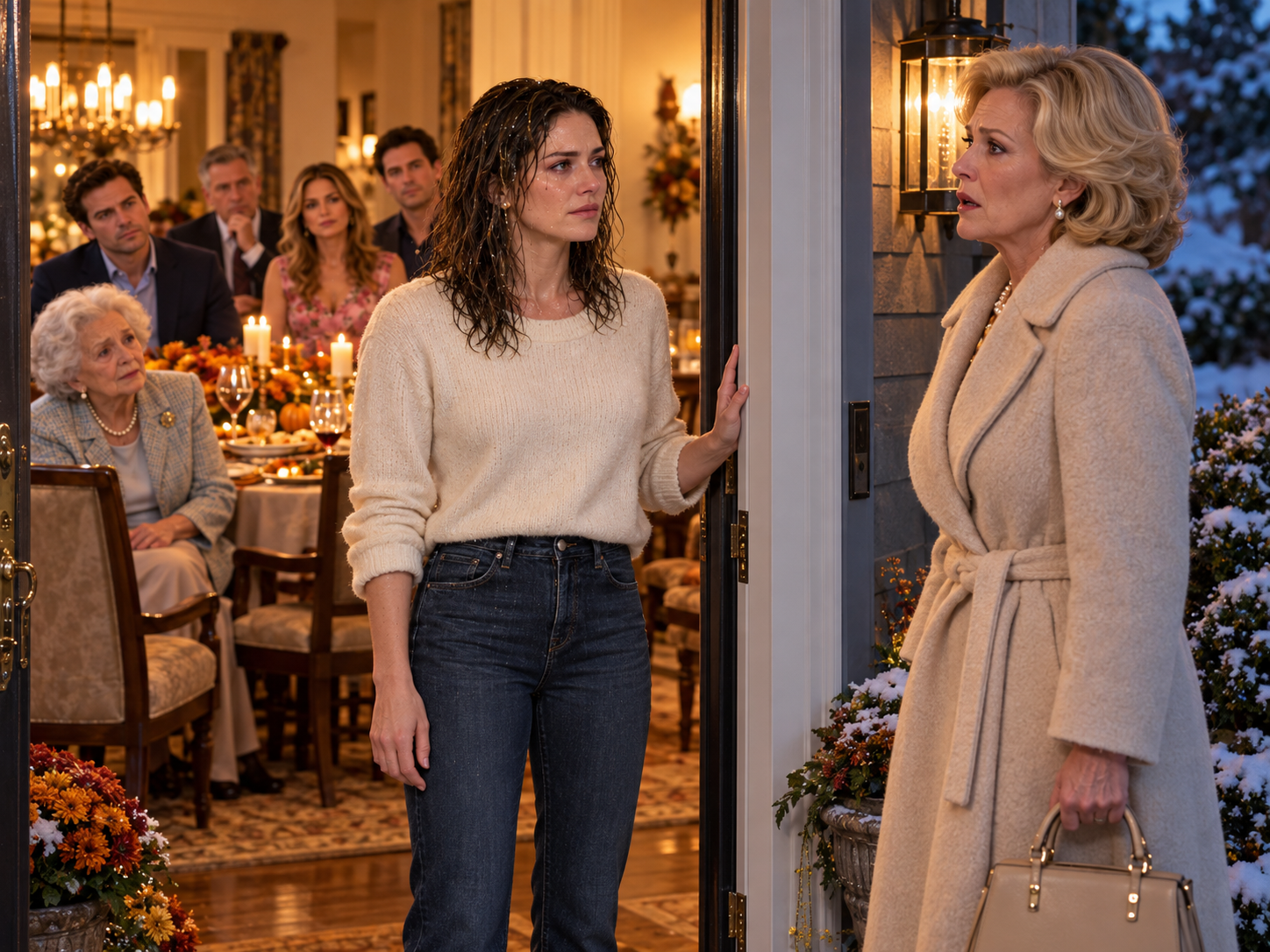
Alone.
No coat despite the cold.
Grandma saw my face.
“Eleanor?”
I nodded.
Kevin whispered:
“Did anyone invite her?”
Nobody had.
I walked to the door.
Opened it but didn’t step aside.
Mom looked past me.
She could see everyone inside.
Her face changed.
“You had Thanksgiving without me.”
I took a breath.
“Yes.”
Her lips trembled.
It was the first time I had ever seen my mother look truly excluded.
Not socially insulted.
Not publicly embarrassed.
Excluded.
“You invited Kevin.”
“Yes.”
“After everything he did?”
“Yes.”
“And not me?”
“Yes.”
Her eyes hardened for a second.
Old instincts.
Then something unexpected happened.
They softened again.
“Why?”
I could have said everything.
Because you humiliated me.
Because you supplied my information.
Because you spent my entire childhood teaching me that your love was conditional.
Instead, I said:
“Because Kevin took responsibility.”
Mom looked through the doorway.
Kevin stood near the kitchen.
He didn’t move toward her.
That seemed to affect her.
“I’m your mother.”
“I know.”
“You would leave your own mother standing outside?”
“If I have to.”
Her face crumpled.
Not dramatically.
Just enough.
“I don’t know how this happened.”
I believed her.
That was the tragedy.
She genuinely didn’t.
“You poured a drink over my head.”
“I was angry.”
“You called me trash.”
“You insulted me first.”
“You gave Kevin my professional materials.”
“I was helping your brother.”
Every answer still contained a defense.
I nodded.
“That’s why.”
“What?”
“That’s why you’re outside.”
She stared at me.
For the first time, maybe she understood that this was not revenge.
It was a boundary.
“You want me to beg?”
“No.”
“Then what do you want?”
“The truth.”
She folded her arms.
“What truth?”
“That you hurt me.”
“I already said—”
“No explanation. No reason. No but.”
Her mouth closed.
Behind me, nobody moved.
Mom looked suddenly very small.
Then she whispered:
“I don’t know how to do that.”
I almost cried.
Because that might have been the most honest thing she had ever told me.
“Then learn.”
I gently closed the door.
PART 5
My mother did not change that night.
That would have been too easy.
She did something harder.
She changed slowly.
For almost two months, I heard nothing.
Then one January morning, a letter arrived.
Handwritten.
My mother had always considered handwritten correspondence old-fashioned, which made the envelope strange before I even opened it.
Inside were four pages.
The first page contained excuses.
She crossed most of them out.
Literally.
I could see sentences beginning with:
I was under a lot of pressure…
Crossed out.
You have to understand how embarrassed I felt…
Crossed out.
Kevin should never have posted…
Crossed out.
Then, halfway down the second page:
I poured a drink over my daughter because she said something that embarrassed me.
No defense followed.
I called you trash.
I laughed at your choices for years because they frightened me. You built a life I did not understand, and instead of admitting that, I treated what I didn’t understand as inferior.
I stopped reading.
Then continued.
When your success became obvious, I changed the story rather than admitting I had been wrong.
My eyes filled.
The next sentence hurt most.
I taught your brothers and sister that mocking you was safe because they watched me do it without consequences.
I sat down.
At the bottom:
I am seeing a therapist. I am not writing this to ask you to forgive me. I am writing it because whether you forgive me or not, you deserved a mother who could say plainly: I hurt you. I was wrong.
I read the letter three times.
Then put it away.
I did not call her that day.
Or the next.
Forgiveness is not an emergency.
Three weeks later, I invited her for coffee.
At a public café.
Neutral ground.
She arrived early.
No jewelry except her wedding ring.
No styled performance.
She looked nervous.
I had never seen that before.
“Hi.”
“Hi.”
She reached for me automatically, then stopped.
“Can I hug you?”
That question alone almost undid me.
“Not yet.”
She nodded.
“Okay.”
We sat.
For twenty minutes, we talked about nothing.
Weather.
Grandma.
Dad.
Then Mom looked at her coffee.
“I keep remembering that morning.”
I waited.
“I thought you were trying to humiliate me.”
“I wasn’t.”
“I know.”
She swallowed.
“I realize now that I had been humiliating you for years and calling it concern.”
I didn’t rescue her from the silence.
She continued.
“I don’t expect things to go back to normal.”
“They won’t.”
She nodded.
“Maybe normal was the problem.”
For the first time in my life, my mother surprised me in the right direction.
We did not become close overnight.
We built something smaller.
Carefully.
Phone calls once every few weeks.
Lunch with Grandma.
Rules.
If Mom criticized my clothes, I ended the conversation.
If she compared siblings, I left.
If she dismissed my work, I corrected her once.
She learned.
Sometimes badly.
Sometimes reluctantly.
But she learned.
Kevin changed too.
After settlement negotiations ended, he took a job at a small property management company two states away.
No executive title.
No father-in-law.
No family introductions.
Six months later, he called.
“I closed my first deal.”
“Congratulations.”
“It’s tiny.”
“Still counts.”
He laughed.
“You sound like Grandma.”
“That is a compliment.”
He paused.
“Sarah?”
“Yeah?”
“I finally understand why you kept the Honda.”
I smiled.
“Oh?”
“My car payment used to be fourteen hundred dollars.”
I burst out laughing.
Kevin did too.
It was the first time we had laughed together without someone else being the target.
Melissa and Mark stayed married.
Barely.
They went to counseling.
Melissa sold the Mercedes.
Not because she suddenly hated luxury.
Because they needed the money after Mark changed firms.
The funny part was, she bought a used Volvo and discovered she loved it.
Daniel stopped turning every family experience into content.
His online following shrank.
His actual life improved.
Dad started speaking more.
Sometimes too late.
But at least now he spoke.
And Grandma?
Grandma became famous.
Not internet famous.
Better.
At her assisted-living community, she started teaching a monthly class called “How Not to Be Intimidated by Your Smartphone.”
I helped her design the handouts.
She charged nothing.
But she demanded cookies.
Nine months after the country club incident, my company reached the milestone I had discussed at brunch.
Two hundred and fourteen rural clinics had installed our security platform.
Some were in communities where the nearest major hospital was more than an hour away.
One Thursday morning, I traveled to a small medical center in western Kansas for the final deployment of that phase.
The clinic director, Dr. Maya Torres, walked me through the building.
“We had a ransomware scare last year,” she said.
“We were lucky.”
I looked at the nurses working behind the desk.
Patient charts.
Medication records.
Everything we built the system to protect.
“This is why we made it.”
Maya smiled.
At noon, we held a small ceremony in the clinic cafeteria.
Nothing fancy.
Sandwiches.
Coffee.
A sheet cake with crooked blue icing.
Jonathan came.
Rachel came.
A few members of my team came.
Grandma insisted on coming.
Dad drove her.
To my surprise, Mom came too.
She sat in the second row.
Quietly.
When I finished speaking, the room applauded.
Grandma stood first.
Then Mom.
For one terrible second, old memories collided.
The country club.
The mimosa.
The laughter.
The cameras.
But Mom wasn’t performing.
She was crying.
Afterward, she approached me.
“I didn’t know.”
I frowned.
“What?”
“What your work actually did.”
I glanced through the cafeteria doors toward the clinic.
“You never asked.”
She flinched.
“I know.”
Then:
“I’m proud of you.”
There had been a time when those words would have meant everything.
That realization was strangely peaceful.
Now they meant something.
But not everything.
“Thank you.”
She smiled.
And that was enough.
A week later, my old Honda finally died.
Completely.
The transmission gave up at a traffic light three blocks from home.
I sat behind the wheel while cars honked around me and started laughing.
Of course.
After everything that car survived, it chose a Tuesday afternoon beside a dry cleaner to surrender.
I called roadside assistance.
Then Grandma.
“You finally buying something respectable?” she asked.
“Careful. You sound like Mom.”
“Take that back immediately.”
I laughed.
The following weekend, I went shopping.
Kevin called while I was at the dealership.
“What are you getting?”
“I don’t know.”
“Please tell me it’s not another Honda.”
“I like Hondas.”
“You have millions of dollars.”
“So I’ve heard.”
He groaned.
I eventually bought an electric SUV.
Comfortable.
Safe.
Not cheap.
Not ridiculous.
When I drove it to Grandma’s apartment, she walked around it slowly.
Then tapped the hood with her cane.
“Very nice.”
“Thank you.”
“Your mother will approve.”
“I didn’t buy it for her.”
Grandma smiled.
“I know.”
That was the entire point.
One year after the country club brunch, Grandma turned ninety-one.
She requested lunch.
Not at the country club.
At my house.
I set up a long table in the backyard.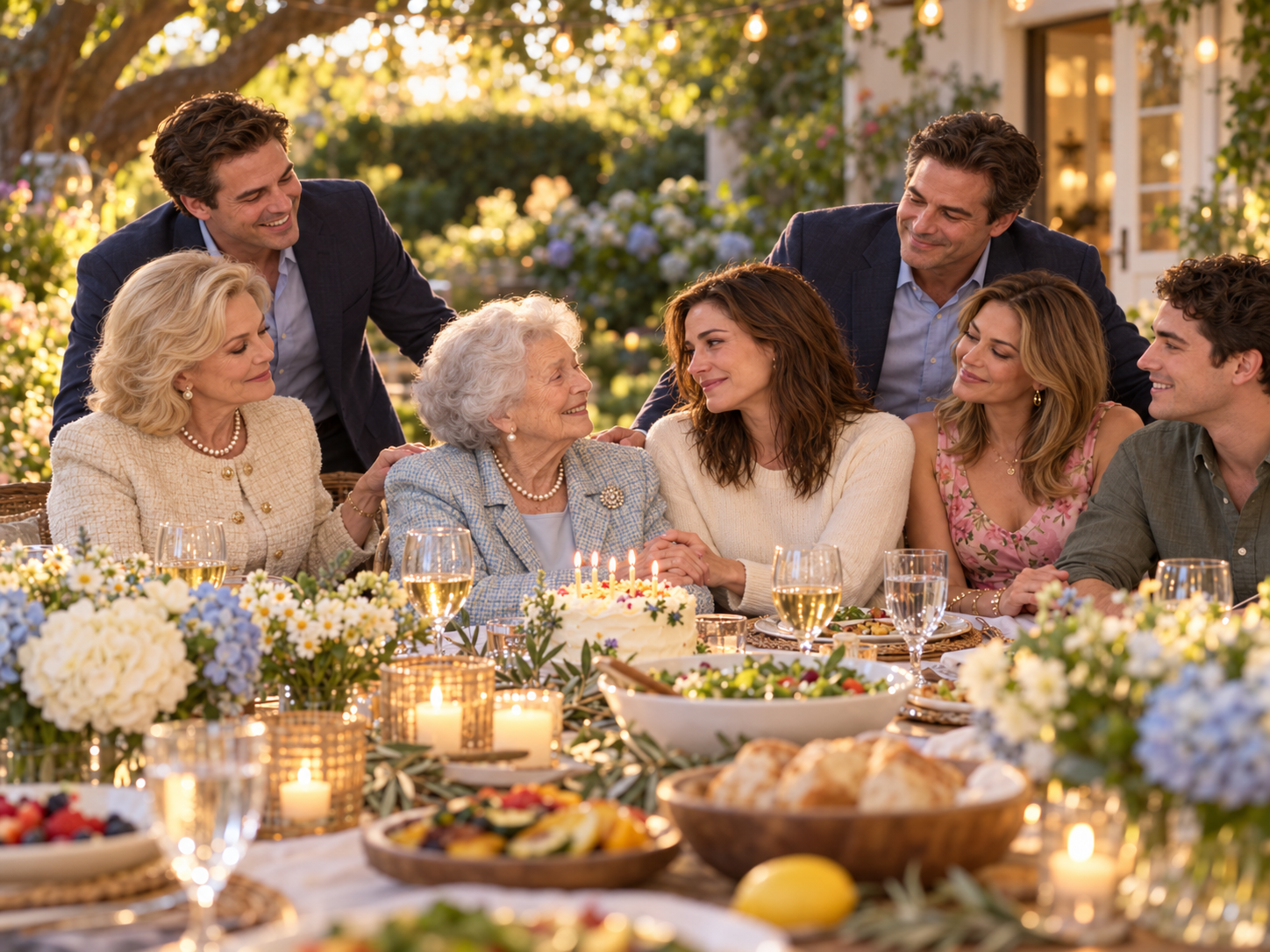
Dad brought flowers.
Melissa brought food.
Daniel brought no camera.
Kevin flew in the night before.
Mom arrived carrying a cake she had actually baked herself.
It leaned slightly to one side.
Grandma loved it.
At lunch, nobody discussed cars.
Nobody compared careers.
Nobody mentioned money.
Kevin asked me about the clinics.
Melissa told us she had started volunteering at a legal aid nonprofit.
Daniel talked about taking a trip without posting anything from it.
Dad listened.
Mom listened too.
Really listened.
Then Grandma tapped her glass with a spoon.
Everyone looked at her.
“I have something to say.”
Kevin groaned.
“Should we be scared?”
“Yes.”
We laughed.
Grandma smiled.
“A year ago, this family embarrassed itself terribly.”
Nobody argued.
She looked at Mom.
Then Kevin.
Then Melissa.
Then Daniel.
Then Dad.
Finally, me.
“I thought that day might destroy us.”
She paused.
“Instead, it destroyed something that needed destroying.”
Silence.
“The idea that family means tolerating anything.”
My throat tightened.
Grandma reached toward me.
I took her hand.
“Family,” she said, “should be the place where truth can survive.”
Mom wiped her eyes.
Kevin stared at his plate.
Grandma squeezed my fingers.
“And sometimes the person who walks away from the table is the person who finally teaches everyone else how to sit at it properly.”
Nobody laughed.
Nobody filmed.
We just sat there together.
Imperfect.
Changed.
Trying.
Later that evening, after everyone left, I carried the empty plates into the kitchen.
Mom stayed behind to help.
As we stood at the sink, she glanced at me.
“You know something strange?”
“What?”
“I can’t even remember what made me so angry that day.”
I dried a plate.
“I can.”
She looked ashamed.
“I’m sorry.”
“I know.”
She handed me another dish.
After a moment, she said:
“You really never needed that expensive watch.”
I looked at her.
For half a second, I wasn’t sure where she was going.
Then she smiled.
A genuine smile.
I laughed.
“No.”
She laughed too.
“No, I suppose you didn’t.”
When Mom left, I walked outside.
The backyard was quiet.
The long table remained beneath the string lights.
One year earlier, I had walked away from another long table believing I had just lost my family.
I understood things differently now.
Walking away had not destroyed my family.
It had ended the version of our family that required me to stay small so everyone else could feel comfortable.
Some relationships survived.
Some changed.
Some became more distant.
And that was okay.
I used to think forgiveness meant returning to the person I had been before someone hurt me.
It doesn’t.
Sometimes forgiveness means carrying the lesson forward without carrying the poison.
I never forgot the mimosa running down my face.
I never forgot Kevin’s camera.
I never forgot the laughter.
But I also remembered Grandma’s hand reaching for mine.
Daniel learning to apologize.
Melissa telling the truth about jealousy.
Dad finally choosing courage over silence.
Kevin rebuilding a career without borrowing my name.
And my mother standing in a rural clinic, seeing for the first time what she had spent years refusing to understand.
The video eventually disappeared from everyone’s attention.
The internet found something new.
Then something newer.
But by then, I no longer cared whether the world remembered it.
Because the most important part of that story was never the moment my mother poured a drink over my head.
It was the moment afterward.
When I didn’t scream.
Didn’t retaliate.
Didn’t beg them to understand.
I simply stood up.
Walked away.
And finally understood something Grandma had been trying to teach me since I was a little girl:
Knowing your worth does not mean convincing people to value you.
Sometimes it means refusing to remain anywhere they repeatedly prove they don’t.
And for the first time in my life, I didn’t need anyone at that table to tell me I belonged.
I already knew I did.