Christa Pike Survived Two Doses of Execution Drugs — Now, Tennessee Faces Serious Questions About What Went Wrong

Christa Pike Survived Two Doses of Execution Drugs — Now, Tennessee Faces Serious Questions About What Went Wrong
She was taken from the execution chamber unconscious and placed on a ventilator. Days later, she was speaking, walking with assistance, and eating again. Now, after surviving Tennessee’s failed execution attempt, Christa Pike is back behind bars — and the legal battle over what happened is only beginning.
On September 30, 2026, Tennessee attempted to execute Christa Pike by lethal injection. The procedure did not end as officials intended.
Pike, 50, survived after receiving two doses of pentobarbital, the drug the state planned to use to carry out her death sentence. She was transported from Riverbend Maximum Security Institution in Nashville to a hospital, unconscious and critically ill.
For several days, her future appeared uncertain. Her attorneys said they feared she might be brain-dead, while doctors worked to treat her condition.
Then came an unexpected development.
Pike regained consciousness. She began speaking. Her attorneys later reported that she could walk with assistance, eat a regular diet, and gradually regain movement in her arms.
By October 10, she had been discharged from the hospital and returned to the Debra K. Johnson Rehabilitation Center, where she will continue receiving medical care.
Her physical recovery has advanced, but the consequences of the failed execution remain far from clear.
What Happened Inside the Execution Chamber?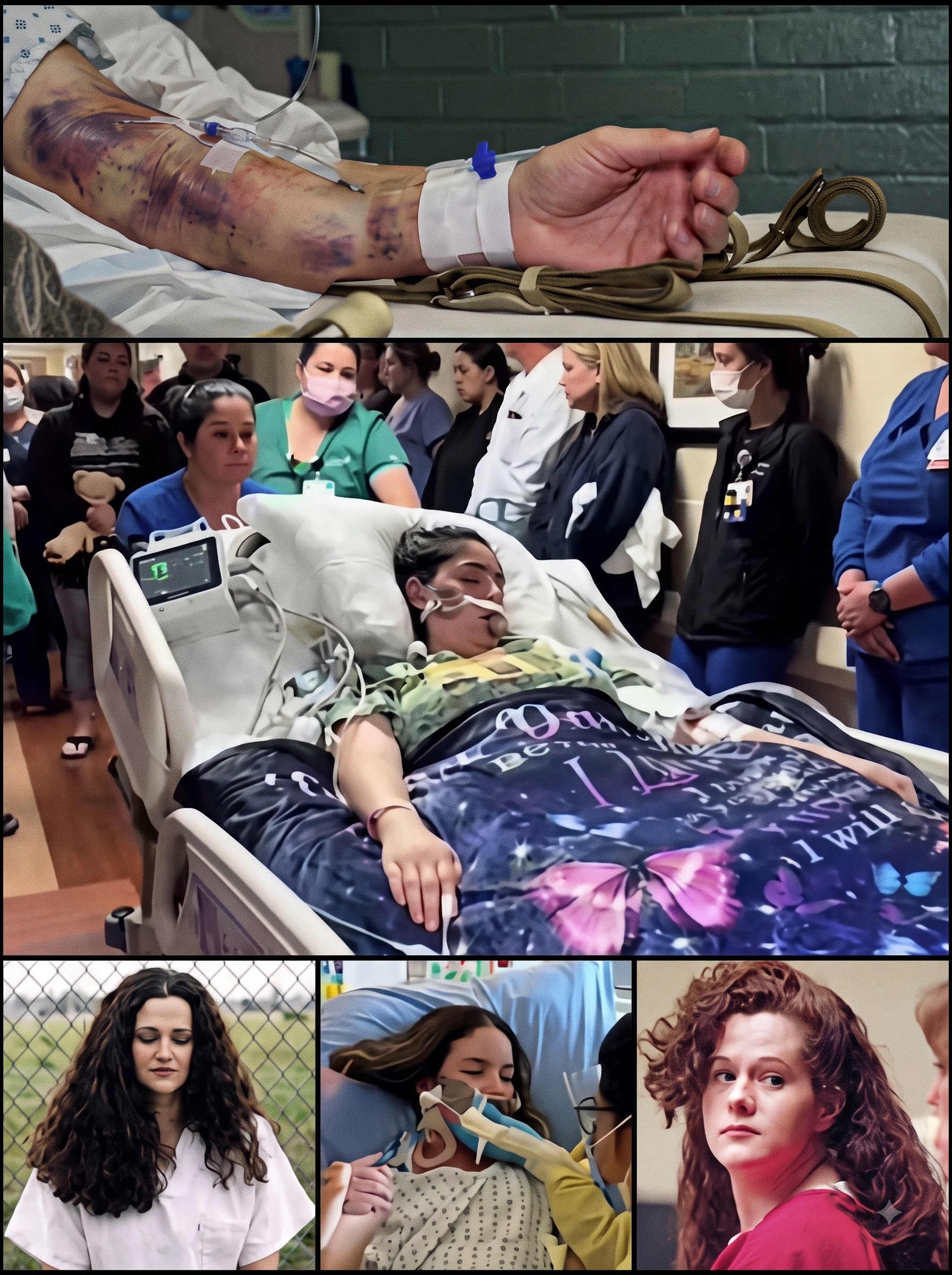
The precise reason Tennessee’s execution attempt failed has not yet been established.
Pike’s attorneys have raised serious questions about the intravenous lines used to administer the drugs. They allege that the lines may not have been correctly placed, potentially allowing the medication to leak into surrounding tissue rather than enter her bloodstream as intended.
Her legal team has reported severe swelling, burns and blistering in her arms. They have also described additional medical complications, including pneumonia and a blood clot.
These details have intensified scrutiny of the procedure, but the exact cause of the failure remains under investigation. Tennessee officials have not publicly provided a complete explanation of what happened.
The unanswered questions are significant. Did problems arise during the placement of the IV lines? Were those problems recognized in time? And what evidence will establish why two doses of the execution drug failed to kill the inmate?
For now, those questions remain unresolved.
Her Attorneys Say the Trauma Goes Beyond Physical Injuries
Pike’s recovery has involved more than her physical condition.
In a statement released October 8, her attorneys said she was experiencing profound psychological trauma after surviving an execution attempt. They described the terror, pain and uncertainty of believing she was about to die.
They also reported that Pike was struggling with concentration and memory, even as her physical condition improved.
Doctors had cautioned that it was too early to assess the long-term effects of the ordeal.
That uncertainty could become important in the legal proceedings ahead. Her attorneys are examining not only what happened during the execution, but also the potential consequences for Pike’s health and constitutional rights.
Her recovery should not be confused with a complete return to normal health. Walking and eating again are encouraging developments, but they do not establish that all injuries have healed or that the psychological effects have ended.
A Judge Orders Tennessee to Preserve Critical Evidence
The legal response began while Pike was still hospitalized.
On October 7, a Tennessee judge ordered state officials to preserve evidence related to the failed execution. The materials include drugs, syringes, intravenous equipment, surveillance footage, records and communications.
The order is an important step because the evidence could help establish how the procedure was carried out and why it failed.
Pike’s attorneys argue that the circumstances raise serious constitutional questions, including whether the state’s actions violated the prohibition against cruel and unusual punishment.
The court has not made a final finding that officials violated Pike’s rights. The preservation order is intended to ensure that potentially relevant evidence remains available as the legal dispute continues.
The outcome could affect the arguments surrounding Pike’s treatment, the legality of another execution attempt, and the state’s responsibility for the events of September 30.
Could Tennessee Attempt to Execute Her Again?
Pike’s death sentence remains in effect. Her survival does not automatically overturn her conviction or commute her punishment.
She was sentenced to death for the 1995 murder of 19-year-old Colleen Slemmer, her classmate at the time. Pike has spent more than three decades in Tennessee’s correctional system.
Her attorneys have said they intend to ask Governor Bill Lee to commute her sentence to life imprisonment without the possibility of parole.
That would mean Pike would remain in prison for the rest of her life, rather than face another execution attempt.
However, commutation has not been granted, and there is no guarantee that the governor will approve the request. Lee rejected Pike’s earlier clemency appeal before the September 30 execution.
As of October 12, no new execution date had been announced.
Tennessee Suspends Executions as the Review Continues
The failed procedure has also prompted a wider review of Tennessee’s execution practices.
Governor Bill Lee suspended the state’s remaining scheduled executions for 2026 while an independent review examines what went wrong. The state’s prison commissioner also announced his departure following the incident.
The scrutiny extends beyond Pike’s individual case because Tennessee has faced other problems with execution procedures, including an earlier execution attempt involving Tony Carruthers that was halted when officials could not establish intravenous access.
The review may help determine whether the failure in Pike’s case resulted from problems with equipment, drug administration, execution protocols, or other circumstances.
Until the findings are released, it would be premature to assign a definitive cause.
Colleen Slemmer’s Death Remains at the Center of the Case
While the failed execution has drawn national attention, the original crime remains central to Pike’s case.
Slemmer was 19 when she was murdered in 1995. Her death led to Pike’s conviction and death sentence, which remain legally in place.
For Slemmer’s loved ones, the failed execution has introduced another unexpected development after decades of waiting for the sentence to be carried out.
For Pike’s attorneys, the immediate focus is on her recovery, the evidence surrounding the procedure, and whether the state can legally pursue another execution.
These issues do not erase the underlying conviction. They raise separate questions about how the state attempted to carry out the sentence and what consequences should follow from the failure.
The Next Chapter May Be Decided in Court
Christa Pike has survived a procedure that was intended to end her life. She has left the hospital, returned to prison, and begun a long recovery whose full extent remains uncertain.
But the questions surrounding September 30 have not disappeared.
The state must now account for what happened during the execution attempt. Pike’s attorneys are seeking to preserve evidence and challenge the circumstances of the procedure. Meanwhile, Tennessee’s independent review could influence decisions about its execution practices and the possibility of future attempts.
For now, there are no definitive answers about why the drugs failed, whether the state violated Pike’s constitutional rights, or whether her death sentence will ultimately be commuted.
She entered the execution chamber under a death sentence and survived. Now, the evidence, the courts, and Tennessee’s own review may determine what happens next.