CHRISTA PIKE IS WALKING AGAIN AFTER TENNESSEE’S FAILED EXECUTION — BUT NEW 911 RECORDINGS RAISE MORE QUESTIONS
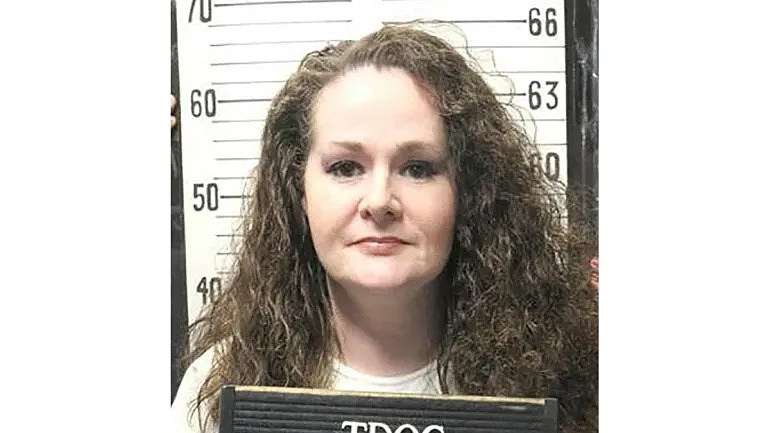
CHRISTA PIKE IS WALKING AGAIN AFTER TENNESSEE’S FAILED EXECUTION — BUT NEW 911 RECORDINGS RAISE MORE QUESTIONS
After surviving two doses of an execution drug, Christa Pike has left hospital and returned to prison. Now, newly released emergency dispatch recordings appear to show that confusion delayed first responders for more than 30 minutes — adding another layer of scrutiny to an already extraordinary case.
NASHVILLE, TENNESSEE — Christa Pike, the 50-year-old Tennessee death-row inmate who survived a failed execution attempt on September 30, 2026, is recovering after spending days in hospital. Her attorneys say she has regained consciousness, begun speaking, taken steps with assistance and started eating again.
But as Pike continues her recovery behind bars, new questions are emerging about the medical emergency that followed the procedure — particularly the delay in getting emergency responders through the prison gates.
Recordings and dispatch records released this week indicate that responders waited outside Riverbend Maximum Security Institution while officials tried to verify whether the emergency call was genuine. The revelations have intensified calls for transparency about what happened during and after the attempted execution.
 A RECOVERY THAT SURPRISED HER LEGAL TEAM
Pike was scheduled to be executed by lethal injection at Riverbend Maximum Security Institution in Nashville on September 30. The state administered two doses of pentobarbital, but she survived.
She was taken to hospital unconscious and placed on a ventilator. In the days that followed, her condition was described as critical, and her attorneys said they had feared she might not recover.
On October 6, Pike regained consciousness and began speaking. Her lawyers subsequently reported gradual improvements: she began taking limited steps with assistance, regained some movement and strength in her arms, and was able to eat a regular diet.
The procedure had left her with burns and blistering around her arms, according to statements from her legal team. Although her progress was encouraging, her attorneys cautioned that the long-term physical and psychological effects remained uncertain.
On October 10, her lawyers confirmed that she had been discharged from hospital and returned to the Debra K. Johnson Rehabilitation Center in Nashville, where she had been held before the execution attempt. They said she would continue receiving medical care in prison.
 NEW 911 RECORDINGS SHOW CONFUSION OVER THE EMERGENCY
The latest development came on October 13, when media outlets reported details from newly released emergency dispatch audio and records.
According to the Associated Press and WSMV, the first 911 call was received at approximately 8:40 p.m. on September 30. The caller reported that Pike was unconscious and breathing abnormally after the execution attempt.
The request for help was not immediately accepted as a verified emergency. Dispatchers and prison personnel struggled to establish whether the call was legitimate because the required verification information had not been provided.
At approximately 9:03 p.m., a dispatcher reportedly said supervisors had classified the call as false and that medical assistance was not needed at the prison. Yet responders outside the facility were receiving conflicting information, with one reporting that someone at the gate was insisting the emergency was real.
The emergency was confirmed at around 9:11 p.m. — approximately 31 minutes after the first call. Responders were then allowed through the prison checkpoint, and an ambulance and fire trucks were seen arriving inside the complex shortly afterward.
One of Pike’s attorneys, Kelly Gleason, also made a 911 call at about 9:08 p.m., urging authorities to provide immediate medical assistance. In the call, she explained that Pike had undergone the execution procedure but was still alive and breathing.
The recordings do not, by themselves, establish whether the delay changed Pike’s medical outcome. They do, however, document confusion over the verification process during a serious medical emergency.
WHAT WENT WRONG DURING THE EXECUTION?
The state has not publicly provided a full explanation for why the procedure failed.
Pike received two doses of pentobarbital, the drug used under Tennessee’s execution protocol. Yet she survived and required emergency hospital treatment.
Medical and execution-protocol experts have raised possible explanations, including problems with intravenous access or the way the drug entered her body. Pike’s attorneys had previously raised concerns about a blood disorder that could affect clotting at injection sites.
Those possibilities remain theories, not confirmed findings. Determining what happened will require examination of medical records, equipment, drug records, witness accounts and other evidence from the execution chamber.
A Tennessee judge has ordered the Department of Correction to preserve evidence related to the failed attempt. The order covers material such as drugs, syringes, intravenous lines, recordings, photographs, witness accounts and documentation of any complications or delays.
The preservation order is an important step in ensuring that evidence remains available for further legal proceedings. It does not, on its own, establish that any individual or agency acted unlawfully.
TENNESSEE PAUSES FURTHER EXECUTIONS
Following Pike’s failed execution, Tennessee Governor Bill Lee announced a pause on further executions for the remainder of 2026 while an independent review is conducted.
The review is intended to examine how the procedure was carried out and why it did not produce the expected result. State officials have not yet released a complete public account of the failure.
It also remains unclear whether Tennessee will attempt to carry out Pike’s sentence again. Her attorneys are asking Governor Lee to commute her death sentence to life imprisonment without the possibility of parole, arguing that she should not face another execution attempt.
The state has made no public promise that another attempt will not occur. Pike’s legal future therefore remains uncertain as the investigation proceeds.
WHO IS CHRISTA PIKE?
Pike was sentenced to death for the 1995 killing of Colleen Slemmer, a 19-year-old classmate in Knoxville, Tennessee. Pike was 18 at the time.
Her conviction and sentence stem from a case involving the killing of Slemmer in a wooded area near the University of Tennessee campus. Pike has remained on Tennessee’s death row for decades.
The current controversy concerns the failed 2026 execution attempt and its aftermath. The questions now being raised include why the lethal-injection procedure failed, how the prison responded when Pike remained alive, and whether emergency protocols were followed.
THE QUESTIONS THAT REMAIN
Pike’s physical recovery has moved forward, but it has not resolved the larger issues surrounding the incident.
Investigators and officials still need to establish what happened during the procedure, why emergency dispatchers initially treated the call as unverified, and whether any changes to execution or emergency-response protocols are necessary.
The newly released recordings provide a clearer timeline of the delay, but they do not answer every question about the failed execution or its medical consequences.
For now, Pike is back in prison and receiving continued care. Her attorneys are seeking accountability and a change to her sentence, while Tennessee’s review continues.
The central question remains: how did an execution procedure proceed to the point where two doses of the drug were administered, yet leave the state facing an emergency response and an inmate who survived?
Until officials release the findings of the review, the full explanation remains unknown.
Sources
- Associated Press — Emergency help delayed after failed execution, 911 calls reveal
- CBS News — Christa Pike discharged from hospital and returned to prison
- WSMV — Newly released emergency audio shows a delay before responders entered the prison
- Death Penalty Information Center — Judge orders preservation of evidence
- ITV News — Emergency response delayed by confusion, recordings show