“I COULDN’T REMEMBER ANYTHING” — DAVINA McCALL REVEALS TERRIFYING MEMORY LOSS AFTER BR@IN SURGERY
“I COULDN’T REMEMBER ANYTHING” — DAVINA McCALL REVEALS TERRIFYING MEMORY LOSS AFTER BRAIN SURGERY
The beloved British TV presenter has opened up about a frightening period when her memory deteriorated so severely that she compared the experience to “advanced Alzheimer’s.” Her emotional confession has prompted renewed attention to the difficult recovery she faced after brain surgery.
Davina McCall has revealed the devastating impact that brain surgery had on her memory, describing a period when she struggled to remember people, conversations and even what had happened just minutes earlier.
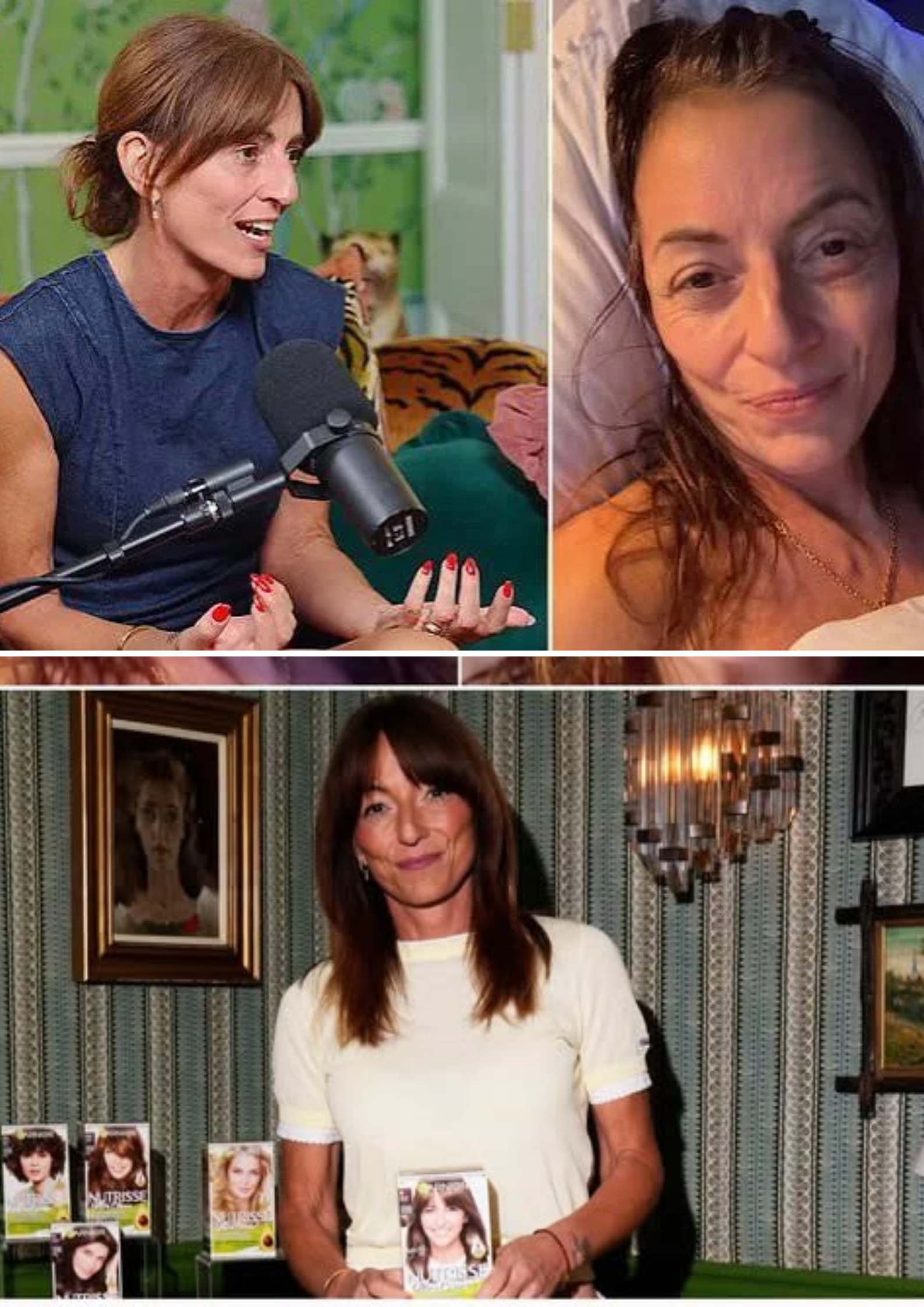
The 58-year-old television presenter shared the deeply personal details during an appearance on Paloma Faith’s Mad, Sad and Bad podcast, explaining how her recovery from surgery in November 2024 became far more difficult than she had anticipated.
“After I’d had my brain tumour taken out, I had advanced Alzheimer’s, so I couldn’t remember anything,” McCall said, describing the severity of her memory problems.
Her words have struck a chord with fans who followed her health journey and hoped to see her return to normal life after the operation.
 THE OPERATION THAT CHANGED EVERYTHING
McCall discovered she had a rare, non-cancerous brain tumour called a colloid cyst after undergoing a health check connected to her work raising awareness of menopause.
The cyst measured approximately 14 millimetres and was located in a sensitive area of her brain. Doctors recommended surgery to remove it, and she underwent the procedure in November 2024.
Although the operation was successful, the recovery brought unexpected difficulties.
McCall recalled that when she came out of surgery, she did not fully understand that she had undergone an operation. Hospital staff would ask her their names, but she struggled to remember them.
The memory loss was not limited to unfamiliar faces. Even visits from her husband, Michael Douglas, could become difficult to recall.
She explained that he might spend two hours with her, briefly leave the room and return, only for her to react as though she had not seen him that day.
 SIX MONTHS OF STRUGGLING TO REMEMBER
The presenter also described how the problems affected everyday activities that many people take for granted.
For around six months, she struggled to follow films because she could not remember what had happened earlier in the story. Reading became difficult for similar reasons: she could lose track of what she had just read.
The experience left her frustrated and emotionally exhausted.
McCall later described 2025 as an exceptionally difficult year for both herself and Douglas, as they navigated the uncertainty surrounding her recovery alongside other health challenges.
Despite the difficulties, she continued searching for ways to rebuild her memory and regain confidence in her daily life.
HOW MUSIC HELPED HER RECOVERY
One of the most significant turning points came when McCall began taking singing lessons.
She described music as a form of mental rehabilitation, explaining that the lessons helped her work on her memory and concentration.
In October 2025, she experienced a moment that felt particularly meaningful: she woke up and realised she could remember what she had done the previous day.
For someone who had spent months struggling to retain information, the moment represented a welcome sign of progress.
McCall has credited music with playing an important role in her recovery, although her experience does not establish that singing will produce the same results for everyone experiencing memory problems.
ANOTHER HEALTH CHALLENGE DURING RECOVERY
McCall’s difficulties did not end with her brain surgery. In 2025, she also revealed that she had been diagnosed with early-stage breast cancer and underwent treatment, including surgery and preventative radiotherapy.
The combination of health challenges made the period especially demanding for her and her family.
In April 2025, she shared reassuring news that scans had shown the brain tumour had been completely removed and was not returning.
Her latest account offers a more detailed picture of the emotional and cognitive challenges she faced after the procedure — struggles that were not necessarily visible to the public.
WHAT HER STORY REVEALS
McCall’s description of having “advanced Alzheimer’s” refers to how severe her memory difficulties felt to her; it is not a public confirmation that she was diagnosed with Alzheimer’s disease.
Memory problems can occur after brain surgery, but their causes and recovery patterns vary. Her account highlights the importance of recognising that a successful operation does not always mean an immediate return to normal functioning.
Today, McCall continues her work in broadcasting and podcasting, sharing her experiences with audiences who have followed her career for decades.
Her willingness to discuss the frightening reality of her recovery has also opened a wider conversation about the less visible challenges people can face after major medical procedures.
For Davina McCall, the road back was not simply about recovering from an operation. It was about rebuilding her confidence in her own memory, one day at a time — and discovering that even during a deeply frightening chapter, progress was still possible.