“WAS BRITAIN’S BIGGEST NURSING SCANDAL BUILT ON FLAWED EVIDENCE?” — LUCY LETBY’S CONVICTIONS FACE FRESH SCRUTINY AS EXPERTS CLASH
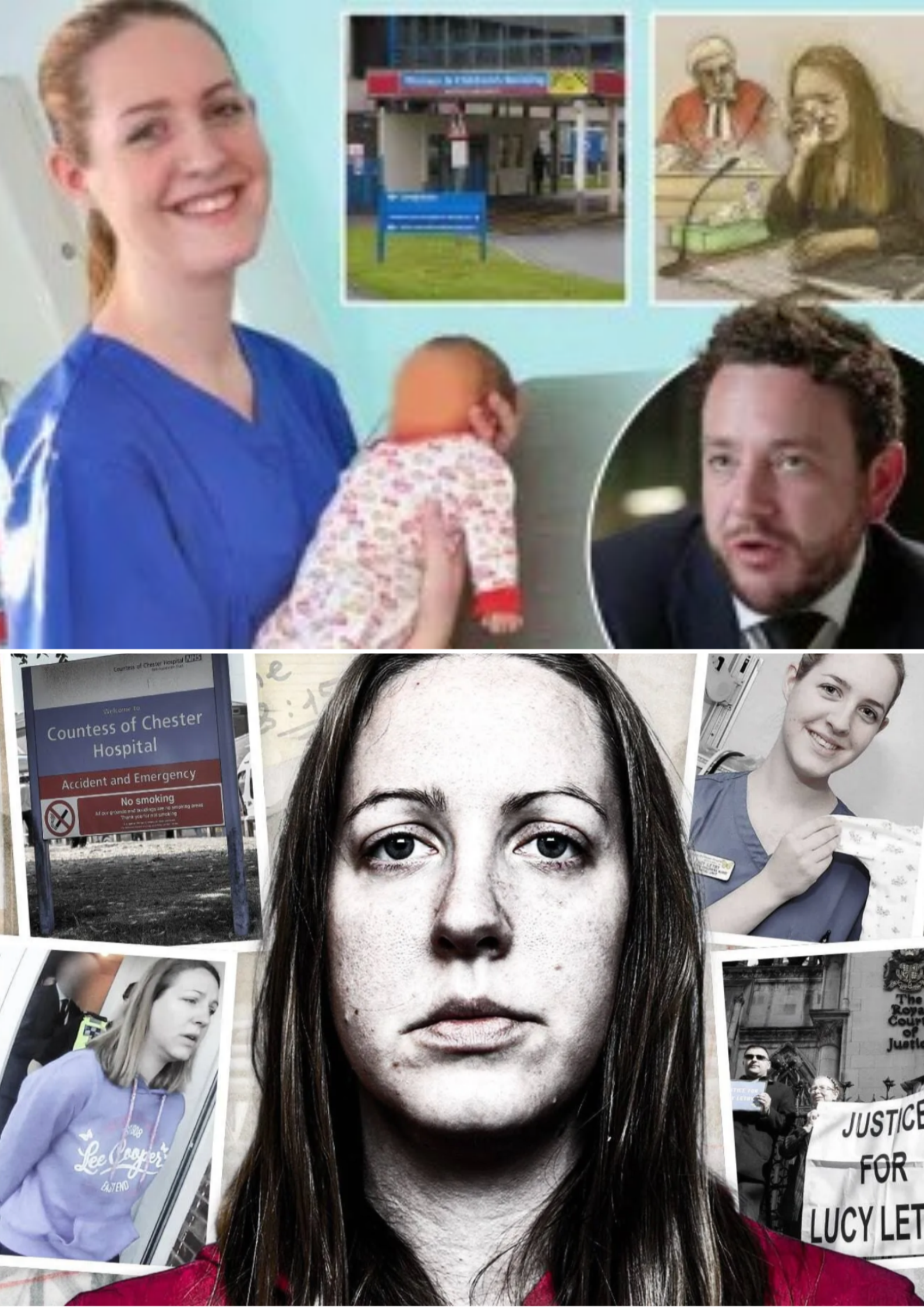
“WAS BRITAIN’S BIGGEST NURSING SCANDAL BUILT ON FLAWED EVIDENCE?” — LUCY LETBY’S CONVICTIONS FACE FRESH SCRUTINY AS EXPERTS CLASH
She is serving 15 whole-life prison terms after being convicted of murdering seven babies and attempting to murder seven others. But as new scientific arguments reach the Criminal Cases Review Commission, a deeply contested question remains at the centre of the case: could any of the convictions be overturned?
The case of former neonatal nurse Lucy Letby remains one of the most disturbing and fiercely debated criminal cases in modern British history.
Convicted of harming newborn babies at the Countess of Chester Hospital between 2015 and 2016, Letby continues to maintain her innocence. Her legal team is now seeking a fresh examination of the evidence, arguing that important parts of the prosecution case deserve renewed scrutiny.
At the heart of the controversy are competing medical opinions, disputed scientific evidence and questions about how investigators interpreted a series of unexpected collapses and deaths on the hospital’s neonatal unit.
Yet the debate has become increasingly complicated. While some specialists have challenged aspects of the evidence used at trial, other experts have raised concerns about the scientific credibility of arguments being advanced by the defence.
 The convictions that shocked the country
Letby was convicted in two trials of murdering seven babies and attempting to murder seven others. The offences involved incidents at the hospital’s neonatal unit over a period of approximately 12 months.
Prosecutors argued that she deliberately harmed infants through different methods, including insulin poisoning and the administration of air. They also presented evidence connecting the incidents to shifts when Letby was working.
Her convictions followed lengthy criminal proceedings, and previous attempts to appeal were unsuccessful. She is serving 15 whole-life sentences, meaning she has no ordinary prospect of release.
Letby has consistently denied committing the offences.
 Why medical evidence has become the focus
One of the central disputes concerns two babies whom the prosecution said had been poisoned with insulin.
In 2025, a group of specialists commissioned by Letby’s legal team challenged the interpretation of laboratory results used in those cases. Their report argued that the testing evidence did not establish deliberate poisoning as securely as the prosecution had claimed.
A separate international panel led by Canadian neonatologist Dr Shoo Lee also reviewed medical evidence relating to the babies. The panel argued that the deaths and injuries could be explained by natural causes or problems with medical care rather than deliberate harm.
These conclusions have attracted significant attention, but they represent the opinions of experts reviewing the case after the trials. They have not, by themselves, overturned the jury’s verdicts.
Other medical and scientific assessments, along with the prosecution evidence considered at trial, remain part of the wider dispute.
A surprising development within the defence team
In September 2026, the debate took another turn when two experts, Helen Shannon and Geoff Chase, withdrew their support for some arguments being advanced by Letby’s defence team.
They maintained that they had concerns about the insulin evidence in two cases but said they could not support other arguments they considered inconsistent with available evidence, science and established physiology.
Their decision highlighted an important distinction: an expert can question one part of a prosecution case without agreeing with every argument presented by the defence.
Letby’s barrister, Mark McDonald, responded that the defence had evidence from experts in several scientific fields that, in his view, undermined the prosecution’s conclusions. He argued that the case should be assessed on the totality of the new material rather than on the views of any single expert.
The disagreement has made the scientific debate more complex, rather than providing a definitive answer about the convictions.
What about the handwritten notes?
Another widely discussed aspect of the case is Letby’s handwritten note, which included the words “I am evil” and “I did this.”
The prosecution relied on the note as part of the wider evidence presented to the jury. However, the words alone do not establish the meaning or circumstances in which they were written, and their interpretation has been disputed.
It would be inaccurate to claim that the note conclusively proves guilt or, conversely, that it definitively demonstrates innocence. Its significance must be considered alongside the other evidence heard during the trials.
The CCRC review: what happens next?
The Criminal Cases Review Commission (CCRC), the independent body responsible for investigating potential miscarriages of justice, is reviewing material submitted on Letby’s behalf.
In a statement published on February 13, 2026, the commission explained that it had received additional submissions and expert reports over an extended period. It stressed that its role is not to decide whether someone is innocent or guilty, but to determine whether there is a real possibility that a conviction would not be upheld if referred to an appeal court.
A referral would not automatically mean that Letby’s convictions had been overturned. It would mean that the relevant court could examine the case again.
The commission has not announced a final decision in the material cited here.
A separate inquiry into hospital failures
The Thirlwall Inquiry, whose report was published in September 2026, examined the hospital’s management, the response to concerns raised by clinicians and the circumstances in which babies were placed at risk.
It found serious failures in safeguarding and communication, including delays in escalating concerns to the police.
However, the inquiry was not established to retry Letby’s criminal case or determine whether her convictions were safe. Its findings about institutional failures must therefore be distinguished from the separate legal process examining her convictions.
A case still dividing public opinion
For the families of the babies, the case represents profound loss and lasting trauma. For Letby, the convictions mean spending the rest of her life in prison unless the legal position changes.
For the justice system, the CCRC review raises a broader question about how complex medical evidence should be tested and evaluated when a conviction depends on competing interpretations of clinical events.
At this stage, neither the claims of those challenging the convictions nor the disputes among experts amount to a final legal determination that the verdicts were wrong.
The outcome will depend on the evidence and the decisions of the appropriate legal authorities.
What do you think is most important in a case like this: trusting the verdict reached at trial, or ensuring that new scientific evidence receives a thorough independent review? Share your thoughts respectfully in the comments.
Sources
- Criminal Cases Review Commission — Official statement on Lucy Letby’s application review
- The Guardian — Experts withdraw support for some arguments used by Lucy Letby’s defence
- The BMJ — International experts’ challenge to the medical evidence
- Associated Press — Findings of the Thirlwall Inquiry and the continuing legal dispute
- The Guardian — Report on disputed evidence in the insulin cases