🚨 AILEEN WUORNOS CASE REEXAMINED: Her Former Lover Helped Police Obtain a Confession — But What Did the Secret Recordings Really Reveal?
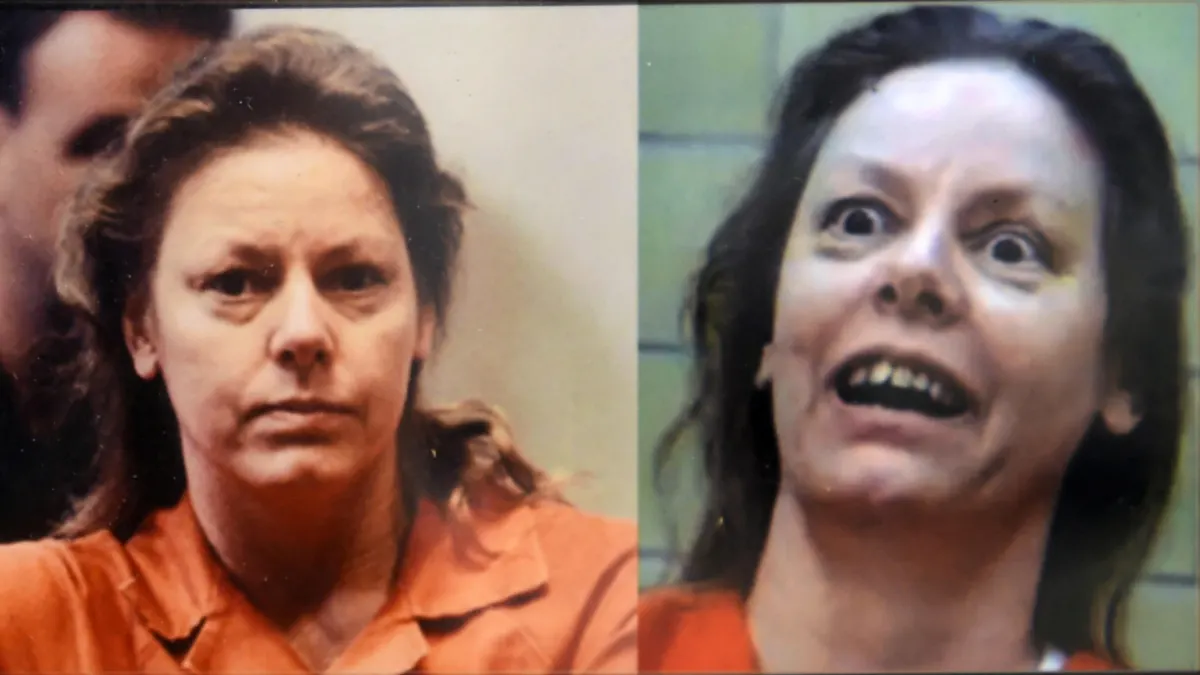
🚨 AILEEN WUORNOS CASE REEXAMINED: Her Former Lover Helped Police Obtain a Confession — But What Did the Secret Recordings Really Reveal?
🚨 SHE WAS ACCUSED OF KILLING SEVEN MEN. THEN THE WOMAN SHE LOVED BEGAN MAKING SECRETLY RECORDED PHONE CALLS FOR POLICE. WHAT AILEEN WUORNOS SAID NEXT WOULD BECOME ONE OF THE MOST IMPORTANT PIECES OF EVIDENCE IN FLORIDA’S MOST NOTORIOUS SERIAL MURDER CASES.
More than two decades after Aileen Wuornos was executed in Florida, newly revisited police recordings and archival interviews are bringing renewed attention to the investigation that shocked America.
At the center of the story is not only the woman whose crimes made national headlines.
It is also her former girlfriend, Tyria Moore, whose cooperation with investigators helped lead to a recorded confession.
But the case raises a troubling question that remains relevant decades later.
How much of a confession can investigators trust when the person speaking gives different explanations at different times?
Seven Men, Florida Highways, and a Terrifying Investigation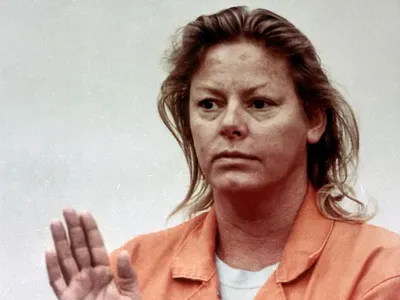
Between 1989 and 1990, seven men were killed in a series of incidents associated with Aileen Wuornos.
Their bodies were discovered in different parts of Florida.
Investigators began connecting the cases through witness accounts, forensic evidence, and property belonging to the victims.
One of the earliest victims was Richard Mallory, a 51-year-old businessman whose body was found in a wooded area in December 1989.
Mallory had suffered multiple gunshot wounds.
His vehicle had also been abandoned.
As investigators reconstructed his final movements, they began uncovering evidence that pointed toward Wuornos.
But the investigation would take a remarkable turn when detectives focused on the woman closest to her.
The Former Girlfriend Who Became Central to the Investigation
Tyria Moore had been romantically involved with Wuornos for several years.
According to Florida Supreme Court records, the two women lived together while Wuornos worked along Central Florida highways.
Moore later testified that Wuornos had told her about shooting a man in December 1989.
At the time, Moore said she did not initially believe the account.
Months later, as media reports circulated about two women being sought in connection with multiple killings, Moore became increasingly concerned.
She eventually left Florida.
Investigators contacted her while she was staying in Pennsylvania.
Moore agreed to cooperate with police.
That decision would dramatically change the direction of the investigation.
The Phone Calls That Helped Obtain a Confession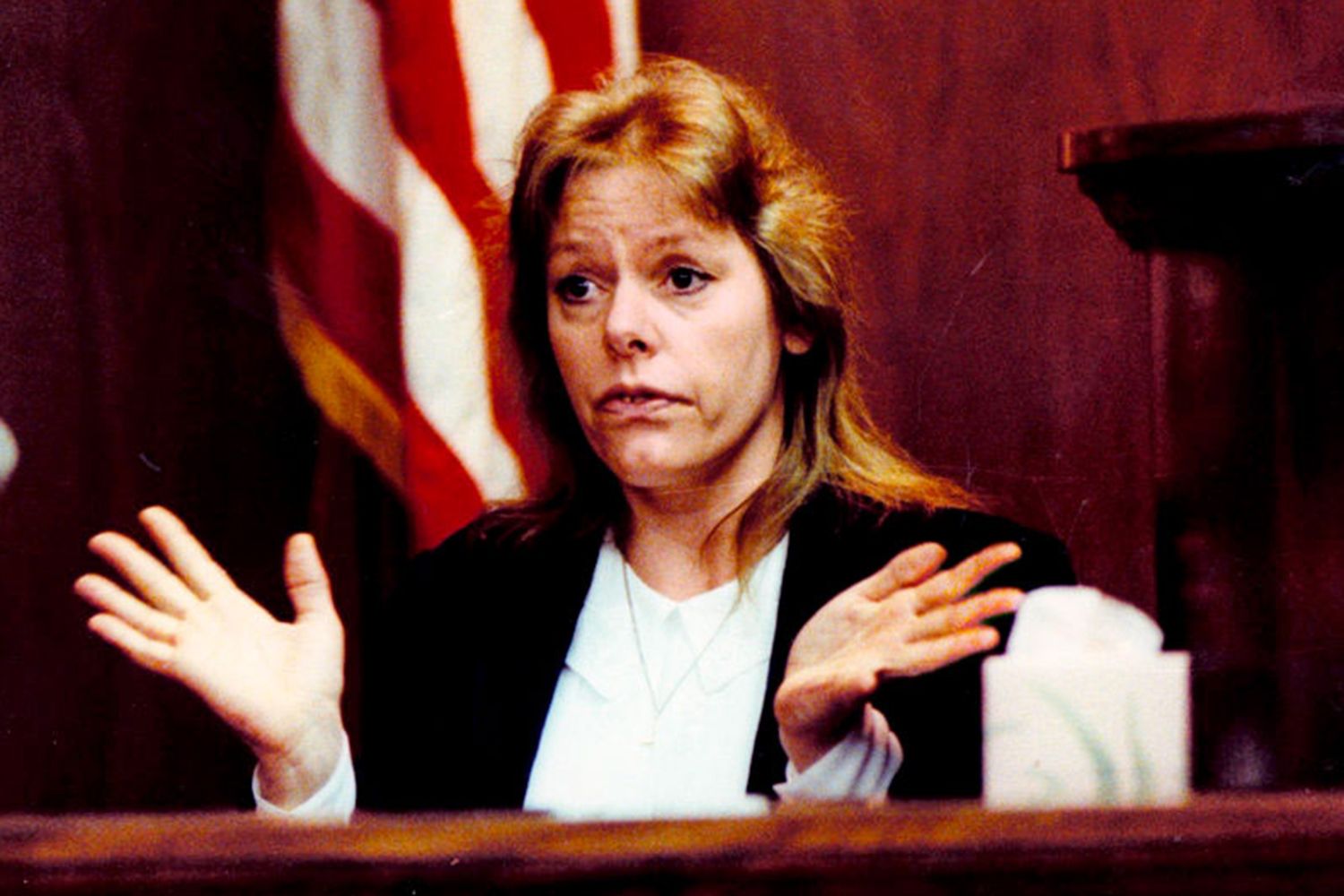
Working with law enforcement, Moore participated in recorded telephone conversations with Wuornos.
The calls were designed to encourage Wuornos to discuss the killings.
Investigators believed Moore’s close relationship with Wuornos could help them obtain information that ordinary questioning might not reveal.
The strategy worked.
Wuornos eventually agreed to provide statements to investigators.
On January 16, 1991, she gave a videotaped confession.
The recording became a central part of the prosecution’s evidence.
But it also raised questions about the circumstances surrounding her decision to confess.
Did Emotional Pressure Influence Her Statements?
Wuornos was deeply attached to Moore.
That relationship became important during the investigation.
Her defense later challenged whether her statements had been made voluntarily.
The argument centered partly on the circumstances of Moore’s cooperation and Wuornos’s emotional connection to her.
However, court records show that Wuornos had access to legal counsel before making her confession.
A public defender advised her against speaking to investigators.
Wuornos nevertheless chose to proceed.
The Florida Supreme Court ultimately rejected the challenge seeking to exclude her confession in the Mallory case.
That ruling became an important part of the legal record.
Still, the role of emotional relationships in criminal interrogations remains a subject of discussion among legal scholars and true-crime audiences.
The Self-Defense Claim That Changed Over Time
From the beginning, Wuornos offered explanations that were not always consistent.
She claimed that some of the men she killed had threatened or assaulted her.
In Richard Mallory’s case, she argued that she feared for her safety during an encounter in his vehicle.
Her defense maintained that she acted in self-defense.
Prosecutors, however, challenged that account.
They argued that the physical evidence and the inconsistencies in Wuornos’s statements undermined her explanation.
The prosecution also presented evidence involving property connected to Mallory.
The jury ultimately rejected her defense.
In 1992, Wuornos was convicted of Mallory’s murder.
She subsequently pleaded guilty or no contest in several additional murder cases.
What the Original Police Recordings Can Tell Us
The surviving recordings provide an opportunity to examine how Wuornos described the killings.
They also reveal how her explanations evolved.
For investigators, recorded statements can provide important details about events, locations, relationships, and possible motives.
But a recording does not automatically establish that every statement is accurate.
Investigators must compare what a suspect says with independent evidence.
In Wuornos’s case, the prosecution relied on more than her words.
Physical evidence, witness testimony, and property records were also presented during the legal proceedings.
That combination of evidence helped establish the prosecution’s case.
The recordings remain important because they show how a high-profile criminal investigation developed.
The Trial That Captivated America
Wuornos’s 1992 trial attracted enormous attention.
The case challenged familiar assumptions about serial killers and generated debate about violence, trauma, and criminal responsibility.
Wuornos testified in her own defense.
She maintained that she had feared for her life during the encounter involving Mallory.
Prosecutors disputed her account.
After considering the evidence, the jury found her guilty.
She received a death sentence.
Further convictions and sentences followed in other cases.
For the victims’ families, the legal proceedings represented an effort to establish accountability for the loss of their loved ones.
For the public, the case became one of the most widely discussed criminal investigations of its era.
October 9, 2002: The End of Aileen Wuornos’s Life
After years on Florida’s death row, Wuornos was executed by lethal injection on October 9, 2002.
She was 46 years old.
Her execution ended the criminal proceedings against her.
But it did not end public interest in her life or the investigation.
Books, films, interviews, and documentaries continued examining how she became involved in the killings and how authorities ultimately apprehended her.
Some focused on her troubled childhood and experiences of abuse.
Others examined the victims, the evidence, and the legal decisions.
The competing interpretations have kept her name in public discussion for decades.
New Documentaries Bring the Recordings Back Into Focus
In October 2025, Netflix released Aileen: Queen of the Serial Killers.
The documentary examined Wuornos’s life using archival footage, recorded interviews, and accounts from people familiar with the case.
Then, on September 30, 2026, Investigation Discovery premiered the three-part series Unmasking a Monster: Aileen Wuornos.
The production revisited the investigation using documented testimony and digitally recreated scenes.
It also featured perspectives from people involved in the investigation, including detectives who helped pursue Wuornos.
The series uses visual technology to recreate historical material.
However, those reconstructed sequences should not be confused with newly discovered original police recordings.
The distinction matters when assessing what the documentaries actually prove.
What Remains Controversial?
The historical record establishes that Wuornos confessed, was convicted, and received multiple death sentences.
It also establishes that investigators relied on Moore’s cooperation to obtain key statements.
But several questions continue to interest researchers and audiences.
How did Wuornos’s relationship with Moore influence her decision to speak?
Why did her explanations change?
How should investigators evaluate confessions that contain inconsistencies?
And how should documentaries balance discussion of a perpetrator’s personal history with the experiences of victims and their families?
These questions do not invalidate the jury’s verdict.
They reflect the broader challenges of interpreting criminal evidence and understanding how investigations unfold.
The Voices That Should Not Be Forgotten
Much of the attention surrounding Wuornos has focused on her personality, childhood, relationships, and execution.
But seven men lost their lives in the series of crimes associated with her case.
Their deaths remain the reason the investigation began.
The historical record is therefore more than the story of a notorious criminal.
It is also the story of victims, families, detectives, witnesses, attorneys, and jurors involved in a difficult pursuit of justice.
Reexamining archival evidence can help audiences understand how investigators reached their conclusions.
But renewed attention should not erase the people affected by the crimes.
The Secret Calls That Changed Everything
When Tyria Moore agreed to help investigators in 1991, the decision became a turning point.
The recorded calls helped lead Wuornos to speak openly with police.
Her videotaped confession provided prosecutors with powerful evidence.
And the subsequent trial became one of the most closely followed criminal proceedings in Florida history.
More than 30 years after that investigation, modern documentaries are introducing the recordings and testimony to new audiences.
But their importance lies in the historical questions they illuminate, rather than proof of a newly reopened criminal case.
🚨 SEVEN VICTIMS. ONE FORMER GIRLFRIEND. SECRETLY RECORDED PHONE CALLS. AND A CONFESSION THAT CHANGED THE INVESTIGATION FOREVER.
The lasting question is not simply what Aileen Wuornos confessed.
It is how investigators distinguished her changing statements from the evidence that could be independently established.
💬 Should true-crime documentaries focus more on original police evidence, or on understanding the personal history of those involved?
👇 Share your thoughts respectfully in the comments.