The Forgotten 1983 Texas Desert Photo That Captured Hollywood History Forever
The Forgotten 1983 Texas Desert Photo That Captured Hollywood History Forever
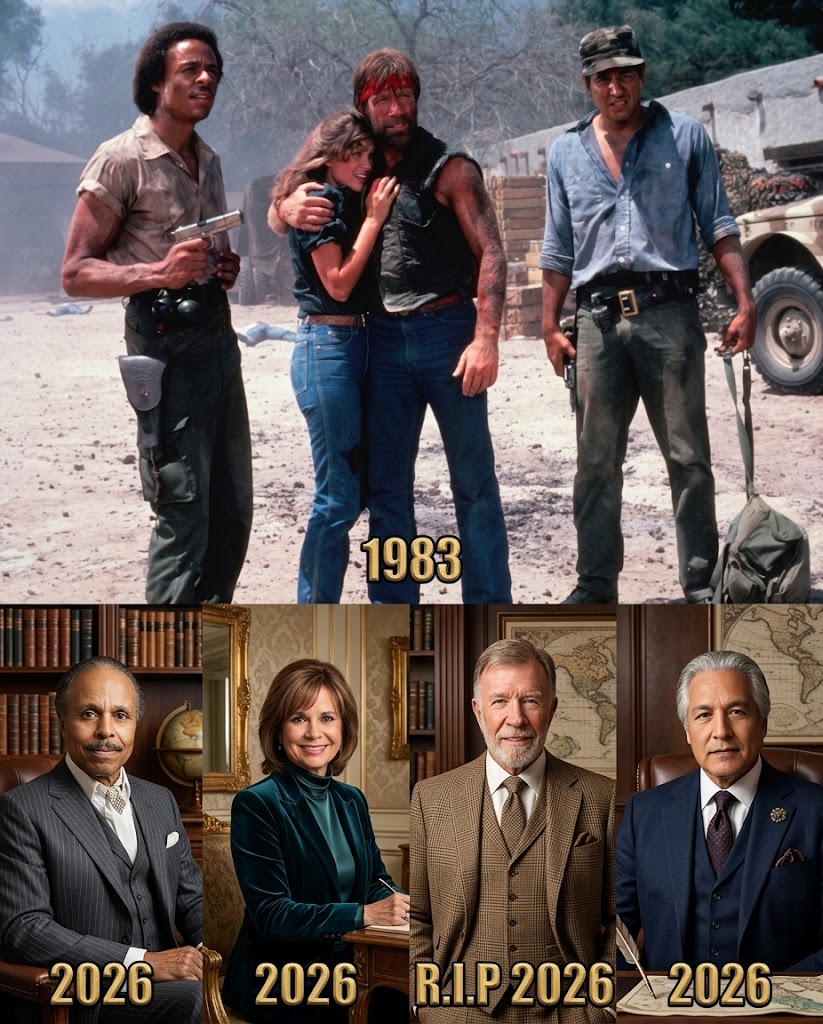
The Texas dust hangs motionless in the air as four people stand together in the middle of a story none of them could possibly understand the future significance of yet. Cameras are rolling. The heat is relentless. Somewhere off-screen, stunt crews are resetting for another explosion, another fistfight, another chase across the scorched desert roads of 1983. But frozen inside this single frame from Lone Wolf McQuade is something far more enduring than action cinema. It is the rare collision of four entirely different lives who arrived at this moment carrying completely separate histories, ambitions, and destinies.
On the far left stands Leon Isaac Kennedy, sharp-eyed and composed as FBI Agent Marcus Jackson. He came from Cleveland with almost nothing except determination. At a time when Black filmmakers were routinely shut out of meaningful opportunities, Kennedy created his own lane from sheer force of will, making Penitentiary a phenomenon. Beside him is Dana Kimmell, youthful and warm as Sally McQuade. Audiences already recognized her from Friday the 13th Part III, but what made Dana stand out in the brutal excess of 1980s cinema was her sincerity and her genuine kindness.
Then there is Chuck Norris at the center of everything. By 1983, Norris was a full cinematic force: stoic, disciplined, and unshakably physical. As J.J. McQuade, he created the blueprint for the lone Texas lawman that would later evolve into Walker, Texas Ranger. On the far right stands Robert Beltran as Kayo, carrying the confidence of someone who earned every inch of his place in Hollywood. Years later, science fiction audiences around the world would know him forever as Commander Chakotay on Star Trek: Voyager.
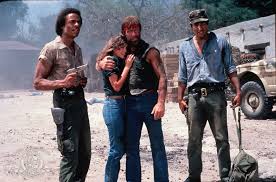
And that is what makes this image so strangely emotional now. Time changed the meaning of all of it. Chuck Norris passed away peacefully in 2026, leaving behind a legacy larger than cinema itself. Dana Kimmell still connects warmly with fans, while Robert Beltran continues creating art. Leon Isaac Kennedy left Hollywood behind entirely, dedicating himself to ministry and humanitarian work. Yet inside this frame, none of those futures exist yet. There is only one summer afternoon, four people standing together beneath a burning Texas sky, and a moment permanently untouched by time.